
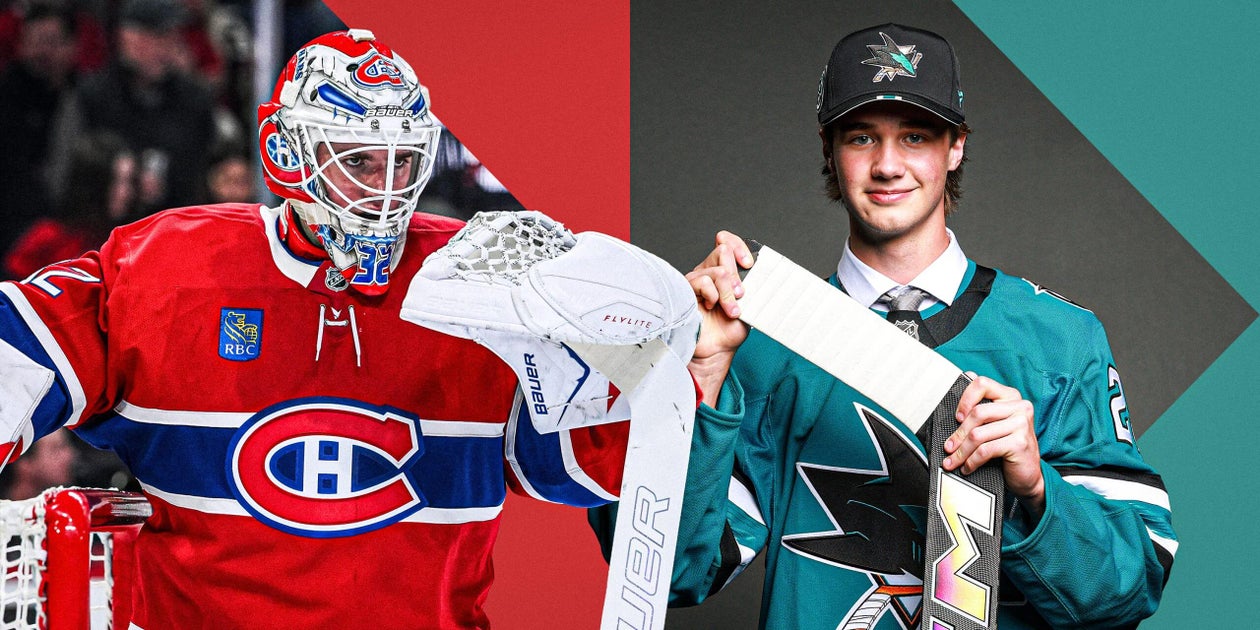
Welcome to the summer 2026 edition of my drafted NHL prospect rankings at The Athletic. This ranking of the league’s top 20 drafted goalie prospects follows yesterday’s top 100 drafted skaters list.
To be considered a prospect, a goalie must be under 25 and not fully established as an NHL goalie.
As always, the list is broken down into tiers and presented within our fully sortable user interface. There are four tiers in this year’s goalie ranking: 1, 2-9, 10-16, 17-20+.
Among the final cuts were diminutive Blue Jackets prospect Sergei Ivanov (the last cut), 24-year-olds Dylan Garand and Dennis Hildeby (both trying to take that next step from being No. 3s to No. 2s with the Rangers and Lightning, respectively), my top two 2026 goalies Tobias Trejbal (Flames) and Dmitri Borichev (Predators), and others like Love Harenstam (Blues), Lucas Beckman (Senators), Evan Gardner (Blue Jackets), Thomas Milic (Jets) and Adam Gajan (Blackhawks).
Team CAR CBJ CHI COL DET EDM LAK MTL NJD NSH NYI PHI PIT SJS TOR UTA VGK
Draft Year 2020 2021 2022 2023 2024 2025 Undrafted
Natl. 🇨🇦 🇨🇿 🇷🇺 🇸🇪 🇺🇸
Tier Tier 1 Tier 2 Tier 3 Tier 4

Loading
Try changing or resetting your filters to see more.
Tier 1
Fowler has established himself as one of the top goalie prospects in the sport with his play over the last five seasons. Last season, in his first full year of pro hockey, he posted very respectable rookie numbers in the NHL and AHL as well.
He’s the kind of goalie who, if he can see a shot and move to it, is going to stop it. Fowler has so many clear tools: great hands, an ability to take space away through square angles and sound positioning, high-end tracking/reads, excellent rebound control, legitimate power/movement and a knack for making huge pad saves and stopping high-danger chances. He rarely gets beaten through the body or frozen. He doesn’t show holes in the net and has the reflexes to get a piece of (if not outright save) pucks when he does. He has a legitimate shot to be a top NHL goaltender, and there aren’t many goalies his age (or even a little older) I’m comfortable saying that about.
I know the Canadiens and their fans are high on Jakub Dobeš right now and deservedly so, but I think Fowler is the team’s starter of the future.
Photo:
David Kirouac / Icon Sportswire via Getty Images

Tier 2
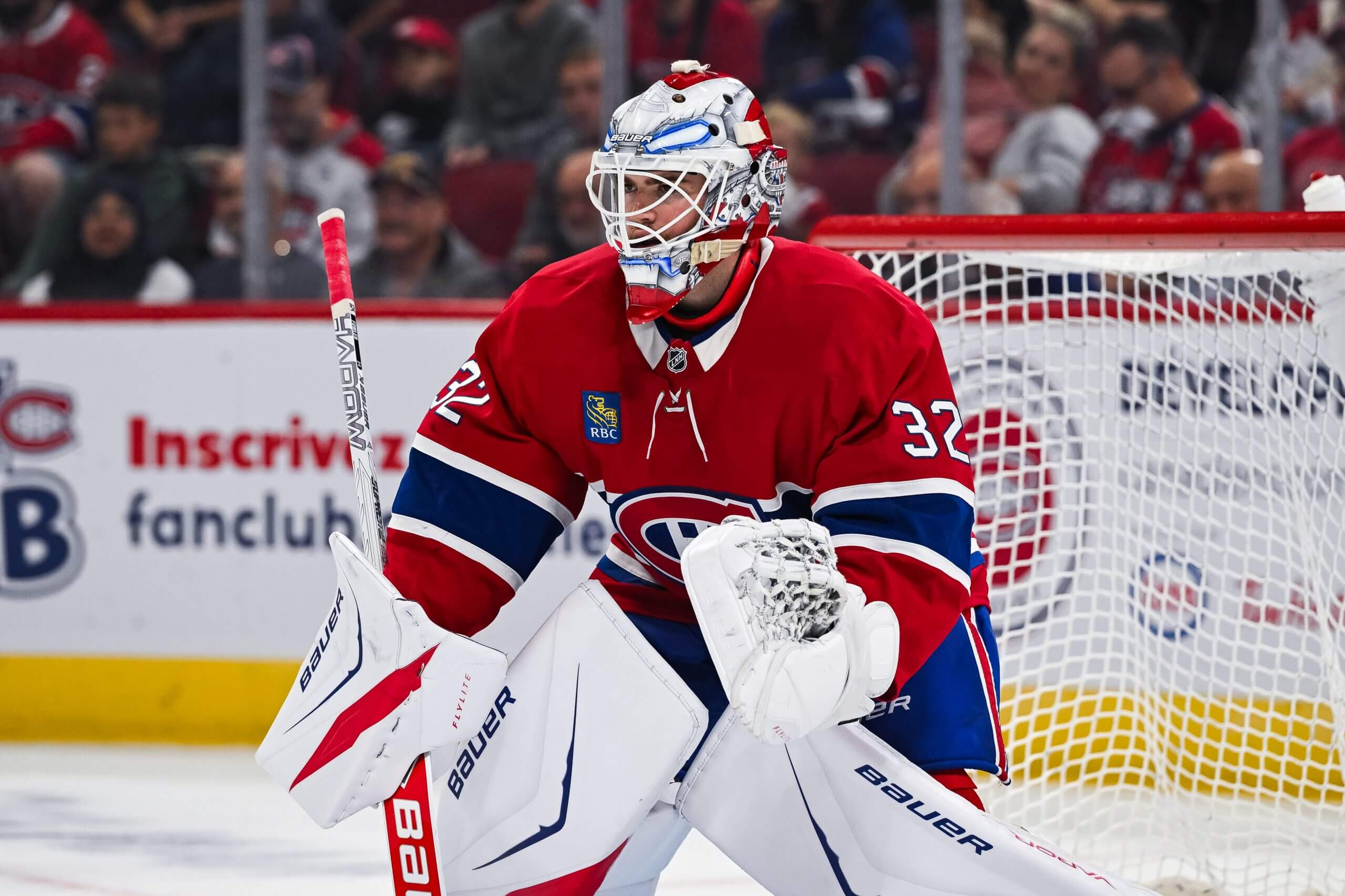
Ravensbergen is a rare southpaw as a right-catching goalie (coincidentally, as is the Sharks’ Yaroslav Askarov) with clear starter attributes. Last season, after he was the second goalie selected in the 2025 draft, he posted a .919 save percentage behind a top team with the Cougars and was Canada’s third-stringer at the World Juniors, reaffirming his status as one of the game’s top goalie prospects and committing to Michigan State, where he’ll play next season.
He moves very smoothly in the net for his size. He’s smart in his reads and anticipation. He can go post-to-post or low-to-high to get to difficult saves with his length and has definite room to get more powerful through his pushes. He has a competitive fire. He reads the play well and fills the net to take away options from shooters with sharp, challenging angles. He has some natural standout attributes and the size to match. I’ve seen him look vulnerable, or get frozen, or give up low-danger shots through his body as well. His upside is real, though, and there is untapped potential in his game if he can get into the gym and really build up his body, which it sounds like he’s doing. The tools are all there, and last year he showed them at his most consistent level to date.
Photo:
James Doyle / Prince George Cougars
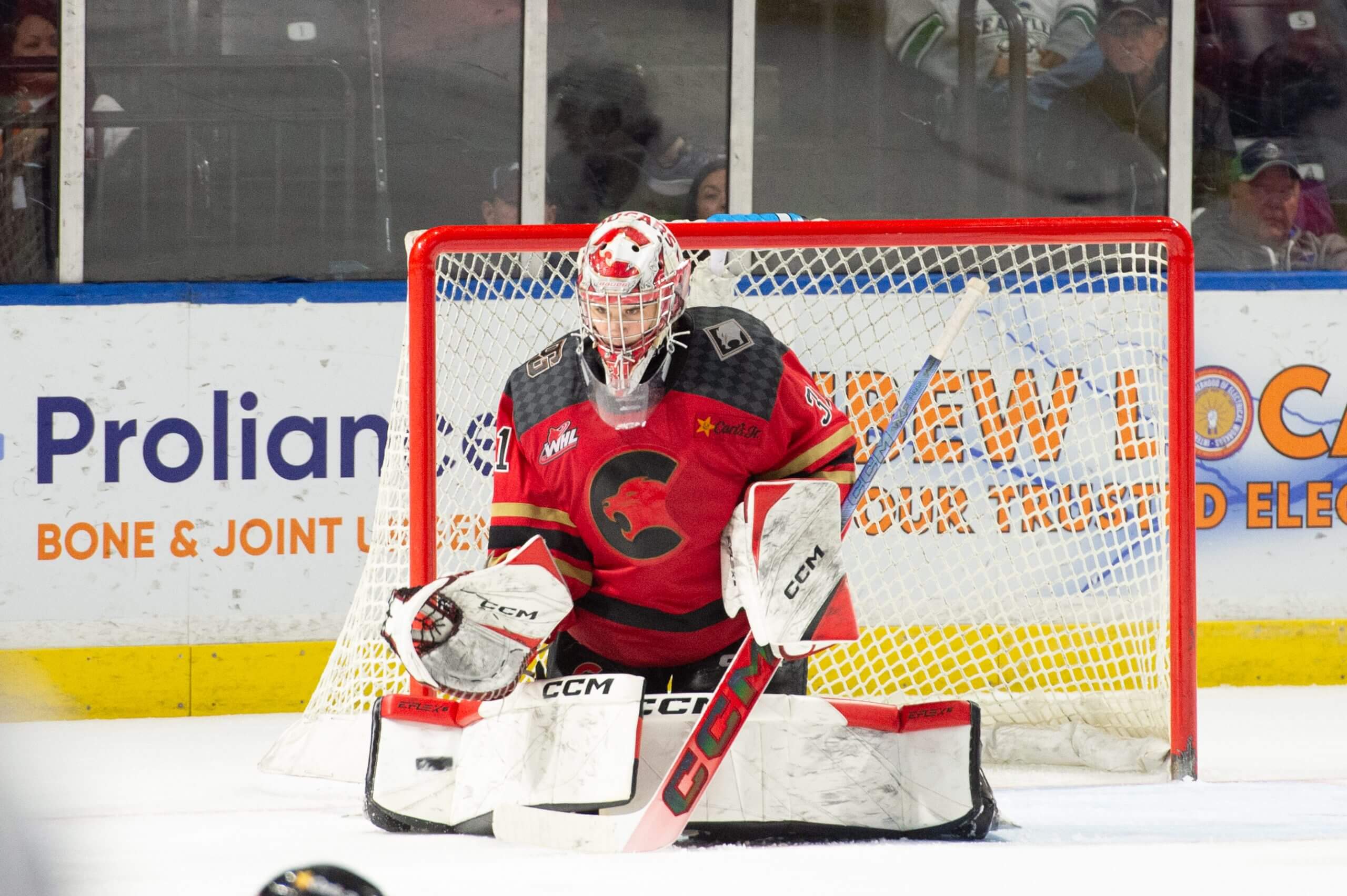
One of my favorite prospects in hockey, Augustine is the definition of calm, cool and collected, and, for me, the best goalie prospect to come through the national program since Spencer Knight. He was a big reason for Michigan State’s revival as a top program, finishing this season as a top-10 finalist for the Hobey Baker and winning the Big Ten’s goalie of the year award. And while he started his pro career 0-2-0 with a .878 save percentage in his first two AHL games, I watched both and felt he looked fine. The trade of Sebastian Cossa and the pending graduation of Michal Postava have opened the door for him to get a real run with Grand Rapids next year.
His game has rare detail and intellect for a netminder his age. He’s good at moving on his knees and in a crouch. He’s good at tracking pucks through traffic and across ice on seam plays. He plays good, sharp angles. His rebound control steering pucks into the corners is good. He’s good at getting down into his butterfly to close his five-hole quickly. He has good control generally. He’s as good in the lower third as any goalie his age, kicking pucks into the corner instead of out into the slot and sticking with dekes and five-hole plays. His athleticism is there when he needs it. He’s stoic.
While he’s not big for a goalie, and he can occasionally get frozen glove side or drop pucks into his glove, I have a ton of confidence projecting him to have a long NHL career. He doesn’t have obvious starter talent or size, but I could see him getting there or, at the very least, becoming a solid, reliable tandem goalie.
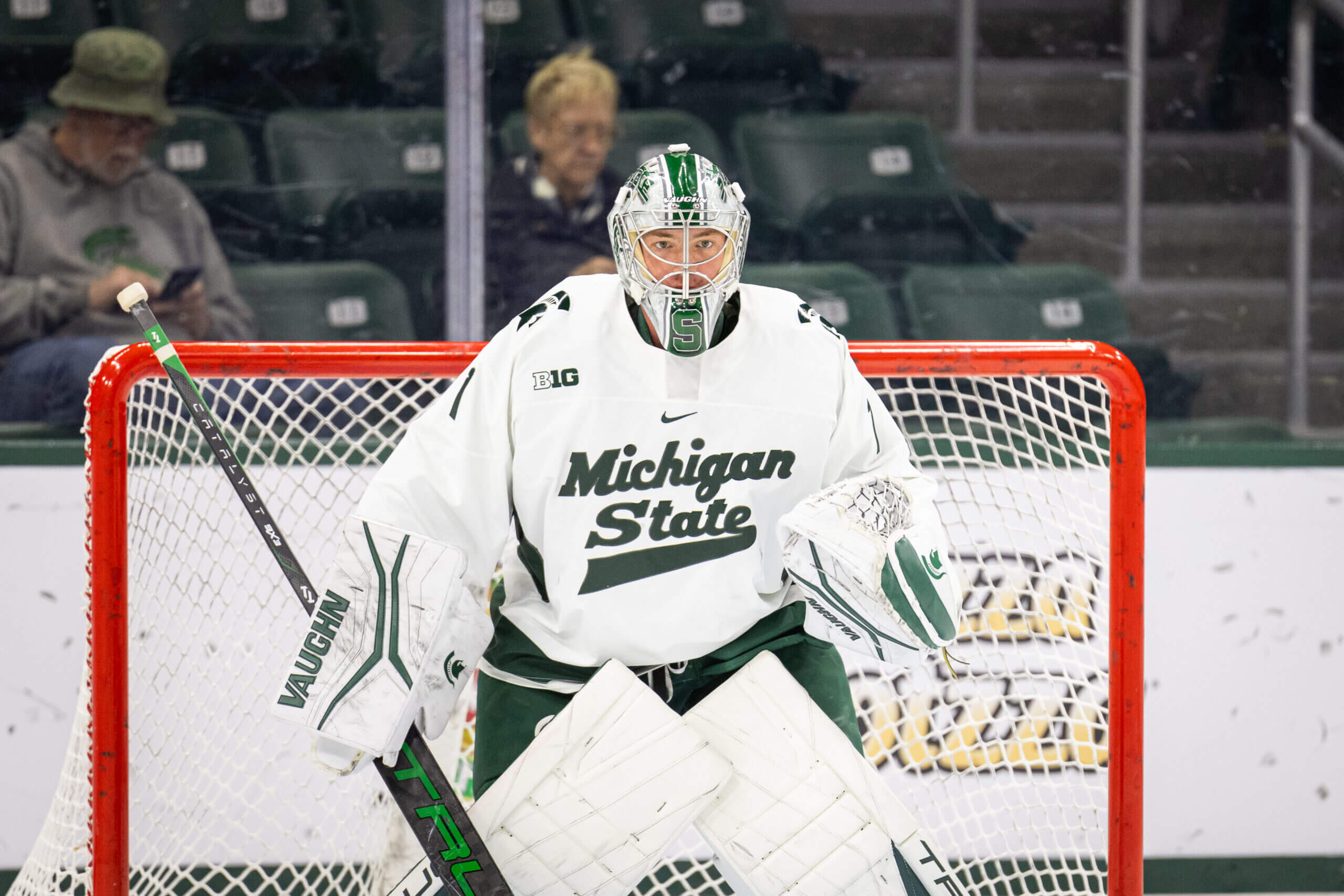
Cossa has always had the talent and upside, but he has also made important progress in some important areas over the years, limiting some of the ups and downs that he had earlier in his career and playing to a high level in the AHL, albeit behind some strong Griffins teams. The NHL opportunity he now has coming in Utah is earned, and I’m looking forward to seeing what his talent can do with it at that level.
He’s a huge, powerful, athletic goalie, and those last two things don’t always come with the first. He’s also a fiery, confident, talkative competitor who doesn’t like to get beaten and wants to command the net and the room. Bigger goalies often struggle with their movements and their recoveries, but neither is an issue for Cossa. His positioning and reflexes help him block and grab a lot of pucks; he does a good job holding his outside edges to be patient on shots and has great hands up high. But it’s his ability to bounce back into his stance or change directions with passes that separates him for a goalie as tall as he is. His power through his pushes gives him a rare side-to-side ability for a goalie that big as well.
There have been times over the years when I’ve seen him look leaky and really struggle to close his five-hole because of his size. This remains a bit of a recurring issue, though it has improved, and he does a really good job kicking pucks aimed for the lower corners. He’ll still occasionally lose himself in his net on scramble plays, as those strong pushes to get to tough lateral saves can pull him off his lines. He can get pulled out of his net overcommitting on dekes. But he has worked to settle down in each of those areas (though his habits still need to be more consistent), and his natural gifts give him undeniable upside.
When he’s set and square to shots, he’s tough to beat. I’ve seen him look unflappable and make point-blank save after point-blank save when he’s dialed in. I’ve also seen him look rattled as shots sneak through holes they shouldn’t be finding. His combination of size, dexterity, competitiveness and explosiveness in the net is very real, though.
Photo:
Jamie Sabau / USA Today
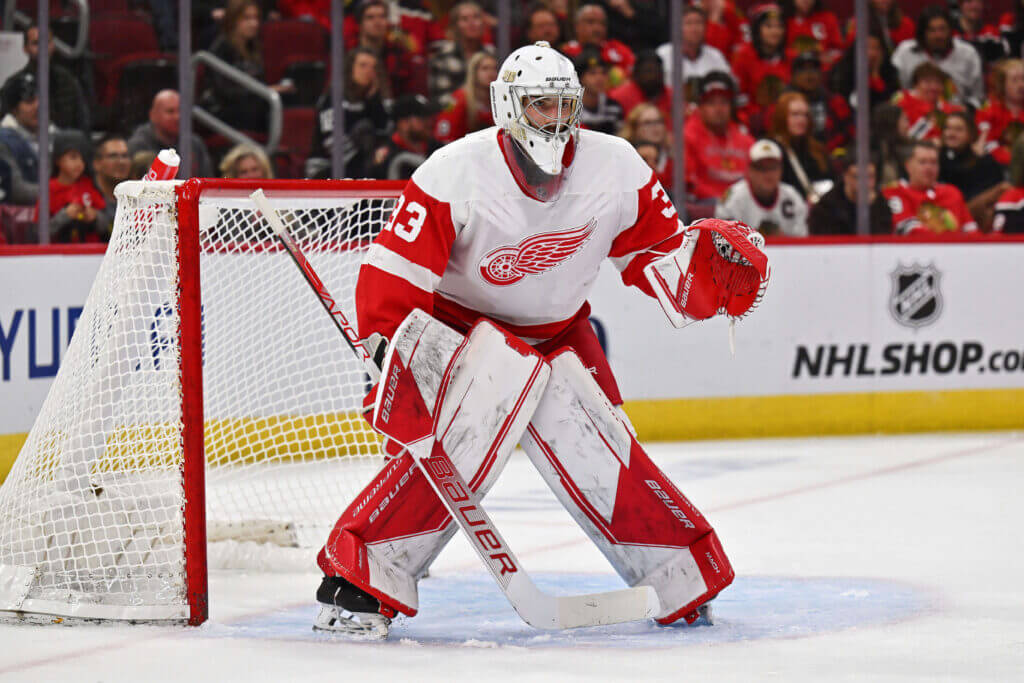
Another in a long line of top Russian goalie prospects, I believed there were half a dozen legit goalie prospects in the 2025 draft, and Andreyanov was firmly one of the top two from that group of six for me. He might lack ideal height, but he fills the net for his size and looks heavy and powerful between his posts without his weight slowing down his footwork and mobility. He’s a strong, sound goalie with good hands and technical ability who tracks and anticipates well, competes and can stay square to swallow the first shot or go post-to-post to make more difficult saves. He has good hands, tracking and reflexes. He’s comfortable playing the puck. He has had some big performances over the last two seasons and looks like a stud to me.
He continued to perform in junior and at the second-tier VHL in Russia last year, though the numbers have been more good than great, and you’d like to see him get KHL reps. I believe he has starter upside. Blue Jackets fans will have to wait for him, though, as he’s signed to a five-year contract with CSKA that runs until the end of the 2029-30 season.
Photo:
Maksim Konstantinov / Getty Images
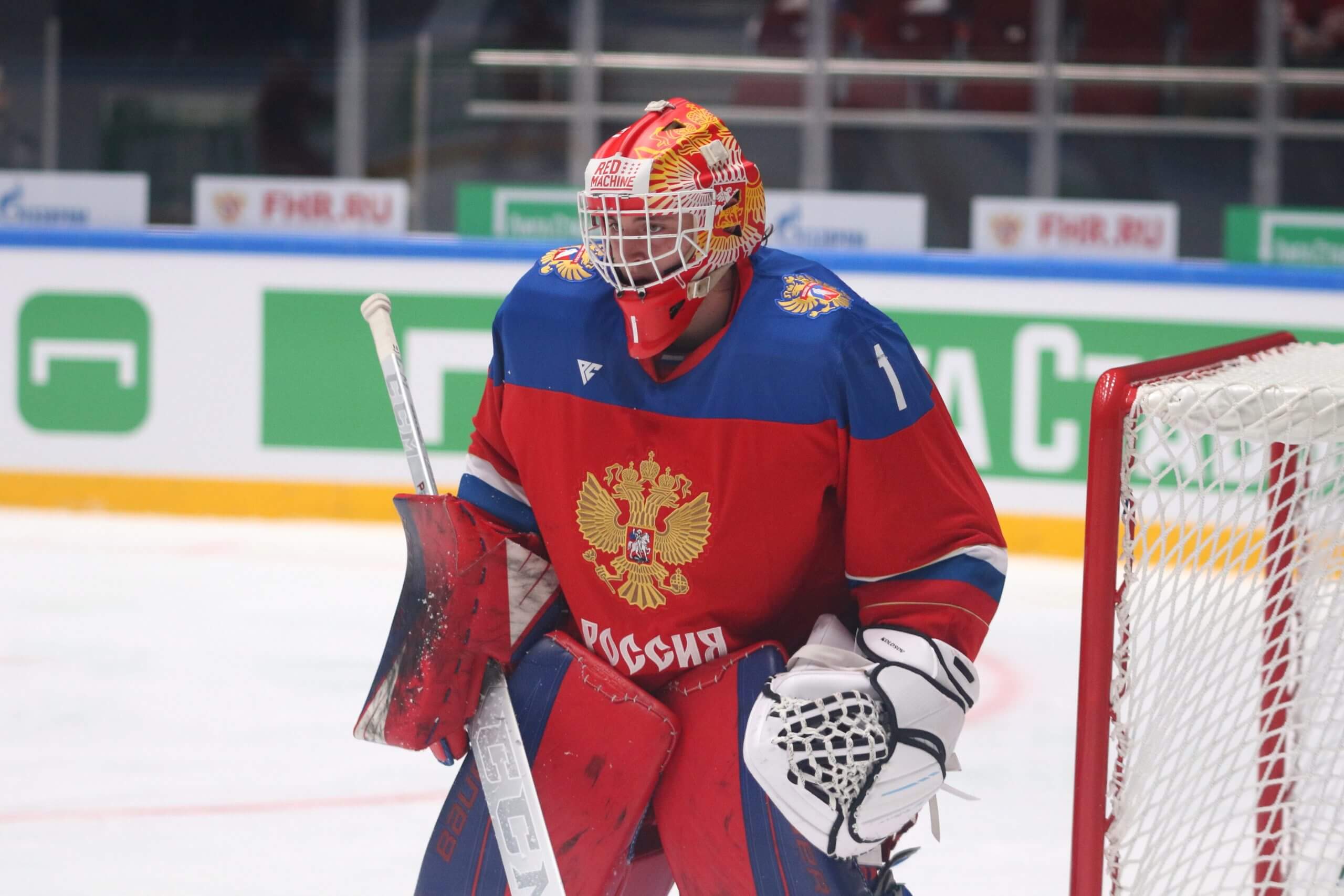
Hrabal has the tools to become a starter in the NHL with a little refinement, and there aren’t many goalies I can say that about. I considered ranking him as high as No. 3.
In his junior year at UMass-Amherst last season, he put up a .937 save percentage as one of the best players in college hockey and turned pro, where he began his pro career with a 3-1-1 record in the AHL.
The size jumps out at you right away, but there are layers, good and bad, to the rest of his game. Hrabal used to get down into his butterfly a little slowly, opening up his five-hole for shooters (a common problem for bigger goalies), but he has made progress on it over the last two years and really covers the bottom of the net well. Once he’s on his knees, he actually scrambles well for a goalie as tall as he is. His hands (both glove and blocker) need some work up high, and he has an odd tendency to try to catch low shots instead of making a pad save; I suspect it’s because he doesn’t trust his rebound control on quick shots. I’ve seen him look completely in command, fill the net and take everything away from shooters. I’ve also seen him get beaten cleanly and look like he’s not tracking pucks. I would like to see him work on playing the puck as well.
The upside is hard to ignore, though. He has some real natural ability and a game-stealing quality when he’s dialed in, which has happened more and more. When he’s sharp on his lines, square to shooters and on his toes, he’s tough to beat. Fewer shots are sneaking through his body, and his competitiveness and size are a good combination. He has also developed more power in his game. He moves well for his size and can really take away a shooter’s options when his angles are on point.
Photo:
Minas Panagiotakis / Getty Images
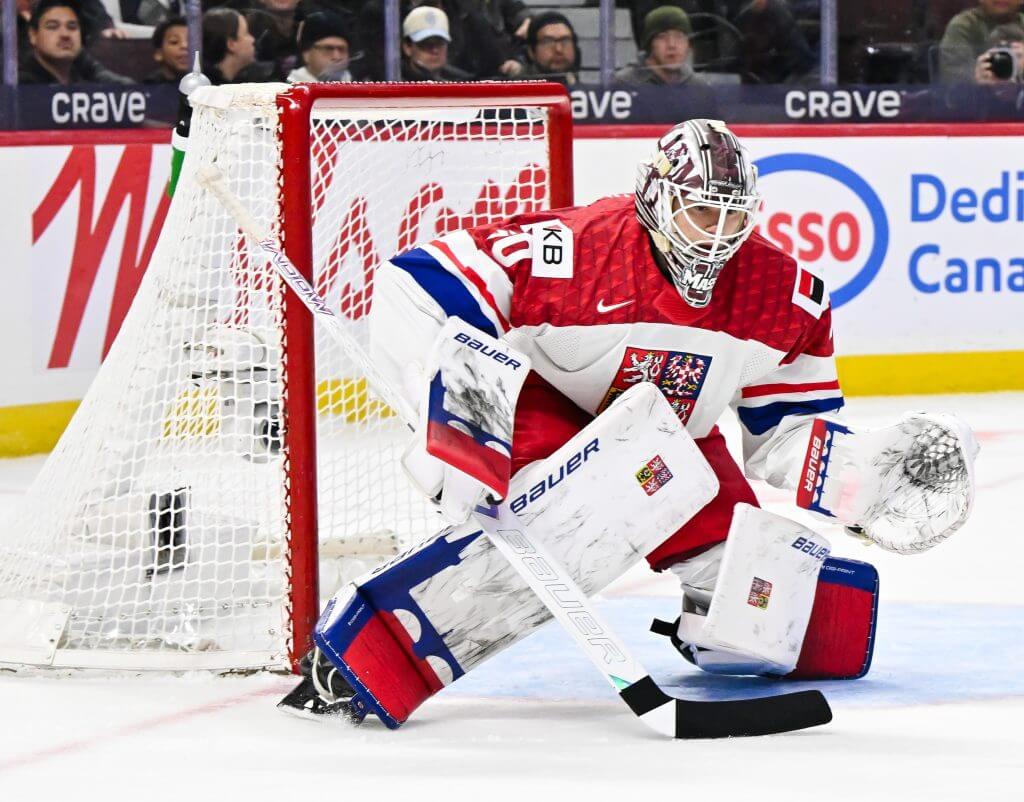
Ivankovic is a small but top-end goalie who has played at a consistently excellent level for Hockey Canada, the Steelheads and Michigan, and has the high-end tools across the board that you look for in a smaller netminder. He plays an incredibly calm, controlled, positional style, especially for an undersized goalie, staying square to shooters, getting set early, holding his edges and controlling his rebounds so well it can look like he’s not moving in the net (and when he does move too much and loses his posts, he battles to get back into his spots and get to pucks on scrambles). His goalie IQ and anticipation are elite. But he’s also ultra-competitive, mobile and athletic, fighting for pucks in the crease and regularly getting to pucks he shouldn’t. Add in strong puck-playing ability, excellent hands and dexterity and dialed-in tracking, and you have a goalie who consistently steals games. He’s also great down low and up high, staying on his feet long enough so that guys can’t pick corners on him, but also quick to drop down and kick out pucks.
He also performed well at two World Juniors, even if he wasn’t the starter in either (that’s coming at next year’s tournament). Plus, there’s at least some hope he’ll get an inch and have a late growth spurt (he wears size 12.5 shoes and his dad, Frank, is 6-foot-5). I’m a believer.
Photo:
Richard T Gagnon / Getty Images)
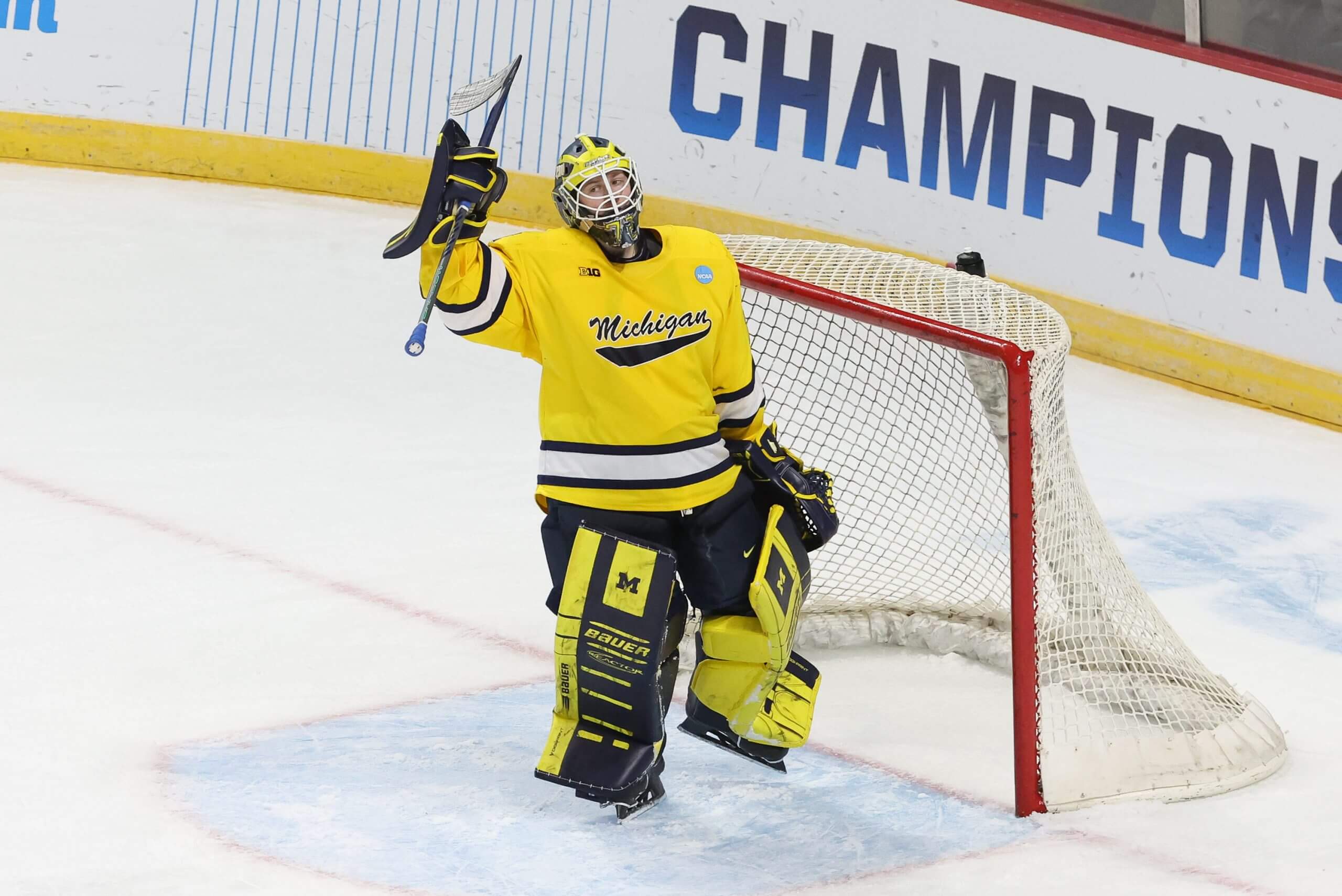
Murashev projects as a legit tandem goalie at minimum and has shown the ability and consistency over the last few years to become a starter if he keeps it up.Last season, his continued strong play in the AHL earned him NHL looks over the more experienced Joel Blomqvist, too.
Murashov isn’t a big goalie, though he has grown a couple of inches and added weight to get to 6-foot-2 and 185ish pounds. He’s also quick and nimble on his feet, gets to a lot of pucks, stays with shooters one-on-one, has great hands and likes to challenge (like many Russian goalies are taught to). I like the movement, footwork, the skill, the way he anticipates plays and his tracking. When he’s dialed in, he’s tough to beat. He would have garnered more notoriety had he backstopped Russia at his World Juniors, too.
Photo:
Per Haljestam / Imagn Images
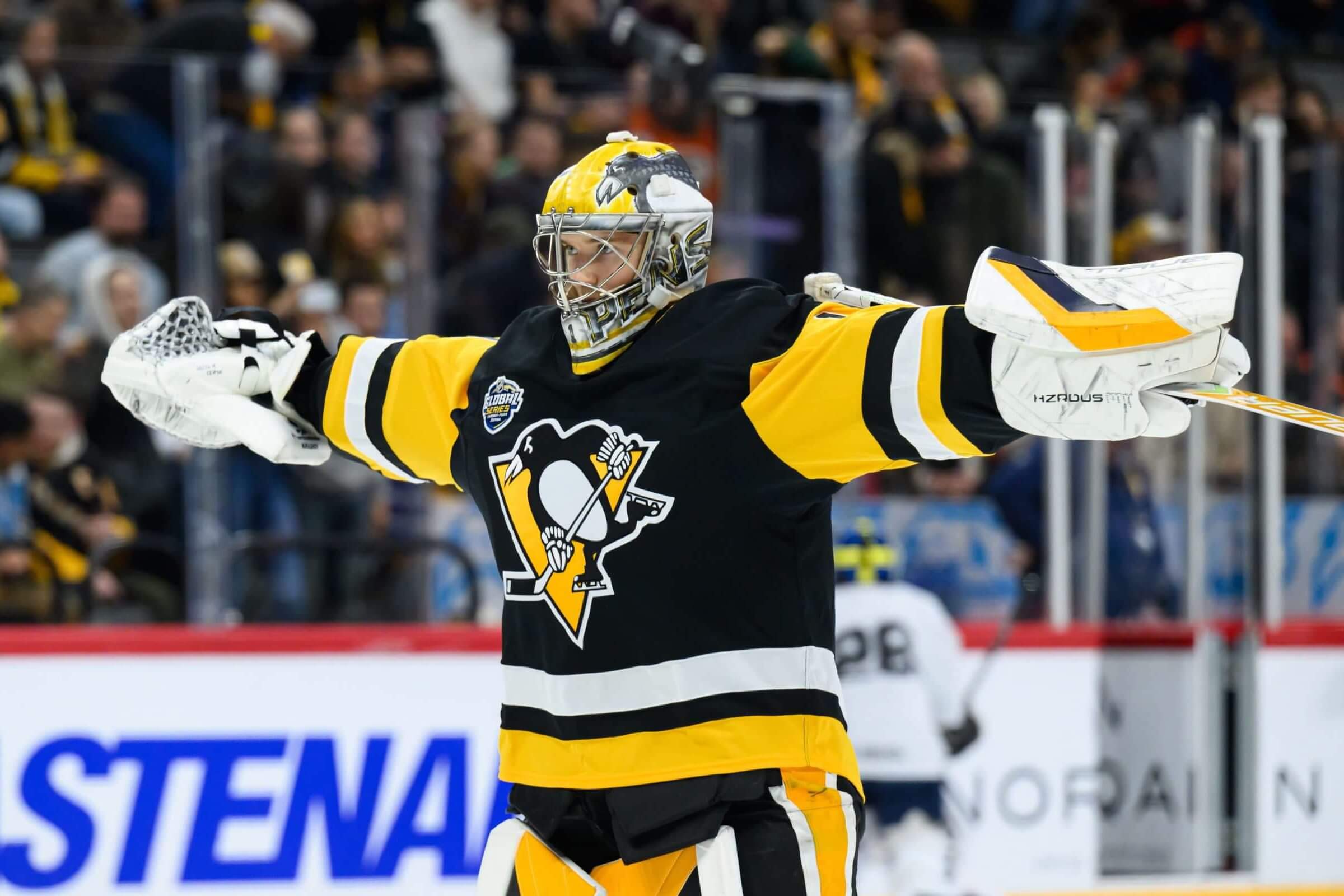
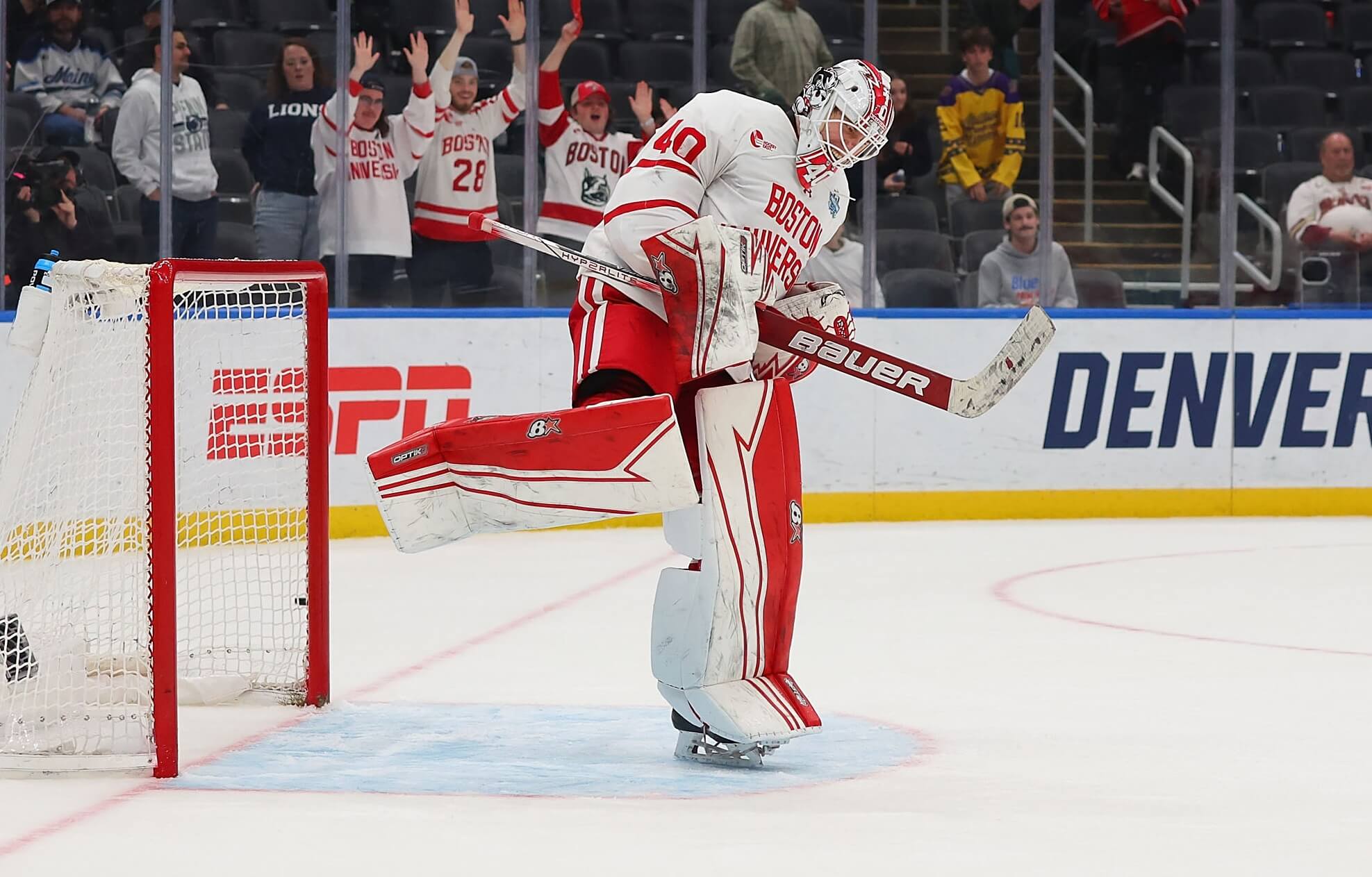
Yegorov is a freak athlete who has high-end attributes. He’s a 6-foot-5 goaltender with raw, natural athleticism that presents itself in his ability to go post-to-post or low-to-high. He also has good hands, and he reads and anticipates the play smartly. He started his post-draft season by returning to the USHL with the Lancers, a team in disarray that often got shelled with shots. After posting a .912 save percentage across 19 games and just three wins to show for it, Yegorov accelerated his commitment to Boston University and joined the Terriers for the second half (where he was excellent early and into the Beanpot, and really made a world of difference for that team, elevating its ceiling and backstopping BU into the Frozen Four). Yegorov was one of the stories of the college hockey season (the five goals he gave up in the final were the most he’d surrendered after joining the Terriers). He and BU didn’t follow it up with the same level of play in his sophomore year, but the talent is all there. He’s a big, long, lean goalie who should get stronger, is quick on his feet and in and out of his butterfly with clear technical skills as well. With the right patience, there’s some serious untapped potential in Yegorov’s game still, too. He has starter upside.
Photo:
Dilip Vishwanat / Getty Images
Tier 3
Zavragin is a talented goaltender who has followed a steep development curve at at an early age already.
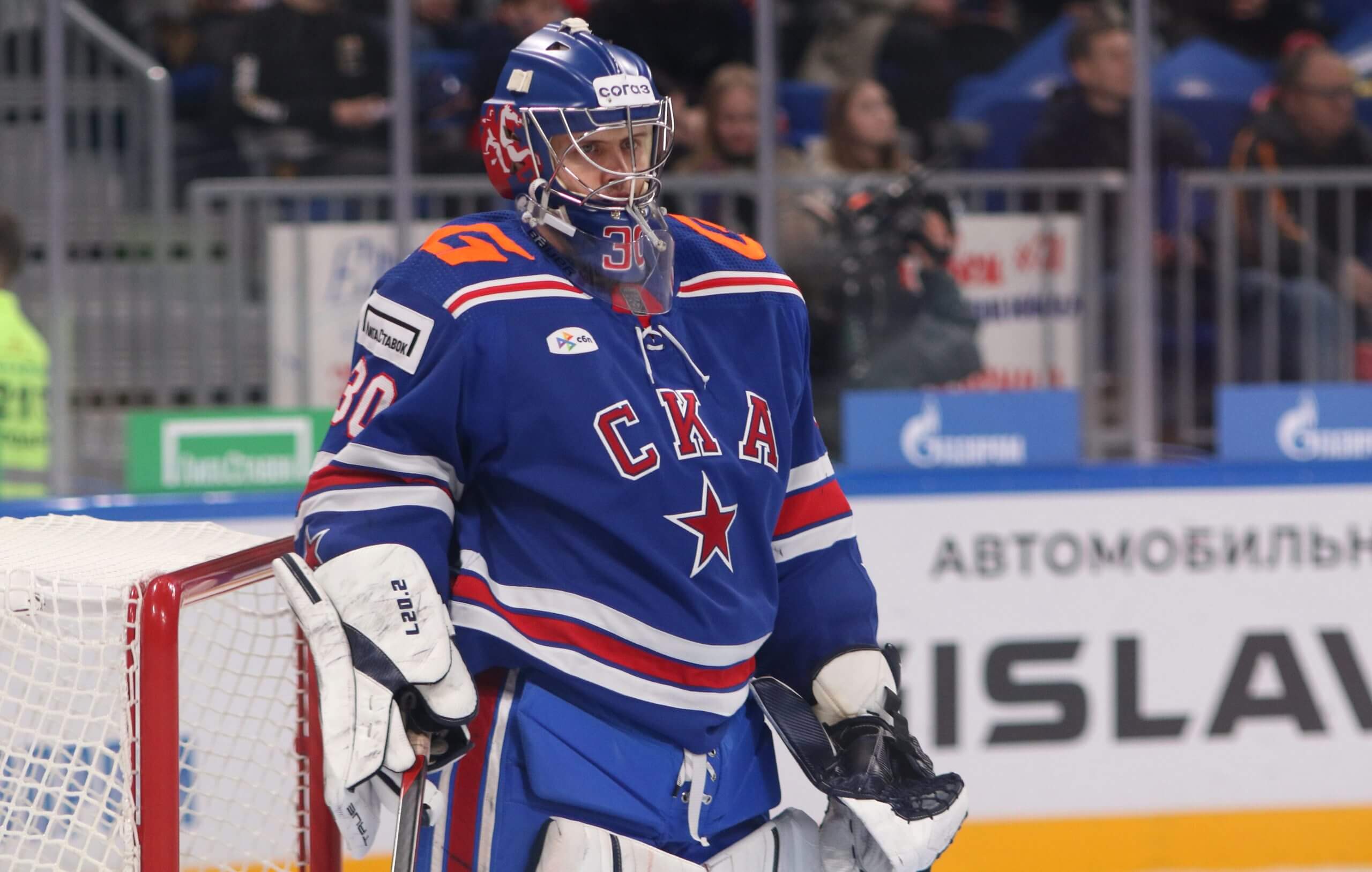
Zavragin rose to KHL prominence as a teenager after playing superbly at lower levels, emerging as one of the better young goalies in Russia. He’s still only 20 (he’ll turn 21 at the end of August) and already has a .918 save percentage across 55 KHL games split between Sochi and SKA.
Zavragin’s athleticism really stands out. He has an impressive ability to go post-to-post and low-to-high, and good reflexes and hands even when he’s moving. Where most young goalies who move to pucks can lose their posts and pull themselves out of position, he also has good control of his game and a willingness to battle when he does get scrambled. He has great hands and reflexes. He sticks with shooters one-on-one and excels on breakaways/penalty shots.
Of note: His current contract expires at the end of the 2026-27 season, so a move to North America could be one season away now.
Photo:
Maksim Konstantinov / Getty Images
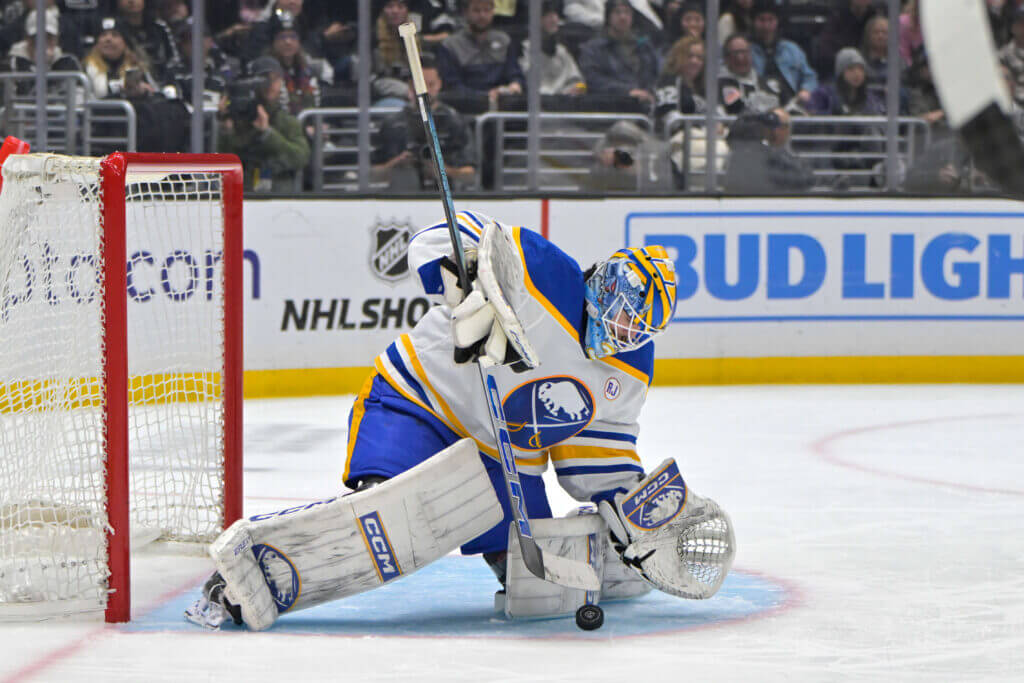
Levi’s pro career hasn’t lived up to the pedigree he built in his college years, but his career AHL save percentage is still .914. And while I’ve been in the minority in continuing to believe that he’s more than just a No. 3, I’m prepared to bet that he’ll finally take that next step with the Oilers. He’s still young by goalie standards, even if it feels like he has been around forever and hasn’t broken through at the NHL level.
He still has pretty much exactly the skills smaller goalies need to be successful. Impressive control on his inside and outside edges, and the patience to hold them. Quick feet on his shuffles so that he can stick with dekes and go post-to-post or low-to-high to get to tough pucks. Good hands. Excellent reads on shooters. Excellent tracking through and under traffic. And a battler’s mentality in the net, which keeps him in plays even when he looks like he’s down and out. There aren’t a ton of goalies his height in today’s NHL, at least not starting ones, but guys like Jet Greaves and Dustin Wolf have broken through, and I’m still not ready to count Levi out. The clock is now ticking after the trade, though.
Photo:
Jayne Kamin Oncea / USA Today
Slukynsky is a lean goalie but has grown from 6-foot-1 and 179 pounds in his draft year to 6-foot-2 and about 185 pounds now. He’s a very smart, anticipatory goalie with legitimate quickness and mobility in the net. He stays square to shots and hits his spots early. He’s active and fast on his feet, athletic with good hands, sticks with shooters one-on-one, gets to his spots early and tracks well — most of the boxes you look for! He needs to get stronger to hold the crease better on jam plays, but that’s been my only criticism of his game.
Despite his glossy record over the years, I’ve also seen him steal games with his mobility and talent. As he gets stronger and works on becoming more and more controlled in the crease, I think he’s going to be a decent NHL goalie.
He had a strong sophomore year last year as well, finishing strong to finish with a .915 save percentage with the Broncos and then performing really well in his first two AHL appearances. Of note: I’ve heard the Kings’ plan is, if they have to, to run three NHL goalies early on next season (Darcy Kuemper, Anton Forsberg, and Erik Portillo) so that they can play both he and Carter George as a tandem in the AHL.
Photo:
Michael Miller / ISI Photos / Getty Images
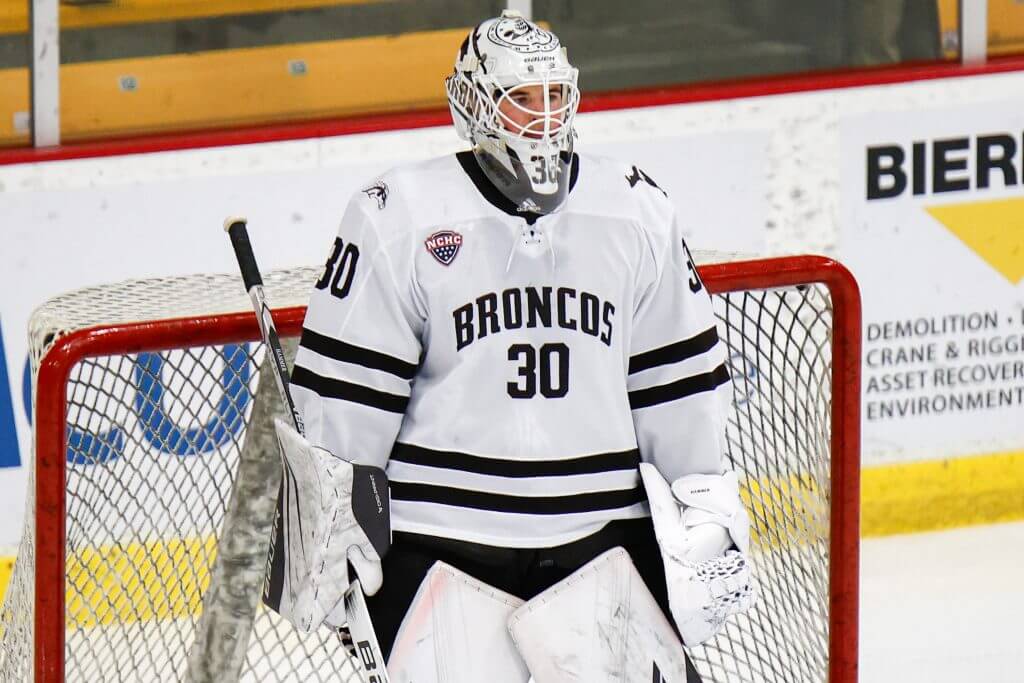
George doesn’t have ideal size, but he’s big enough and rarely seems to get frozen straight up with shooters because he has good hands and hockey IQ as a goalie. He knows when to stay on his feet and when to get down and pick pucks out, because he reads it so well off the blade, and he’s patient. He’s very communicative and shows comfort playing pucks. He tracks pucks through traffic really well. He has quick feet and closes his five-hole fast, with mobility moving laterally and correcting. He can make post-to-post saves when he has to, but he isn’t an elite athlete and doesn’t rely on his athleticism.
George plays a positionally sound and calm game for his age that shows a lot of maturity. He’s a smart, quick, competitive, consistent goalie who should have a long pro career and has the calm, studious demeanor you look for. His numbers regressed behind an Owen Sound team that struggled in front of him at times last year, and he was just OK as a returnee at the World Juniors, losing the net to Jack Ivankovic, but he was really solid after a trade to the Soo, posting a .913 in his 24 games there to close out his junior career. I project him as a future NHL goalie, though he probably tops out as a 1B-3 and not a 1-1A.
Photo:
Ellen Schmidt / Getty Images
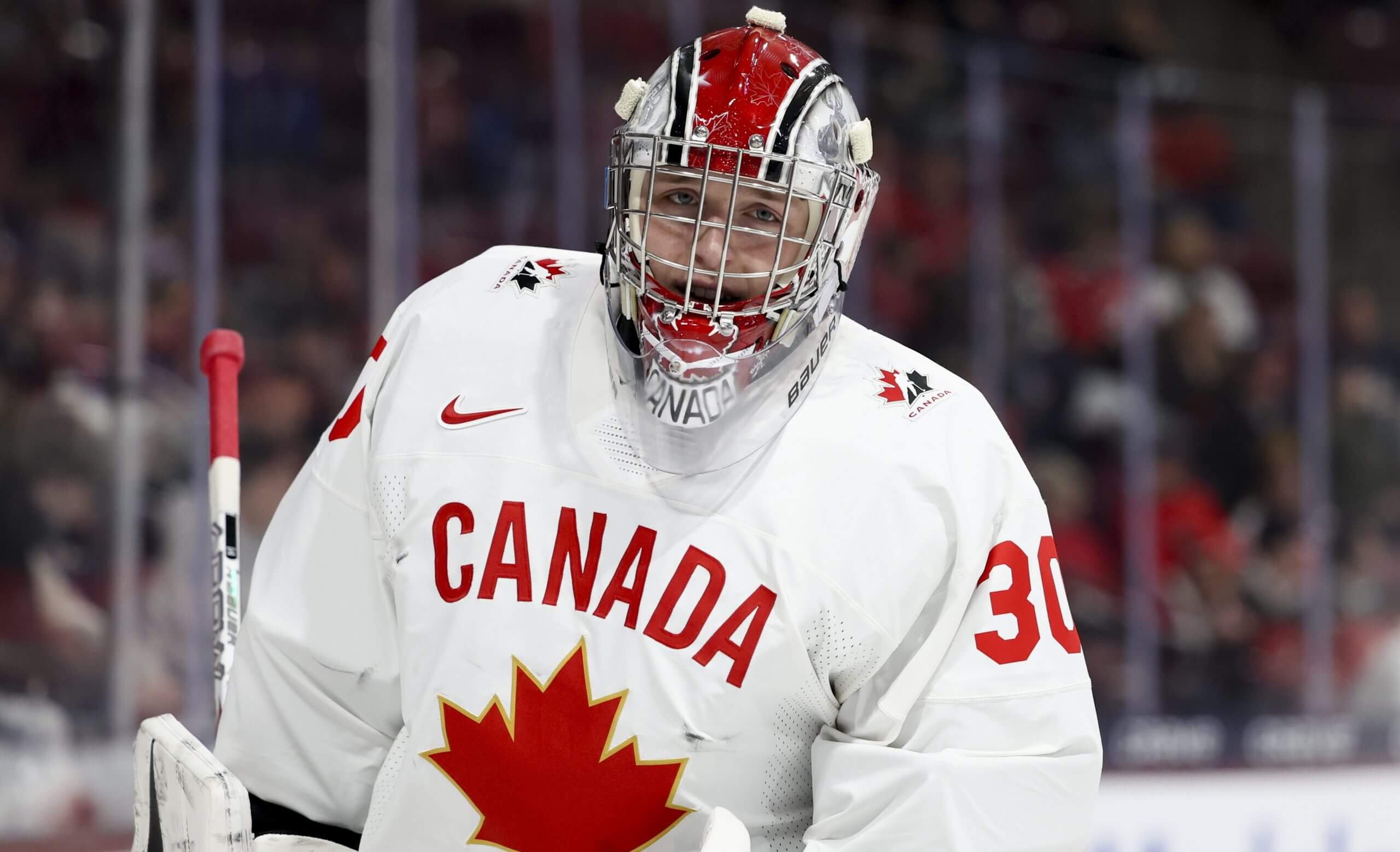
Eventually, a goalie starts to play well enough for long enough at enough levels that you can’t ignore the results. It’s easier to get on board when they’re 6-4, obviously, but more and more goalies in the 5-11 to 6-1 range are emerging as well, and Lindbom looks poised to be another recent success.
Last year, it was the same story in the AHL with a .926 save percentage. The only place in his career where his numbers haven’t yet quite come is in his early NHL starts. I’d wager they will, though.
Lindbom has quick hands (a great glove hand in particular, but also a good blocker) and shoulders reacting to shots. He has quick feet. He always seems set in his stance before shots are taken. Despite his quickness, he’s not busy in the net. Few shots beat him down low because of how fast he gets in and out of his butterfly. He holds his edges well and doesn’t go down until he has to. Ultimately, he has the right blend of control and athleticism and looks like he’s on a very good trajectory for being the third-last pick in the 2021 draft.
Photo:
Andy Abeyta / The Desert Sun
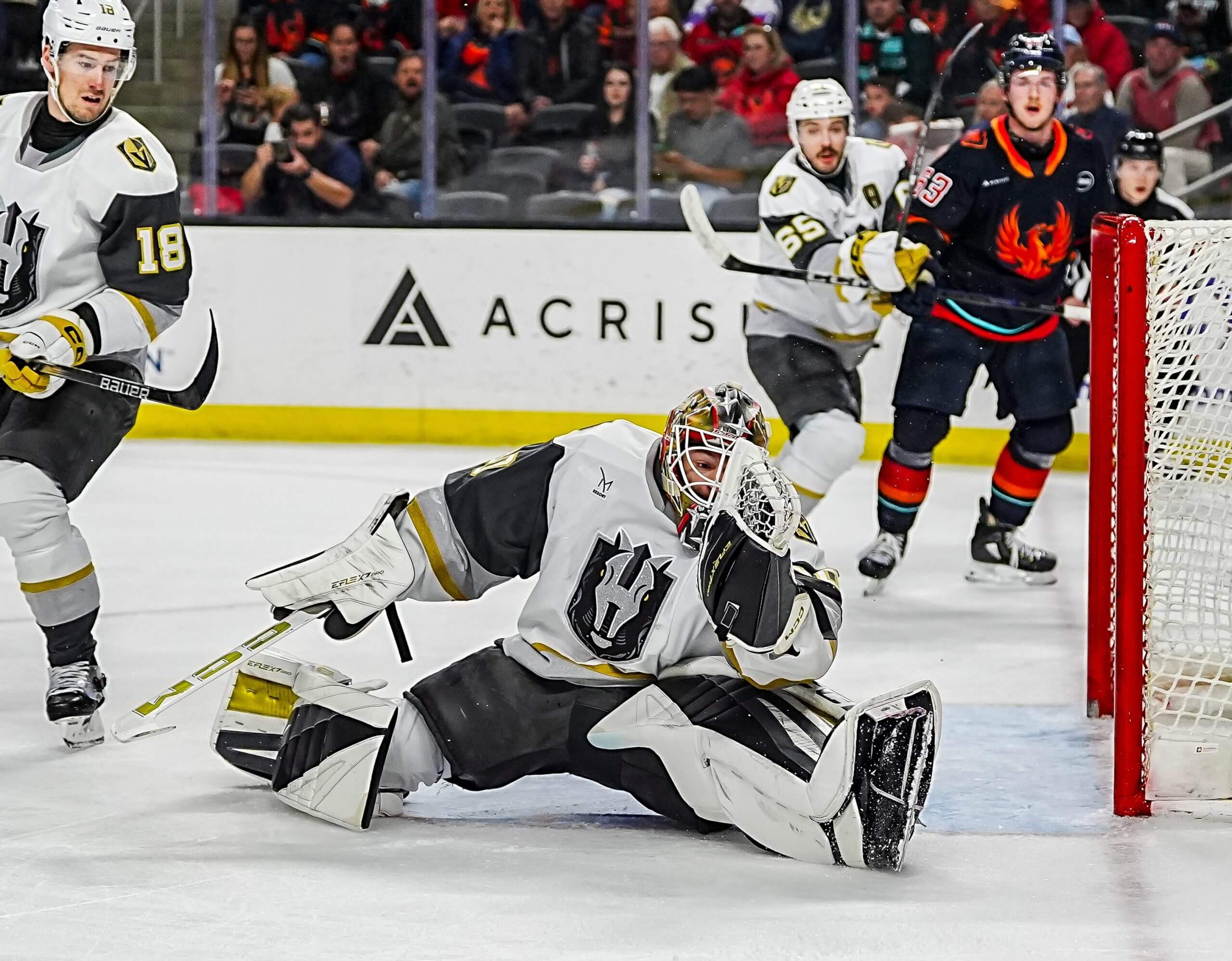
NHL Central Scouting’s No. 2-ranked European goalie two years ago, Frolov is a good-sized goalie whose career MHL save percentage is .916. He plays an aggressive and challenging style; when he’s on, shooters struggle to beat him or even create rebounds off him because he takes away their options, stays on top of them, and then has good hands up high and is quick to close off and seal the ice down low. He plays on his toes and makes the first save consistently. He can get a little scrambly and lose his net on second and third chances, though, and can sometimes be a little overzealous.
I like the size, ability and confidence he plays with. He clearly trusts himself to beat shooters with his talent and lines. He has a game-stealing quality to him when he’s dialed in, and some scouts felt he was the best or second-best goalie prospect in the 2025 draft. He will need to settle down and refine his approach to reach his potential in the NHL, but the skill level, tools and upside are real.
Gamzin was one of the KHL’s best goalies as CSKA’s starter last year, building on the promise he showed in No. 2/3 roles over the previous couple of years to continue to perform under a heavier workload, outperforming a former NHL goalie in Spencer Martin. He’s lean, with good mobility, reflexes, dexterity and hands. He moves to pucks early and plays quickly. He still has two more years on his contract in the KHL, so Islanders fans won’t likely see him in North America until mid-2028, but he has positioned himself as one of the better young goalies outside the NHL.
Tier 4
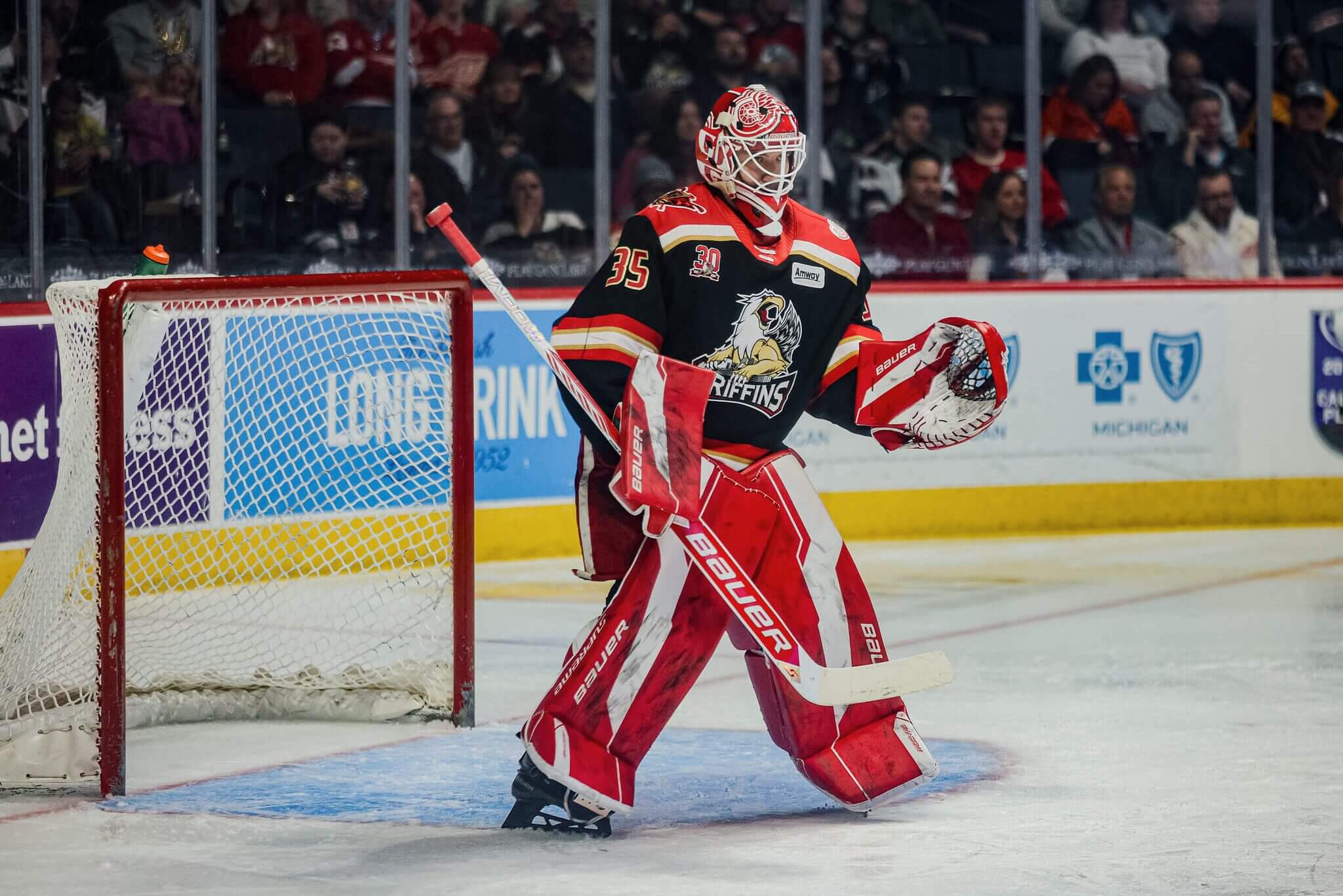
One of the best stories in the AHL last year, Postava came over to North America as a 23-year-old free agent who turned 24 during the season and emerged as Grand Rapids’ starter ahead of an AHL All-Star and first-round pick in Sebastian Cossa, posting a .937 in the regular season and .912 in the playoffs. The Griffins’ goalies have typically all posted strong numbers over the last couple of years, but Postava’s merits as a future No. 2 are earned. He’s not the biggest or most athletic goalie, but both are good, and his game is led by excellent technical ability, control, reflexes, positioning and tracking, which allow him to get and stay square on a lot of shots and make the saves he’s supposed to. Sharp angles and consistency define him. And if nothing else, his emergence as a legit option for the Red Wings net bought them the ability to leverage Cossa for a first-round pick and to give Trey Augustine all the time he needs in the AHL.
Photo:
Nicolas Carillo / Grand Rapids Griffins
DET
Undrafted
🇨🇿
Tier 4
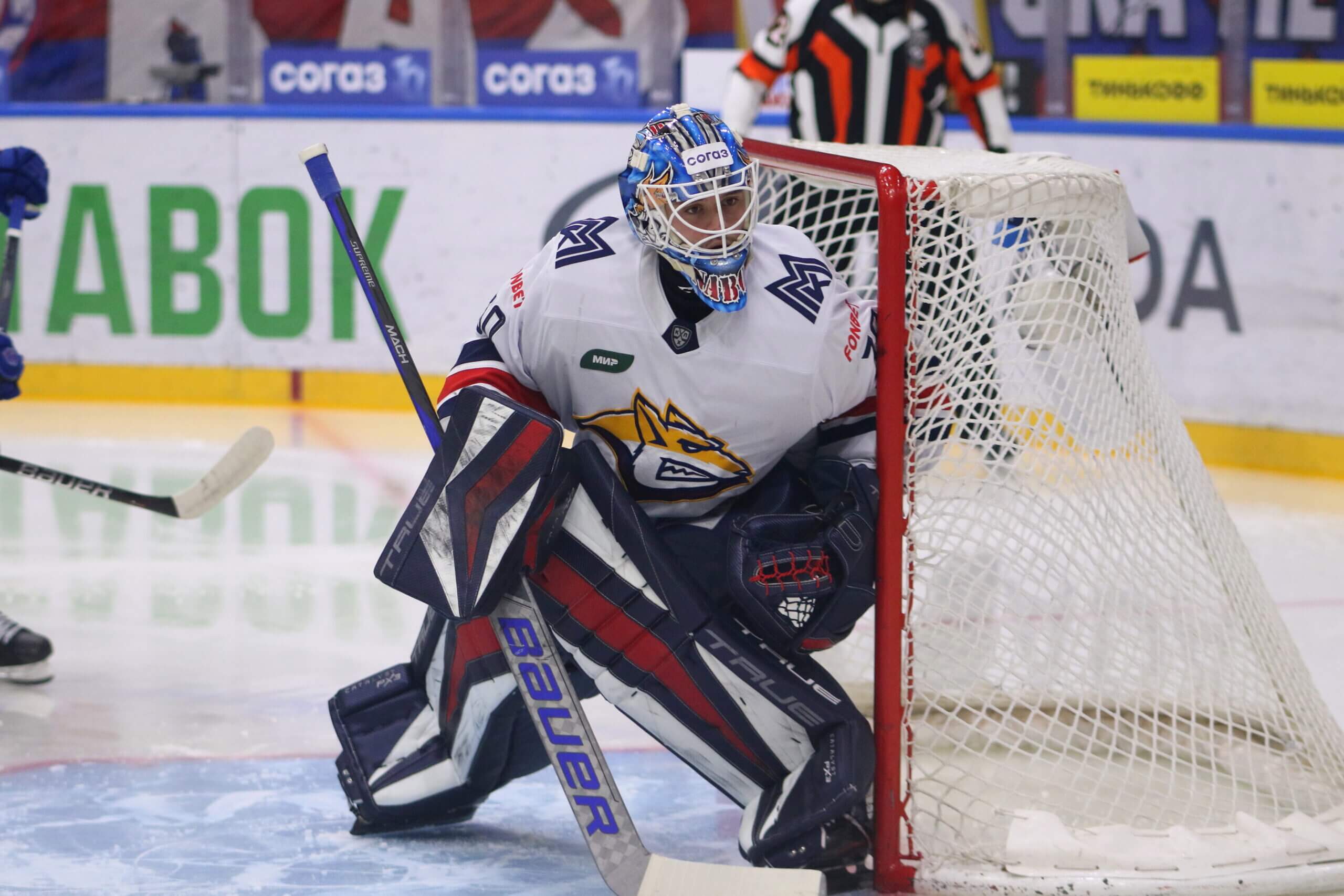
Nabokov was my top-ranked goalie in the 2024 NHL Draft and the first goalie chosen, and established himself as one of the top goalies outside the NHL at an early age. He doesn’t have ideal size, but was an MHL All-Star in 2022-23, KHL rookie of the year and playoffs MVP in 2023-24, backstopping Magnitogorsk to a Gagarin Cup title, and again one of the top goalies in the league two seasons ago. His numbers took a big dip last year (.901), but he was still winning games. He’s a mobile and extremely technically and positionally sound goalie who gets to pucks, recovers quickly, sticks with scrambles and tracks well through traffic, but also stays controlled and has good hands. I don’t see much to pick apart in his game, and I expect him to play in the NHL and even be really solid as an NHL goalie. He’ll play for the Eagles in the AHL next year, and I expect him to have immediate success there.
Photo:
Maksim Konstantinov / Getty Images
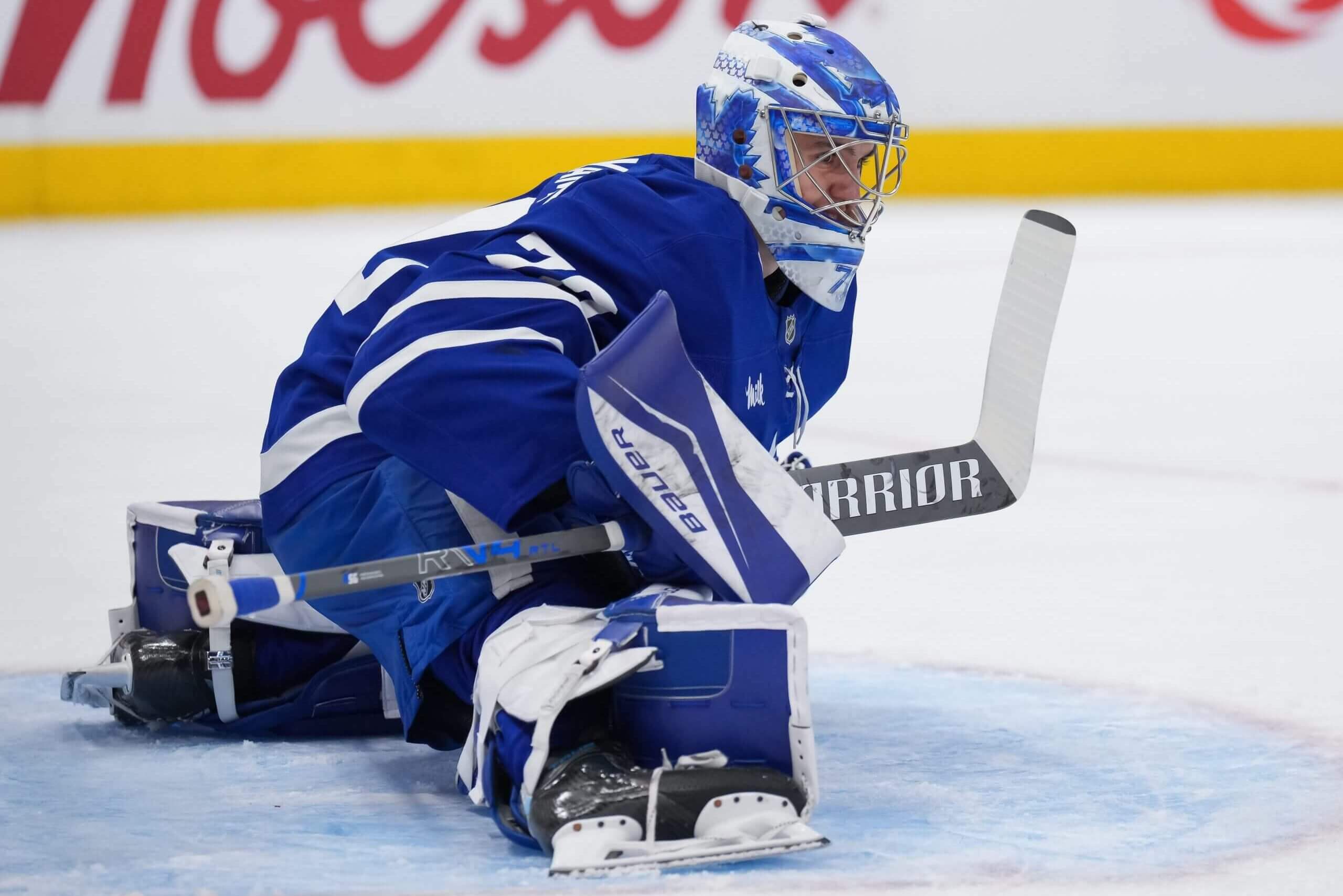
Akhtyamov reaffirmed his legitimacy again last season, backstopping the Marlies to a Calder Cup as playoffs MVP. He’s quick in his net, his positioning is sound and aggressive, and he rarely gets beat high glove or high blocker despite that small-ish frame because he has good hands and he stays on his feet long enough to make shoulder saves up high. He’s also sneaky-competitive and keeps a lot second and third chances in front of him. He’s not young anymore, but he’s now positioned as the Leafs’ No. 3; he’ll get games this year, and after another strong year in the AHL, he’s expected to take that next step and become a No. 2 or tandem goalie in the next year or two.
Photo:
Chris Tanouye / Getty Images
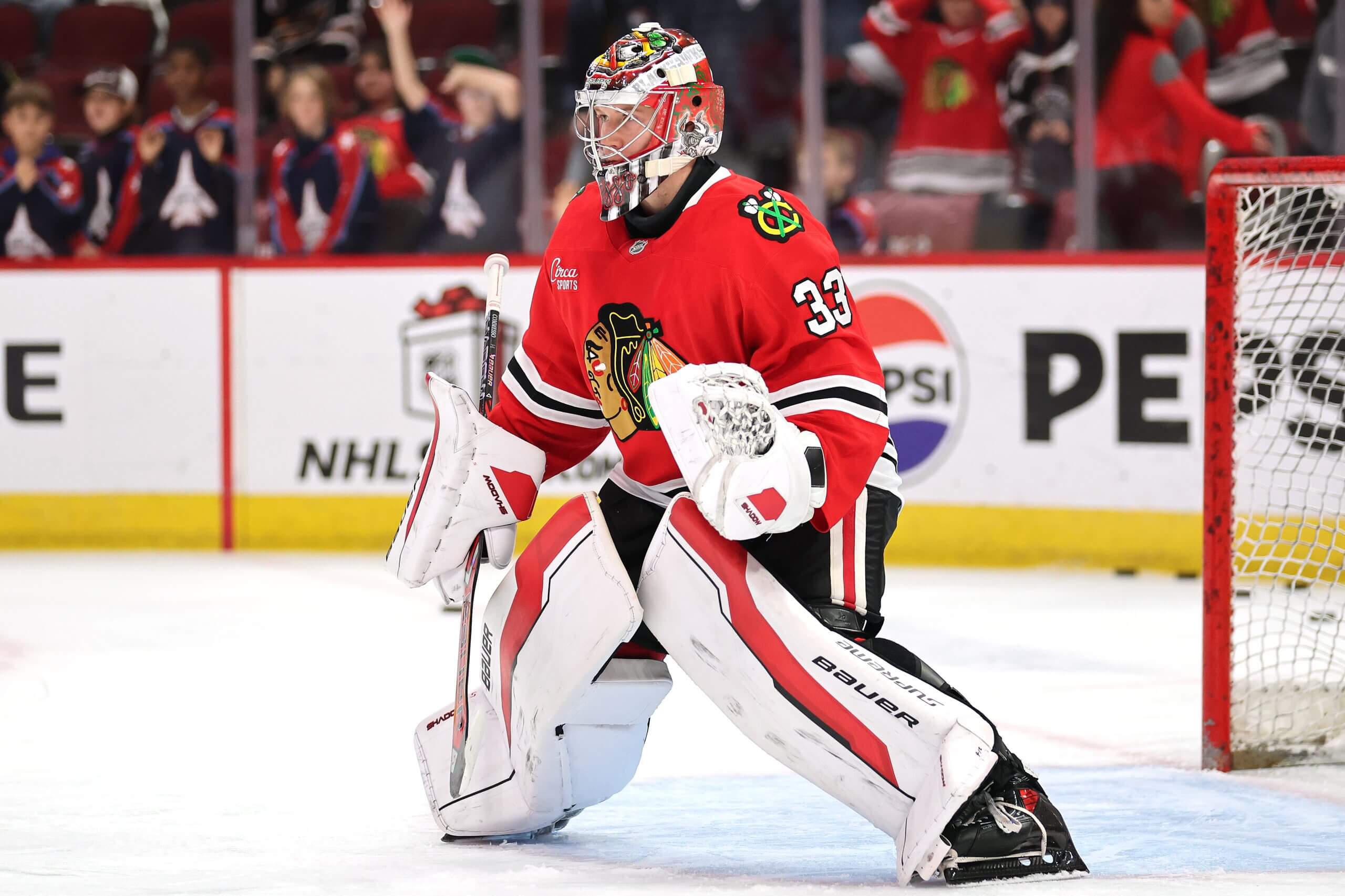
I expect Comesso to become a decent No. 2, even if he doesn’t have starter upside or 1A upside.
He played well between the AHL and NHL last season, so he’s now knocking on the door.
I see a mature makeup. He’s not big for a goalie, but he blends a studious approach to the position with sharp angles, sound technique (including good habits and post integration) and a calming, poised demeanour to keep shots in his chest, control rebounds, settle down plays and hold firm to his edges. And while he’s not a dynamic athlete, he can fall back on his athleticism when the play does break down, he’s efficient in his movements, he’s quick on his feet and he doesn’t put himself into many scrambles because of the way he reads the play. Commesso reliably makes the saves that he should and plays the same game to game. He doesn’t steal a ton of starts, and I wouldn’t say he has any A-grade tools that really pop, but there’s not a lot in his game that you can nitpick either.
Photo:
Michael Reaves / Getty Images


Jul 15, 2026
Connections: Sports Edition
Spot the pattern. Connect the terms
Find the hidden link between sports terms
Play today’s puzzle