
Farmers on alert amid cyclospora outbreak
STOUGHTON, Wis. (WKOW) — As Wisconsin’s farmers markets reach peak season, a recent Cyclospora outbreak is prompting shoppers and farmers alike to pay closer attention to food safety and where produce comes from.
Wisconsin has confirmed more than 40 cases of Cyclosporiasis since May, according to state health officials. The parasite causes symptoms including severe diarrhea, stomach cramps, nausea and fatigue, and is most commonly spread through contaminated fresh produce.
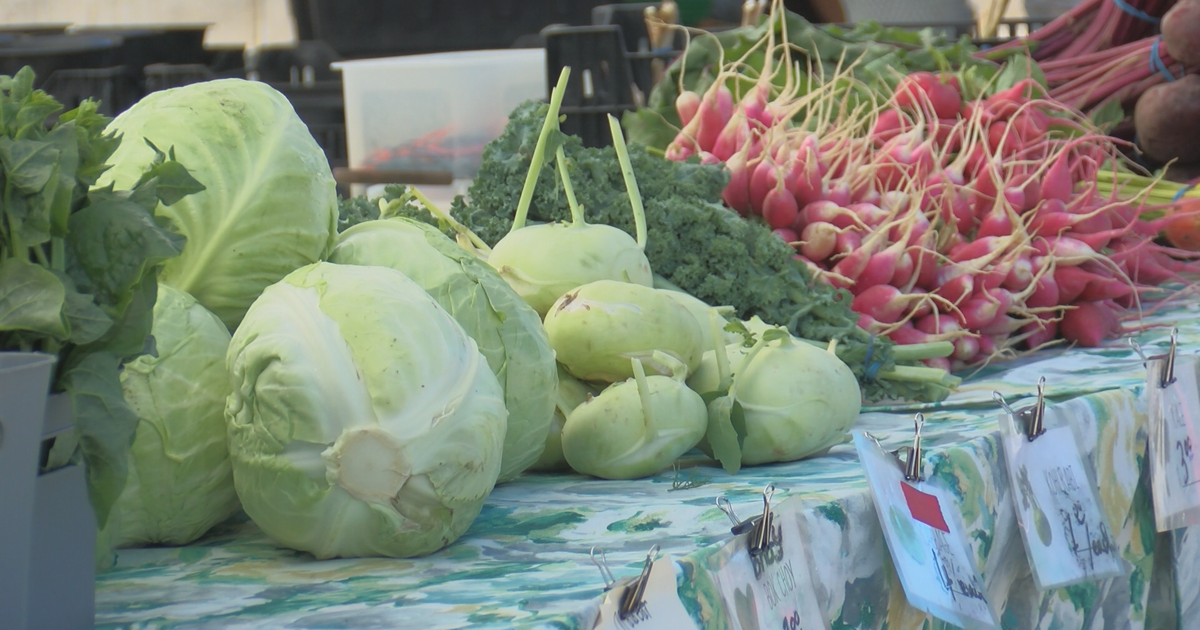
Maggie Kraft was shopping at Hilldale’s Wednesday Farmers’ Market. She said buying directly from local growers gives her greater confidence in the food she brings home.
“If I go to the big box stores, I have no idea where that food came, or how long it’s been in transit, or how it was grown. What did they spray it with,” Kraft said.
Even so, experts say no produce is completely risk-free.
“I feel bad saying this because it’s summer and everybody wants to eat fresh produce, but there isn’t really a safe way to wash it,” said Laura Knoll, a professor of medical microbiology at UW-Madison.
While the current outbreak has not been linked to produce sold by local farmers in Wisconsin, it’s still top of mind for farmers in the state.
“It’s certainly come onto our radar in a big way,” Kristen Kordet, owner of Blue Moon Community Farm in Stoughton.
She said her farm follows strict food safety protocols and is confident in the produce it sells directly to customers.
The outbreak also comes during one of the busiest times of the year for vegetable growers, as farms harvest cucumbers, zucchini, squash, basil and other summer produce.
“It’s [cyclospora] something that we know enough about to know that our protocols here at Blue Moon are very safe, and we can feel really confident, Kordett said. “But it’s a huge concern.”
Last year, the CDC scaled back its FoodNet program that tracks foodborne illnesses. The program previously tracked eight foodborne illnesses, and now only tracks two.
Cyclospora is one of the pathogens no longer tracked in the program.
“I believe part of the reason this outbreak is seeming to be worse this summer is that the CDC cuts in the CDC,” said Knoll. “Those surveillance systems are essential for us to quickly be able to figure out the source of the contamination,
When asked about the reductions, the a U.S. Department of Health and Human Services spokesperson told 27 news Cyclospora surveillance has not stopped. The agency said it continues collecting Cyclospora data through surveillance systems outside of FoodNet while working with the U.S. Food and Drug Administration and state and local health departments to identify the source of the current outbreak.
Full statement from Emily G. Hilliard, Press Secretary, U.S. Department of Health and Human Services:
“U.S. Department of Health and Human Services:
Under the leadership of Secretary Kennedy, FDA is currently investigating Cyclospora outbreaks using established epidemiologic, laboratory, and traceback tools in close coordination with CDC and state and local partners. Protecting the nation’s food supply is a core FDA responsibility, and the agency has the expertise, personnel, and resources necessary to detect, investigate, and respond to foodborne illness outbreaks and take regulatory action when warranted. Additionally, FDA investigators were not impacted by staffing changes or RIFs.
To be clear, cyclospora tracking never stopped. CDC is actively working with health departments in all 50 states to gather data.”