

A 30 foot-long, 35,000-pound whale washed up in a mudflat beneath a dock in Winthrop on Wednesday, animal protection officials said.
The whale, a “juvenile humpback,” was first located, stranded, and trapped under a dock off Washington Avenue around 12:30 p.m. on Wednesday during a high tide, according to officials for the animal rescue group Whale & Dolphin Conservation USA.
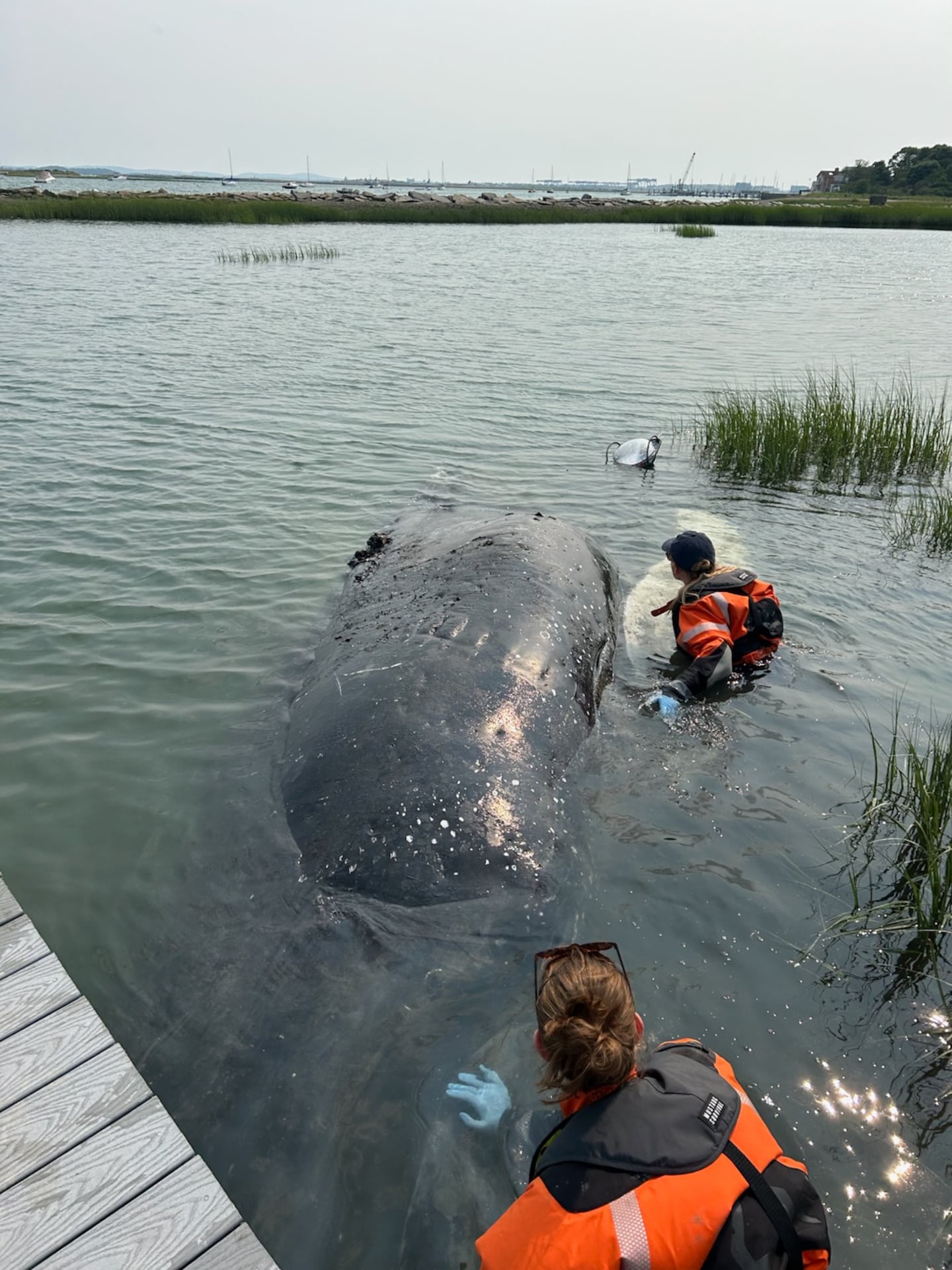 Animal stranding response crews inspect a 35,000-pound humpback whale that washed up stuck under a private dock in Winthrop on Wednesday.Whale & Dolphin Conservation USA
The agency, which monitors 300 miles of coastline including from Plymouth to Revere, responded around 5:30 p.m. to examine the animal along with officials from the Massachusetts Environmental Police and the Winthrop Harbormaster. Its cause of death has yet to be determined, officials said in a news release.
Rescue crews are continuing to work Thursday to identify a suitable place to move the whale and conduct a necropsy, or animal autopsy, said Caroline Genther, assistant stranding coordinator for WDC. Currently, the whale is stranded underneath a dock on private property, officials said.
Genther added that extraction of the whale and a necropsy are unlikely to occur for a few more days.
“It’s the height of summer … things are [especially] logistically difficult,” she said.
WDC officials said that their work has also been hampered by federal funding cuts.
“The federal funding freezes and delays in funding opportunities we have experienced in the past year do not stop whales from stranding, but they do disrupt our ability to respond,” Regina Asmutis-Silvia, the organization’s executive director, said in the release.
Wednesday’s incident marks the first large whale stranding of the year in Massachusetts, according to Genther. Last year there were no major whale beaching incidents, but in 2024 officials responded to six strandings in six months, she added.
On the whole, marine mammal strandings are increasing in the area, a trend researchers attribute to shifts in habitat and prey activity resulting from global warming.
“We’re seeing more animals close to shore and in Boston Harbor,” Genther said.
Just this week, marine rescue crews on Cape Cod responded to the largest ever mass stranding of bottle nose dolphins in the Northeast on Brewster beaches.
“We are heartbroken at the loss of this young animal,” wrote Lauren Brandkamp, WDC’s stranding coordinator. “We are currently working with federal, state, municipal, tribal liaison, and community partners to determine a course of action for this whale. The more information we can discover through internal and external examinations, the better we can advocate for policies to protect these animals and their ocean home.”
The WDC said they also reached out with condolences to the Wampanoag Tribes across southeastern Massachusetts, which consider whales to be members of their family.
Bryan Hecht can be reached at bryan.hecht@globe.com. Follow him on Instagram @bhechtjournalism.