
NEED TO KNOW
A Georgia wildlife center is caring for over 40 orphaned fawns, most of which lost their mothers in vehicle collisions
Volunteers provide intensive care while ensuring the fawns retain their natural fear of humans for successful release
The state ranks 22nd in the U.S. for animal collisions, with deer being the most common victims on roadways
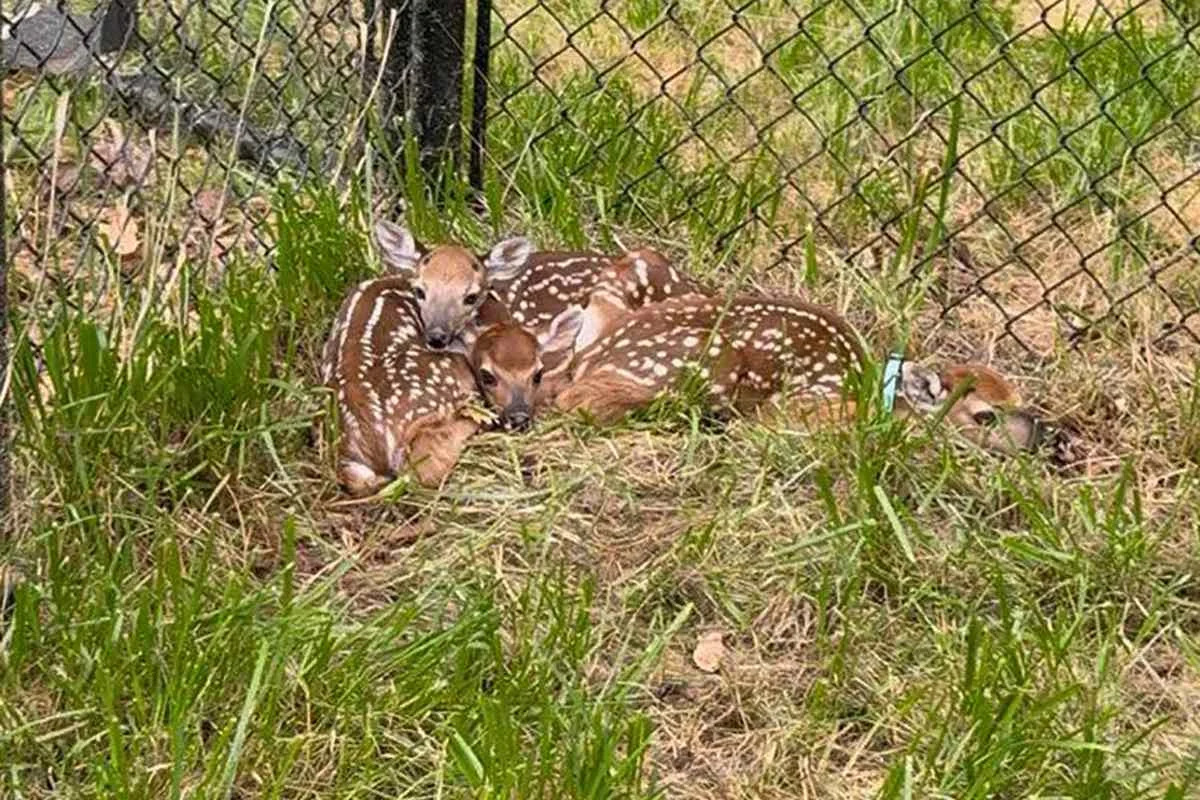
Over 40 orphaned fawns are getting a second chance at life thanks to a Georgia wildlife rehabilitation center dedicated to raising the young deer with the goal of returning them to the wild.
According to CBS News, Smithwick Station, a licensed wildlife rehabilitation facility in Canton, has taken in more than 40 juvenile deer this season alone. Most were orphaned after their mothers were killed in vehicle collisions on Georgia roadways.
“The end goal here that we’re looking at from the beginning of the season is getting these guys back to the wild,” licensed wildlife rehabilitator Sarah Paulk told the outlet in an interview published on Monday, July 13.

Two fawns one wearing a green collar and the other a pink collar with the latter licking the first
Credit: Smithwick Station/Facebook
Each day at the rescue begins before sunrise as volunteers prepare formula and feed the growing herd of young deer. “We feed, what, 120 bottles a day?” Paulk noted.
The rescue reflects a broader issue across the state. According to officials, Georgia ranks 22nd in the nation for animal collisions, with drivers facing roughly a 1-in-109 chance of hitting an animal each year. Deer account for the majority of those crashes.
Never miss a story — sign up for PEOPLE’s free daily newsletter to stay up-to-date on the best of what PEOPLE has to offer, from celebrity news to compelling human interest stories.
While motorists often witness the immediate aftermath of a collision, the consequences frequently continue after the scene is cleared. If a nursing doe is killed, her hidden fawns are often left behind with little chance of surviving without help.
Even as volunteers provide around-the-clock care, they work to prevent the animals from becoming too comfortable around people. “We have to respect that they’re not pets,” said volunteer Kimberly Steinberg. “They do belong in the wild. So you have to, I think, practice some restraint.”
Wildlife experts say deer that become habituated to humans can lose their natural fear, making them more vulnerable after release. The National Wildlife Federation (NWF) notes that deer accustomed to people face increased risks, including future vehicle collisions and hunting.
“We all want them to thrive when they’re released and not necessarily be attached to humans, which could be problematic,” added Steinberg, who first became involved with Smithwick Station after discovering a distressed fawn near her own farm. “She was running up and down here, just screaming,” she recalled.
After contacting the Georgia Department of Natural Resources (DNR), Steinberg learned that while mother deer commonly leave their fawns alone for hours while foraging, prolonged crying, especially during the heat of the day, can signal that intervention is needed. The agency referred her to Smithwick Station, where she later became a volunteer.
“And then I get to watch that sweet one grow up,” Steinberg told CBS News. “And I’m so excited to see her be released one day.”
Wildlife officials emphasize that finding a fawn alone does not necessarily mean it has been abandoned. In most cases, people should leave the animal where it is and allow up to 48 hours for its mother to return. Injured, sick or orphaned fawns found near a deceased doe should instead be reported to state wildlife officials or a licensed wildlife rehabilitator.
Read the original article on People