
Seattle-area consumers paid 4.5% more for goods and services over the past year, the second highest increase of any major metro in the country and the largest anywhere in the western United States, according to new federal data. While prices went down nationally, Washington families kept paying more, and the policies widening that gap were written by Washington Democrats.
The Bureau of Labor Statistics released its Consumer Price Index breakdown for the 12 months between June 2025 and June 2026 this week. The Seattle-Tacoma region edged out the New York City metro area by 0.4 percentage points, and only the Philadelphia-Wilmington-Camden region posted a bigger annual jump at 5.4%. The West as a whole averaged a 3.2% increase, which is below the national average of 3.5% and makes Seattle’s number look even worse by comparison.
The federal data confirms what recent studies have already documented, with the cost of living in Washington rising faster than in any other state over the past decade. Now the question is why Seattle keeps topping the wrong lists.
Gas and housing did the damage
BLS statistician David Kong told KING 5 that higher energy prices, especially gasoline, along with shelter costs drove the June-to-June increase. Energy prices in the Seattle area surged 20.7% over the year, and gasoline alone climbed roughly 24.7%.
The war in Iran pushed oil prices higher across the globe, but every American city faced that same market, and only a handful pay Washington-level prices at the pump. The Climate Commitment Act adds an estimated 50 cents or more to every gallon, the state gas tax automatically increased again on July 1, and Washington drivers still pay among the highest gas prices in the nation even as the national average has fallen below $4 a gallon. Gov. Bob Ferguson has rejected Republican calls to pause the carbon program.
Grocery carts and closets took hits too. Fruits and vegetables jumped 11.7%, apparel rose 14.7%, and recreation costs increased 9.8% over the year.
Democrats built this price tag
The inflation report reflects choices, not bad luck.
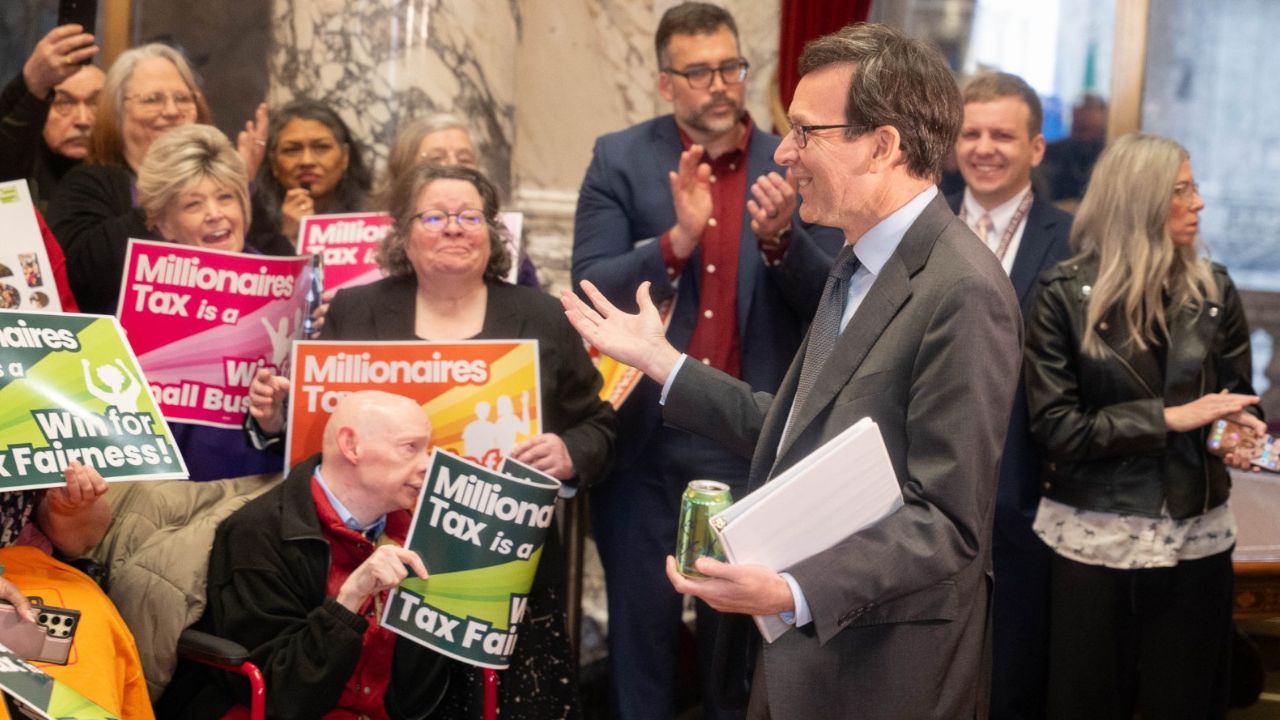
Washington Democrats passed $12 billion in new taxes last year, the largest tax increase in state history, and followed it up this spring when Ferguson signed a 9.9% income tax on high earners into law. The state’s fiscal management earned a C grade and a 31st-place ranking from Truth in Accounting last month, and Moody’s downgraded Washington’s financial outlook to negative.
Shelter costs, the other driver Kong identified, carry the Legislature’s fingerprints as well. Environmental review requirements, zoning restrictions, and repeated permit fee hikes have helped make Washington the fifth most expensive state in the nation to call home.
Residents have noticed; Washington lost more than 55,000 people to lower-cost states between 2021 and 2023. Tuesday’s numbers gave anyone still here 4.5% more reasons to consider joining them.
Listen to The Jason Rantz Show on weekday afternoons from 3 p.m. – 7 p.m. on Seattle Red on 770 AM (HD Radio 97.3 FM HD-Channel 3). Subscribe to the podcast here. Follow Jason Rantz on X, Instagram, YouTube, and Facebook.
Follow @https://twitter.com/jasonrantz
