
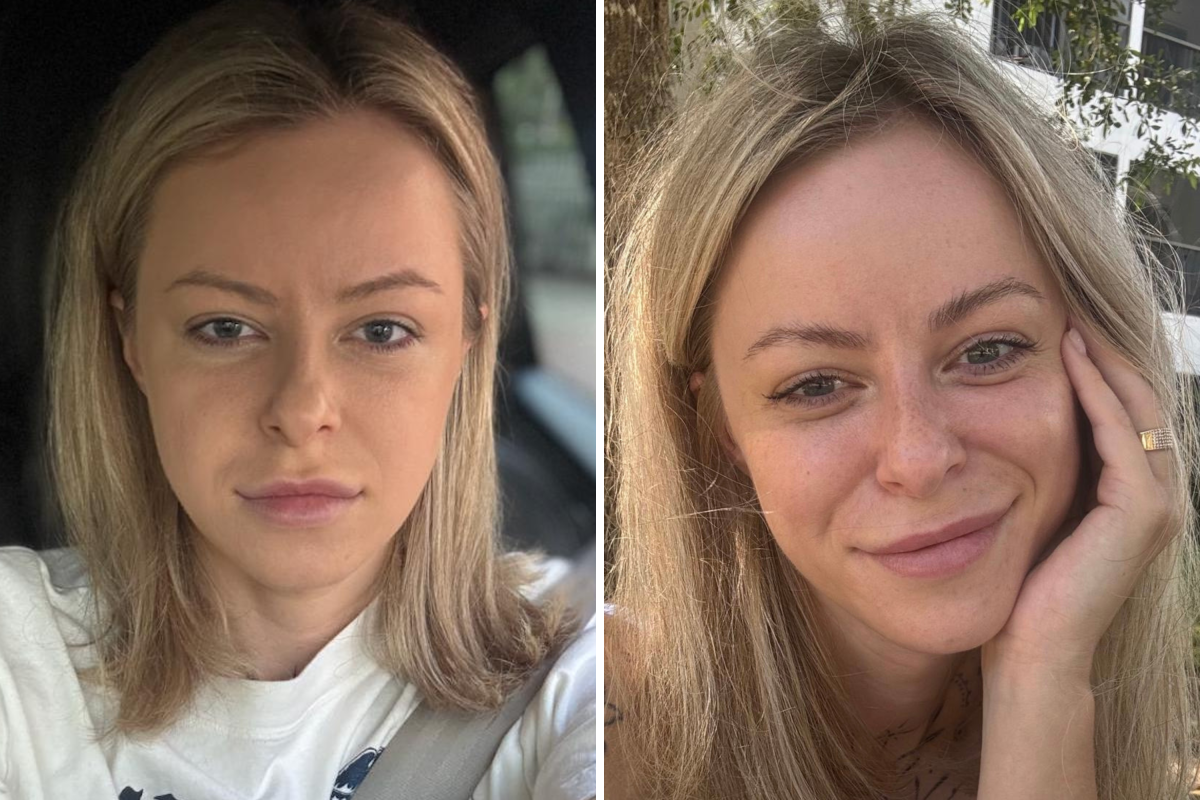
A Belarusian asylum seeker who depends on daily medication after thyroid cancer surgery was hospitalized three times in four days while in immigration custody, including one emergency visit for critically low calcium levels, according to medical records reviewed by Newsweek.
Katsiaryna Bartko, a 33-year-old cancer survivor who has been in U.S. Immigration and Customs Enforcement (ICE) custody since June 4, is being held at the Midwest Regional Reception Center in Leavenworth, Kansas, according to her partner. She has been held at the facility, which is operated by CoreCivic, since June 19.
Her partner, Dmitry Shyshov, 41, told Newsweek that Bartko was initially denied prescribed medication while in custody, an allegation disputed by immigration authorities. He said she began receiving some of her medications after Newsweek contacted CoreCivic, but alleged that she still has not received the full thyroid testing and additional laboratory work that recent results indicate she needs.
Read More on News
“Without the proper attention to this matter, she may literally die in detention without medications,” Shyshov told Newsweek in a phone interview.
A spokesperson at the Department of Homeland Security (DHS) told Newsweek that “Bartko is actively receiving proper medical care and treatment for hypothyroidism and hypocalcemia.”
Ryan Gustin, spokesperson for CoreCivic, told Newsweek that Bartko is “being regularly monitored by facility medical staff, with all known medical issues being addressed.”
The case comes as immigration advocates, attorneys and lawmakers have raised concerns about medical care in detention facilities amid the Trump administration’s expanded deportation efforts. It has increased arrests and detention capacity nationwide, while critics argue that a growing detainee population risks straining access to medical treatment for people with serious health conditions. Federal officials and detention operators have said detainees receive appropriate medical care and access to specialty services when needed.
Bartko’s medical records show she previously underwent surgery for thyroid cancer, leaving her dependent on daily medication and calcium supplements after the removal of her thyroid and related glands. The removal of her thyroid and parathyroid glands left her with permanent hypoparathyroidism and chronic hypocalcemia, requiring lifelong calcium supplements and hormone medication. Without them, her blood calcium can fall to dangerous levels.
Medical records obtained by Newsweek show Bartko was taken to Memorial Hospital Miramar in Florida on June 6 after developing low calcium levels in her blood, a condition known as hypocalcemia, which can cause muscle spasms, seizures, heart rhythm problems and other serious complications.
Bartko reported weakness, dizziness, headache and facial tingling when she arrived at the emergency department, according to records. The department physician said that she appeared to be “in acute distress” during her June 6 hospital visit, per the documents.
Doctors administered intravenous calcium and listed hypocalcemia among her diagnoses. The hospital described the visit as involving an emergency medical condition.
Documents show Bartko returned to Memorial Hospital Miramar on June 8 with right-sided abdominal and flank pain. Her calcium remained below the hospital’s reference range, and she was diagnosed with a bacterial urinary tract infection and a right ovarian cyst, according to the emergency department record.
A third hospital visit on June 9 showed Bartko’s calcium levels had risen into the hospital’s reference range after earlier intravenous calcium treatment, records show.
Hospital records also found a 13-by-12-mm pineal gland cyst on a June 6 CT scan and a 3.7-cm ovarian cyst during a June 8 evaluation. Later MRRC records noted plans for an oncology consultation and follow-up care.
Shyshov said Bartko’s thyroid cancer treatment left her dependent on medication that must be taken on schedule and that Bartko’s thyroid cancer treatment left her with permanent hypoparathyroidism, requiring the calcium supplementation and hormone replacement therapy.
“It requires a daily hormonal therapy that should be supplied by the hours,” he said, adding that her first hospitalization was caused by what he described as a hypocalcemic crisis.
Bartko entered the United States legally on an F-1 student visa in March 2022, according to a copy of her passport. DHS said she was admitted in New York on March 5, 2022, and that her student status was terminated on March 2, 2023.
She filed an asylum application on February 2, 2023, and a United States Citizenship and Immigration Services (USCIS) receipt notice says her Form I-589 asylum application was received and pending, according to immigration records. The application was filed before her student status was terminated, according to records.
Bartko’s asylum claim is based on her political activity in Belarus, according to her Form I-589 application and supporting documents reviewed by Newsweek.
She participated in the 2020 pro-democracy movement in Minsk, was involved with opposition networks and later opposed Belarus’ support for Russia’s invasion of Ukraine, Shyshov said.
A support letter from the International Charitable Fund Kalinoucy, a Belarusian democratic organization, to USCIS said she could face arrest and persecution if returned to Belarus. Shyshov also said Belarusian security services later visited her parents’ home searching for her. “She basically followed all the rules regarding the immigration law. And she filed for asylum within the first year of her legal presence on United States soil.”
Miami-Dade County records show Bartko was booked on a battery charge on May 5. DHS said local law enforcement arrested her that day and that ICE lodged an immigration detainer the following day before taking her into federal custody. The agency said Bartko “will remain in ICE custody pending removal proceedings and will receive full due process.”
Shyshov said the arrest stemmed from an argument between the couple. A court record reviewed by Newsweek shows the battery charge was resolved as “No Action,” with no conviction, on June 2. Court records also show her pretrial release conditions were terminated before ICE took custody of Bartko, which occurred two days later.
She was later held at the ICE ERO Miramar Field Office, Flagler County Jail in Florida, Shyshov said, then transferred to MRRC in Kansas on June 18 and booked there the following day.

MRRC intake records dated June 19 show staff recorded Bartko’s need for daily medication and calcium supplements and instructed that her current treatment continue until she was seen by a medical provider.
A health assessment conducted two days later documented her history of thyroid cancer surgery, low calcium levels and other complications linked to the removal of her thyroid and parathyroid glands. The facility ordered thyroid and calcium testing and requested outside specialist referrals. Documented referrals included neurology and oncology consultations.
The documents show facility staff were aware of Bartko’s medical history and ongoing treatment needs, documenting her diagnoses, medications and planned follow-up testing.
Shyshov said Bartko’s diagnosis was confirmed after she arrived at MRRC, but alleged that prescribed medications were still not administered. “The physician confirmed her diagnosis,” he said. “He prescribed the regular medication that she’s taking all the time. … However, none of those medicines was yet supplied to her.”
Records show medications were ordered multiple times during Bartko’s detention at MRRC. They also document a June 23 disagreement involving one of her medications. A facility note says Bartko refused medication at breakfast because she believed she already had it in her room. The same note says staff found medication from a previous detention center and removed it because it had not been formally authorized for her to keep.
Shyshov said that Bartko was not given her medication from June 23 through July 10 and that she was briefly given medication before it was taken away.
“There was a day when they gave her a blister with her hormones,” he said. “However, she didn’t get a chance to take it more than once, just because the next day it was withheld from her.”
MRRC records show Bartko received a thyroid test result on June 23 that fell well below the laboratory’s normal range. Records show staff planned medication changes and follow-up testing.
A follow-up calcium test was ordered but not completed, Shyshov said, adding that Bartko has since begun receiving some medications but additional laboratory testing and specialist evaluations identified in her records have not yet been completed.
Shyshov said he sought assistance from the offices of Democratic Representative Frederica Wilson and Republican Senator Ashley Moody, both of Florida. He said Wilson’s office assigned a caseworker and sent inquiries to USCIS, ICE and DHS regarding Bartko’s detention and medical care, while Moody’s office opened an active constituent case.
He also alleged that ICE officers later accused him of improperly obtaining Bartko’s medical records despite signed authorization forms permitting the release of information to him and her attorney.
CoreCivic declined to discuss Bartko’s specific medical records, citing privacy restrictions, but said its onsite medical staff provides healthcare around the clock.
“The safety, health, and well-being of the individuals entrusted to our care is our top priority,” Gustin said.
He also said that detainees have daily access to medical services, including mental-health care, and that prescribed medications are either administered by medical staff or managed by detainees themselves, depending on the medication.
DHS echoed a similar sentiment, saying ICE provides comprehensive medical care from the time a detainee enters custody, including intake screenings, health assessments, access to medical appointments and 24-hour emergency care.
“For chronic illness, detainees are referred to specialty care providers based on their individual needs and diagnoses,” a DHS spokesperson said.
“Detainees are referred for routine follow-up with specialty care providers based on provider recommendations for specific diagnoses and individual needs.”
Shyshov said Bartko is pursuing legal and humanitarian avenues for release. He said her attorney filed a motion for bond or custody redetermination on June 29, while a separate humanitarian-release request remains pending. According to Shyshov, Bartko’s bond hearing and master calendar hearing are scheduled for July 22 before the Kansas City Immigration Court.
Bartko’s attorney, Steven Goldstein, declined to comment on the case but confirmed to Newsweek that he represents her in her immigration proceedings.
Shyshov said he believes Bartko would face the bleakest of outcomes if deported to Belarus because of her medical needs and opposition activism.
“She will die in Belarus if she is deported,” he said.