
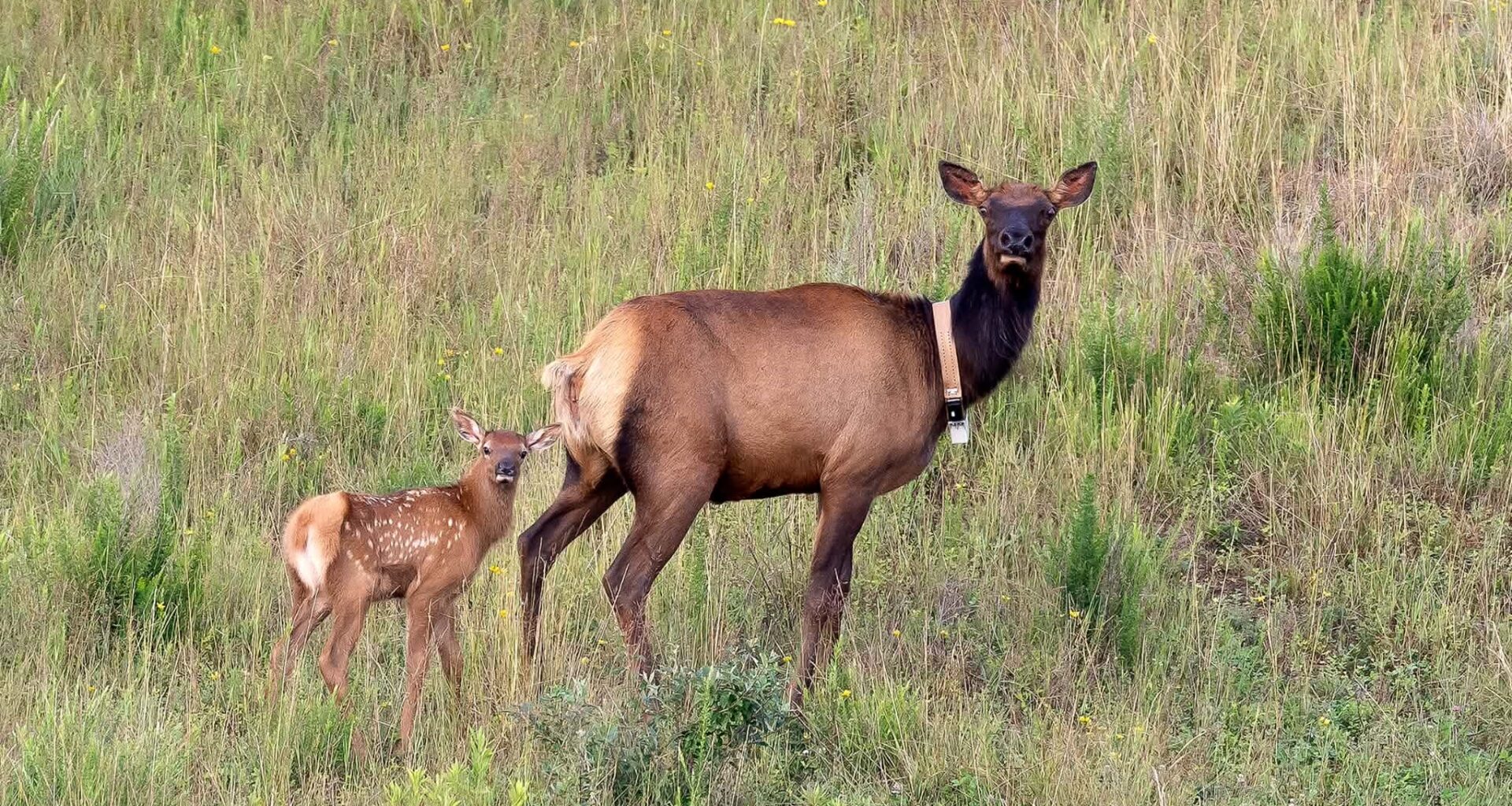
HOLDEN, W.Va. — The calving season is in full swing among the West Virginia elk herd on the Tomblin Wildlife Management Area in Logan County. However, it’s hard to know just how many are out there since elk are very different than whitetail deer in their nursery habits.
“They move off by themselves a lot of times to birth and there’s 27,000 acres here. We can watch some of that on telemetry and make some guesses, but they hide them so well it’s hard to see them even when you know where the mommy is. They seem like they hide them a lot longer than a deer does a fawn,” said DNR Elk Project Leader Randy Kelley.
Kelley said at times they’ve found cows during August who they assumed hadn’t had a calf and one will show up just because she kept it so well hidden.
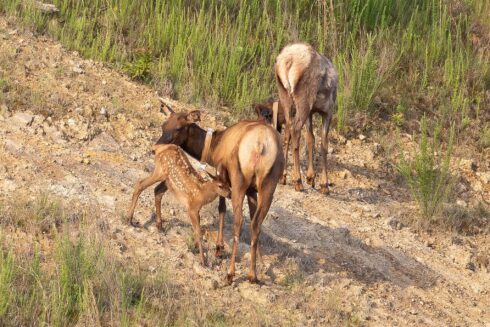 PHOTO: Mark Bias
The growth of the West Virginia elk herd has also gotten to the point it’s hard to know all of the branches of the tree, but Kelley and his team do their best to track as many as they can. Most of the adults wear GPS tracking collars to give the agency a chance to track movements and understand their habits. Each winter, once breeding season is over, they’ll add new collars to the younger calves and check their health.
The herd at this point is relying on self growth to increase numbers. The program returned elk to West Virginia for the first time in more than 100 years in 2016. The first elk reintroduced came from the U.S. Forest Service’s Land Between the Lakes National Recreation Area in western Kentucky. Since then, the state received two more shipments of elk transfers. One was from Arizona and another from the LBL facility a second time. Due to the prevalence of CWD and other wildlife diseases, transfers of cervid animals from state to state has fallen out of favor. It seems unlikely the practice will resume unless researchers can develop a live test for CWD. That research is progressing, but it’s unknown how long it will take.
Until then, West Virginia’s elk herd continues its slow growth. One thing which Kelley and other observers have been able to document is improving genetics. Elk from those two original source herds and those born in West Virginia are all breeding. Photographer Mark Bias, who spends a lot of time on the Tomblin WMA photographing elk was able to observe elk cows with all three colors of ear tags with calves this spring. Orange tags are Arizona elk, yellow tags are from the Land Between the Lakes facility, and black tags are those born in West Virginia.
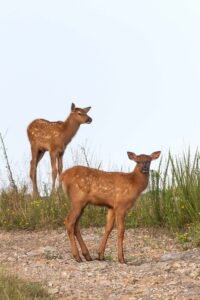 PHOTO: Mark Bias
During a recent conversation with Kelley on West Virginia Outdoors, I quizzed him about the amount of time an elk cow can be productive and reliable for calving.
“We’ve documented some yearlings dropping calves, but it’s not common. Kentucky also documented that early on in their project. Eight, nine, or ten years is probably the peak of having calves. But we had a 14-year old have a calf, but the literature says after eight, nine, or ten yeas they began to go downhill,” Kelley explained.
Kelley said they are also starting to observe more roaming by the elk as their numbers grow. Some like to find their own territory. He’s able to document the movement with the GPS tracking collars. Kelley said one calf ventured in the spring into Lincoln County around Hart’s Creek on some private land.
“I don’t know if the man and woman who own a small farm there ever knew she was there. But she was on the ridge in a pasture area. We didn’t talk to them, but we kept an eye on here. She was probably there calving, but eventually she came back onto the WMA,” he said.
The movement is part of the process which the agency envisioned when the program was launched. However, the reintroduction of elk in the eastern United States has shown as long as there is adequate food and winters aren’t so harsh that elk are forced to migrate, they are content to stay in a relatively small area. Kentucky’s elk herd is massive, but hasn’t ventured out of the coalfield region where they were reintroduced in the late 80’s and early 90’s.
Kelley and his team are finding where the West Virginia elk were introduced on the Tomblin WMA tends to be the home range most still cling to most of the year.