
2026-07-22T08:02:54+00:00
font
Enable Reading Mode
A-
A
A+
Shafaq
News- Washington
Lebanese
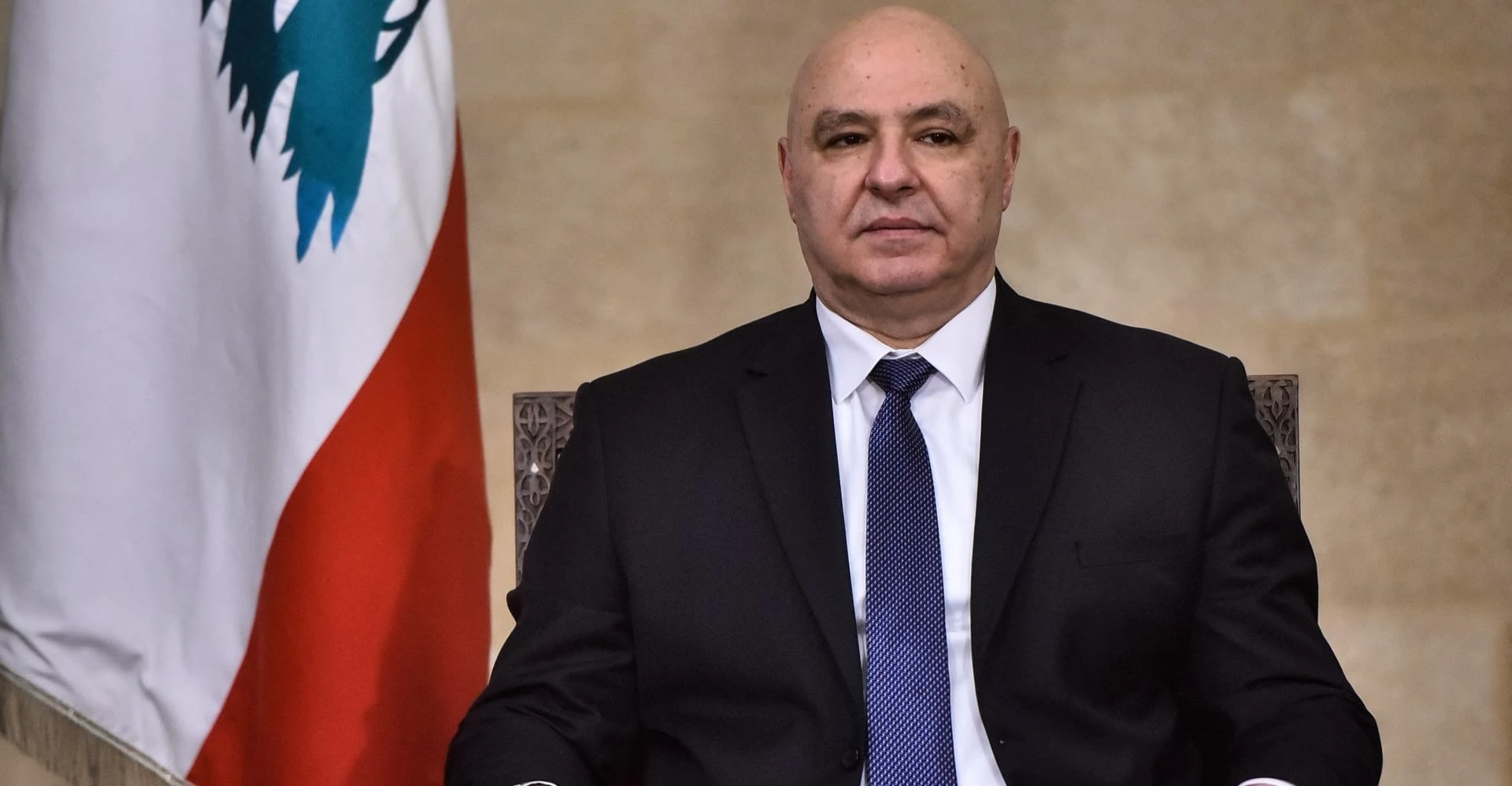
President Joseph Aoun on Wednesday argued that Hezbollah’s disarmament is
possible if there is genuine political will, linking the move to the withdrawal
of Israeli forces from Lebanese territory, the Lebanese army’s full control
over the country, and a state-led reconstruction effort.
Speaking
during a dinner hosted in his honor by Lebanon’s ambassador to Washington, Nada
Hamadeh Moawad, as part of his visit to the United States, Aoun stressed that
the Lebanese army must assume full control over all Lebanese territory, while
reconstruction efforts should remain solely under state authority and free from
external interference.
The
Lebanese president also described Lebanon’s model of coexistence and pluralism
as significant not only for the country but also for the wider Middle East,
noting that a successful Lebanese experience could offer a message of hope for
the region and beyond.
السفيرة حمادة معوض اقامت حفل عشاء تكريماً للرئيس عون والوفد اللبناني المرافق
حضره عدد من اعضاء الكونغرس والمسؤولين في الادارة الاميركية.- رئيس الجمهورية: لا يمكن للبنان أن يكون آمناً ولا موحداً إلا حين يكون دولة واحدة بجيش واحد يحمي جميع اللبنانيين من دون تمييز.- الرئيس عون:… pic.twitter.com/cqWfi82mZl
— Lebanese Presidency (@LBpresidency) July 22, 2026
On
Tuesday, Aoun met US President Donald Trump at the White House, where Washington
pledged to help address Lebanon’s challenges and expand its assistance to
Beirut. Trump also indicated his willingness to engage with Hezbollah, “if the
Lebanese president wants me to talk to the group.”
Aoun
began a several-day visit to the United States, during which he met with
members of Congress and US administration officials. He previously discussed
with US Secretary of State Marco Rubio the implementation of the trilateral
framework agreement between the United States, Lebanon, and Israel, as well as
issues related to the pilot phase of the proposed zone in southern Lebanon and
Hezbollah’s disarmament.
Read more: South Lebanon framework: What we know so far