
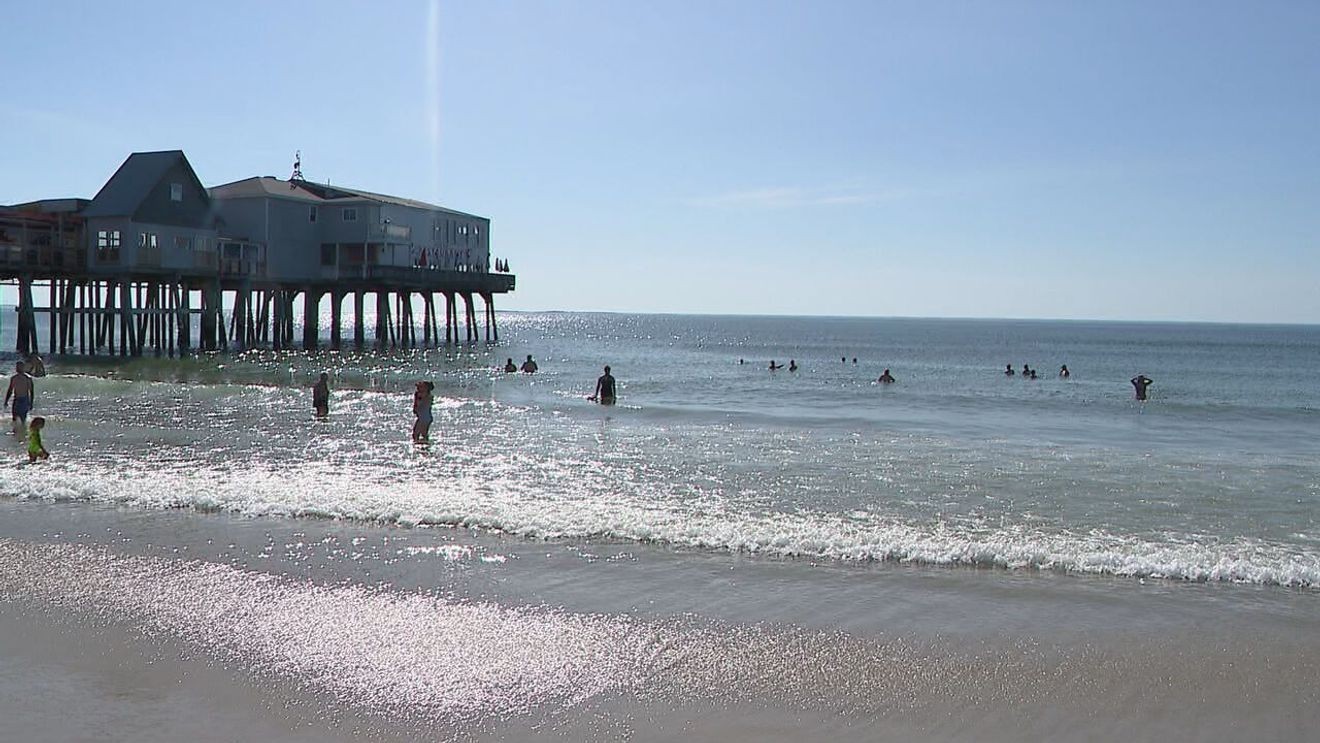
After the extreme heat we had to start July, ocean water temperatures were well above normal.
However, something has changed over the past week or so, and ocean water temperatures along Maine’s coastline are now running below average.
So, what happened?
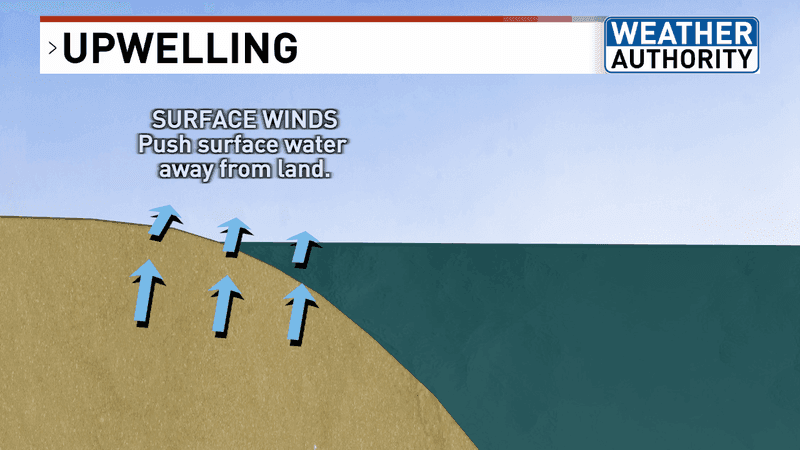
Upwelling wind direction (WGME).
It’s called upwelling.
When winds blow parallel to the coastline, either from the southwest or the northeast, they push the surface water away from shore.
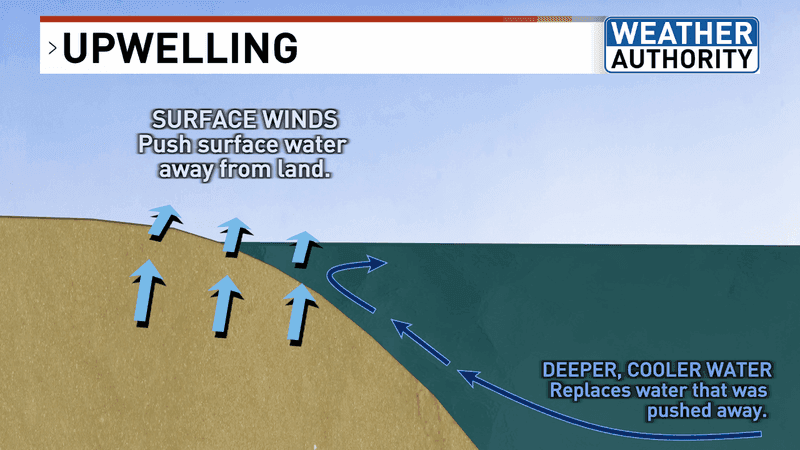
Upwelling water movement (WGME).
As the surface water is pushed away from the coastline, colder, denser water from deeper in the Gulf of Maine wells up to replace it, causing ocean temperatures near the shore to drop quickly.
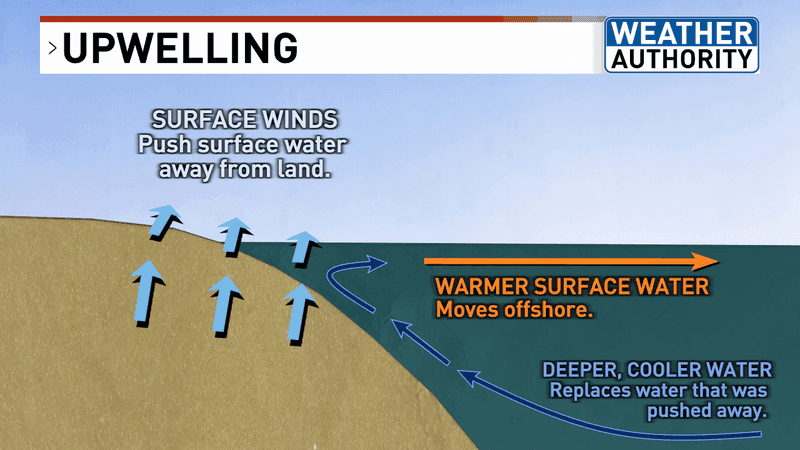
Warm water push offshore due to upwelling (WGME).
As a result, the warmer surface water is pushed farther out to sea.
After Maine’s heat wave at the start of the month and several days with highs above 90 degrees, sea surface temperatures climbed well above normal.
But that warm water was confined to the surface. Once it was pushed offshore, colder water was able to rise to the surface, leading to the sharp cooldown we’ve seen along the coastline.
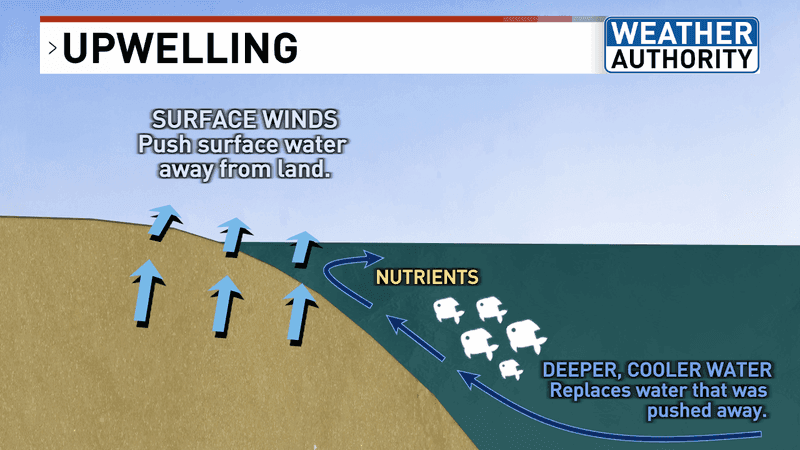
Shift in nutrients due to upwelling (WGME).
This colder water is packed full of nutrients, causing marine life to flock to upwelling zones – making upwelled conditions a great time for fishing.
These nutrients fuel the food chain, attracting everything from plankton and baitfish to larger game fish.
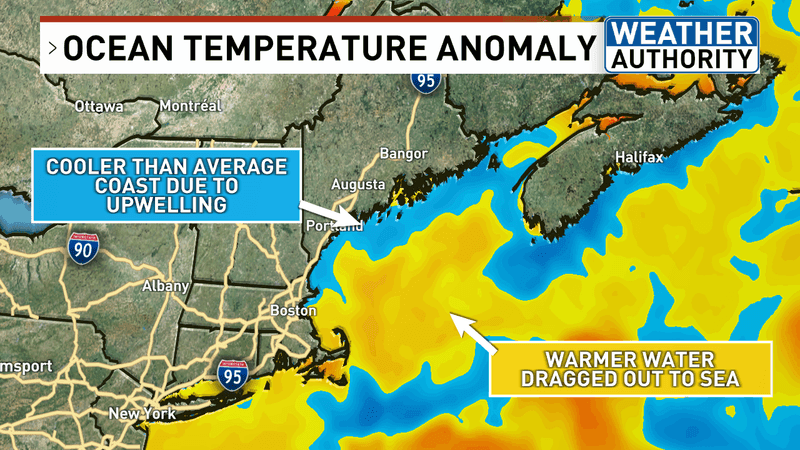
Current ocean temperature anomaly (WGME).
Sea surface temperature anomalies show cooler-than-average water currently hugging Maine’s coastline, while warmer-than-average waters remain farther offshore.
The Gulf Stream also plays a role in this pattern. During the summer months, the current can become more meandering, allowing warm water to break apart and spread northward into the Gulf of Maine. This helps maintain those warmer ocean temperatures offshore, while upwelling keeps nearshore waters much cooler.