
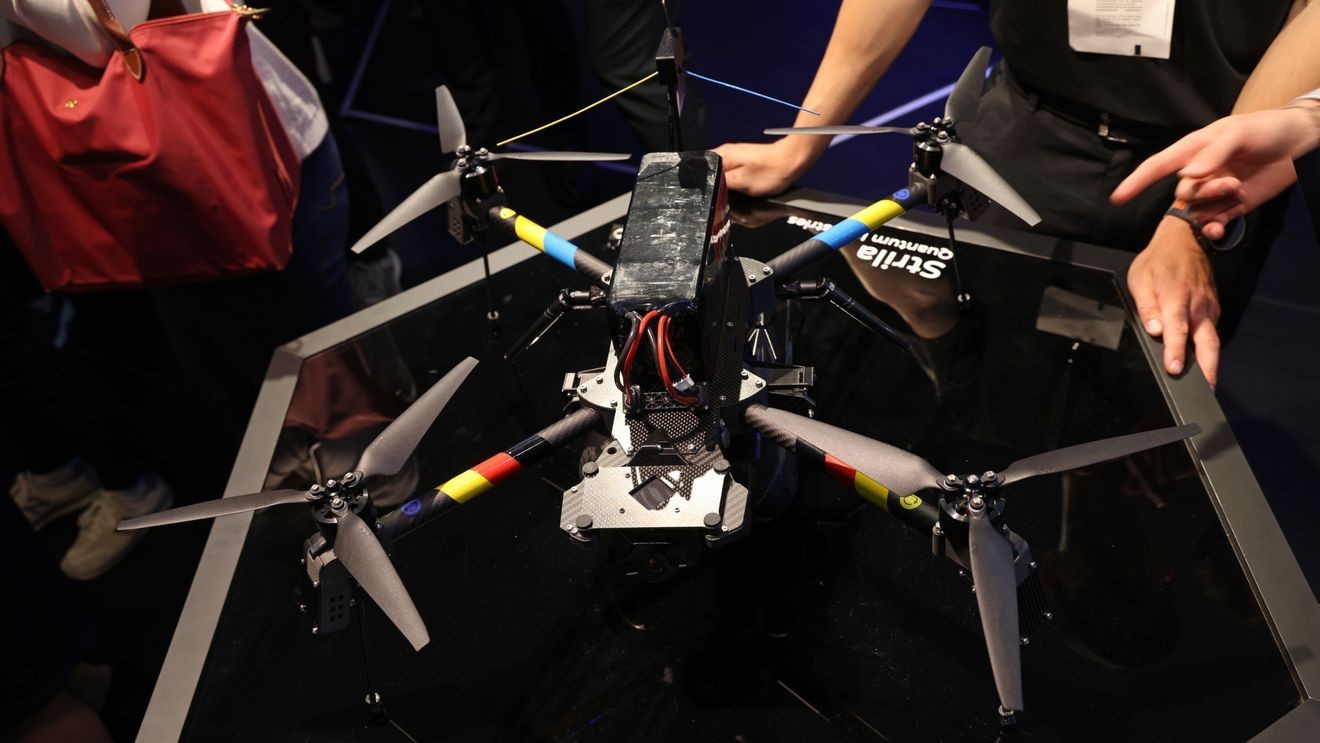
WASHINGTON (TNND) — Drones have become one of the defining technologies of modern warfare, and a growing number of lawmakers and military leaders say the United States must dramatically increase its ability to build them.
The conversation has intensified as conflicts in Ukraine and the Middle East have demonstrated how relatively inexpensive drones can destroy tanks, ships and other military equipment worth millions of dollars. Those battlefield lessons are now shaping how the Pentagon—and Congress—are thinking about America’s future military readiness.
Is the U.S. falling behind?
The answer depends on how you measure it.
The U.S. continues to operate some of the world’s most sophisticated military drone systems, including aircraft capable of long-range surveillance and precision strikes.
But defense officials increasingly argue that future conflicts won’t be won by a handful of advanced aircraft alone. Instead, they say success may depend on the ability to rapidly produce thousands of low-cost drones that can overwhelm enemy defenses, gather intelligence and conduct precision attacks.
Ukraine has become a real-world testing ground for that strategy. Both Ukrainian and Russian forces now deploy large numbers of inexpensive first-person-view (FPV) drones and other unmanned systems for reconnaissance and attacks. The conflict has shown how commercially available technology can be adapted for military use at a fraction of the cost of traditional weapons.
In response, Congress has been urging the Department of Defense to accelerate drone procurement, expand the use of artificial intelligence in autonomous systems and strengthen America’s domestic manufacturing capacity.
Why is China part of the conversation?
A major concern among lawmakers is China’s dominance in the commercial drone industry.
Chinese manufacturer DJI remains the world’s largest commercial drone company and controls a significant share of both the U.S. and global commercial drone markets. Defense experts say that concentration creates potential supply chain vulnerabilities and raises national security concerns if the United States remains dependent on foreign-made drones or key components.
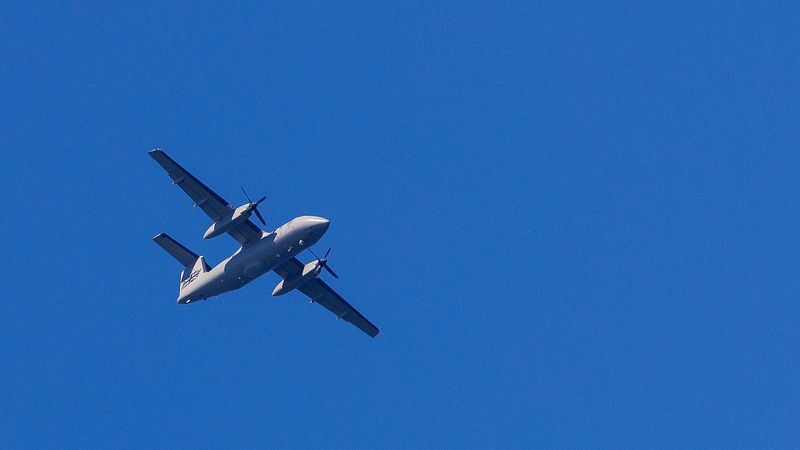
AT SEA, ENGLAND – APRIL 27: A UK military drone passes overhead as an inflatable ‘small boat’ carrying migrants crosses the channel after leaving northern France on April 27, 2026 in Dover, England. Last week the UK and France signed a £662 million, three-year deal to curb small boat crossings, featuring a first-of-its-kind £160 million “results-based” payment conditional on a reduction in arrivals. The agreement funds a 42% increase in French coastal personnel, a new removal centre in Dunkirk, and advanced surveillance technology. While designed to disrupt smuggling gangs and secure beaches with riot-trained officers, early reports show smugglers have already begun shifting launch sites further south to bypass the intensified patrols. (Photo by Dan Kitwood/Getty Images)
Those concerns have prompted lawmakers to push policies aimed at expanding American drone manufacturers and reducing reliance on overseas suppliers.
The military is adapting
The Pentagon and other federal agencies have already begun incorporating lessons from recent conflicts.
The U.S. Marine Corps recently established a new Robotics Integration Group and Counter-Drone Team within its Training and Education Command. The organization is designed to help Marines train with unmanned systems while also preparing to defend against increasingly sophisticated drone threats.
Military leaders say the move reflects the growing importance of drones in future conflicts, where unmanned aircraft are expected to play a central role alongside traditional forces.
Drones are changing everyday life, too
The technology is also becoming more common outside the battlefield.
Today, drones are used across the United States for infrastructure inspections, agriculture, emergency response, search-and-rescue missions, mapping and commercial photography. Companies continue to explore their use for package delivery and other commercial applications.
But as drone use expands, so do security concerns.
Federal authorities recently announced they seized more than 700 unauthorized drones near host cities during the 2026 FIFA World Cup. The operation involved the FBI, Transportation Security Administration, Federal Aviation Administration and other agencies working to protect restricted airspace around major sporting venues.
Officials say unauthorized drones can interfere with emergency operations, create aviation hazards and pose potential security risks during large public events.
Military leaders and lawmakers broadly agree that drones are no longer a niche technology—they are becoming a cornerstone of both national defense and civilian life.
While the U.S. remains a global leader in advanced military capabilities, many defense experts argue it must dramatically expand domestic drone production, strengthen supply chains and adapt more quickly to the rapidly changing nature of modern warfare if it hopes to maintain its competitive edge.