
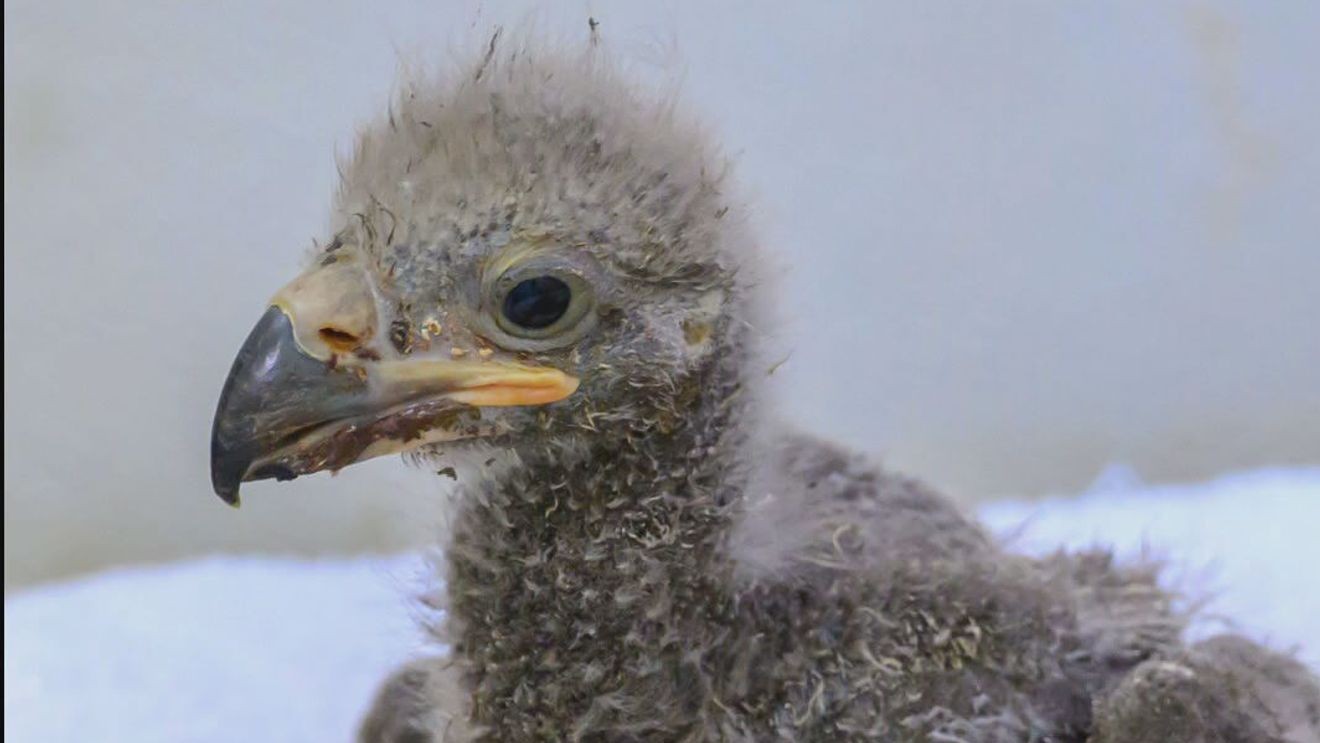
The bald eagle is not only majestic – it’s powerful. Yet, sometimes even an aerial predator needs a helping hand.
PHOTOS: Bald eagle chicks rescued, rehabilitated
Dr. Marcie Logsdon learned that firsthand in April when the Bonneville Power Authority called to say they had an eagle nest on a power structure that was posing a fire and power outage risk.
“It looked like it was a higher and higher likelihood that something bad was going to happen if that nest was left in place,” said Dr. Logsdon.
Two bald eagle chicks were in the nest – one just days old, the other trying to hatch.
Dr. Logsdon was tasked with the emergency removal and care of the chicks.
Once safely removed from the power structure, the chicks were taken to Washington State University’s Veterinary Teaching Hospital, where one chick was placed in an incubator while the other worked to hatch.
“They would actually talk to each other even though the one was in the egg,” said Dr. Logsdon. “So, if the one chick started vocalizing, we would hear the egg actually start peeping and talking back. It was really, really crazy.”
But the chick attempting to hatch became distressed and got stuck.
Dr. Logsdon intervened to save the chick, meticulously helping it out of the egg.
From there, the chicks had to learn to eat.
Veterinarians fed the chicks small bits of meat while dressed in camouflage to keep the chicks from imprinting on humans.
They even got an eagle puppet to get the chicks used to the iconic white head and yellow beak of the American bald eagle.
“Their growth rates were off the charts,” said Dr. Logsdon. “They were eating us out of house and home, but in a good way.”
The next step was getting them into the wild, so they identified a foster nest in Wenatchee.
Leavenworth area arborist Robbie Brown climbed the tree and hoisted the chicks into the nest joining one eagle chick that was already there.
From there, it was all on the eagles to survive.
“By the next morning, the same photographer that had the pictures up – that let us know about the nest – got pictures of the parents feeding all three babies.”
The chicks and their new sibling are more than 12 weeks old and are thriving.
“There are those cases and those stories that come through that are going to be top five for a lifetime,” said Dr. Logsdon. “This was definitely one of those.”