
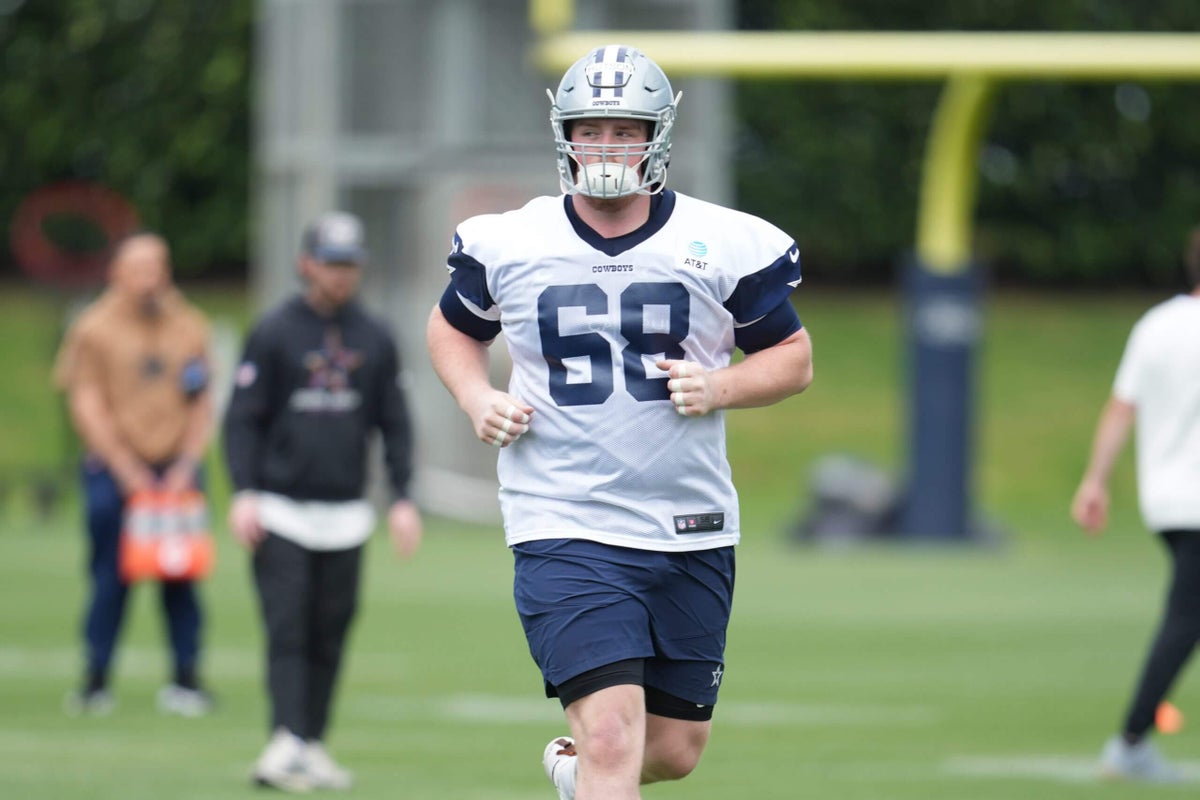
Texas could suit up an offensive lineman who attended NFL rookie minicamps after a judge ruled for Cole Hutson in his challenge of the NCAA’s new eligibility rules.
Hutson filed a lawsuit in Travis County, home of the University of Texas, last week trying to secure a fifth year of eligibility.
Texas coach Steve Sarkisian indicated at SEC media days on Thursday in Tampa, Fla., that if Hutson can play college football, the Longhorns would likely welcome him back if a judge clears the way.
“If it ultimately all goes through, we’re getting a veteran player, right?” Sarkisian said. “At the end of the day, there’s nothing like having an experienced player on your team, in your locker room, in the offensive line room. What does the future hold? I don’t know. I haven’t seen Cole. It’s been seven months since the last time we played. So there’s a lot that we have to kind of sort through and unpack. But if we’re fortunate enough to have him back, it’d be great.”
Hutson, who went undrafted in April and took part in Browns and Cowboys minicamp, is the first known football player to challenge the NCAA’s recently adopted age-based eligibility rule. He played in 48 games over four seasons at Texas, starting 23.
A source briefed on the ruling confirmed a judge has granted Hutson a temporary restraining order, which would allow Hutson to work out with the team, though this is a downtime in college football with preseason practices a few weeks away.
Attempts to reach Hutson’s attorney for comment were unsuccessful.
The next step is a hearing for a temporary injunction. If granted, the injunction could allow Hutson to continue his college playing career while the case proceeds through the court. The playbook Hutson is following has become the standard in all types of legal challenges to NCAA eligibility rules.
A judge’s ruling in Hutson’s favor for the TRO doesn’t guarantee he’ll also receive an injunction, but it can be viewed as a positive sign.
The NCAA in June changed its eligibility rules to an age-based model, which establishes a five-year window for all athletes to compete in full seasons, eliminating almost all waiver exceptions and redshirting. The change goes into effect in August and does not cover college athletes whose eligibility ran out at the end of the 2025-26 school year.
Within 24 hours, lawsuits were filed challenging the implementation of the new standard on behalf of athletes in the Class of 2022, saying they were unfairly denied a fifth year of eligibility.
A judge in Ohio has already granted a preliminary injunction to 15 basketball players who were named in the initial lawsuit. The ruling could pave the way for their return to college ball next season, but the NCAA is appealing.
“The effect of this ruling will be to take away valuable participation opportunities from student-athletes who are eligible to compete, in favor of those who have already received exactly the number of seasons of competition they expected,” the NCAA said in a statement about the Ohio ruling.
The Ohio judge also ruled that the players should be allowed to enter the transfer portal to have the best opportunity to find a place to play this season.
A similar case has been filed in Tennessee, another is pending in Georgia and another is expected to be filed soon in North Carolina, said plaintiff’s attorney Darren Heitner.
Heitner said that while basketball players have been prioritized so far, he is now hearing from “tons of football players” who could try to seek a similar path back to playing in college.
Despite the legal challenges, the NCAA said in a statement Thursday it has no plans to modify the new rule to include Class of 2022 athletes whose eligibility expired.