
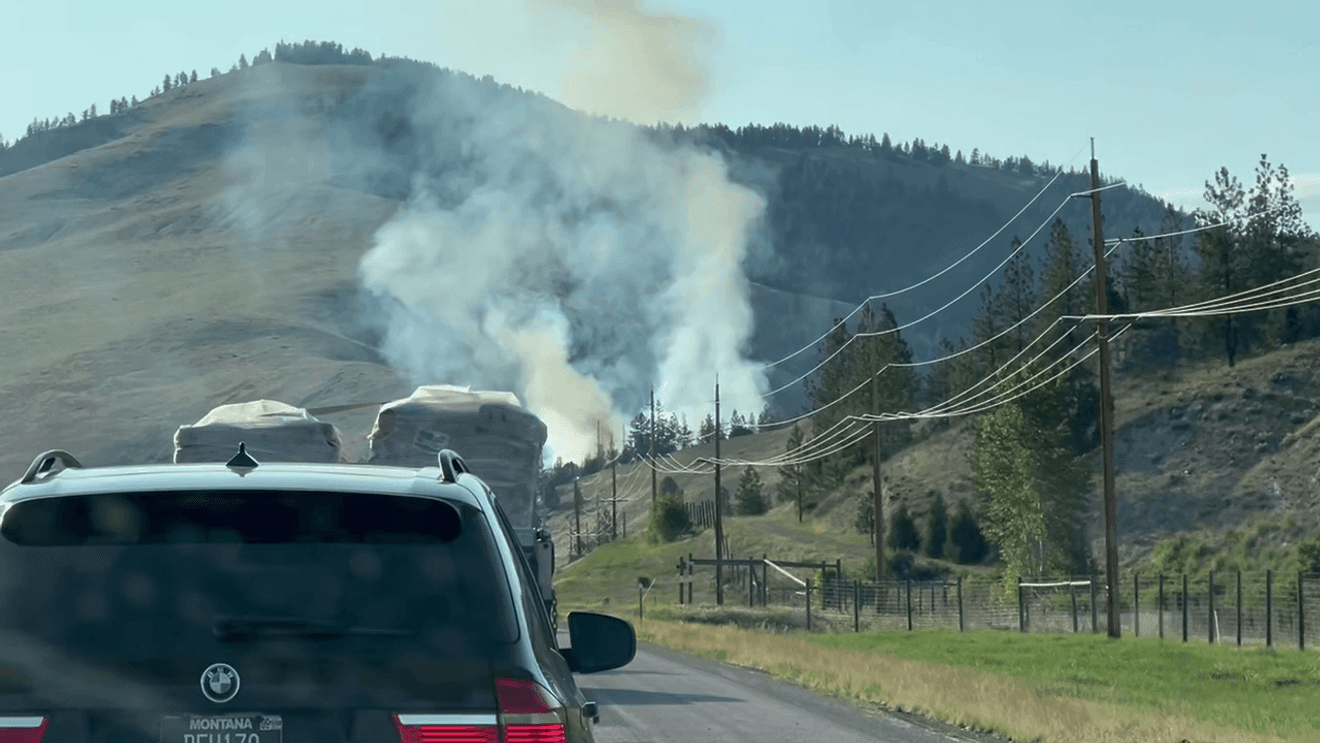
BOZEMAN, Mont. — The smell of smoke and hazy skies has become a familiar sight in Bozeman summers, raising concerns about air quality.
Wildfire smoke contains tiny particles known as Particulate Matter 2.5 (PM2.5) which can travel deep into the lungs and even enter the bloodstream, and for some Montanans, the effects are more than just uncomfortable.
When you breathe in wildfire smoke it can cause an inflammatory response and that can affect a lot of different parts of your body you can it can also trigger asthma attacks or worse in COPD condition it can cause complications for people with heart and lung disease,” said Kerri Mueller, Missoula Public Health Air Quality Specialist.
Mueller and I spoke about why wildfires smoke is different from other air pollutions.
“The main reason why is because when we breathe in that smoke there are such small particles that they don’t get caught in our upper respiratory system they actually go deeper into our lungs and once they’re in our lungs they can bypass into our bloodstream and affect the rest of our body,” said Mueller.
The symptoms folks should watch out for when exposed include coughing, irritated eyes, sore throats, headaches, and difficulty breathing.
” But on top of that there’s some longer-term effects to exposure to wildfire smoke in the long term it can reduce your lung capacity it can impact your cognitive function and can cause longer term complications for those that have asthma and COPD heart or lung disease and it can put you at risk for cardiovascular complications and stroke and can even not lead to hospitalization,” said Mueller.
Experts recommend keeping an eye on local air quality reports throughout the day.
When smoke levels rise, spend more time indoors, people should reduce strenuous outdoor activity and, keep windows and doors closed.
“That looks like either installing or putting a portable HEPA air cleaner in your home. And a HEPA air cleaner specifically is a good tool for wildfire smoke because it can filter out particles that are 0.3 or filter out particles down to 0.3 microns in size,” explained Mueller. “Using a MERV 13 filter furnace filter attached to a box fan is also a great way to filter out smoke from your home.”
If you have to be outside for work or recreation, health officials recommend wearing a properly fitted n-95 respirator to filter out harmful smoke particles and taking frequent breaks.
While the smoke may be temporary, health officials say repeated exposure can have lasting impacts, so it’s important to take precautions.