
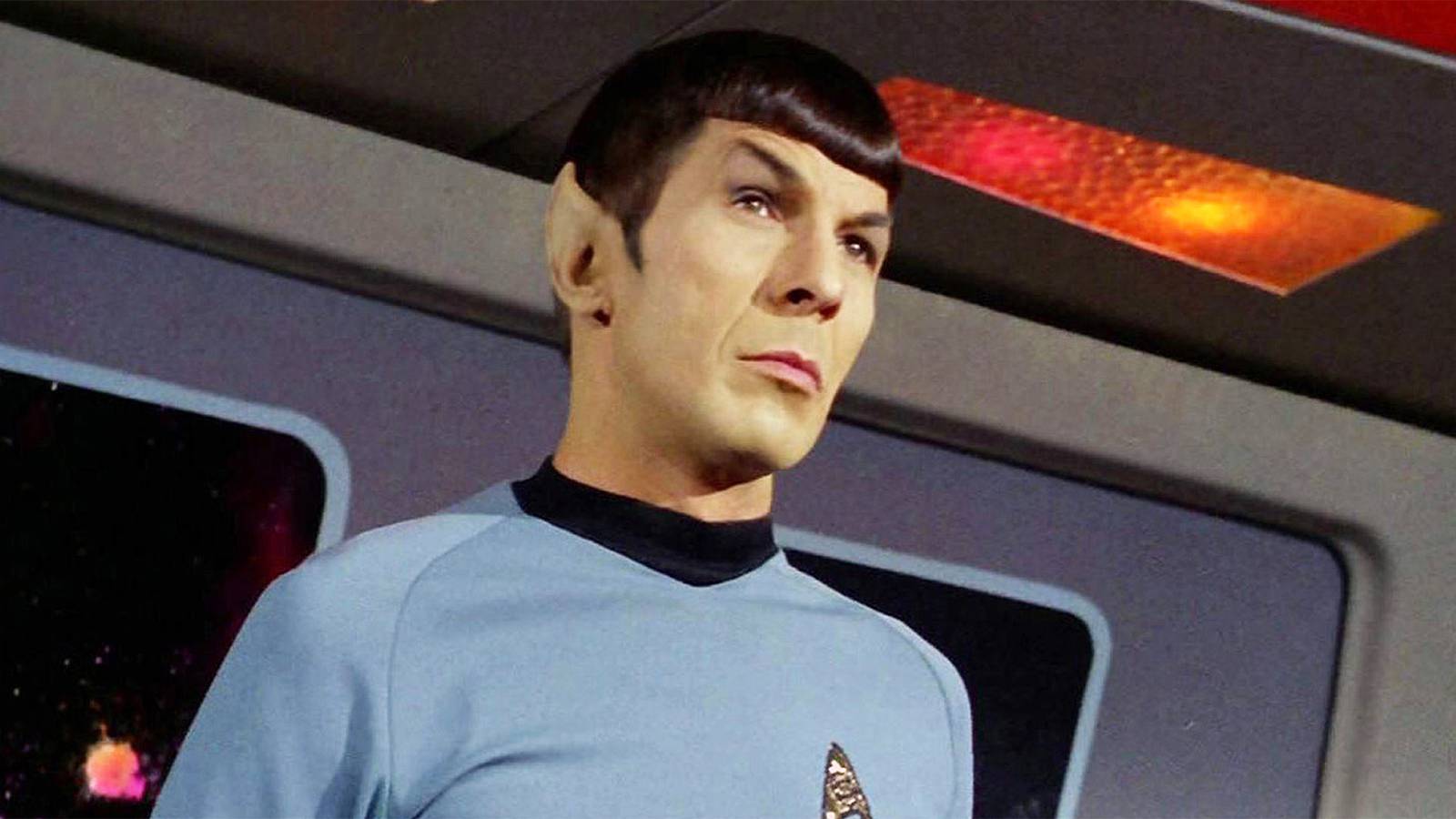
After 60 years of pop culture notoriety, it’s safe to say practically everyone knows about the friendship between James T. Kirk (William Shatner) and Spock (Leonard Nimoy). The Enterprise captain and his first officer’s effortless, abiding interplay actively demonstrates one of Star Trek‘s guiding principles: empathetic trust is the skeleton key to forging profound bonds between disparate species. The duo’s foolproof chemistry has transcended genre barriers and birthed the franchise’s go-to dynamic of unconventional, acutely affecting relationships.
This touchstone powers Star Trek II: The Wrath of Khan with all the efficiency of a functional warp core. Widely considered the best Trek feature film, the magnificent sequel to the more cerebral Star Trek: The Motion Picture roots its crowd-pleasing space-action spectacle in stakes and character follow-through. The founding cast of The Original Series and the all-timer villain that is Khan Noonien Singh (Ricardo Montalbán) all contribute to the movie’s beating heart, but the resonance of Kirk and Spock’s final exchange summarizes their dynamic’s — and Trek’s — incomparable staying power.
Spock’s Last Words in ‘Star Trek: The Wrath of Khan’ Emphasize His Emotions
As Spock lies dying from radiation during Wrath of Khan’s bittersweet finale, barely able to draw breath, Trek’s first child of two worlds — who actively suppresses his human drives in favor of his Vulcan side — both reaffirms logic and embraces vulnerable emotion. He encourages Kirk not to mourn him (logic), then forces out a ragged declaration (emotion): “I have been, and always shall be, your friend.” Screenwriter Jack B. Sowards’ multidimensional callback reiterates the movie’s core framing and 15-year context surrounding that theme. Spock describes Kirk as “my captain and my friend” in the episode “Amok Time,” and expresses a similar sentiment earlier in Wrath of Khan. “You are my superior officer,” he says. “You are also my friend. I have been, and always shall be, yours.”
Collider Exclusive · Sci-Fi Personality Quiz
Which Sci-Fi Hero Are You Most Like?
Paul Atreides · Captain Kirk · Princess Leia · Ellen Ripley · Max Rockatansky
Five iconic heroes. Five completely different ways of facing an impossible universe. One of them shares your instincts, your values, and your particular way of refusing to back down. Eight questions will tell you which one.
🏜️Paul Atreides
🖖Capt. Kirk
✊Princess Leia
🔦Ellen Ripley
🔥Max Rockatansky
FIND YOUR HERO →
01
How do you lead when the stakes couldn’t be higher?
The way you lead under pressure is the most honest thing about you.
AI absorb everything — every variable, every pattern — and move only when I know the path forward.
BI read the room, make the call, and own the consequences. Hesitation costs more than mistakes.
CI rally people. A cause needs a voice, and I refuse to let fear be louder than conviction.
DI assess the threat, establish what needs doing, and get it done without waiting for permission.
EI don’t lead. I act. Others can follow or not — I’m already moving.
NEXT QUESTION →
02
What is your greatest strength in a crisis?
The quality that keeps you alive when everything else fails.
APrescience — the ability to see further ahead than anyone else and plan accordingly.
BImprovisation — I’m at my best when the plan falls apart and I have to invent a new one.
CConviction — I know what I’m fighting for, and that certainty doesn’t waver under fire.
DComposure — I stay functional when everyone around me is falling apart. Panic is a luxury.
EEndurance — I outlast things. I take the hit and keep moving long after others have stopped.
NEXT QUESTION →
03
What is the thing you’d sacrifice everything else for?
Your deepest motivation is your truest compass.
AThe survival and dignity of my people — even if I have to become something frightening to ensure it.
BThe safety of my crew — every single one of them. No one gets left behind.
CFreedom — for my people, for every world still crushed under the weight of an empire.
DThe truth — what actually happened, what’s actually out there, whether anyone believes me or not.
EThe one person — or the one memory — that still makes any of this worth surviving for.
NEXT QUESTION →
04
How do you relate to the people around you?
Who you are to others under pressure is who you really are.
AWith intensity and distance — I care deeply, but the weight I carry makes closeness complicated.
BWith warmth and irreverence — I take the mission seriously, not myself.
CWith directness and trust — I say what I mean, and I expect the people I work with to rise to it.
DWith professional care but clear limits — I’ll protect you, but I won’t pretend we’re family.
EWith wariness that slowly becomes loyalty — I don’t trust easily, but when I do, it holds.
NEXT QUESTION →
05
You’re facing a threat that no one else believes is real. What do you do?
How you respond when you’re the only one who sees it defines everything.
APrepare in silence. If they won’t listen, I’ll be ready when they finally have to.
BKeep pushing until someone listens — and if no one does, handle it myself.
CBuild the case, find the allies, and make the threat impossible to ignore.
DDocument everything. The truth matters even if no one believes it yet.
EStop trying to convince anyone. Survive it. That’s the only argument that counts.
NEXT QUESTION →
06
What has your heroism cost you personally?
Every hero pays. The question is what — and whether they’d pay it again.
AMy innocence — I’ve seen what I’m capable of, and I can’t unsee it.
BPeople I loved — the command chair has a view, but it’s a lonely one.
CA normal life — I gave up everything ordinary the moment I chose the cause.
DMy sense of safety — I know exactly what’s out there now, and I can’t pretend otherwise.
EAlmost everything — and I’m still not sure what I’m carrying it all for. But I keep going.
NEXT QUESTION →
07
How do you feel about the rules of the world you’re in?
Every hero has a relationship with the system. What’s yours?
AI understand them deeply — and I know exactly which ones must be broken, and why.
BI respect the spirit of them and bend the letter when the situation demands it.
CThe system is the problem. I’m not here to work within it — I’m here to dismantle it.
DI follow protocol until protocol stops being useful. Then I make the call myself.
EThe rules collapsed a long time ago. What’s left is instinct, and mine are reliable.
NEXT QUESTION →
08
When everything is on the line, what keeps you going?
The answer is the most honest thing about you.
ADestiny — or something that feels so much like it that the difference no longer matters.
BThe people on my ship — their faces, their trust, the fact that they’re counting on me.
CThe belief that what we’re fighting for is worth every sacrifice, including this one.
DSheer refusal to let it win — whatever it is. I don’t stop. That’s just who I am.
EI’m not sure anymore. But the road is still there, and I’m still on it.
REVEAL MY HERO →
Your Hero Has Been Identified
Your Sci-Fi Hero Is…
Your answers point to the iconic sci-fi hero who shares your instincts, your values, and your particular way of facing the impossible.
Arrakis · Dune
Paul Atreides
You carry a weight most people would crumble under — the knowledge of what you’re capable of, and the burden of what you might have to become.
You see further ahead than others and you plan accordingly, even when the vision frightens you.
You are driven by loyalty to your people and a sense of destiny you didn’t ask for but can’t escape.
Paul Atreides is not simply a hero — he is someone who understands the cost of power and chooses to bear it anyway.
That gravity, that willingness to carry what others won’t, is exactly you.
USS Enterprise · Star Trek
Captain Kirk
You lead with instinct, warmth, and an absolute refusal to accept a no-win scenario — because you’ve always believed there’s a third option nobody else has thought of yet.
You take the mission seriously without ever taking yourself too seriously.
Your crew would follow you anywhere, not because you demand it, but because you’ve earned it.
Kirk’s genius isn’t tactical — it’s human. He reads people, bends rules with purpose, and wills outcomes into existence through sheer conviction.
That combination of warmth, audacity, and relentless optimism is unmistakably yours.
The Rebellion · Star Wars
Princess Leia
You are the kind of person who holds the line when everyone else is losing faith — not because you’re fearless, but because giving up simply isn’t something you’re capable of.
You lead through conviction. Your voice carries because your belief is unshakeable.
You gave up everything ordinary the moment you chose the cause, and you’ve never looked back.
Leia is not a supporting character in her own story — she is the moral centre of the entire rebellion.
That same fierce, principled, unbreakable core is what defines you.
The Nostromo · Alien
Ellen Ripley
You are not reckless, not grandiose, and not particularly interested in being anyone’s hero — you just refuse to stop when it matters.
You see threats clearly, you document the truth even when no one listens, and when the time comes you handle it yourself.
Ripley’s heroism is earned, not performed. She doesn’t have a speech — she has a flamethrower and a plan.
You share her composure under the worst possible pressure, and her refusal to pretend the monster isn’t there.
When it counts, you don’t flinch. That’s everything.
The Wasteland · Mad Max
Max Rockatansky
You have been through fire that would break most people — and what came out the other side is something the world underestimates at its peril.
You don’t ask for help, don’t need validation, and don’t wait for anyone to tell you the rules no longer apply.
Your loyalty, when it finally arrives, is absolute — but it’s earned in silence and tested in action, not in words.
Max is not a nihilist. He is someone who lost everything and found, against his will, that he still has something worth protecting.
That bruised, stubborn, ultimately human core is exactly yours.
↻ RETAKE THE QUIZ
Although Star Trek never presents Spock as infallible nor devoid of internal conflict, he’s still the wisest individual aboard the Enterprise by far. He dispenses candid advice to his human colleagues (or wryly mocks their passionate contradictions), serves as Kirk’s confidant, and mentors Saavik (Kirstie Alley), a traditionally straight-laced Vulcan. After acquiring more experience in a few decades than most do in a lifetime, the Spock of Wrath of Khan understands what matters most — whereas Kirk, his direct foil, finds himself displaced by his middle age. The swashbuckling daredevil confronts failure, remorse, and those twin fears of irrelevancy and death.
Related
This ‘Star Trek: The Next Generation’ Quote Changed the Way I Look at the World
It is a powerful lesson in trusting your own perception.
The lesson Spock’s last words impart is simple enough: he doesn’t regret giving his life for others. He values his crew too much to try and mimic the man who infamously subverted the Kobayashi Maru’s no-win scenario. His strategy-based decision also attests to the willing sacrifices we make for our loved ones — all while Spock’s closest friend, the co-architect of the monumental bond that inexorably shaped his life, helplessly watches his demise. Kirk spends the majority of Wrath of Khan being outmaneuvered, with Spock’s presence his singular unshakable guarantee. His entirely logical sorrow seeps through that glass barrier. Kirk and Spock are a love story, however one interprets it (the glass barricade has taken on a symbolic life of its own for the queer community).
Early drafts reportedly killed Spock sooner and for shock value. Thank the Star Trek gods that Wrath of Khan (temporarily) takes out the ultimate fan-favorite character yet brings his arc full circle in a meaningful, impactful manner: by asserting how the head and heart are equally imperative. Spock reaffirming his affection for Kirk viscerally embodies Trek’s driving philosophy. No matter how many times fans rewatch Wrath of Khan, despite being well aware of Spock’s imminent resurrection, those words retain an extraordinarily devastating pathos. It’s an irreplaceable quote for an irreplaceable moment. And 11 years after Nimoy’s own passing, Spock’s intimate acknowledgment strikes resoundingly close to home — an additional layer of appreciation, grief, and gravitas.