
Frank Bisignano has spent decades leading some of the largest and most consequential institutions in American finance.
Today, he holds two of the most demanding positions in the federal government: commissioner of the Social Security Administration and CEO of the Internal Revenue Service.
The responsibilities are enormous. Social Security serves more than 300 million Americans through benefit payments, retirement records, disability determinations, replacement cards and hundreds of millions of annual transactions. The IRS processes more than 150 million individual tax returns while collecting the revenue that finances the federal government.
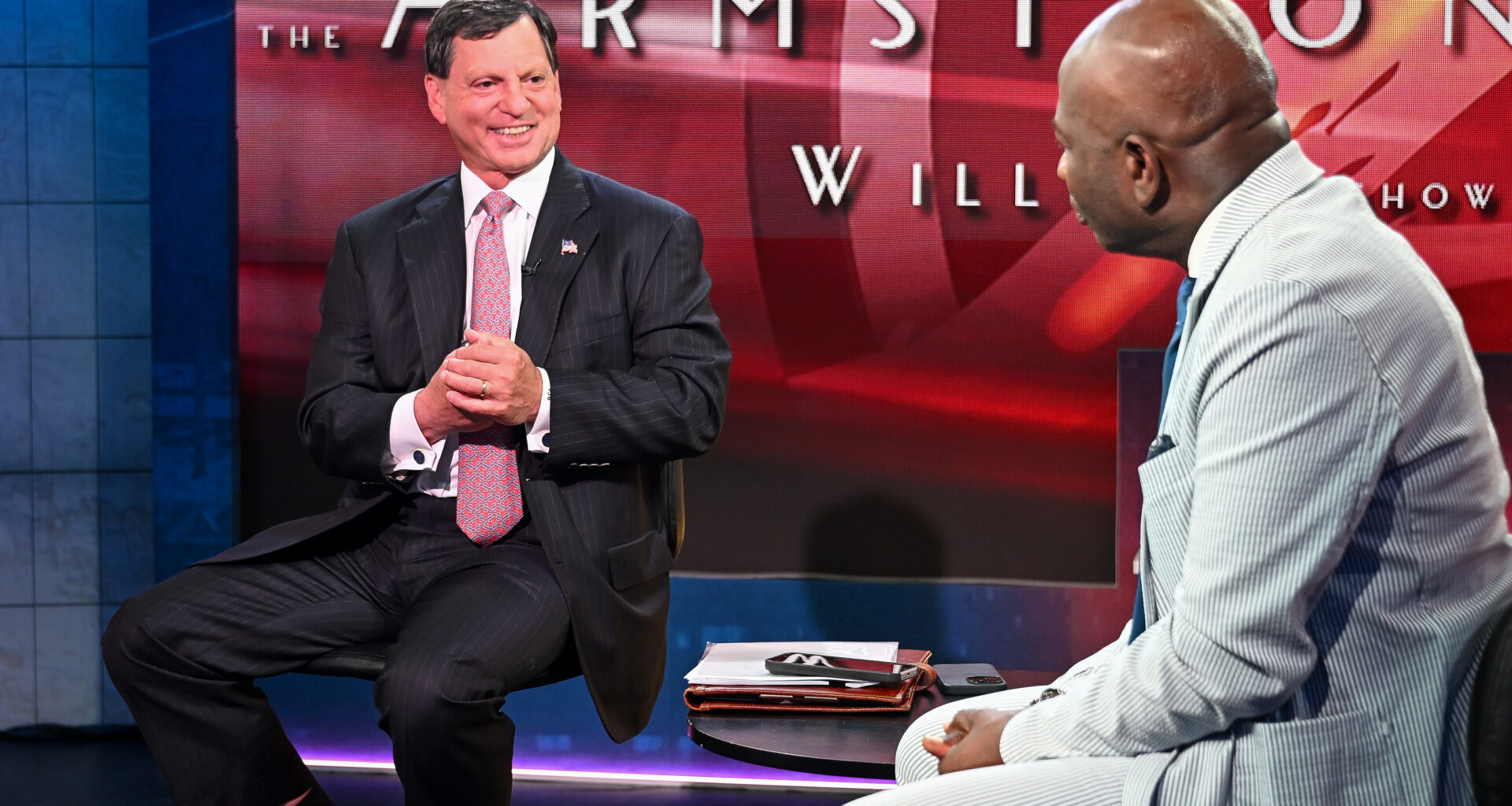
In an interview with The Baltimore Sun and “The Armstrong Williams Show,” Bisignano discussed his decision to leave the private sector and his efforts to modernize both agencies. The conversation has been edited for length and clarity.
You have led or held senior positions at American Express, Citigroup, JPMorgan Chase, First Data and Fiserv. Most successful executives never leave the private sector. Why did you accept what many consider one of the toughest assignments in government?
I received a phone call asking me to meet with the president-elect, and I did. Throughout my life, I had one regret that I tried to address in many different ways: I never served in the military.
My grandfather came to America and joined the United States Army during World War I as part of his journey toward becoming a citizen. My father was orphaned as a child, served during World War II and then worked for the federal government for 44 years, including at the Treasury Department.
I went on to have a successful business career, but I also had the opportunity to help create programs for members of the military.
When military leaders thanked me for those programs, I would tell them that I did not deserve the thanks. They were the people who had served and sacrificed.
I had a wonderful job running a large and successful company with a tremendous team. But when I was given the opportunity to serve the country, I believed I should accept it.
When you arrived at the Social Security Administration, what problem did you believe needed to be addressed most urgently?
Serving the American public. In 2024, the average wait time on the telephone sometimes approached 40 minutes. An average of 40 minutes means that some people were waiting considerably longer.
The year-to-date average is now under seven minutes, and we are serving significantly more people.
I also recognized that Social Security needed to become a digital-first agency. The same is true of the IRS. We need to transact with people in the way they conduct the rest of their lives.
Only about 4% of Social Security transactions now occur in field offices. The remaining 96% take place through telephone and online services. We expect to complete more than 800 million transactions this year.
You witnessed the Sept. 11 terrorist attacks firsthand and later battled cancer that you believe was connected to your exposure at ground zero. How did those experiences shape your leadership?
We had a plan [at Citigroup] for what would happen if the World Trade Center towers came down. That did not make us the smartest people in the world. The complex had been attacked before, so we understood the risk. In the same way, at JPMorgan, we had a plan for what would happen if a major bank failed because we had already seen signs of stress in the financial system.
I will never forget the morning of Sept. 11. I saw the damage to the first tower, and I saw the second plane hit. We had approximately 16,000 employees in Lower Manhattan, including people in 7 World Trade Center, who were my responsibility.
We lost six people that day, and I will never forget them. But we were able to get everyone else out safely before 7 World Trade Center collapsed.
 Armstrong Williams interviews Frank Bisignano, chief executive officer of the Internal Revenue Service and commissioner of the Social Security Administration. (Kevin Richardson/Staff)
When history judges your tenure, what do you hope Americans will say changed because you served?
I hope they will say that we brought both organizations into the modern era and began serving Americans in the way they are accustomed to being served elsewhere.
I also hope they will say that the agencies’ books and records were accurate.
We began reconciling the Social Security number database, known internally as the Numident. It had never been fully reconciled.
When the president spoke about records showing people who appeared to be 150 or 160 years old, those records did exist. That did not necessarily mean those individuals were receiving benefits, but inaccurate or unreconciled records create vulnerabilities.
The Wall Street Journal published a story alleging that you were involved in spying on a fellow banking executive. You have denied the allegation. What happened?
The story claimed that I had spied on Charlie Scharf, the chief executive officer of Wells Fargo and a friend of mine.
Charlie called me the evening before the story appeared in print because it was already available digitally. We laughed about it.
I joked that perhaps my grandchildren would look back 40 years from now and say, “Pop-Pop had a successful business career, became a senior federal official and apparently he was also a spy.”
Of course, it was not true.
JPMorgan denied it. We denied it. The people involved said it did not happen, but the story ran based on unnamed sources.
I am 66 years old. Before entering this administration, you would have had difficulty finding a single article throughout my career that attacked my integrity in that way. I ran major companies and worked through the financial crisis.
Then, decades into my career, there is suddenly an allegation involving someone who is a good friend of mine. Charlie himself said it was one of the craziest things he had ever seen.
You have to maintain a sense of humor.
We have discussed many successes. What challenges have you not yet fully addressed?
Speed of execution.
We recently completed a full-day IRS strategy meeting and left focused on how to increase the speed at which the agency implements decisions.
Legal and policy departments must ensure that everything we do complies with the law. But policy itself can be changed when it no longer serves the public effectively.
A policy that made sense decades ago may no longer make sense today.
When someone tells me a change will take 2½ months, I ask why it cannot be completed in 2½ days.
That is the mindset we are trying to create.
What final message would you like Americans to take from this conversation?
This country has strong leadership right now.
The president is committed to creating a safer, more secure country and a government that delivers for the American people in a way it has not done for a very long time.
The IRS and Social Security touch virtually every American’s life. That is an enormous responsibility, and it is also an extraordinary opportunity to serve.
We are here to do the work, modernize these institutions and deliver better results for the American people.
Armstrong Williams (www.armstrongwilliams.com; @arightside) is a political analyst, syndicated columnist and owner of the broadcasting company, Howard Stirk Holdings. He is also part-owner of The Baltimore Sun.