
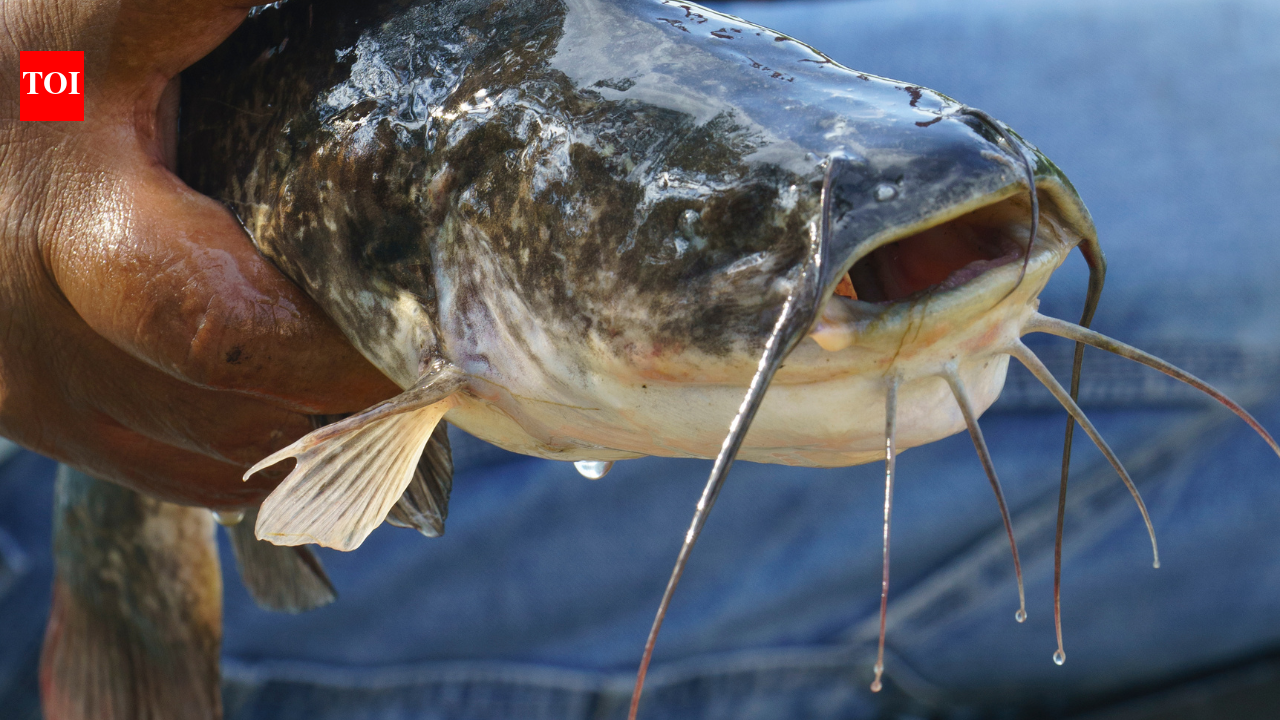
 Scientists discover a cancer that infects other fish instead of staying in one body: Here’s why this rare finding matters (iStock) Cancer is usually thought of as a disease that begins inside one body. It develops when a person’s or an animal’s own cells grow uncontrollably. But every once in a while, nature presents scientists with something far more unusual: a cancer that can move from one individual to another. A new study published in Nature has uncovered exactly that in brown bullhead catfish living in Lake Memphremagog, which stretches across Vermont in the US and Quebec in Canada.Researchers found that the melanoma affecting these fish is not developing independently in each animal. Instead, the cancer cells themselves are spreading between fish, making this the first known transmissible cancer in a fish and the first ever discovered in a freshwater ecosystem. Here’s what scientists discovered and why it matters.
What does it mean when a cancer is ‘transmissible’?
Most cancers begin when a person’s or animal’s own healthy cells accumulate genetic changes over time. Those cancer cells remain confined to that individual unless they spread within the same body.A transmissible cancer is completely different.In these extremely rare cases, the cancer cells themselves leave one individual, enter another and continue growing there. Instead of each tumour arising independently, the same cancer cell lineage survives by moving from host to host, behaving almost like a parasite.The Nature researchers reached this conclusion after analysing the genomes of tumour tissue and healthy tissue from affected fish. They found that tumours collected from different catfish were genetically far more similar to one another than they were to the fish carrying them. Hundreds of thousands of genetic variants were shared across tumours but were absent from the healthy fish, providing strong evidence that all of the tumours originated from a single cancer lineage rather than separate cancers developing independently.Scientists say this makes brown bullhead melanoma only the fourth naturally occurring transmissible cancer known in animals. Similar cancers have previously been documented in dogs, Tasmanian devils and several species of marine shellfish.
How might the cancer spread between fish?
The exact route of transmission remains unknown, and the researchers say more work is needed before any conclusions can be drawn.However, the study outlines several possibilities based on the biology of brown bullhead catfish.One theory involves the spawning season. During reproduction, these fish gather in close groups and come into frequent physical contact, which creates opportunities for living cancer cells to move directly from one fish to another.Another possibility involves the freshwater environment itself. Because fish constantly interact with water through their skin, gills and mouth, cancer cells released into the water may potentially enter another fish through these tissues.Researchers also note that brown bullheads live on lake bottoms and do not have protective scales. If cancer cells survive in lake sediment, they could theoretically come into contact with passing fish.The study further suggests that hormonal changes during reproduction or weakened immune responses at spawning could make fish more vulnerable to these invading cancer cells.Importantly, these are still scientific hypotheses. The study did not identify a confirmed transmission pathway.
How serious is this disease for the fish?
The discovery raises important conservation questions.Researchers reported that melanoma spread rapidly through the brown bullhead population after first being noticed around 2012. By 2015, roughly 30% of fish in Lake Memphremagog were found to be affected.What remains unclear is what this means for the long-term survival of the species.Scientists point to other transmissible cancers for comparison. In Tasmanian devils, a contagious facial tumour has caused catastrophic population declines, reducing numbers by around 90% in some regions. By contrast, dogs naturally recover from their transmissible venereal tumour in many cases, while several shellfish populations continue to survive despite widespread transmissible cancers.It is still unknown where brown bullhead melanoma falls on that spectrum. Researchers also do not yet know whether the same cancer lineage exists in other freshwater lakes across North America.Understanding how deadly the disease is, how quickly it spreads and whether it has already travelled beyond Lake Memphremagog will be essential for future conservation planning.
Does this pose any risk to people?
For most readers, the obvious question is whether a transmissible cancer in fish could spread to humans. Based on current scientific knowledge, there is no evidence that this cancer can infect people.The study focused entirely on brown bullhead catfish and did not report any risk to humans or other animals outside this species.Human cancers behave very differently. Our immune system is highly effective at recognising and destroying foreign cells from another individual. This is one reason why organ transplant recipients require immune-suppressing medication to prevent rejection.Outside very rare medical situations such as organ transplantation or pregnancy-related cancers, cancer is not considered contagious in humans.The researchers also found no evidence that bacteria, viruses or other microorganisms were responsible for the tumours. Instead, the cancer cells themselves appear to be the infectious agent.The discovery therefore expands scientific understanding of how cancer can evolve in nature rather than signalling a new public health concern.The researchers say other fish species that develop unexplained dark skin lesions may now deserve closer investigation to determine whether similar transmissible cancers exist.Beyond conservation, studying these rare diseases could help scientists better understand how cancer cells evolve, escape immune defences and survive over long periods. Those insights may eventually contribute to broader cancer research, even though the disease itself remains confined to wildlife.Disclaimer: This article is based on findings published in Nature. The study examined transmissible melanoma in brown bullhead catfish and did not report any evidence that the disease can spread to humans.