
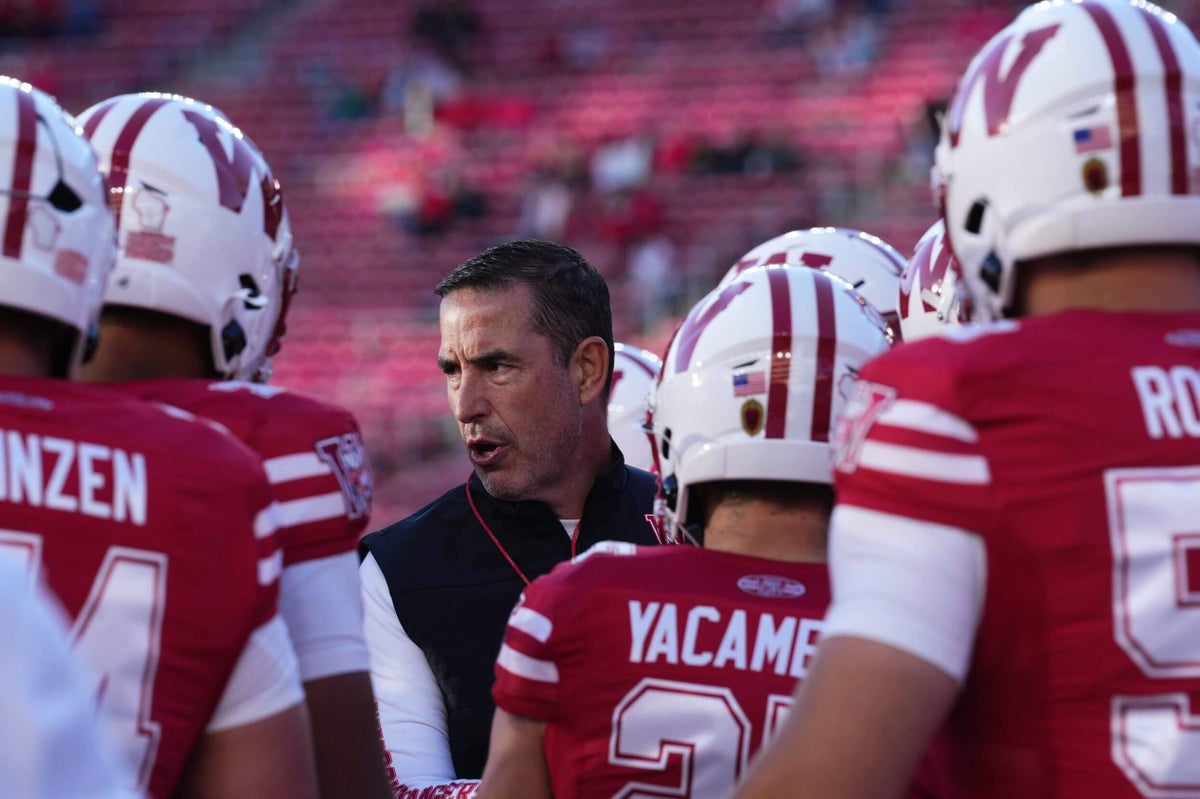
MADISON, Wis. — Hours after “Fire Fickell” chants reverberated across Camp Randall Stadium, Luke Fickell waited for more bad news to come walking through his door.
Year 3 was not going to plan for the Wisconsin football coach, bottoming out with back-to-back home shutout losses last October. So when athletic director Chris McIntosh came knocking in the midst of a six-game skid, Fickell expected the worst. The former Badgers offensive lineman gave him a choice instead.
“He asked me, ‘What do you want to do?’” Fickell said in an interview with The Athletic. “‘You’re at a crossroads. Where are we headed here? Either you’re all in, or find an escape route.’”
There were no specifics on how a departure might be handled — whether Fickell would be fired immediately, finish the season or reach a settlement on his roughly $25 million buyout. McIntosh wanted an answer first. He gave the coach the night to think about it.
“There’s nothing I would rather do than pull ourselves out of where we are,” Fickell told him the next day.
McIntosh hired Fickell in November 2022 to much fanfare, less than a year removed from Fickell leading Group of 5 Cincinnati to the four-team College Football Playoff. The former Ohio State assistant’s Big Ten and Midwest roots made him an ideal candidate to elevate a consistently successful program that had fallen off the pace of the sport’s title contenders.
It’s gone the opposite direction. On the heels of two disappointing seasons, the 2025 Badgers were ravaged by injuries — particularly at quarterback — a brutal schedule and a glaring lack of identity. A program that made 21 straight bowl games before Fickell’s arrival endured consecutive losing seasons for the first time since 1992. Fickell is 17-21 overall and 10-17 in Big Ten play.
All of it underscores the do-or-die nature of the 2026 season for Fickell, kicking off with a prime-time opener against Notre Dame on Sept. 6 at Lambeau Field.
The falloff isn’t a mystery. Fickell, 52, acknowledges that he and McIntosh were reluctant to embrace the modern roster-budget reality of college football. Wisconsin lagged behind its peers in name, image and likeness dollars and wrongfully believed the new revenue-sharing cap would level the financial playing field.
“I can never quit anything in my life, but it was more than that,” Fickell said. “This is all I want to do. I’m not backing down. But we needed to do things in a different way. Otherwise I’m not sure we can turn this thing around.”
McIntosh, who did not respond to interview requests by The Athletic, agreed. On Oct. 20, two days after a 34-0 home bludgeoning by the Buckeyes, the AD sent a letter to Badgers fans indicating his support for the head football coach and plans to increase investment in the program.
“Coach Fickell sees the potential in what this team can be, as do I, and he shares the same disappointment and frustration,” the letter read. “As a department we must provide our coaches the tools necessary to succeed.”
It didn’t quell the fan outrage, especially as schools like Penn State pulled the plug on James Franklin and LSU fired Brian Kelly amid similarly disappointing seasons. In early November, after McIntosh reiterated Fickell would return in 2026, former Badgers men’s basketball player and local sports radio host Ben Brust declared “Saturday’s don’t even exist anymore!” in a memorable on-air rant, describing the season as the “lowest of lows in 35 years” for Wisconsin football.
Even after ranked wins over Washington and Illinois in the final weeks, a 4-8 record did little to temper skepticism among the Badgers faithful boating on Lake Mendota or tucking into the world-famous cheese curds at The Old Fashioned. But there have been tangible changes, headlined by a significant increase in roster funding.
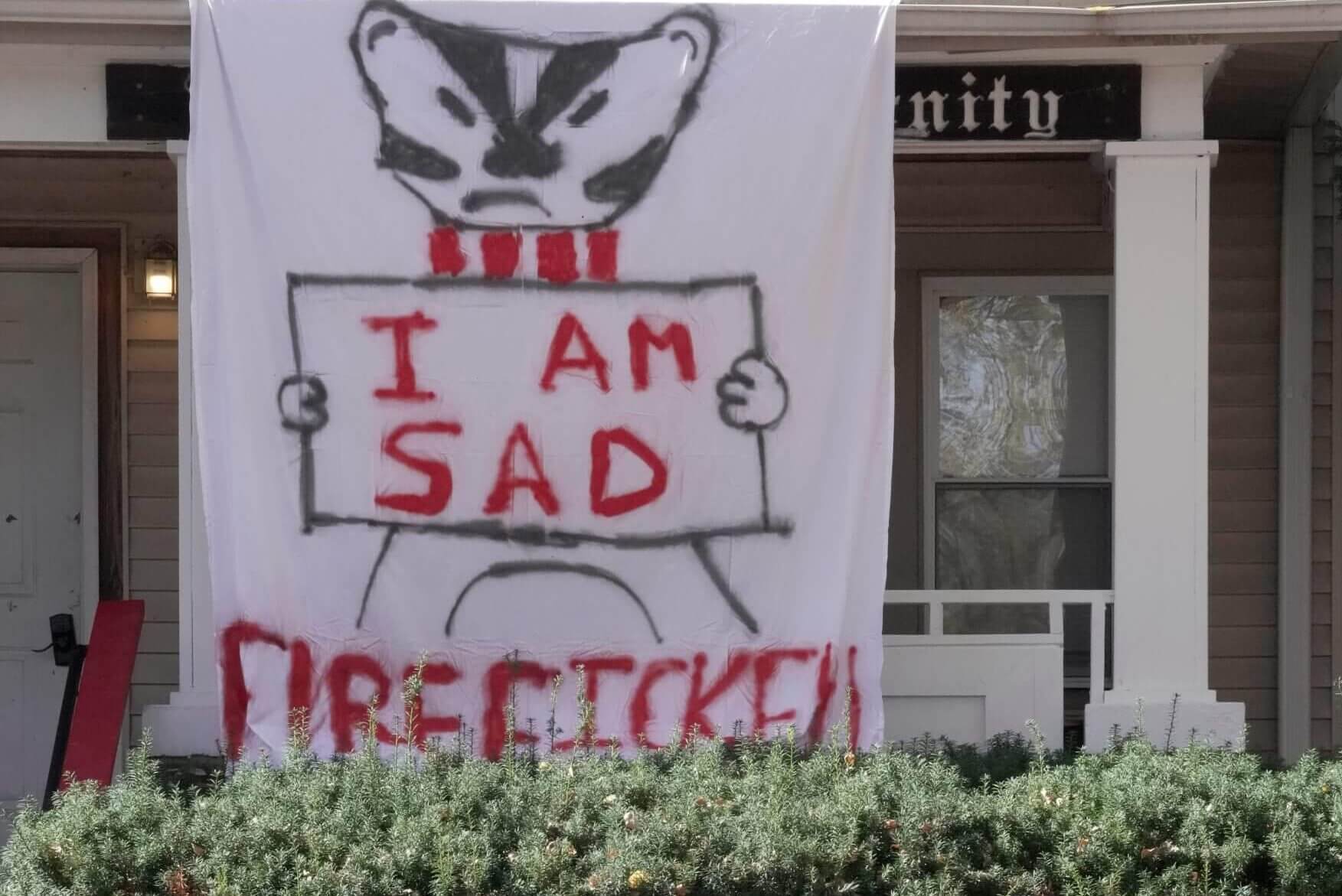
Wisconsin fans have expressed their displeasure about the direction of the program under Luke Fickell. (USA Today Network via Reuters Connect)
Fickell and other Wisconsin officials declined to talk specific dollar figures, but the Badgers’ roster budget is north of $25 million in 2026 and more than double what it was in 2025, according to people briefed on the budget who spoke on the condition of anonymity because they weren’t authorized to discuss it publicly.
“As I understand it, we were in the bottom third, bottom 40 percent of the Big Ten in terms of NIL money (last season),” said Ted Kellner, a prominent Badgers booster who founded investment and real estate management firms. “I heard we’re in the top half this year.”
The result is a deeper and more talented depth chart that added more than 30 players via the transfer portal, including former Old Dominion quarterback Colton Joseph, a fortified offensive line and a rebuilt secondary.
But even that momentum had to tap the brakes in April when McIntosh announced he was departing for a job as the Big Ten’s deputy commissioner of strategy after a dozen years at his alma mater, the past five as AD. Suddenly, Fickell’s biggest advocate — who linked arms when the “Fire Fickell” chorus was at a fever pitch — had seemingly found his own escape route.
“(McIntosh) was all in, said we’re doing this together. He helped push the university to make some of those investments,” Fickell said. “I don’t know what changed, but he had this opportunity and deep down in his heart, I think he feels like he can help change college football in a better way than being here. And maybe that’s the best thing for us, too.”
Shawn Eichorst, a Wisconsin native and former deputy AD for the Badgers under Barry Alvarez, was appointed as the new AD earlier this month, having held a deputy role at Texas. Along with an ongoing search for a new university chancellor, the hot-seat chatter is not cooling for Fickell in 2026.
He isn’t hiding from it, either. Earlier this summer, Fickell gave his team a quick history lesson about Spanish explorer Hernán Cortés and the 1519 conquest of the Aztec Empire, when Cortés famously scuttled his fleet of ships and any chance to retreat. It inspired the phrase “burn the boats.”
Fickell’s contract runs through March 2032 and his buyout is still close to $20 million, but in February, he declined the customary one-year rolling extension offered by the school’s athletic board to head coaches. He previously received the extensions, which do not impact buyout structures, after 2023 and 2024, but couldn’t justify another without improved results.
No escape routes.
“I wanted the guys to understand that too. My chips are pushed to the middle,” Fickell said. “We gotta burn the ships, burn the excuses, anything that’s going to hold us back. The only option is to push forward.”
There was a tone-setting moment for the Badgers this offseason, when Fickell and two of his young defensive stars got into it. On the golf course.
“He was definitely talking some trash to us,” Mason Posa said.
“That’s how you know you’re in with him,” added fellow sophomore linebacker Cooper Catalano. “We’re ride or die with coach Fick.”
Fickell, a former Ohio high school state-champion wrestler and Buckeyes defensive lineman, is maniacally competitive, and his young linebacking duo is cut from the same cloth. Posa is a state-champion wrestler from New Mexico; Catalano is a wrecking ball from Milwaukee who grew up rooting for Wisconsin. When injuries and losses led to increased opportunity for the true freshmen in 2025, the Badger bash brothers sparked those late-season, field-storming upsets, shifting the locker room dynamics.
“Some of our youth stepped up and played well, and it meshed with some of the veterans,” Fickell said. “We’ve had great kids, a good culture. But we needed more of a chip on our shoulder. Now we have some edge to our leadership, some possible alphas.”
It was a positive step, but more needed fixing. The NIL hesitancy was compounded by early missteps, in particular hiring Phil Longo as offensive coordinator. The idea that Longo’s Air Raid style would modernize Wisconsin’s offensive line-driven, run-game pedigree was a terrible fit, schematically and personality wise, and Fickell fired him late in the 2024 season.
“Fickell just got fooled with Longo,” according to a former staffer, speaking anonymously to protect relationships. “It was the wrong move.”
Off the field, grievances ranged from tweaks to tradition, like the team no longer running out to U2’s “Where the Streets Have No Name” for home games, to systemic changes, like what some considered an abandonment of in-state high school recruiting. The 2026 class included one Wisconsin prospect.
“I think coach Fickell thought he could do it his own way,” said Brad Nortman, a former Wisconsin punter who previously hosted local sports radio. “Erase the Badger blueprint and a lot of the traditions — in-state recruiting, connecting with high school coaches, connecting with former players. There was a level of disconnect.”
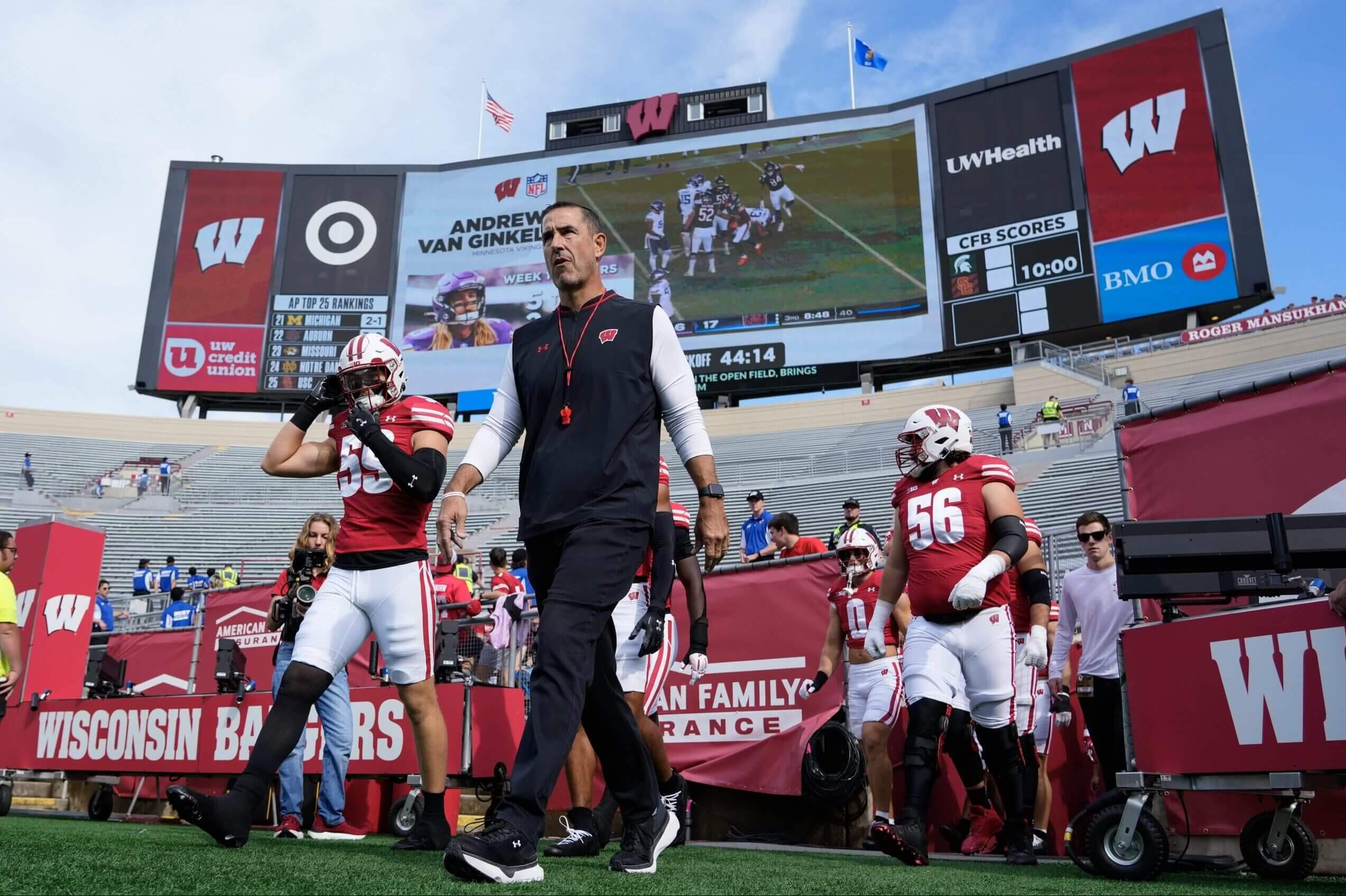
Luke Fickell still has a $20 million buyout and what appears to be a favorable schedule in 2026. (Jeff Hanisch / Imagn Images)
The Badgers suffered significant injuries to their starting quarterbacks each of the past three seasons. After Billy Edwards Jr. injured his knee in the 2025 season opener, he returned in Week 4 against Maryland but lasted two drives. Weeks of will he or won’t he come back followed, but he never played another snap. Wisconsin finished last in the Big Ten in total and scoring offense.
“I’m not blaming everything on the quarterback situation, but we were holding onto hope (that Edwards would return),” Fickell said. “It got to the point where we just hit a wall.”
Regardless, the program strayed too far from the Wisconsin standard. Fickell took much of the blame, but the issues went deeper.
Wisconsin alum Dan Katz — better known as Big Cat, host of the popular “Pardon My Take” podcast — made headlines this spring when he talked publicly about struggling to get the Wisconsin athletic department to return his calls regarding NIL initiatives. Former men’s basketball All-American Frank Kaminsky raised similar complaints.
Combined with McIntosh’s abrupt departure, it amplified criticism toward the former AD.
“Like he was leaving right before accountability sets in,” Nortman said.
McIntosh, in a letter to fans, said he had not been looking for a a new job but the newly created position offered an “incredible” opportunity to shape the future of the Big Ten.
Other adjustments were made. Fickell hired offensive coordinator Jeff Grimes, a former offensive lineman who better fits the ethos of Fickell and Wisconsin. Fickell reevaluated training practices in light of the injury struggles. In March, he hired former Badgers team captain Bradie Ewing as director of football alumni relations. Fickell resolved to be more present as well, whether sitting in on more position group meetings, hosting interview podcasts with incoming transfers or talking smack on the tee box. His oldest set of twin boys, Ashton and Aydon, joined the team as freshman walk-ons this offseason.
“These kids know he’s intense, but they’ve started to see that it’s out of genuine love, and what it takes to win,” said Brady Collins, Fickell’s longtime strength coach. “I’m not saying Fick’s totally changed because last year was rough. He’s still the same dude, but you can definitely see he’s got a different pep in his step.”
Most notably, the staff refocused its local recruiting strategy, with 10 in-state commitments bolstering a 2027 high school class that ranks top-25 nationally. (One of them, three-star Ethan McIntosh, is the former AD’s son.)
“If you’re in a marriage and realize it’s not working but you go to counseling and try to change, I give you a lot of credit,” Nortman said. “That’s what Fickell’s doing now. He’s taking steps to fix it.”
Money helps. This spring, the state of Wisconsin passed legislation that redirects nearly $15 million in annual funding from the state’s general fund to Badgers athletics to be put toward facility debt service, which frees up dollars for revenue sharing and other booster investments. The school’s multi-media rights partnership with Learfield is facilitating more of those precious over-the-cap NIL deals. Donors like Kellner have stepped up. Big Cat’s calls were returned, too.
In 2024, the season Ohio State won the national title with a self-described $20 million roster and before the revenue sharing cap was instituted, Wisconsin’s football NIL spending was less than $4 million, industry sources not authorized to publicly disclose the figure told The Athletic. Two years later, the program is no longer swimming against that current — perhaps not at the price point of the Big Ten’s highest spenders, but much closer.
“I feel pretty good about this season,” said Joe Thomas, a former All-American offensive lineman and Pro Football Hall of Famer. “I know other fans who are still skeptical. But in the end, we all just want a team that gives us a chance every Saturday.”
Fickell still believes Wisconsin is the type of school where you can win big. Where he can win big.
“It’s one of the things that drew me here, that traditional program,” Fickell said. “Some of my mistakes were not fully recognizing that it’s impossible to do it in the same, completely traditional ways these days. And not just accepting that, but embracing it.”
The new-look Badgers will be tested immediately by a likely top-five Notre Dame squad, led by head coach Marcus Freeman, who played for Fickell at Ohio State and was his defensive coordinator at Cincinnati. There are a handful of Fickell’s former assistants on the Fighting Irish staff.
As big as that game is, Fickell sees the whole board. Wisconsin’s 2025 schedule featured four of the 12 CFP teams. The Irish notwithstanding, this year appears more manageable, avoiding Indiana, Ohio State, Oregon and Michigan in Big Ten play.
And Fickell understands there’s only one sufficient outcome to this season. One path forward.
“Gotta win,” Fickell said. “I’m not saying it’s life or death, but this is the world we’re in. It’s what we work for. You can’t get this opportunity back.”
Burn the boats.