
Player rankings seem like a great way to evaluate your potential selections in 2026 fantasy football drafts, but they ignore what ultimately decides your fantasy fate, specifically, player point production. While players may rank No. 3 and 4 in the quarterback rankings, No. 4 may project to score significantly fewer points than No. 3. So, while you may be betting the next best player at a position, you also could be walking off a points cliff and bypassing players at other positions who provide a bigger advantage for your weekly score.
This is the premise behind “The Draft Chasms of Doom,” a series we began last year and explain in more detail here. Using Jake Ciely’s 2026 player projections, we’ll show you where he expects to find the biggest drops in projected points at each of the four skill positions, starting with quarterbacks, and explain what Jake’s projections are seeing to give you advanced warning of potential precipices.
Below you can see the graphs for all four skill-position groups, and as you’ll note, there is an Everest-like drop-off at quarterback before we hit a very lengthy plateau. Let’s go full Indiana Jones and explore what the numbers are telling us about this year’s draft chasms of doom.
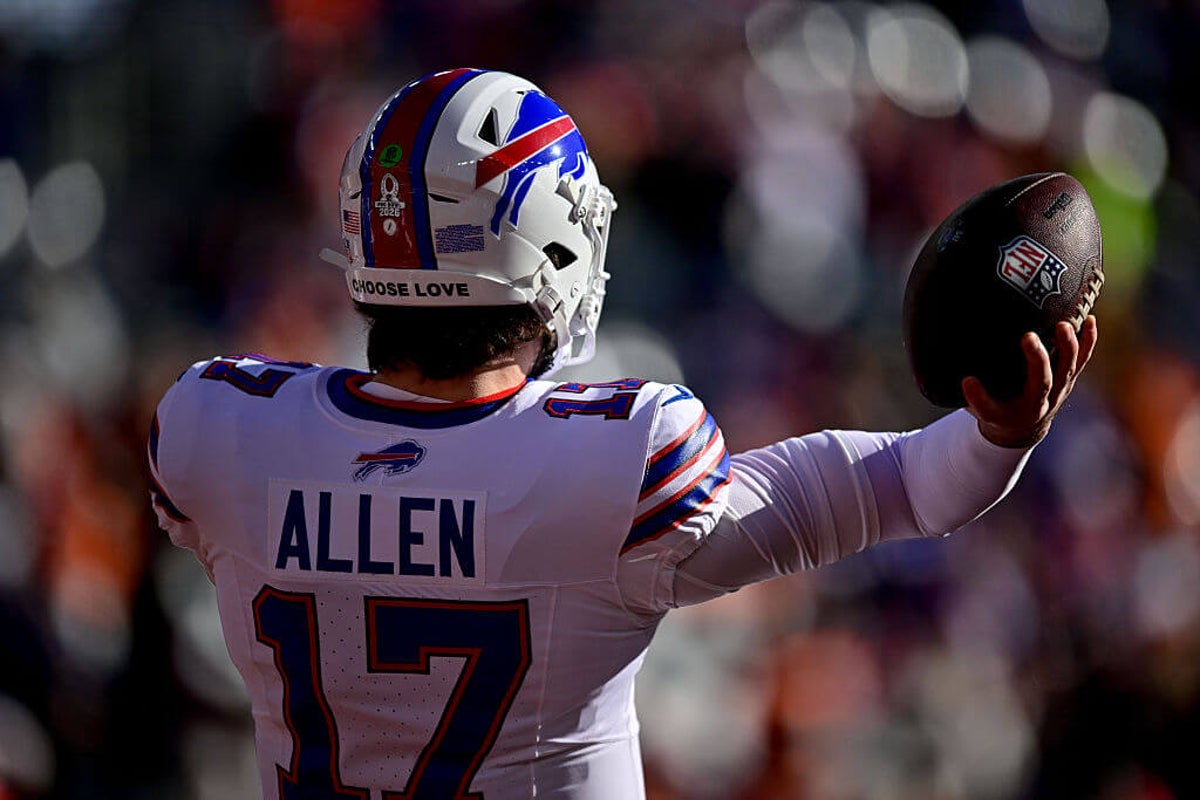
Context is essential here, so let’s start with an example. In 2025, Josh Allen was projected to be the second-best QB by our Jake Ciely behind Lamar Jackson. Allen finished as the top QB with 364.62 and 22.79 adjusted fantasy points per game (FPPG excluding games when QB didn’t appear in the second half due to injury or late-season rest). Meanwhile, Drake Maye finished with 350.96 (20.64) and Matthew Stafford had 350.38 (20.61). If you drafted Allen, you had to do so early (2026 ADP of 27.1), but he still provided a decent edge at the position, scoring 2.15 more points per game than Maye and Stafford, the next best at the position. But Stafford only scored 2.01 more points per game than QB11 Caleb Williams.
While Allen justified his early draft position for managers seeking security at QB, the annual volatility of quarterback scoring suggests there was no penalty for waiting to draft your quarterback. In fact, you’re likely incentivized to do so, maximizing the value of early picks at positions like running back and wide receiver, where the value over a replacement player (VORP) is significantly higher than at quarterback, as illustrated in the multi-positional chart above.
What’s that mean for 2026? Jake breaks it down
While there are two tiers for the top-six quarterbacks, I see it a bit more as a Tier 1A and Tier 1B. I’d be happy taking any of the top six if they fall to Round 5, but that won’t happen with the first three most of the time. Jayden Daniels is my most drafted quarterback so far — in my rankings, I have him QB4 given his QB1 ceiling. If any in Tier 1 makes it to the end of Round 3 or early Round 4, I’d grab one. In the end, I’m Ricky Bobby-ing QB (and TE — we’ll get to that). If I’m not first (Tier 1), I’m last (waiting to double-digit rounds).
Some might see the names — and chart — and disagree about how large Tier 3 is, but the value of all are similar. Honestly, where VORP has the projections as tight, even from Jalen Hurts to Daniels to Brock Purdy, to even Dak Prescott, the ceilings come into play. The Tier 2 trio all have No. 1 QB ceilings. It’s hard to find a path for most in Tier 3 to reach that level; everything would have to go nearly perfect for it to happen. That’s why I’d wait until the endgame for a Tier 3 QB, as there is negligible difference between the upside, floor and overall expectation for all.
This table might make you think “Josh Allen or bust!” Honestly, I get it, given his consistency and upside. It comes down to if you feel justified in making him a late-second or early-third round pick. Again, it’s warranted and similar to Travis Kelce’s peak seasons, but if he drops even 1 point lower in adjuted FPPG, and 2-to-3 quarterbacks nip at his heels, you lose the edge you paid for plus the lost value of who you could have taken at a diferent position.
Tier 1 and 2 start the steady decline, and you might argue away Hurts and Daniels here. My pushback would be the aforementioned ceiling difference. The Tier 3 group is about as flat as it gets, which should make you feel better about waiting as long as possible if you miss on one of the “elites.” If you’re drafting a Tier 4 QB, hopefully it’s because you’re pairing him with a Tier 3 option to take two shots at a top-10 quarterback. A mid-round Bo Nix or Jaxson Dart pick coupled with Malik Willis (see my breakout QB notes) or even a healthy Daniel Jones would give you nearly the same ceiling as most top-end options.
Quarterback is the same this year as it is every year. Do you enjoy spending an early pick on a near certainty? You can justify it, but if it goes wrong, you’re getting double-dinged because of what you sacrificed elsewhere. Do you love the thrill of gambling on breakouts? Double down and go for it. We see a few quarterbacks surprise and hit near top-tier value every year — Matthew Stafford and Trevor Lawrence just last year. Every year, I go “all in” on the breakout gambles because it works more often than not, and your roster build is always more palatable. Again, that’s not saying it’s wrong to go all Hailee Steinfeld and lock in your Allen.