
The legislature yesterday passed an amendment to the Civil Code removing a provision that mandates a guaranteed minimum inheritance share for siblings, giving people greater freedom to distribute their estates through a will.
The amendment to Article 1223, which passed its third reading without objection, is to take effect six months after being promulgated, which is expected to happen within a few weeks.
Before being revised, the article stipulated that certain close relatives were entitled to a minimum share of an estate, even if a will left them out. For siblings, that guaranteed share was one-third of the total amount of the inheritance shared among them.
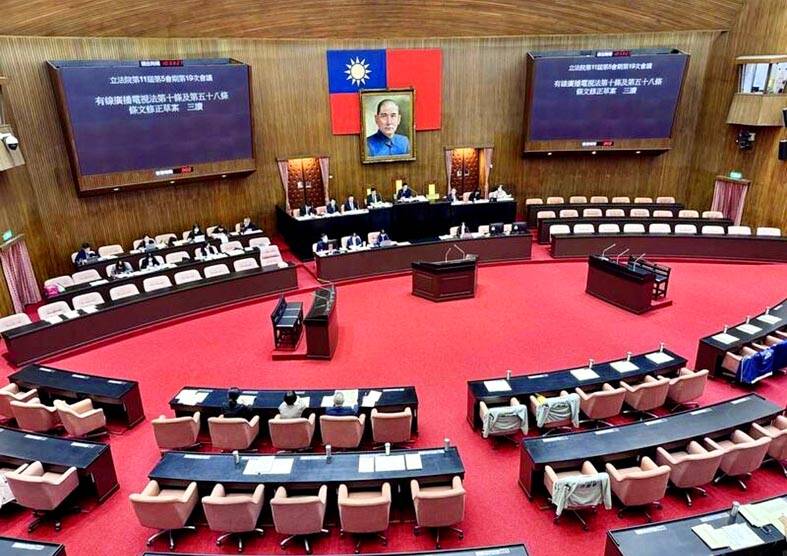
Photo: Tu Chien-jung, Taipei Times
Taiwan introduced the compulsory inheritance share system in the 1930s to protect close relatives from being completely excluded from an estate and to maintain family support obligations.
After the amendment takes effect, siblings would no longer be entitled to that guaranteed share if the deceased leaves a valid will that distributes the estate to other individuals or entities.
The change does not affect who can inherit funds when there is no will.
If a person dies without leaving a will, siblings can still inherit money under existing inheritance rules when they are the legal heirs.
The compulsory shares for spouses, children and parents remain unchanged, even if a valid will says otherwise.
Anyone aged 16 or older can make a will if they have the legal capacity to do so.
Lawmakers said the amendment reflects modern family structures and gives people greater freedom to decide how their assets are distributed after death.
The Ministry of Justice had also proposed changes, including recognizing heirs who made special contributions, such as providing long-term care or financial support, but those provisions were not included in the bill passed yesterday.
Chinese Nationalist Party (KMT) caucus secretary-general Lin Pei-hsiang (林沛祥) said that the old system was often a source of family disputes.
The amendment does not negate familial ties, but rather returns to the basic principle of respecting a person’s right to distribute their estate according to their wishes, he added.
The amendment is expected to have a significant impact on high-net-worth individuals, “double income, no kids” couples, single people and family business succession planning, PricewaterhouseCoopers Taiwan said.
The firm advised people to consult with professional advisers early to ensure their wills comply with the latest legal requirements to map out the most suitable asset succession plans.
Additional reporting by Lo Kuo-chia and Cheng Chi-fang