
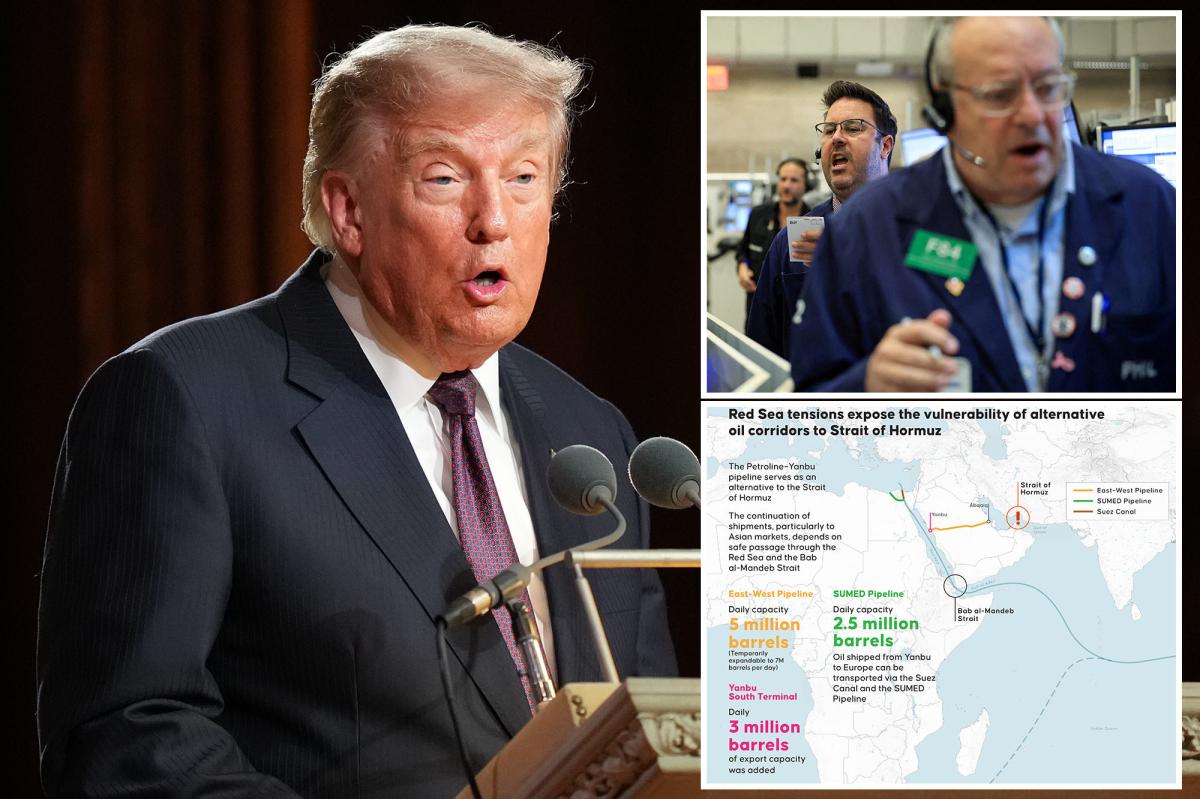
Stocks plummeted Wednesday on worries about inflation in the wake of the Federal Reserve’s vote keeping interest rates steady — and as oil spiked about 6% amid fears of a protracted war with Iran.
The Dow Jones Industrial Average plunged 1,150 points, or 2.2%, while the S&P 500 and Nasdaq fell 1.5% and 1.7%, respectively.
Stocks slumped Wednesday as oil prices jumped 6%. REUTERS
Earlier Wednesday, the Fed voted to hold interest rates steady — with three central bankers voting against the majority and saying the rates should be hiked amid persistent inflation.
At a press conference on the vote, Fed Chair Kevin Warsh refused to answer how he planned to lower inflation or when he would be ready to raise rates, prompting traders to question whether the body will act in time to stem major price increases.
Mounting fears around a potential AI bubble and concerns that China’s technology is catching up to US rivals also continued to weigh on stocks Wednesday.
Stateside chipmakers like AMD, Nvidia and Broadcom sank 6%, 7% and 11%, respectively.
Investors were also spooked after President Trump vowed to retaliate against the Islamic Republic’s surprise overnight missile attacks targeting US troops stationed in Jordan.
Brent crude oil prices surged 6.6% to $90.65 a barrel while West Texas Intermediate crude jumped 5.4% to $84.66 on concerns that a broadening Middle East conflict could worsen an already historic energy supply disruption.
US Central Command said all of the missiles were successfully intercepted.
“We’ll be hitting them hard,” Trump told Fox News chief foreign affairs correspondent Trey Yingst in a brief interview. “They’re going to get a beating.”
Despite the plans for retaliation, Trump added that negotiations with Iran will continue, saying, “We’re going to let them keep talking.”
President Trump vowed to “beat the f–king s–t out of” Iran after surprise missile attacks on US forces were intercepted. Alex Brandon/POOL via CNP/INSTARimages.com
Meanwhile, US and Saudi aircraft hit “multiple terrorist logistics and weapons sites” in eastern Iraq in response to more than 30 drone attacks in the past three days by “Iran-aligned terrorists,” according to Centcom.
The renewed threats came just ahead of Kevin Warsh’s second Fed meeting as chairman, when central bankers are largely expected to hold interest rates in the 3.5% to 3.75% range.
Warsh’s surprisingly hawkish stance on inflation has quashed hopes for a rate cut anytime soon, especially since a drawn-out Middle East conflict could send energy prices even higher – sending the odds of a rate hike at Wednesday’s meeting up to 35%, according to CME FedWatch.
Reports of fresh attacks in the Red Sea have raised concerns about global energy supply disruptions. Anadolu via Getty Images
More than half of traders anticipate the Fed will raise interest rates by a quarter point by September.
Meanwhile, the UK Maritime Trade Operations Centre on Tuesday reported “suspicious activity” in the Red Sea – following reports last week of Houthi attacks on vessels in the area.
The Strait of Hormuz, a vital maritime route for 20% of the world’s oil in the Persian Gulf, has been largely blockaded for months amid the war with Iran – causing the world’s worst-ever energy supply disruption and sending US gasoline prices above $4 a gallon.
Reports of fresh strikes in the Red Sea have raised new fears that a second critical shipping route through the Bab el-Mandeb Strait, which carries about 7% of global oil supplies, could also be compromised.