
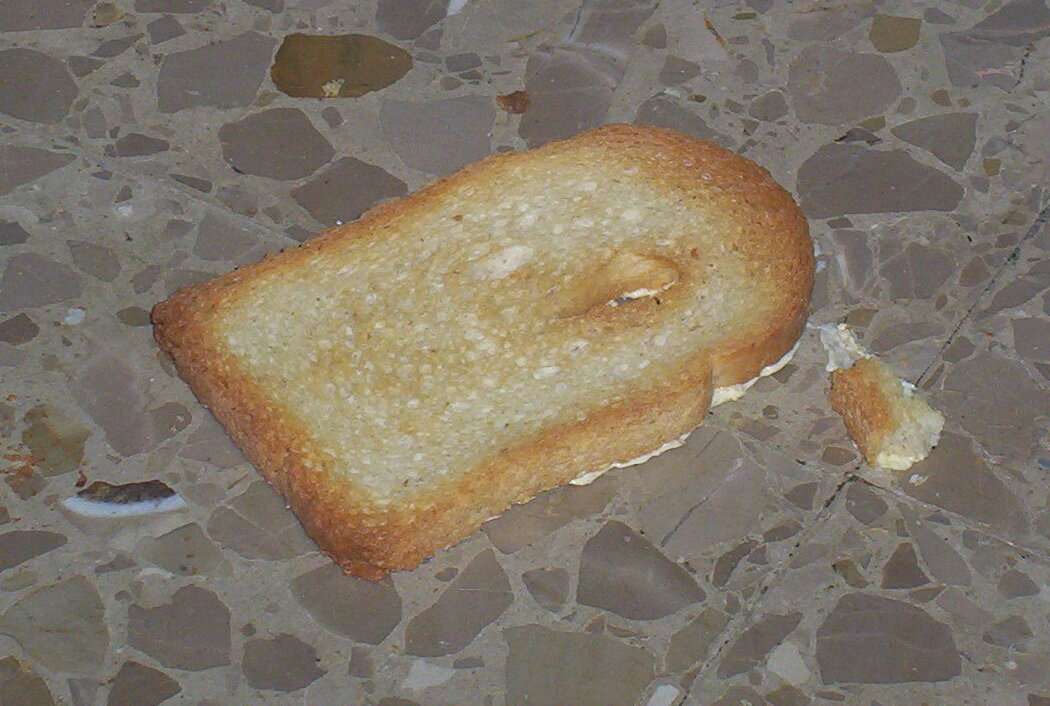
For more than a century, people have grumbled that dropped bread always lands butter-side down and chalked it up to plain pessimism. When the BBC science show Q.E.D. tossed toast into the air in 1991, it landed butter-down only half the time — exactly what chance predicts.
But the buttered toast phenomenon is real when the toast slides off a table instead of getting flipped. Physicist Robert Matthews worked out why and won a 1996 Ig Nobel Prize for it: a slice pushed over a table edge starts to rotate, and an ordinary table gives it just enough falling time to complete about half a turn before it lands, buttered face down. Raise the table above ten feet and the toast finishes a full rotation and lands butter-up.
Matthews argued the outcome traces back to human height, which is itself capped by the strength of chemical bonds — a person tall enough to butter toast at a ten-foot counter would fracture their skull in any fall. The weight of the butter, mathematician Ian Stewart says, is “negligible.”
Previously:
• Five second rule conclusively debunked
• Is the Five Second Rule real?