
What if every starting running back in the NFL were injured? That’s the exercise we’ll run here, ranking the remaining fantasy backs based on upside should they become their team’s RB1. Running backs have stayed healthier than wide receivers over the past two seasons, but history suggests that will regress in 2026.
Tier One1) TreVeyon Henderson, NE
This one feels obvious given Henderson has a higher ADP than Rhamondre Stevenson, who enters the season as New England’s starting back. Stevenson was the better player last year (including fantasy production) and is trusted far more in pass protection — Henderson saw just four snaps in the AFC Championship game. However, Henderson was the RB7 in producing spike weeks as a rookie, when he also ranked 10th in yards per touch (5.3). It’s also likely he improves during his second year in the league. New England’s schedule will be much harder in 2026, but the addition of A.J. Brown will be a big help to the offense.
Henderson has massive fantasy upside should he get starter touches.
2) Blake Corum, LAR
Corum could earn closer to a 50/50 split this season, but Kyren Williams is still the Rams’ RB1. Corum will have standalone value (especially in Best Ball leagues), but his true fantasy potential would require an injury to Williams. If Corum took over as LA’s lead back, he’d be locked in as a top-10 fantasy RB in an offense projected to lead the NFL in scoring. The Rams’ difficult schedule during the championship weeks (@Sea, @TB) is a minor concern, although plenty can change (including a Vita Vea trade).
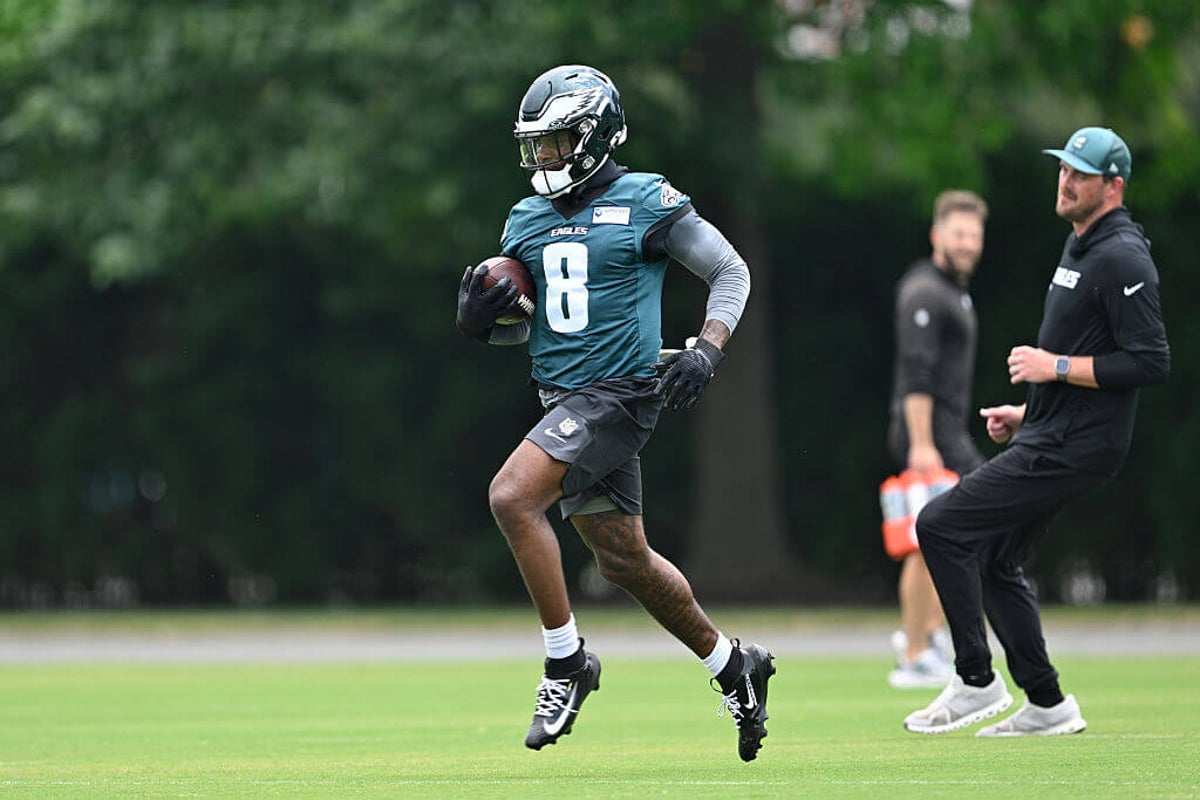
3) Tank Bigsby, PHI
Tank Bigsby propaganda pic.twitter.com/mMMJZqSWqC
— Ian Hartitz (@Ihartitz) February 13, 2026
Bigsby is more of a true backup than others toward the top of this list, as it would likely take a Saquon Barkley injury for him to have any fantasy value. However, he impressed last season and has emerged as Philadelphia’s clear RB2. The Eagles project to have one of the league’s best offensive lines and an upgraded system under new OC Sean Mannion. Bigsby has an affordable ADP (RB53) with league-winning potential should he become Philadelphia’s RB1.
Barkley could easily stay healthy and have a huge bounce-back campaign, but Bigsby owns Tier 1 contingency upside.
4) Rico Dowdle, PIT
Jaylen Warren is listed as Pittsburgh’s starter, and he could be in line for an underrated fantasy season if he absorbs most of Kenneth Gainwell’s vacated targets. However, reconnected with Mike McCarthy, Dowdle is also set for plenty of work, including at the goal line. Pittsburgh running backs saw the second-most targets among team RBs in the league last season, and that’s likely to continue with Aaron Rodgers at this stage of his career.
Kaleb Johnson seems like an afterthought, so Dowdle would become a borderline top-15 fantasy RB should Warren go down.
5) Jonathon Brooks, CAR
Brooks has just nine career NFL carries and is returning from his second ACL surgery, but all signs point to him finally being back to 100 percent. He likely would’ve been the second RB drafted in this year’s rookie class, and Chuba Hubbard looks like one of the league’s most replaceable starters. Brooks can overtake Carolina’s RB1 role based on performance, but a Hubbard injury would certainly clear the way to a featured role.
Brooks has three-down ability in a possibly ascending offense, and his fantasy potential is no secret with a quickly rising ADP.
6) Kyle Monangai, CHI
Monangai remains Chicago’s clear RB2 entering his sophomore campaign, but he’d be in a terrific situation should D’Andre Swift exit the picture. Ben Johnson is one of the league’s best play callers and offers cheat codes in which fantasy managers can benefit. Monangai showed he can play on all three downs as a rookie, and he’s one injury away from making a major fantasy impact.
Tier 27) Kenneth Gainwell, TB
Gainwell was top five in receiving yards and catches among running backs last season, also ranking second in fantasy points per opportunity. He’ll no longer be Rodgers’ comfort blanket now that he’s in Tampa Bay, but the Buccaneers paid Gainwell good money and plan on giving him a big role. Bucky Irving remains the team’s starter, but he’s battled injuries and didn’t see a goal-line rush last season. Gainwell would lose base carries to Sean Tucker should Irving go down, but he’d see increased touches and fantasy value. It’s easy to forget how injury-ravaged Tampa Bay’s offensive line was last season, but it’s arguably a top-three unit entering 2026.
8) RJ Harvey, DEN
Harvey had an underwhelming rookie season as a rusher, but he excelled as a pass catcher and scored 12 touchdowns. He ranked fifth in fantasy points per opportunity, so Harvey has upside if given more touches. Harvey’s expected PPR points per game jumped from 7.4 during games with J.K. Dobbins to 16.5 in games without him last season. Dobbins re-signed in Denver, and rookie Jonah Coleman will be a factor should the veteran back suffer yet another injury (there’s also concern about Denver wanting to run more under center). Still, Harvey’s role would also undoubtedly increase in a terrific situation — the Broncos might have the best offensive line in the league and are likely to play at a fast pace under new OC Davis Webb.
Harvey is being drafted ahead of Denver’s starter (Dobbins), but a somewhat limited workload cap keeps him from being higher on this list.
9) Ray Davis, BUF
Davis is one of the few true backups available later in drafts and who are just one play away from becoming must-starts in fantasy. Ty Johnson would take over most passing down work, but Davis is locked in as the RB2 in an offense that might lead the league in scoring. James Cook has shown no signs of slowing down, but Davis would inherit a lucrative role in one of the league’s best rushing systems. Even with Josh Allen stealing work, Cook tallied the fourth-most red-zone rushes (56) and the eighth-most carries inside the 5-yard line (14) last season.
During the two games in which Davis has seen more than 55% of the snaps, he’s averaged 23 touches and 160.5 yards. Davis could be a top-15 fantasy back should Cook go down.
10) Rachaad White, WAS
Jacory Croskey-Merritt is listed as the Commanders’ RB1 on most depth charts, while White figures to act as the team’s passing-down back. White struggles as a rusher, but he stands out among the Commanders’ RB pass catchers. Rookie Kaytron Allen would see more carries should “Bill” get injured, and Jerome Ford also looms on Washington’s roster, limiting White’s workload potential. Still, White would see increased touches should injuries strike, and Jayden Daniels gives fantasy upside to Washington’s backfield.
11) Jordan Mason, MIN
Aaron Jones re-signed in Minnesota, leaving another planned split backfield with Mason. There’s fantasy potential in Kevin O’Connell’s system (assuming Minnesota’s QB situation is fixed), although Mason isn’t much of a receiver. He’d also lose work to rookie Demond Claiborne, and Mason has never reached 175 carries (including college), as he’s worn down under heavier workloads in the past. However, Mason would become a weekly fantasy starter should Jones exit the picture.
12) Tyrone Tracy, NYG
Tracy averaged just 9.2 touches over six games with Cam Skattebo last season, but that jumped to 17.4 over nine games without the rookie. Skattebo clearly enters 2026 atop the Giants’ depth chart, but he also brings with him real health questions coming off the dreaded “TightRope” surgery. Tracy’s contingency upside could be somewhat muted by Devin Singletary’s continued presence (especially at the goal line), and there’s obvious concern over a Matt Nagy/Greg Roman offense. That said, Tracy was equivalent to fantasy’s RB18 (despite scoring just one rushing TD) during games he was New York’s lead back last season, and he’d see an obvious boost should he land back in a lead role in 2026.
13) Chris Rodriguez, JAX
Bhayshul Tuten should take over as Jacksonville’s 1a with Travis Etienne gone, but Rodriguez will also see plenty of work. He’s likely the favorite at the goal line, but Rodriguez has totaled seven targets over 35 career games. Rodriguez isn’t a special runner and is coming off foot surgery, but Liam Coen is one of the best play callers for fantasy production.
Rodriguez’s lack of pass-catching ability curtails his upside, but he’d still be a weekly fantasy starter should he become Jacksonville’s RB1.
Tier 314) Woody Marks, HOU
There are rumblings out of Houston suggesting Marks may split work with David Montgomery, but the veteran newcomer figures to ultimately act as the Texans’ lead back when healthy in 2026. Marks is a capable receiver, but he was a very limited runner behind a poor offensive line. Marks lacks big upside, and Houston’s RB depth chart is thin behind him.
Marks would quickly become fantasy relevant should Montgomery suffer an injury.
15) Isiah Pacheco, DET
New Lions RB Isiah Pacheco’s ranks among 51 RBs with 90+ carries last year:
46th in rush yards over expected per attempt
38th in yards after contact per attempt
48th in missed tackles forced per attempt
50th in @PFF rush grade
A downgrade from David Montgomery.
— Jared Smola (@SmolaDS) March 10, 2026
Even with Jahmyr Gibbs expected to get a bigger workload, there will be room for fantasy production by another Lions back. If there weren’t concerns over Pacheco’s health, he’d be much higher on this list. But he’s struggled mightily since breaking his leg in 2024, recently being outplayed by 30-year-old Kareem Hunt. It’s possible Kansas City’s run-blocking was to blame, but Pacheco ranked toward the bottom of the league in most rushing categories despite facing the NFL’s highest rate of light boxes. One reporter has suggested Sione Vaki could cut into Pacheco’s touches.
A rejuvenated Pacheco would have potential to pay off huge, especially if Gibbs goes down under a heavier workload. But questions remain whether Pacheco’s explosiveness will ever return.
16) Jaydon Blue, DAL
Blue was a bust during his rookie season, but he impressed during a brief audition in Week 18, especially before the rest of Dallas’ starters were pulled. He has the most fantasy upside among the Cowboys running backs vying to back up Javonte Williams. Blue reportedly learned his lesson from his rough rookie campaign and enters his sophomore season with a totally different mindset. Blue will produce helpful weeks in Best Ball even with limited touches in the old Tony Pollard role, and he possesses upside for more in Klayton Adams’ system, even if Phil Mafah (and not Malik Davis) would take over base down work should Williams go down.
Blue likely won’t ever be a workhorse even if injuries strike, but he’d quickly become a must-start in fantasy thanks to a Dallas environment that routinely produces among the most plays.
17) Brian Robinson, ATL
Robinson lacks standalone value, and there’s low perceived injury risk for Bijan Robinson, but his fantasy outlook would quickly spike if given the opportunity. (Brian) Robinson would likely cease some passing down work, but Atlanta’s depth chart is bare. Robinson didn’t get many opportunities behind Christian McCaffrey last season, but he remains a capable runner who would see most of the Falcons’ carries and goal-line work should Bijan go down.
18) MarShawn Lloyd, GB
Whether Josh Jacobs receives a suspension remains up in the air, although no one will be surprised if he doesn’t miss any games in 2026. All signs point to a healthier Lloyd winning Green Bay’s RB2 role. Lloyd revamped his offseason preparation to stay on the field, and he was able to go through OTAs healthy for the first time. Chris Brooks isn’t a threat if Lloyd is truly healthy, although the latter may never be treated like a workhorse. Still, Lloyd got 7.1 YPC during his final year in college and could inherit the league’s most lucrative goal-line role should Jacobs miss time, so he’s one of the better fantasy bench stashes.
19) Kimani Vidal, LAC
Keaton Mitchell goes rounds higher in Best Ball (and I’m plenty guilty myself), but Vidal would likely take over as LA’s base-down back should Omarion Hampton be sidelined. Mitchell will unquestionably provide some nice spike weeks (probably even with a healthy Hampton), but he’ll likely require an injury to be trusted as a weekly Flex option; Mitchell would still be limited to 10-15 touches should LA’s RB1 go down.
Meanwhile, Vidal remains the favorite to act as the Chargers’ RB2, giving him ample fantasy upside in new OC Mike McDaniel’s system — McDaniel is second among play callers in expected backfield fantasy points over the past three seasons. The Chargers will also go from a completely devastated offensive line last season to a possible top-five unit in 2026.
Hampton has yet to prove he can handle a full NFL workload, so Vidal (and Mitchell) has a real chance to make a fantasy impact in 2026.
20) Tyler Allgeier, ARI
Allgeier is now in arguably the league’s most crowded backfield after acting as Bijan Robinson’s backup. Rookie Jeremiyah Love will see plenty of touches after being selected third overall in the NFL draft, and Arizona reportedly plans on keeping James Conner and Trey Benson. Offensive coordinator Nathaniel Hackett mentioned Conner first when talking about Arizona’s starter. The Cardinals project to be the lowest-scoring team in football this season, and Allgeier would likely split work even if injuries hit.
Honorable mentions: Alvin Kamara (NO), Tyjae Spears (TEN), Jonah Coleman (DEN), Jordan James (SF), Emmett Johnson (KC), Dylan Sampson (CLE), Sean Tucker (TB), Braelon Allen (NYJ), Mike Washington (LVR)