
Welcome to Sliders, a weekly in-season MLB column that focuses on both the timely and timeless elements of the game.
It was a typical game for the swashbuckling 1986 New York Mets, a team that will celebrate its 40th anniversary in a ceremony at Citi Field on Saturday. On a warm summer night at Shea Stadium that July, the Mets trounced the Atlanta Braves by 11 runs. Gary Carter hit two home runs, Sid Fernandez tossed a shutout, and Darryl Strawberry charged the mound.
Jesse Orosco, the Mets’ left-handed closer, had the night off. So did Steven McDonald, a New York City police officer, who enjoyed the game with friends.
“That was the last thing,” McDonald’s son, Conor, said by phone this week. “He went to the game, got home, went to bed, woke up and went to work. And then everything changed.”
The next afternoon, in Central Park, a 15-year-old boy named Shavod Jones shot McDonald three times, severing his spinal cord and paralyzing him from the neck down. McDonald was 29 years old and had been married for eight months. His wife, Patti Ann, was pregnant with Conor, who was born the next January.
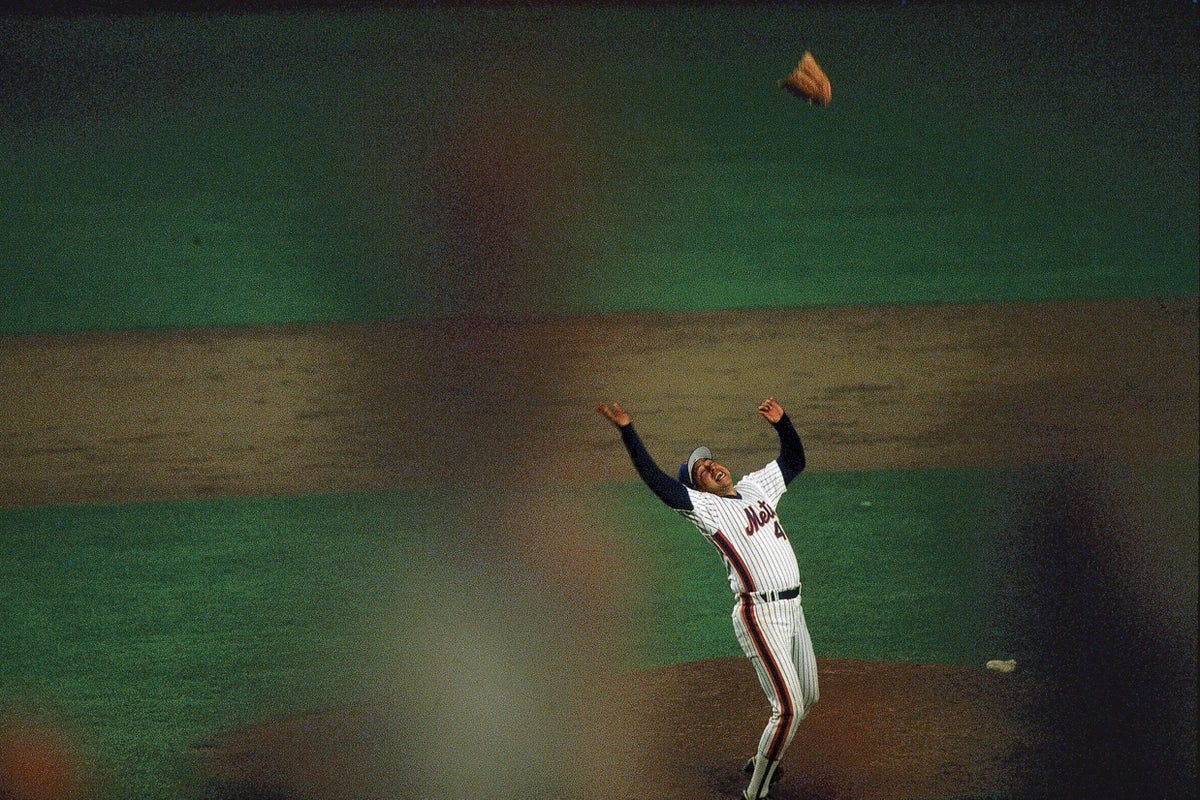
The Mets went on to beat the Boston Red Sox in a thrilling World Series, and when Orosco struck out Marty Barrett for the final out of Game 7, he flung his brown Rawlings glove to the sky. Soon after, he visited McDonald at Bellevue Hospital and gave him the glove.
“When he was in the hospital, a bunch of athletes were there at the same time and everybody was giving gifts to him,” Orosco said this week. “So I just decided I’m gonna give the glove to him right there.
“I know I’ve had people say, ‘Hey, Jesse, why’d you give up the glove?’ And I said, ‘You know, that’s not what it’s all about.’ I was happy to do that. The time was right. And I mean, it could have been any of us athletes that were there that day that could have done it.”
Only Orosco, though, had an artifact so symbolic of joy. Mary Murphy, a young reporter from Queens, had been at Shea that night, reveling with her sisters in the upper loge section along the first-base line. She had no idea until years later that Orosco would be integral to a film she would make about McDonald, who died in 2017.
“I wanted to show that he not only struggled, but that he found joy,” Murphy said. “And when I heard about Jesse Orosco giving him the baseball glove that he threw up after Game 7 of the World Series, I said, ‘We have to have that in this movie. We have to find a way to talk to Jesse Orosco.’”
Jay Horwitz, the longtime Mets public relations director and now the team’s historian and vice president of alumni relations, put Murphy in touch with Orosco, who lives in San Diego and spoke with Murphy there. The documentary, “Saint of the City,” is in final edits, and Murphy — who won 33 Emmys for breaking news and investigative work at PIX 11 and CBS 2 — hopes for widespread distribution soon.
‘Saint of the City’ documentary trailer
Courtesy of Mary Murphy
She held a private screening this month for donors and those who appear in the film, to coincide with the New York Police Department naming its academy for McDonald. Orosco was there and met Conor McDonald for the first time.
“I just remember, as a kid, my dad always talking about Jesse Orosco,” McDonald said. “At three or four years old, before I knew what sports meant to my community and to my family, I knew that this was a special person and he really helped my dad.
“He was kind of like a myth, you know? He’s a legend. And getting to talk to him and tell him how important that visit was to my dad and that gesture of giving him the glove — sometimes you don’t get a chance to thank people, because life goes in different ways, and to me it was great just to do that, 40 years later.
“There was a lot of pain and a lot of suffering, and people like Jesse Orosco, just with one visit and a simple gesture, helped my dad survive. The doctors only gave my dad like three years to live, and he lived for 30 and a half years. And that gave me the ability to know my dad and help me become the husband and father I am today.”
McDonald and his father bonded over New York sports, especially the Rangers, Knicks and Mets. The next time the Mets reached the World Series, they went to the final game together — a loss to the Yankees in 2000. Conor won’t be at the Mets reunion this weekend, though, because his son will be celebrating his second birthday.
The boy’s name is Steven Mychal, after Conor’s father and Mychal Judge, the chaplain of the New York Fire Department. Judge, who was instrumental to Steven McDonald’s spiritual journey — which included publicly forgiving Jones and corresponding with him while he was in jail — died on Sept. 11, 2001.
For all of the tragedy, Conor McDonald felt a calling to his father’s profession. A captain in the NYPD, he learned this week that he had been promoted to deputy inspector.
“In my personal opinion, being a cop is the greatest job in the world,” McDonald said. “There’s a lot of great people you serve and protect, especially in New York City. It’s a great privilege.”
Five questions with….Carl Willis, on his five Cy Young winners
As a rookie with the 1984 Detroit Tigers, Carl Willis shared a bullpen with that season’s AL Cy Young Award winner, Willie Hernández. As a longtime pitching coach for three teams, he’s gotten quite familiar with more modern Cy winners.
Willis, 65, has coached five Cy Young Award winners in his 23 seasons guiding staffs in Cleveland, Seattle and Boston. CC Sabathia (2007) and Cliff Lee (2008) won it during his first stint in Cleveland, Félix Hernández (2010) won it with the Mariners, Rick Porcello (2016) with the Red Sox and Shane Bieber (2020) with the Guardians.
“All of those guys were just tremendous competitors,” Willis said recently. “I mean, how much confidence they had, the ability to control their emotions, but to pitch with an edge.”
Willis — a reliever for nine seasons who earned a World Series ring with the 1991 Minnesota Twins — spoke about the breakout seasons of his five Cy-winning pupils.
Sabathia: “He started to evolve into a complete pitcher. We started throwing a cutter when we were at the old Yankee Stadium, just on flat ground, and when he took it to the mound, I don’t want to make comparisons to another Hall of Famer, but it was like a Steve Carlton slider. It wasn’t really a cutter. Now, when we told CC that and had him throw the pitch again, it was terrible. And I’m like, ‘Hey, just think cutter, don’t think slider.’ He still had power stuff, but he had this pitch that he could throw to both righties and lefties, and his change-up was always good. That kind of complemented the power.”
Lee: “The biggest thing about Cliff (in 2007, when he struggled), up until that point in his career, all he ever wanted to know was, ‘Who can I not pitch inside?’ He just wanted to bury people inside, inside. And then we’d talk about adding other pitches and things of that nature. And I talked to him about, hey, you know what? Throw some fastballs away. Because he’d get to five innings, we’d have 100 pitches because everyone looked in. In too far: they take it for a ball. Leak in a little bit: foul ball, foul ball. It became just this battle of wills. And all of a sudden, he started to throw some fastballs down and away to move their eyes there. To where all of a sudden he controlled counts and they had to respect the other side of the plate, and when he came in, he beat them. Honestly, nothing in this game is easy to do, but it was so simple.”
Hernández: “I just remember Félix having meetings with the staff prior to a series; there’d be a handful of guys we’d say, ‘Hey, we don’t want to throw this guy a changeup.’ And Félix said, ‘Well, I’m going to see if he can hit mine.’ But the thing about Félix is that he could just manipulate the baseball. He had power as well, but he could do anything with the baseball he wanted to do. He’d be in a battle with a guy and he’d throw him a cutter and he didn’t even throw a cutter. But he’d throw a good cutter. He just had a tremendous feel for the ball.”
Porcello: “I joined the team there in May and I was on a crash course learning these guys. But I’d seen Rick for years with the Tigers and he had a ridiculous sinker. And as metrics evolved with TrackMan and the ability to measure, there was some thought that he had a good four-seam, and he was shifting towards becoming more of a four-seam, curveball and not throwing the sinker as much. And look, I mean, I’m old school, but I’m like, ‘Wow, this guy’s got a ridiculous sinker. I don’t think you never throw a four-seamer, but throw your strength. Throw your two-seamer down and then when you want, you can beat guys up with a four-seamer. But if you’re just trying to live there, it’s not really who you are. He was able to kind of make that adjustment; he had that competitive spirit, and he was a leader on our pitching staff and in our clubhouse.”
Bieber: “He threw fastballs away and down that had ride through the bottom of the zone that hit her spot. They were going to be low and out of the zone, and they would hold plane. I remember it so well during that year in Cincinnati and Minnesota as well; he would throw an 0-0 curveball. We talk about dumping in a curveball — guys don’t swing at 0-0 curveballs, so just dump it in there — but he’d throw 0-0 curveballs that were like 0-2 curveballs; much like his four-seamer, it would hold plane. He could start it and it had no hump in it and just — boom, right at the knees, with power. He had such command and feel for that curveball, it was absolutely ridiculous.”
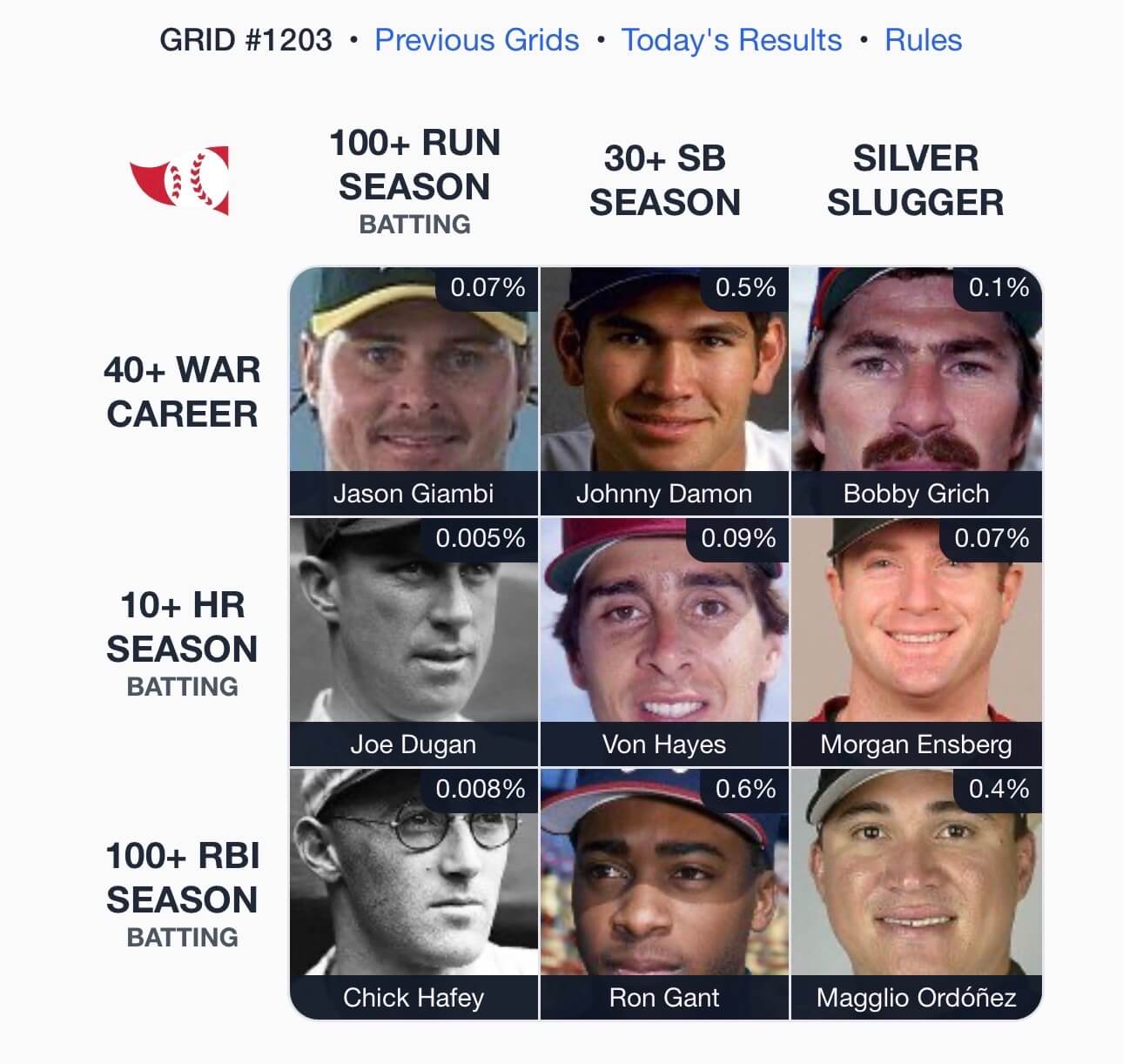
Off the GridJoe Dugan, 100-run season, 10-homer season
Full disclosure: I had to look this one up — I didn’t know offhand that Joe Dugan had 10 homers for the 1921 Philadelphia A’s and a couple of 100-run seasons for the New York Yankees. But since it’s trading season, well, it’s a tale worth sharing.
This year’s Aug. 3 trade deadline is as late as it can be under the collective bargaining agreement, which allows the commissioner to set the date anywhere from July 28 to Aug. 3. It’s been around that date for four decades — we won’t get into waiver complications — but from 1923 to 1985, deadline day was June 15.
The inspiration was a one-sided deal between the Boston Red Sox and the Yankees, but not the one involving George Herman Ruth. That sale had happened in the winter before the 1920 season. This one happened on July 23, 1922, when the Yankees sent four players and $50,000 to Boston for Dugan and Elmer Smith.
The Yankees were trailing the St. Louis Browns in the American League before the deal, and boy, did this upset the good folks of St. Louis.
As the Associated Press reported on July 25: “Letters of protest, terming as ‘unsportsmanlike’ the recent New York-Boston transaction by which the Yankees acquired Third Baseman Joe Dugan and Outfielder Elmer Smith were sent to former Judge K.M. Landis, national baseball commissioner, by the Chamber of Commerce and the Rotary Club of this city today.”
Evidently, the Chamber of Commerce and Rotary Club had some clout in those days, because soon the Browns persuaded Judge Landis (the K.M. stood for Kenesaw Mountain) to establish a deadline for trades. But that didn’t help the 1922 Browns, whose fans were right to be worried.
The Yankees went 41-19 the rest of the way to win their second pennant in a row, and Dugan hit .286 down the stretch, matching his average across seven seasons with New York. He became especially close with Ruth, who famously confided in Dugan, before his farewell at Yankee Stadium in 1948, “I’m gone, Joe. I’m gone.”
Dugan was a pallbearer at Ruth’s funeral, held on a hot, rainy morning that August. Turning to another pallbearer, former pitcher Waite Hoyt, Dugan said, “I’d give a hundred dollars for an ice-cold beer.”
“So would the Babe,” replied Hoyt.
Classic clipRickey Henderson goes to Toronto, July 31, 1993
It sure doesn’t look like the Toronto Blue Jays will return to the World Series in 2026. The first time they made it, though, Hall of Fame general manager Pat Gillick did all he could to help them get back, acquiring the greatest leadoff man in history, Rickey Henderson, 33 years ago today.
Henderson came from the Oakland Athletics for pitcher Steve Karsay and a player to be named later (outfielder José Herrera). He didn’t hit much, but stole 22 bases in 24 attempts down the stretch and had two critical World Series moments against the Philadelphia Phillies: a two-out, two-run single in the eighth inning of Game 4, when the Jays scored six runs for a stirring 15-14 win, and the leadoff walk in the ninth inning of Game 6.
Henderson represented the tying run and moved to second on a single by Paul Molitor. It was his presence that caused Mitch Williams to use a slide step motion while facing Joe Carter. With diminished stuff, Williams served up the home run that won the title, a moment immortalized this month in a statue outside Rogers Centre.
Two fun anecdotes about Henderson as a Blue Jay from Howard Bryant’s fantastic 2022 biography: Henderson missed three games with frostbite — in August. (He fell asleep while icing his ankle.) And when he returned to Toronto, back with the A’s in 1994, the team bus passed a billboard depicting Carter’s home run. As players and staff swapped stories about where they were at that moment, Henderson dropped the mic with a cry from the very last row:
“I was on second base!”