
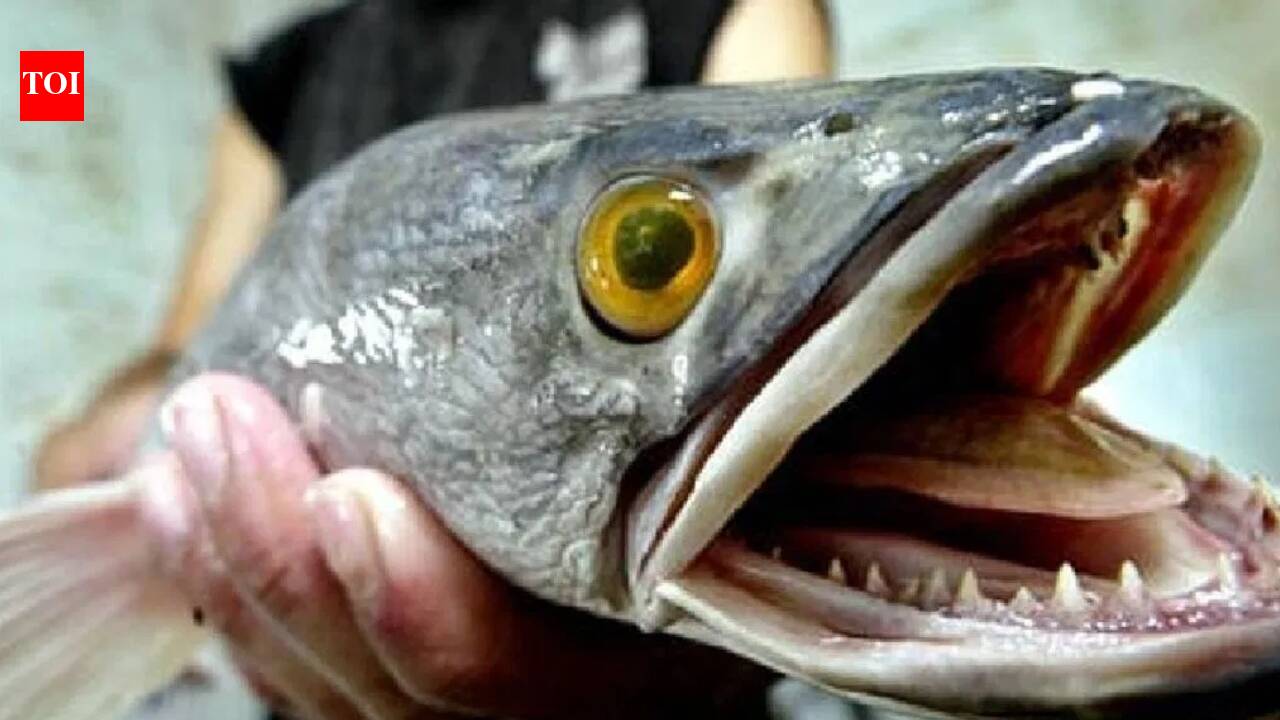
 When ‘Frankenfish’ invaded America: How the discovery of snakehead fish in a Maryland pond sparked nationwide alarm. Back in the summer of 2002, something strange happened in a quiet Maryland suburb; something that got the whole country talking. It started like any normal day by the pond in Crofton: an angler, hoping for bluegill or largemouth bass, pulled up a fish nobody had ever seen there before. Long and lean, covered in tough scales with a mouth full of sharp teeth, this thing didn’t just look out of place: it could also breathe air and had an uncanny knack for surviving outside the water for short stretches. People started calling it the “Frankenfish,” and for a while, it almost felt like a sci-fi movie playing out in real life. But this was no monster from the deep; it was a northern snakehead, a freshwater predator from Asia.
The arrival
The first confirmed sighting came in May 2002, when a fisherman caught an unfamiliar fish in a small pond in Crofton, about 30 kilometres east of Washington, D.C. Soon after, biologists discovered not just one fish but an entire breeding population, including adults and nearly 100 juveniles. Investigators revealed that at least one breeding pair had likely been illegally released into the pond, possibly after being kept as pets or purchased from a live fish market.News of the discovery hit the front page almost overnight. Everyone from lakefront property owners to federal officials worried about what might come next. There were stories everywhere packed with speculation: the snakehead could slither miles over dry land, decimate native wildlife, and transform American waterways for the worse.
The aftermath
There was a sense of urgency to contain the panic. Wildlife officials weren’t about to take any chances. Within weeks, they moved to poison the pond using rotenone, a chemical designed to kill fish, hoping to wipe out every last snakehead before it could escape to nearby streams. The whole operation was as high-stakes as it was drastic, and it seemed like the only way to stop the species before things spiraled out of control.Turns out, the fish had been quietly multiplying. Biologists found not just one, but a whole family of snakeheads: adults and nearly a hundred juveniles. Investigators guessed someone probably dumped them in the pond after buying them as pets or dinner from a live fish market. Whether intentional or just careless, that one act nearly set off a nationwide invasion.
What exactly was it?
Much of the alarm boiled down to the snakehead’s unusual biology. These fish have a breathing organ that lets them gulp air, so they can survive in stagnant water or even flop across wet ground to reach new ponds. Early reports exaggerated their overland travels a bit (it’s not like they’re marching across highways), but they really can move from one water body to another under the right conditions. And then there’s the appetite: snakeheads eat other fish, frogs, and anything else they can get their jaws on, and the females can lay thousands of eggs a year. Both parents guard those eggs fiercely, which means plenty of baby snakeheads make it to adulthood. In other words, they have all the right tools to take over.
The measures taken
The federal response went far beyond Maryland. By October 2002, snakeheads were banned under the Lacey Act, making it illegal to buy, sell, or transport them alive anywhere in the U.S. The goal was simple: keep the fish from spreading through the aquarium trade or live food markets. But in the end, the barriers weren’t enough.Within a couple of years, snakeheads popped up in the Potomac River, which is a vast, interconnected waterway that drains much of the region. From there, they moved through the Chesapeake Bay watershed, and the list of affected states kept growing. Once a species like this cracks into a connected river system, getting rid of it is nearly impossible. It’s an object lesson in how fast invasive species can make themselves at home when people don’t act fast enough.
The experts’ take
After the dust settled, the panic started to look a little overblown. Snakeheads are serious invaders, no argument there, but they’re not the unstoppable monsters people first imagined. Mostly, they spread through rivers and lakes, not by crawling miles across dry land. And while they absolutely have an impact, as they eat tons of native fish and mess with aquatic food webs, they haven’t wiped out the wildlife everywhere they land.But that’s not exactly comforting. Studies show snakeheads can reshape local ecosystems, especially where they become common. They hit hardest in backwaters and slow-moving rivers, where native fish just aren’t equipped to deal with a predator like this. Local agencies and university researchers still keep a close watch, hoping to figure out the long-term effects on biodiversity and the fish we rely on for recreation and food.Now, over two decades later, attitudes toward the snakehead have shifted a bit. Among anglers, the fish have earned grudging respect as a sport target: aggressive, hard-fighting, and, according to some, pretty tasty. Certain states will even encourage people to catch and cook their snakeheads rather than throw them back. Wildlife officials put out the word: if you land one, kill it, don’t release it, and always report new sightings. They’re serious about slowing the spread in any way possible.What happened in Maryland triggered big changes in how America deals with invasive species. It turned an obscure fish into a household name, led to new policies and controls on pet and wildlife trade, and showed that even isolated ponds can turn into ground zero for environmental problems. Maybe most of all, the “Frankenfish” story left behind a harsh lesson: even the smallest, most casual action, like releasing an exotic fish, deciding to skip a law or a warning, can have consequences well beyond what anyone expected.