
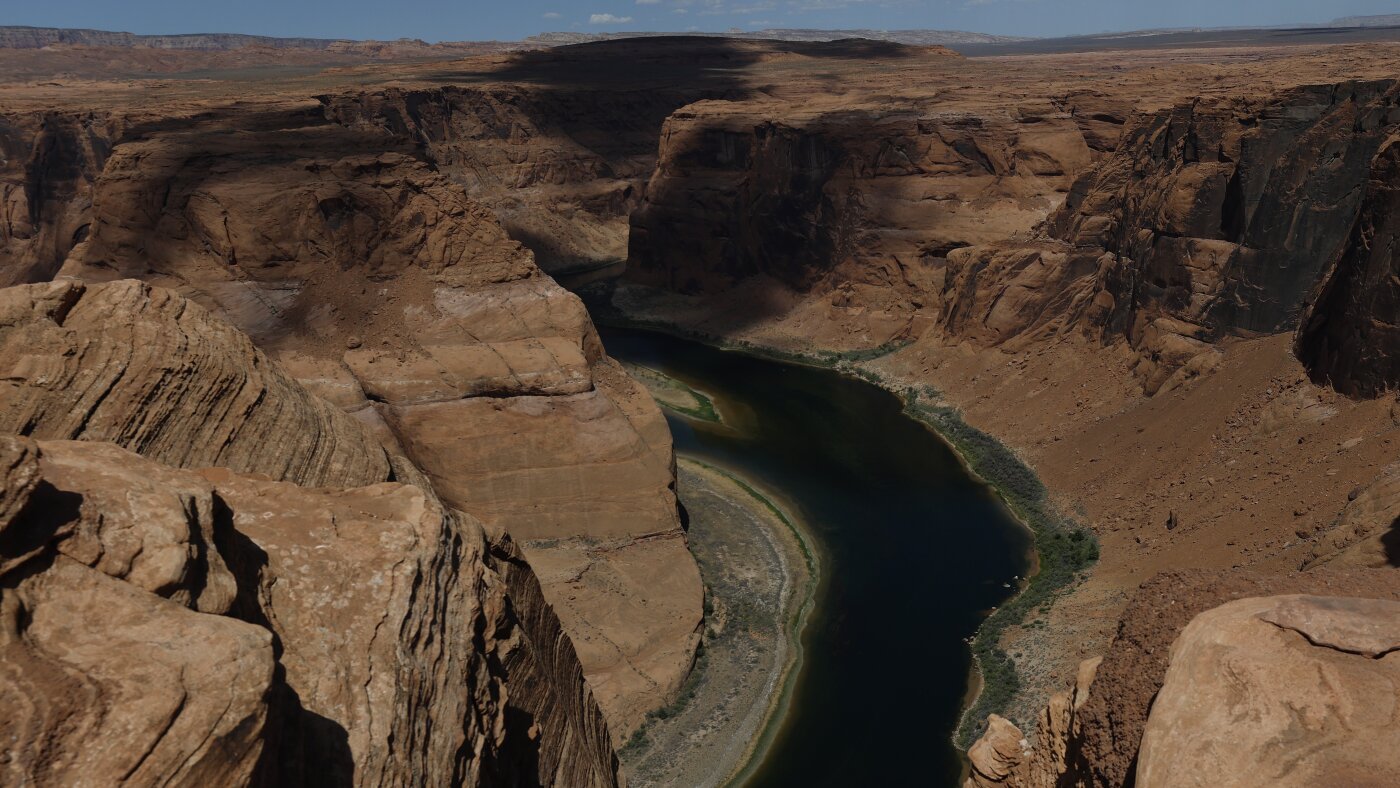
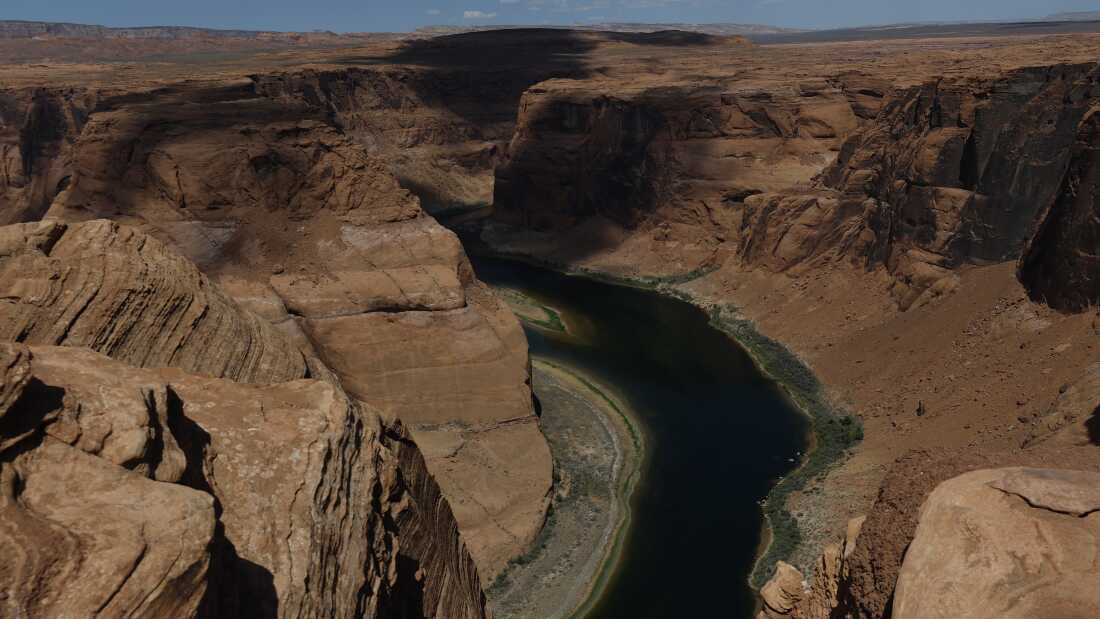
A view of the Colorado River at Horseshoe Bend on July 31, 2026 in Page, Arizona. In July, the combined water of Lake Mead and Lake Powell, the country’s two biggest reservoirs, fell to their lowest levels since 1957. The unprecedented low in combined storage prompted the U.S. Department of the Interior to mandate twenty percent cuts in water usage for the next two years for Arizona, California and Nevada.
Justin Sullivan/Getty Images
hide caption
toggle caption
Justin Sullivan/Getty Images
Across the western US, many states are dealing with extreme heat and drought-like conditions.
In times like these, water — and access to it — becomes a contentious issue.
A new plan put forth by the federal government aims to allocate water from the Colorado River between states and Native American tribes.
What’s in the plan – and will it work?
This episode was produced by Daniel Ofman, with audio engineering by Becky Brown. Our director is Marc Rivers.
It was edited by Michael Levitt and Tinbete Ermyas.
Our interim executive producer is Courtney Dorning.
Support public media with NPR+ and enjoy perks for over 25 podcasts like this one. This show’s perks include bonus episodes and sponsor-free listening. Learn more at plus.npr.org.