
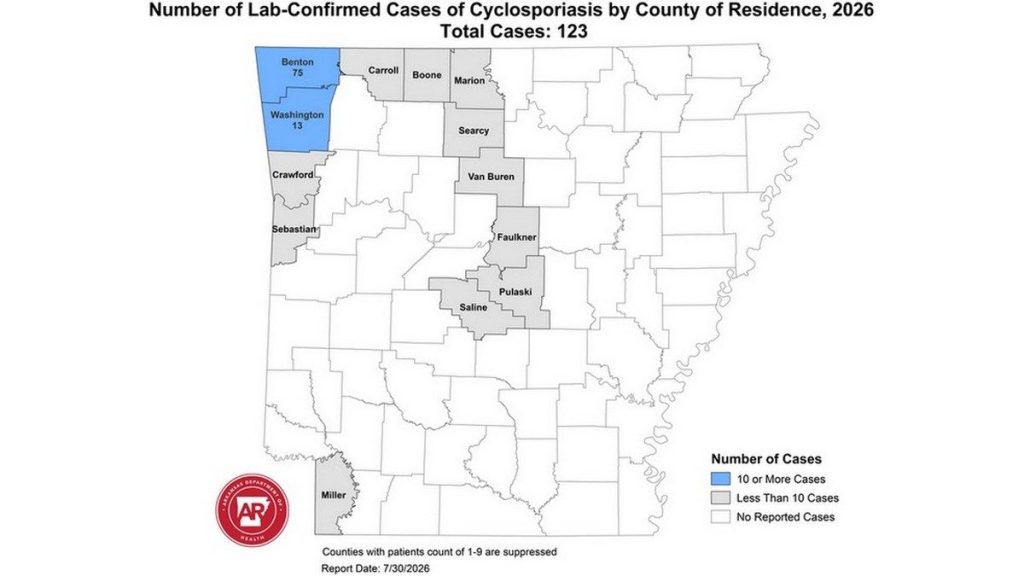
Cyclosporiasis, the stomach illness spreading across the country, is still increasing in Arkansas and one more county in the north central part of the state are reporting cases. The Arkansas Department of Health (ADH) is reporting 132 cases this week, an increase of 53 cases of the sickness in the state. The sickness is now being reported in Searcy County. In last week’s report for the ADH, it was reported in Marion and Boone counties. All three of those counties are reporting less than 10 cases. Benton County in the northwest part of the state leads Arkansas with 75 cases.
The ADH says Cyclosporiasis is an intestinal illness caused by the microscopic parasite Cyclospora cayetanensis, also known as Cyclospora. People can become infected by consuming food or water that contains the parasite. Cyclosporiasis is not usually life-threatening.
As health officials continue investigating the source of the outbreak, focus remains on certain shredded iceberg lettuce supplied by Taylor Farms in central Mexico, even after the FDA withdrew an earlier positive lab result.
SYMPTOMS
Cyclospora usually causes watery diarrhea with frequent and sometimes explosive bowel movements. Symptoms may seem to go away and then return one or more times. Anyone who suspects they have cyclosporiasis should contact their healthcare provider.
Cyclospora spreads when people eat food or drink water that has been contaminated. It is very unlikely to spread directly from person to person.
TREATMENT
Anyone experiencing symptoms of Cyclospora infection should talk to their healthcare provider. Cyclosporiasis is treated with trimethoprim-sulfamethoxazole. Resting and drinking plenty of fluids are important for those with diarrhea.
Most people with healthy immune systems will recover without treatment, but illness may last from a few days to over a month if untreated. Symptoms may improve and then return (relapse). Persons in poor health or those with weak immune systems may be at higher risk for prolonged or more severe illness.
PREVENTION
People can take the following steps to prevent Cyclospora infection:
– Avoid consuming food or water that may be contaminated with feces.
– Follow food safety handling recommendations for safe preparation and storage such as:
– Wash hands with soap and water before and after handling or preparing raw fruits and vegetables.
– Wash all fruits and vegetables thoroughly under running water before eating, cutting, or cooking.
– Cut away any damaged or bruised areas on fruits and vegetables before preparing and eating.
– Refrigerate cut, peeled, or cooked fruits and vegetables within two hours.
While Cyclospora case counts tend to rise in the spring and summer months, there has been an increased number of Cyclospora cases reported to the Arkansas Department of Health in 2026 compared to prior years. After an investigation, it was determined that the increase in cases in Arkansas is, in part, associated with the ongoing multistate outbreak.
WebReadyTM Powered by WireReady® NSI