
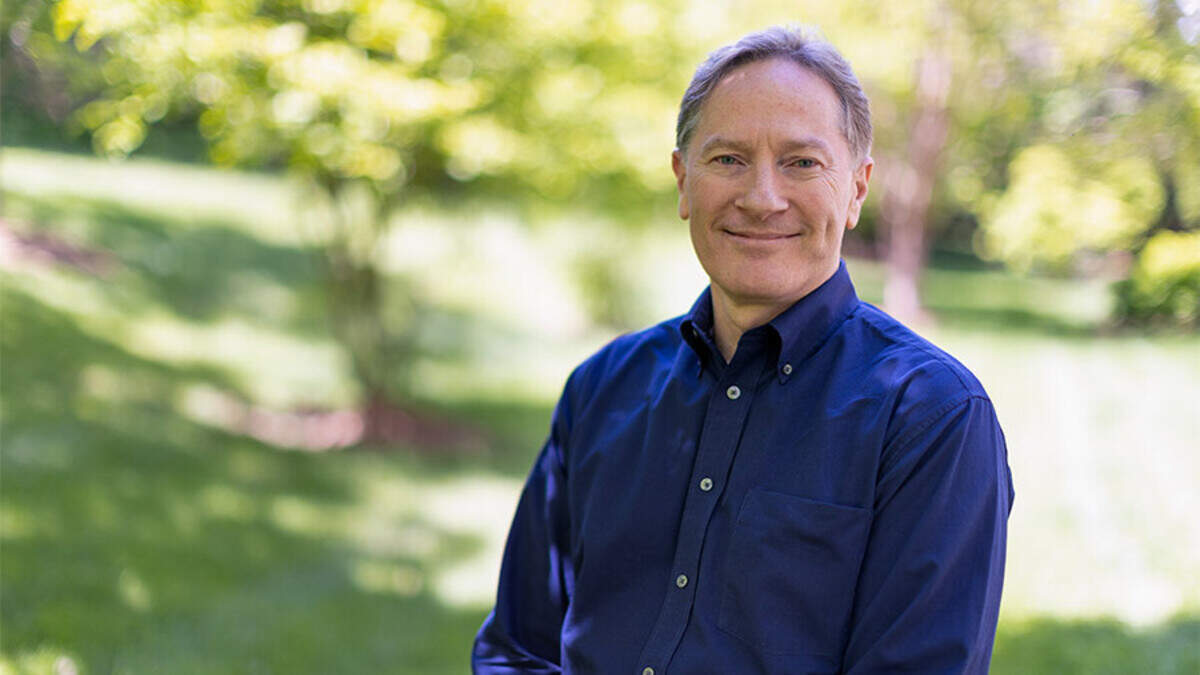
A federal judge has ruled that a Tacoma-area therapist can reopen his court case challenging Washington’s ban on conversion therapy that makes performing it on minors unprofessional conduct for healthcare professionals.
The July 30 ruling by the U.S. District Court Judge Tiffany Cartwright, whose chambers are in Tacoma, comes after the Supreme Court ruled in March that a similar Colorado law banning conversion therapy infringed on free speech based on viewpoint.
Brian Tingley, a licensed marriage and family therapist based in Fircrest, last challenged the Washington law regulating unprofessional conduct for healthcare professionals, RCW 18.130.180, in 2021. A District Court judge dismissed his lawsuit, finding that some of his claims were blocked by appeals court rulings that upheld a California conversion therapy law.
Attorneys for Tingley from the Alliance Defending Freedom, a conservative legal advocacy organization, argue that the Supreme Court’s ruling in the Colorado case, Chiles v. Salazar, vindicated Tingley’s right to speak to clients “consistent with his religious convictions and his clients’ wishes” by holding that conversion therapy laws such as Washington’s censor speech based on viewpoint.
Tingley is Christian, and in a declaration filed in court he said his faith informs, among other things, what paths and ways of thinking will most likely enable his clients to achieve comfort with themselves and live happy, satisfied lives. He said most of his clients are Christians who choose to work with him because of their shared worldview.
“My counseling consists solely of conversation,” Tingley wrote. “I never set goals for clients, but I help them with goals they set for themselves.”
Tingley is now seeking a preliminary injunction to stop Washington from enforcing its conversion therapy law in regard to his counseling conversations.
Opposing Tingley’s request to reopen the case, lawyers for state Attorney General Nick Brown, Secretary of Health Dennis Worsham and Assistant Secretary of the Health Systems Quality Assurance Shawna Fox argued in court filings that conversion therapy attempting to change a person’s sexual orientation or gender identity doesn’t work, and it hurts kids.
Attorneys for the state said research overwhelmingly concludes that conversion therapy increases depression and suicidal ideation, and that it has been discredited by leading medical and mental health organizations.
“Accordingly, exercising its well-established authority — and duty — to regulate licensed health professionals and protect vulnerable youths, Washington’s Legislature declared that practicing conversion therapy on minors is ‘unprofessional conduct,’” attorneys for the state wrote in its response to Tingley’s motion to reopen the case.
The state defendants have been joined by an intervenor defendant, Equal Rights Washington, a statewide LGBTQ advocacy organization.
In June last year, Brown led a coalition of 19 states and Washington, D.C., in a brief defending a similar law in Michigan as an outside party to a case challenging Michigan’s law. In a news release, Brown said Washington was one of more than 25 states that banned or restricted conversion therapy.
Tingley’s attorneys, however, say the state government is trampling on the First Amendment by prohibiting him from voicing certain perspectives that the state disfavors when speaking with consenting clients. Attorneys wrote in court documents that Tingley never imposes his views on clients, and that they come to him to work toward their chosen goals.
“Tingley believes — and his clients agree — that ‘it is more important [for a person] to live consistently with their religious values than to conform their lives to their subjective feelings,’ including feelings of same-sex attraction or discomfort with their bodies,” the attorneys wrote, citing Tingley’s declaration filed in court.
Due to Washington law, Tingley said in his declaration, at least six times in the past few years he has declined to provide counseling for minors who experienced unwanted same-sex attraction, wanted counseling to help change their gender identity or help with unwanted sexual behaviors in order to align that with their biological sex or biblical sex ethic.
Tingley said state law has also prevented him from advertising his business on his website as he would like to. He said he advertises “sexual orientation & gender identity struggles,” but he’d like to specifically advertise counseling for minors struggling with their biological sex or who want to reduce unwanted same-sex attraction.
A representative for the Attorney General’s Office said Tuesday that the office was not able to comment on the ruling reopening Tingley’s case because it was working on a response to his motion for a preliminary injunction.
Johannes Widmalm-Delphonse, an attorney for Tingley, said in a news release issued after the ruling that there was an “epidemic” of mental health issues among young people today. He said young people and their parents often come to Tingley because they feel most comfortable with a counselor who shares their faith.
“We’re pleased to see that Washington will be held accountable for its unconstitutional law and that Mr. Tingley will have the chance to vindicate his First Amendment rights, Widmalm-Delphonse said in a statement to The News Tribune.

The News Tribune
Peter Talbot is a criminal justice reporter for The News Tribune. He started with the newspaper in 2021. Before that, he earned his bachelor’s degree in journalism at Indiana University. In college, he worked as an intern at NPR in Washington, D.C. He also interned for the Oregonian and the Tampa Bay Times.
Support my work with a digital subscription