
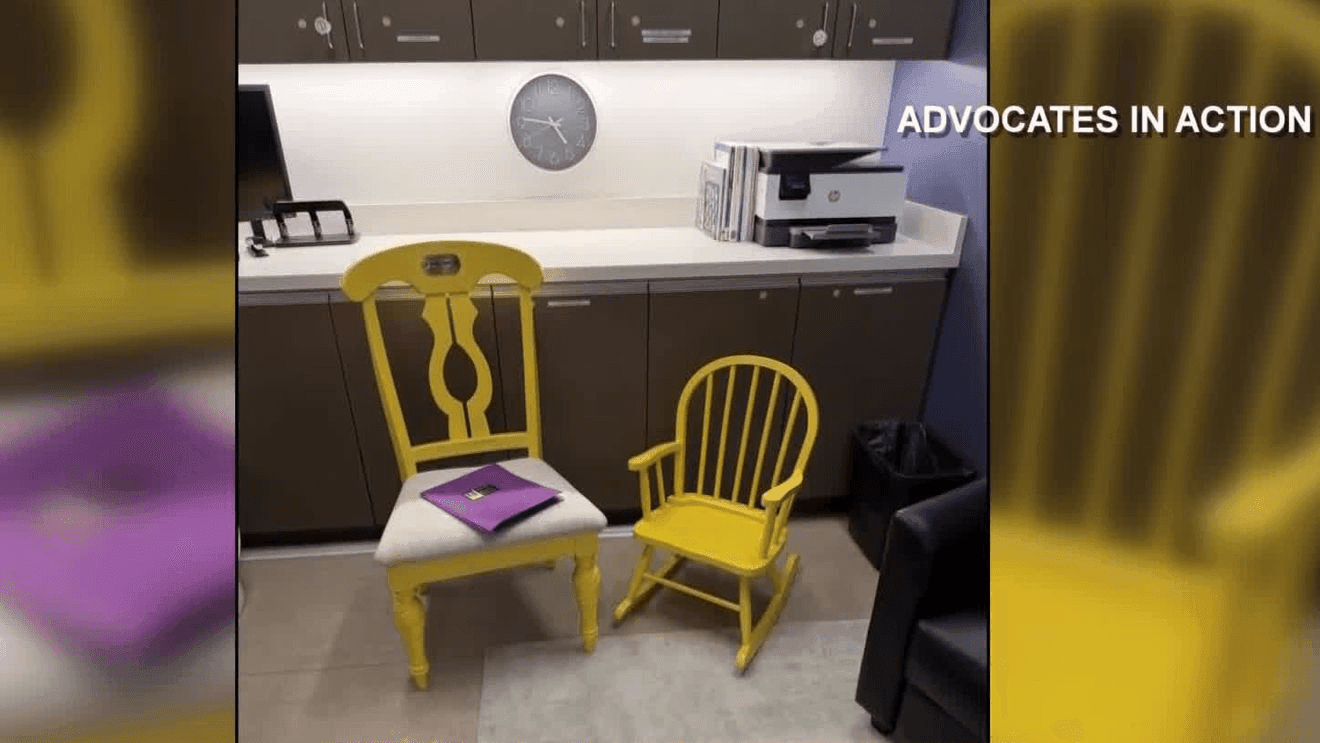
LAS VEGAS (KSNV) — Stress and overwhelm can show up in everyday moments — an email someone regrets sending, a student who walks out of class, a teacher who carries one difficult moment into the next interaction, or a parent who brings the pressure of the workday home. A Nevada-based group says those reactions can be interrupted before they turn into the next decision.
Haley Stewart and Sheryl Lynn of JOYELY, along with Dr. Tya Mathis Coleman, deputy Nevada state treasurer, are promoting what they call the “Chair of JOY,” a tool designed to create a visible pause when emotions run high.
According to JOYELY, the Chair of JOY is meant to interrupt stress before it becomes someone’s next reaction — at school, at work or at home. The group says people who use it can reset and approach the next moment differently, whether that means a student returning to class, a teacher entering the next interaction with a new mindset, or a parent listening instead of reacting.
JOYELY says it is focusing first on children and education because many adults are now trying to relearn how to recognize, navigate and respond to their emotions. In contrast, children can begin learning those skills early. The group says “JOY Intelligence” and the Chair of JOY are intended to give students, educators and families shared language and a practical method to use when emotions are high, to help children identify what is happening, interrupt an automatic reaction and make a different next decision.
JOYELY also announced an event called Advocates in Action on August 7, bringing together educators, psychologists, mental health professionals, public leaders, advocates and families. Organizers say the goal is for Nevada to become “a leader in prevention, not last in the country and not somewhere in the middle,” and to help break cycles of constant stress, harsh reactions and disconnection before they shape another classroom, family, workplace or generation.
The gathering will explore what it would take to place Chairs of JOY in classrooms and community spaces and to create what organizers describe as a new conversation about emotional wellness.