
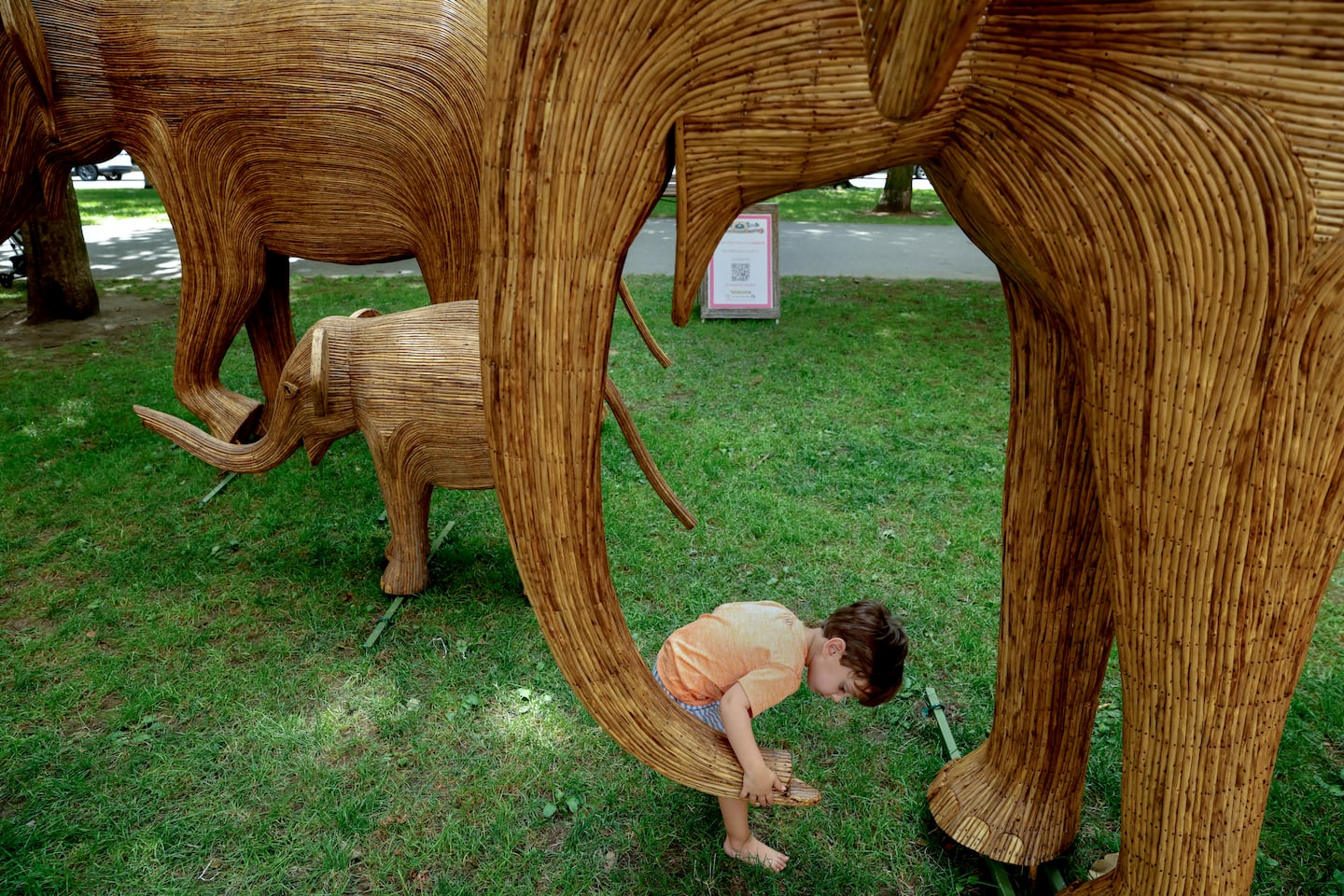
“For me, the elephant is the most inspirational animal, especially the Asian elephant,” said Ruth Ganesh, co-founder of The Great Elephant Migration. “They’ve used their immense intelligence to work out how to live in a very human-dominated place, and they’ve done it with all of the characteristics we associate with elephants: incredible patience and total lack of aggression, despite their immense size and capability.”
Each statue was hand-crafted by hundreds of Indigenous artisans from India’s Nilgiri Biosphere Reserve, which is home to the largest population of endangered Asian elephants in India. Ganesh came up with the idea about 10 years ago with Dr. Tarsh Thekaekara, a conservation researcher who lives in the Nilgiris.
“The whole journey began when we, together, decided to recreate every single elephant that lives in that landscape with the Indigenous communities who know them all by name and personality,” Ganesh said.
The statues were woven from the Lantana camara plant, which is considered to be one of the world’s worst invasive species by the Global Invasive Species Database.
“We took this leap to not only remove it from the forest, but actually make something beautiful that helps wildlife with it,” she said.
The statues debuted in Newport, R.I., in 2024, and traveled to eight American cities including New York City, Miami, and Beverly Hills. After the five-week stint in Boston, the herd will move on to Las Vegas, Washington, D.C., and ultimately to Europe.
“It’s not very often that you get to fuse a world like Boston, for example, with a fairly remote rural Indigenous community in southern India,” she said. “What’s been unique about Boston is the overwhelmingly warm welcome that the elephants have been given.”
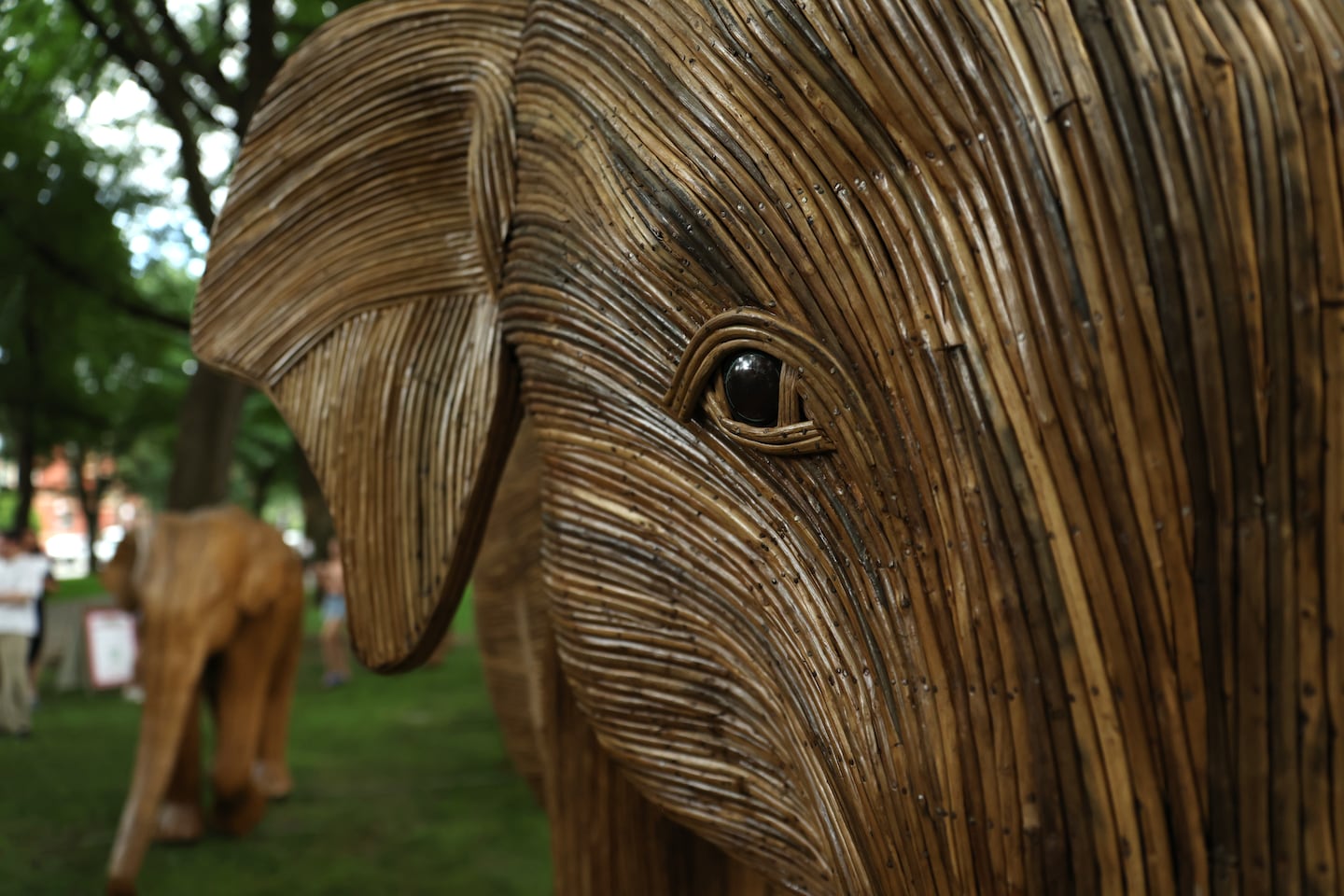 The detail of an elephant’s eye. The display of 100-life size statues arrived in Boston Thursday. Jonathan Wiggs/Globe Staff
. Each sculpture is paired with a conservation organization that will receive proceeds from the sales. Since its launch in 2024, the Great Elephant Migration has raised $1.4 million to support human-wildlife coexistence projects.While the beneficiaries span across the globe, money will also go towards local organizations including the New England Aquarium’s initiatives to protect the North Atlantic right whale.
“We love the poetry of one of the biggest land mammals helping one of the biggest oceanic mammals,” Ganesh said. “Whales and elephants seem like great bedfellows.”
The installation is free and open to the public. It will run from Saturday until Sept. 13, at the Commonwealth Avenue Mall between Arlington and Fairfield streets.
“These elephants, being famous for their memories, remind people of how magnificent our world is. We’re so grateful to share that with Boston, and I can’t wait to raise the tape on Saturday.”
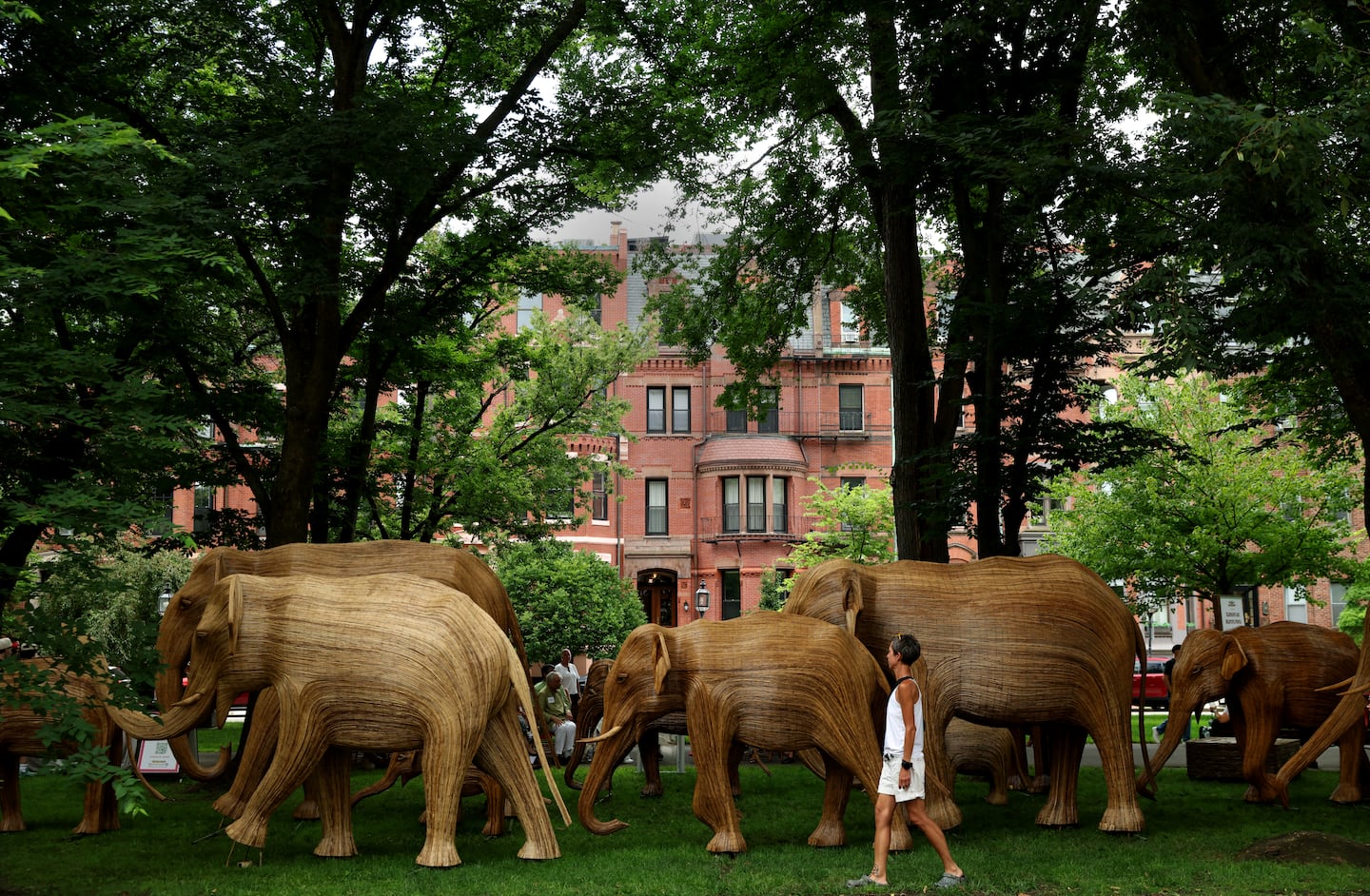 The Great Elephant Migration, arrived on Thursday to the Commonwealth Avenue Mall in Boston in partnership with title sponsor The ‘Quin House. The public will have the opportunity to experience this extraordinary outdoor installation featuring 100 life-size elephant sculptures handcrafted by Indigenous artisans from India’s Nilgiri Biosphere Reserve. The display will be open from Aug. 8-Sept. 13. Jonathan Wiggs/Globe Staff
Chloe Craft can be reached at chloe.craft@globe.com.