
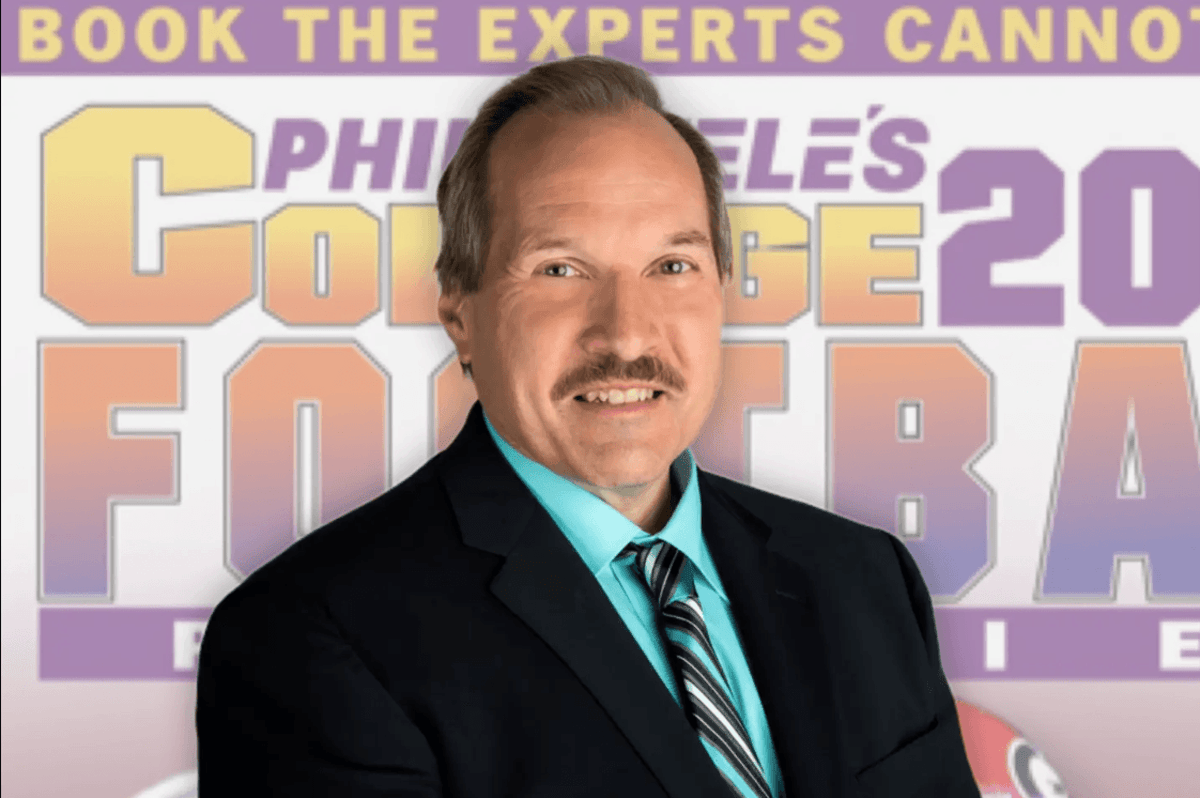
Phil Steele couldn’t understand the upset call his office received Monday.
A customer was complaining about the uselessness of the smaller edition of Steele’s college football preseason magazine. But there’s only one edition of Steele’s authoritative preview, and no regular reader would accuse the annual behemoth of lacking information.
Then Steele searched Amazon and found the culprit: fake versions of his publication.
“Four freaking magazines with my name on them,” Steele told The Athletic.
The fake magazines were removed from Amazon Tuesday afternoon, after Steele and The Athletic reached out to the company about them.
All four had “Phil Steele’s College Football Preview 2026” displayed prominently in the title. The similarities ended there.
Although they looked legitimate enough at first glance, a deeper look revealed some red flags. One cover included an Ohio State quarterback wearing No. 18; Buckeyes star Julian Sayin wears No. 10. Another put 16 lines on a 12-team College Football Playoff bracket and illustrated a play with 10 players on offense and eight on defense.
The four false versions totaled 266 pages. Steele’s tome is 376 pages by itself.
Two listed authors, Russel Brieveton and Gilgert Martwel, do not appear on online searches, and one doesn’t show an author inside at all. The final one listed Steele as its author but said it doesn’t include two-page spreads or detailed depth charts on every team — which is what Steele’s actual publication has been doing for three decades to become one of the most definitive products in the space.
“And yet they put my name on it,” Steele said incredulously.
WARNING. There are 4 different magazines on Amazon right now that they are titled “Phil Steele” College Football that have nothing to do with my magazine! They are 58, 70, 45 and 93 pages and have NOTHING to do with me. They are scams. My magazine is 376 pages with two full pages… pic.twitter.com/K6nyCgGIIR
— Phil Steele (@philsteele042) August 11, 2026
Steele spent time on social media and his website Monday and Tuesday warning readers and fans about the fake editions. He said he was “incensed” by the fraudulent magazines because he spends seven months working on the preview and takes so much pride in the final product. This time of year, he does hundreds of local radio interviews, and hosts often talk up his magazine. If a listener heard a segment and ordered the knockoff slop, Steele feared the local radio host who recommended it would lose credibility, too.
“Phil Steele’s is like the gold standard,” Steele said. “I don’t want somebody thinking it’s a bunch of crap, which is what they’re putting out.”
AI-generated spoofs are an issue elsewhere in the publishing business, including with travel guides. Steele recently ordered a different preseason magazine to analyze the competition and received a bare-bones preview; the $20 publication didn’t include any names, and some of its team breakdowns were less than 40 words each. Its listed author has also published a dozen travel guides.
Steele contacted Amazon about the slop using his name, and the legal team for one of his partners, the sports marketing company Learfield, also reached out. Steele doesn’t have an army of copyright attorneys at his fingertips.
“It was just so infuriating to do that,” Steele said. “I’m wondering how Amazon allows that.”
In a statement to The Athletic, an Amazon spokesperson said the site has multiple safeguards to try to protect publishers, authors and readers.
“Our content guidelines govern which books can be listed for sale, and we take proactive and reactive measures to prevent, detect, and remove content that violates those guidelines,” the spokesperson said. “The titles in question have been removed. We continually monitor our store and enhance these protections as technology and the publishing industry evolve.”
Amazon makes up a small percentage of Steele’s business. Barnes & Noble, Books-A-Million, a few airports and his website, philsteele.com, are the main places to buy his real magazine.
“There’s nothing like it,” Steele said.