
There’s a scene early in the iconic mockumentary This Is Spinal Tap, where director Marti DiBergi presents the heavy metal band with a collection of criticisms about their previous albums.
“The musical growth rate of this band cannot even be charted,” reads DiBergi. “They are treading water in a sea of retarded sexuality and bad poetry.”
“That’s nitpicking, isn’t it?” guitarist Nigel Tufnel says, brushing it off.
It goes on like that for a bit, with Tufnel, lead singer David St. Hubbins, and bass player Derek Smalls offering hubristic retorts to any and all critique. But as the film follows the band during a make-or-break tour that nearly tears them apart, each member has moments when they come to terms with the price of their fading stardom, reflecting on whether the critics might have had a point.
“It’s such a fine line between stupid, and uh… clever,” St. Hubbins later muses.
Like Spinal Tap, Pat McAfee knows about his critics and spends a lot of energy offering retorts to explain why they’re wrong. He contorts and spins as needed, often hiding behind the notion that he is simply an athletic supporter or that he is standing for unity. When that doesn’t work, he plays the woe-is-me victim.
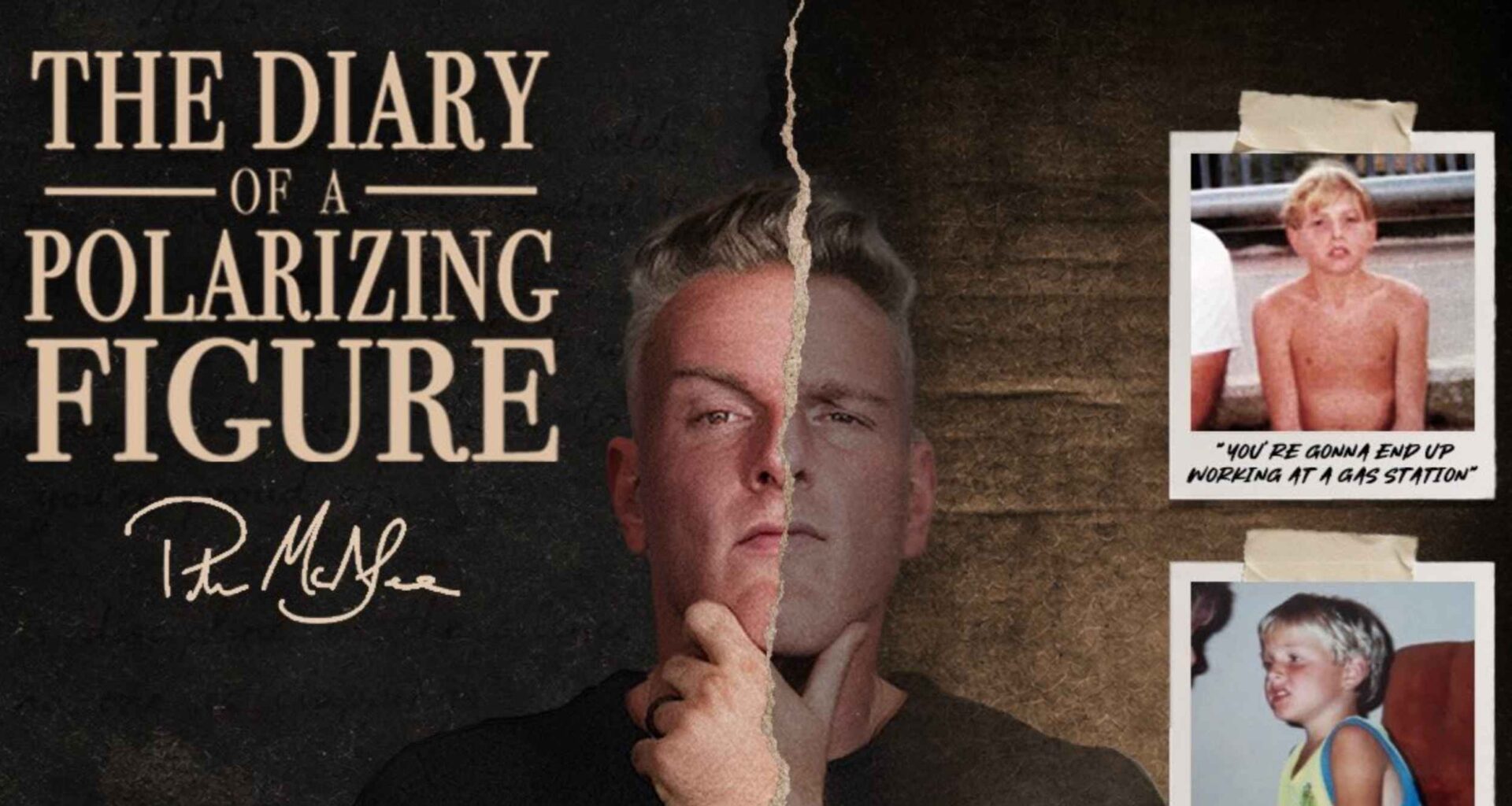
And like Spinal Tap, McAfee has taken to channeling his emotions into song in hopes of expressing more clearly why he is this way. His debut single, Dookie, was the story of a man who had risen above his critics, and not exactly a break with his usual persona. The hope, with the announcement that he was releasing an entire album, was that McAfee would finally peel back the layers. Show people the wounded child who grew up to be so full of angst and frustration despite such immense success and conquest.
He even teased as much in the album announcement.
“For as long as I can remember, my mere existence has made people hate my guts,” McAfee wrote. “I’ve been writing songs about it for 20yrs & it’s time to let them aht.. A LOT of headlines & narratives.. if I was to die, I’d like my kids to know exactly who their dad is.”
The Diary Of A Polarizing Figure debuted on Friday, and it does indeed walk the fine line between stupid and clever. It’s also unlikely to change many minds about the mercurial cultural figure.
McAfee’s genre can be summed up as a kind of country-hip-hop amalgamation I would call Uncle Rock. A steady autotuned flow of generic “good ol’ boy” lyricism stacked on top of easy listening beats or royalty-free rock chords. The Pennsylvania native often affects a Southern drawl incongruous with the man we know from our TV screens. Most of the songs are 75% chorus. Nothing offends, especially the attempts to be offensive. It strangely reminded me of some of the songs from Turning Point USA’s halftime show.
Many of the songs on The Diary of A Polarizing Figure follow the same throughline as Dookie. Things used to be tough; now they’re great; the haters can eat it, and it’s all good. In fact, there are three major throughlines that repeat themselves across the entire album:
I didn’t have much before, but now I have a lot.
The grim specter of death is coming for us all, and you never know when it will get here.
Good things come only to those who work hard and earn them.
To wit, “Pitbull And A Mugshot” is about a down-and-out guy who has it good now and wants people to know that the haters can’t do anything about it because we are all one. “Young Me” is about a down-and-out guy who has it good now and wants his younger self to know it’ll work out. “Blue Collar Symphony,” which is probably the best song on the album, is about a down-and-out guy who has it good now and wants people to know he knows where he came from. “OOPS” is about a guy who was down and out but has it good now (“I used to not have sh*t; now I got a bidet”) and wants people to know the haters can’t do anything about it. “Rich As Shit” is also about a guy who was down and out but has it good now and wants people to know the haters can’t do anything about it (“Talentless suits might need to find a new scam”).
Meanwhile, “You’re Alive” is about making sure you’re appreciating life because one day it’ll all be over (“There’s a dash between 2 dates. The 2nd one is never late.”). “Big Rain Coming” is McAfee’s lullaby to himself about how he’s “paid my dues, earned some boos, learned what pressure does” and how he tries to live in the moment because you never know when you’ll die. “No One Ever Knows” is a reggae-tinged song about appreciating life amid its many struggles (“Expectations stacking like Pisa’s leaning tower”) because you will die one day.
This isn’t to say there aren’t musical detours along the way.
“Click Clack” is McAfee’s most hip-hop-esque effort, though it’s mostly a generic rehash of all his aforementioned themes. I would be remiss if I didn’t point out two lyrics in particular:
“I guess I’m an anomaly My mom birthed a monopoly.” If I had to know that existed, so do you.
“I guess I can agree that I’m dynamical, I silenced all the sheep like Hannibal.” Sorry to be pedantic, but Hannibal Lecter didn’t silence the sheep; Clarice’s cousin did.
“Smokin” is, as one might expect, about smoking weed. It includes six choruses.
“Good Times” is basically the Bo Burnham country music bit.
“Polarizing Figure” appeared to be the song we’d been waiting for at first, explaining why McAfee felt so compelled to make the album. However, the lyrical crux is more about attempting clever wordplay than it is about getting beyond the surface.
“All of us so gullible, all of it’s combustible. Stories out of context, from folks considered trustable. They’re reckless with their narratives, searching for comparatives. Eliminate disruptors; to them, it feels imperative. Death threats bring hairy times. High stress from scary lies. Folks you never met, wishing for your demise.”
“Outlaws” ends up being the song that most directly attacks what McAfee often sees as one of his main antagonists: Sports reporters. He sees them as “puppets with some pens… saying that we ruined sports televisiagain,” which is not a typo. “Having your own thoughts somehow became unique; now authenticity’s validity can break through when you speak,” he sings, pushing back on critics and their outdated notions of how things work.
Finally, there’s “Cheers To The South,” which was concerning when the first lyric was “cheers to our destinies.” Whose destinies? Southern destinies?? What southern destinies are we referring to??? Thankfully, the song reveals itself to be mostly about getting drunk at lakes and farms, though we are left with this pièce de résistance:
“And cheers to the sun and cheers to the moon. Let’s celebrate life while we have the oppor-tune.”
Given McAfee’s recent proclivities and friendship alignments, it stands to reason that this album might find a foothold with a certain audience. It is fair to admit it is well made. McAfee says on his Spotify page that he collaborated with songwriter Ernest (Ernest Keith Smith) and Big Loud CEO Seth England in making it. There are plenty of references to beer, God, John Deere, and small-town values that check all the modern country boxes and, despite his warnings, the lyrics are inoffensive enough, albeit sometimes confusing.
We know from his TV work that McAfee craves adulation and abhors criticism. He’ll likely find both here. He often sings about appreciating what you’ve got, ignoring the hate, and living in the moment. How he reacts to what people think of the album will put these mantras to the test and likely be the real barometer by which we measure how he feels about the world. And himself.