
SALT LAKE CITY (KUTV) — Utah’s mountains, deserts and canyons are home to wildlife ranging from rattlesnakes to black bears, but an unexpected encounter can quickly become dangerous if people get too close or react the wrong way.
Wildlife encounters can happen on hiking trails and in campgrounds, but animals also occasionally make their way into neighborhoods and other populated areas.
The Utah Division of Wildlife Resources said one of the most important rules applies regardless of the animal: Keep your distance and don’t approach or feed wildlife.
Getting too close can cause an animal to feel threatened and become aggressive, while feeding wildlife can cause animals to lose their natural fear of people and return to populated areas looking for food.
What to do next can depend on the animal.
Black bears
Black bears are the only bear species found in Utah. They live throughout most of the state, except the West Desert, and are most commonly found in mountainous areas, foothills and canyons.
Bears typically avoid people, but their strength and speed make a close encounter potentially dangerous. Food can also change their behavior, particularly when a bear becomes accustomed to finding meals in garbage, campgrounds or around homes.
If you encounter a black bear:
Don’t run, climb a tree, lie down or play dead.Stay calm, stand your ground and give the bear an opportunity to leave.Have bear spray or another deterrent ready.If the bear attacks, fight back.Keep food, garbage and other scented items secured when camping.Around homes, remove attractants including pet food, bird feeders, garbage and dirty barbecue grills.
DWR said black bears can run as fast as 35 mph and are excellent climbers, making trying to outrun or outclimb one a bad strategy.
Cougars
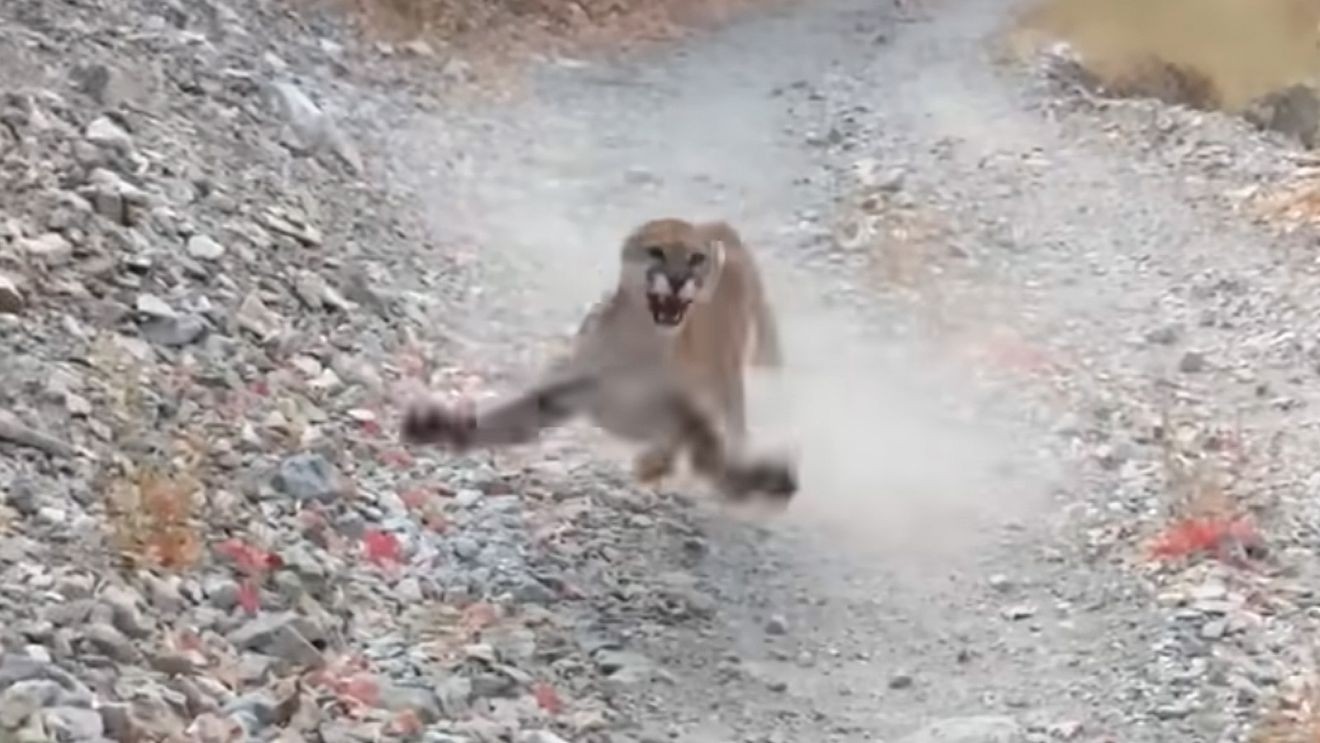
Cougars can be found throughout Utah, particularly in foothills and canyons and anywhere mule deer are common. Encounters are more likely around dawn and dusk, when cougars typically hunt.
Attacks on people are rare, but a cougar is a powerful predator and running can trigger its instinct to pursue prey.
If you encounter a cougar:
Never run.Face the cougar and maintain eye contact.Make yourself appear larger by raising your arms or opening your jacket.Speak loudly and firmly.Pick up small children without turning your back on the animal.Give the cougar room to escape.Fight back if attacked, while protecting your head and neck.
Hikers and runners can reduce the risk of an encounter by traveling in groups, remaining aware of their surroundings and avoiding headphones that prevent them from hearing what’s happening around them.
Moose
Moose are primarily found along the Wasatch Front and in northern and northeastern Utah, typically in forested areas. DWR estimates Utah has between 2,500 and 3,000 of them.
Despite not being predators, moose can be extremely dangerous. Adults can weigh 600 to 1,000 pounds, and bulls can stand about 6 feet tall at the shoulder. Cows can become particularly defensive around calves in late spring and early summer, while bulls become more aggressive during the fall breeding season.
If you encounter a moose:
Give it plenty of space and never approach it.Watch for signs of agitation or aggression.Back away if the moose begins behaving aggressively.If it charges, run away and try to put a large object such as a tree, vehicle or building between you and the animal.If knocked down, curl into a ball, protect your head and remain still until the moose leaves.Keep dogs leashed and away from moose.Dogs are particularly concerning because moose view them as predators and may become aggressive toward both the dog and nearby people.Bison
One of Utah’s most visible bison herds lives on Antelope Island, where the population can climb above 700 animals after calves are born in the spring. Wild bison are also found in the Henry Mountains in southern Utah and the Book Cliffs in eastern Utah.
Their size can be deceptive from a distance. Bison can move extremely quickly and have injured visitors at Antelope Island after charging them.
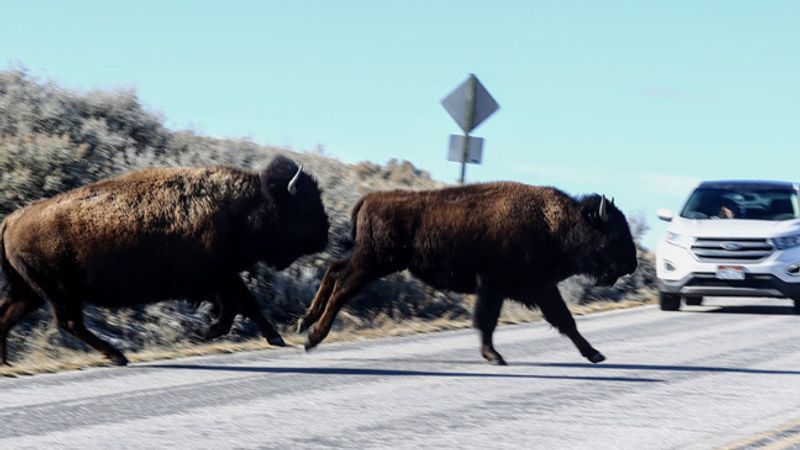
Did you know that American Bison have been at Antelope Island State Park since 1893? (Photo: Robin Pendergrast)
If you encounter a bison:
Stay at least 150 feet away.Never approach a bison for a photograph.If a bison is blocking a trail, turn around rather than trying to pass it.If one approaches, back away and give it room.Look for warning signs including raising its tail, pawing the ground, snorting or shaking its head.Never attempt to pet or feed one.Mountain goats
Mountain goats are most likely to be encountered in Utah’s high-elevation, rocky alpine terrain. The state’s largest herds are found in the Uinta and Tushar mountains, with other populations along the Wasatch Range, including Mount Timpanogos, Provo Peak and Little Cottonwood Canyon.
Both male and female mountain goats have horns, and DWR warned the animals can charge and potentially impale someone who gets too close. Females can be particularly territorial when they have young.
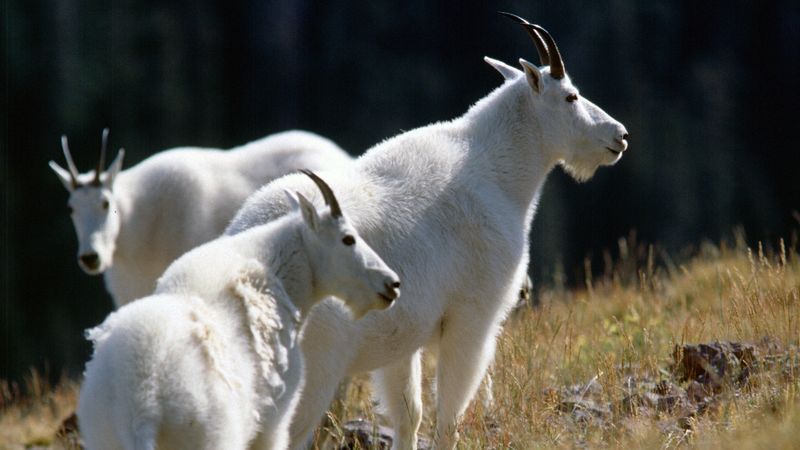
You can see mountain goats on April 14 at the mouth of Little Cottonwood Canyon. A free wildlife-viewing event runs from 9 a.m. to 3 p.m. at the park-and-ride lot.
If you encounter a mountain goat:
Stay at least 150 feet away.Turn around if one is coming toward you on a narrow trail.Slowly back away if a goat approaches.If it continues approaching, wave your arms and make loud noises.Keep dogs leashed and under control.Never feed a mountain goat or allow one to lick your skin.
DWR recommends cutting a hike short rather than attempting to squeeze past a mountain goat, particularly when an encounter happens near cliffs or other steep terrain.
Deer
Mule deer are found throughout Utah, from mountain and foothill areas to desert habitat, and they frequently move into neighborhoods and other populated areas — particularly during the winter when snow pushes animals to lower elevations.
Their familiarity can make deer seem harmless, but they are still wild animals capable of becoming aggressive when they feel threatened. Buck deer can be particularly aggressive during their breeding season in November, while does can be protective of young fawns.
If you encounter a deer:
Keep your distance and don’t approach or attempt to touch it.Never feed deer, which can cause them to lose their natural fear of people and repeatedly return to populated areas.Give bucks additional space during the fall breeding season.Keep dogs controlled and don’t allow them to chase or harass deer.Never approach, touch or attempt to rescue a fawn that appears to be alone.Report deer that appear sick, injured or are behaving aggressively to wildlife officials.DWR said newborn fawns are frequently left alone during their first weeks of life while their mothers are nearby. People should leave them where they are rather than attempting to help or move them.Elk
Elk are found across much of Utah, particularly in mountainous, forested and high-elevation areas, although herds can move to lower elevations during the winter.
Adult elk are considerably larger and more powerful than deer. Bulls can become particularly aggressive during the fall rut, while cows can become defensive around calves during the spring and early summer.
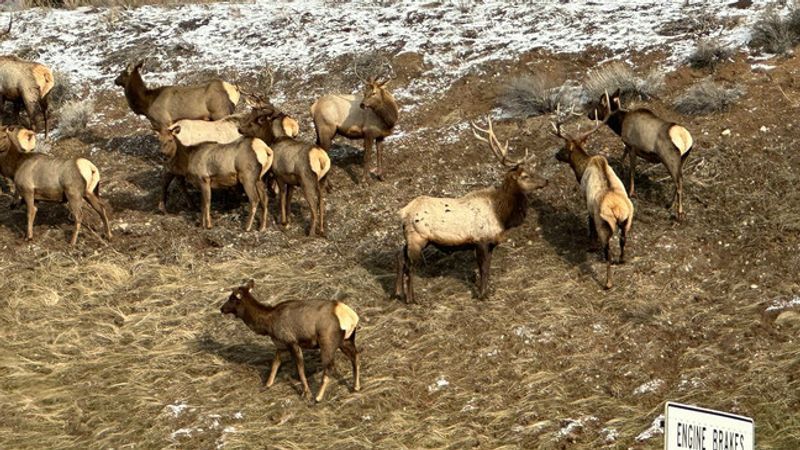
A herd of elk managed to strand itself on a strip of land adjacent to I-80{ } in Salt Lake City on Thursday, Jan. 26, 2022, where Utah Highway Patrol and the Division of Wildlife Resources attempted to herd the animals back toward the foothills near Parleys Canyon. (Photo: Lincoln Graves, KUTV)
If you encounter an elk:
Keep a safe distance and never approach or feed one.Give bulls additional room during the fall breeding season.Never get between a cow and its calf.Back away and give the animal an escape route if it appears agitated.Keep dogs leashed and never allow them to chase elk.Don’t approach or attempt to rescue an elk calf that appears to be alone.Report an elk that appears sick, injured or is behaving aggressively.
DWR warns that allowing dogs to chase elk, deer or other hoofed wildlife can be dangerous for both the wildlife and the pet. Elk may defend themselves against a dog they perceive as a threat.
Pronghorn
Pronghorn — commonly called antelope — are found across Utah’s open desert, grassland and shrub-steppe country, where their preference for wide-open terrain makes them relatively easy to spot from roads and trails.
Pronghorn generally avoid people and don’t pose the same risk as larger animals such as bison or moose. However, they are still wild animals and shouldn’t be approached, chased or cornered for a closer look or photograph.
If you encounter a pronghorn:
Watch and photograph it from a safe distance.Don’t approach, chase or attempt to touch it.Never feed a pronghorn.Keep dogs controlled and don’t allow them to chase wildlife.Give the animal a clear path to move away.If viewing from a road, pull completely off the roadway in a safe location before stopping.
Pronghorn are especially visible in open country and near roads, making viewing and photography among the most common ways people interact with them in Utah.
Porcupines
Porcupines are found across much of Utah, particularly in forested and mountainous areas where they spend time in trees and feed on bark, twigs and other vegetation.
Porcupines aren’t aggressive and don’t shoot their quills, but their defensive quills can become embedded in the skin of a person or animal that gets too close. Dogs are particularly at risk because they may approach, chase or try to bite a porcupine.
If you encounter a porcupine:
Give it plenty of room and allow it to move away.Never attempt to touch, pick up or corner one.Keep dogs leashed and prevent them from approaching.Don’t attempt to remove deeply embedded quills yourself if a pet has a significant encounter; contact a veterinarian.Seek medical care for serious quill injuries to a person, particularly if quills are near the eyes, face or other sensitive areas.Bighorn sheep
Utah is home to both Rocky Mountain and desert bighorn sheep. Rocky Mountain bighorns are found primarily in mountainous areas of northern and central Utah, while desert bighorns live in the rugged canyon and desert country of southern Utah.
Their distinctive curled horns make bighorn sheep a popular animal to photograph, but adult rams are powerful animals capable of delivering tremendous force with their horns. Rams also become more aggressive toward each other during the fall breeding season, when they can be seen charging and colliding headfirst.
If you encounter a bighorn sheep:
Keep your distance and don’t approach for photographs.Never attempt to touch or feed one.Give rams additional space during the breeding season.Don’t position yourself between animals or block their path.Keep dogs controlled and away from the sheep.Back away and give the animal room if it begins approaching or appears agitated.Rattlesnakes
Utah is home to five rattlesnake species, with the Great Basin rattlesnake the most common.
They can be found around rocky benches, dry canyons and high-elevation slopes, although encounters can also happen at lower elevations. Rattlesnakes are venomous, but DWR said they do not chase people and generally bite only when they feel threatened.
If you encounter a rattlesnake:
Remain calm and stay at least 10 feet away.Don’t attempt to touch, move or kill it.Don’t throw rocks, sticks or other objects at it.If you hear a rattle, locate the snake before moving so you don’t accidentally step closer.Watch where you put your hands and feet around rocks, logs, brush and crevices.Keep children and pets away.
If bitten, don’t try to suck out the venom and don’t apply ice, heat or a tourniquet. Remain calm and seek immediate medical care.
Coyotes
Coyotes can be found throughout Utah, from undeveloped areas to neighborhoods along the Wasatch Front and elsewhere in the state.
They generally avoid people, but animals that become accustomed to humans or associate neighborhoods with food can lose some of that fear. Small pets can also be vulnerable.
If you encounter a coyote:
Don’t approach or feed it.Don’t run away if one approaches.Make yourself appear large and make noise to scare it away.Keep children close.Keep dogs leashed and bring pets inside, particularly at night.Remove food sources including pet food and unsecured garbage.Bobcats
Bobcats live across Utah and can occupy a variety of habitats, including foothills, canyons, deserts and wooded areas.
They are elusive and encounters with people rarely become dangerous, but bobcats are still wild predators capable of defending themselves if cornered or threatened.
If you encounter a bobcat:
Keep your distance and give it an escape route.Never approach or attempt to touch it.Keep children and pets away.Don’t run toward or corner the animal for a photograph.If it doesn’t leave, make yourself appear larger and make noise while backing away.Wolverines
Seeing a wolverine in Utah is considerably less likely than encountering most other animals on this list.
Wolverines naturally occur at very low densities and are capable of traveling enormous distances, meaning individual animals can occasionally move through Utah without representing an established population.
Despite their reputation, wolverines generally avoid people. However, they are powerful wild animals with strong jaws and claws and should never be approached.
If you encounter one:
Keep your distance.Don’t approach it for photographs.Give it a clear path to leave.Keep pets controlled and away from the animal.Report the sighting to wildlife officials, particularly if you can safely document it from a distance.Badgers
American badgers are found throughout Utah, particularly in open areas including grasslands, sagebrush and desert terrain where they can dig for rodents and other prey.
Badgers generally avoid people, but their powerful jaws and long claws can make them dangerous if they are cornered, threatened or protecting themselves. Their low profile and tendency to dig can also make them easy to surprise in brush or uneven terrain.
If you encounter a badger:
Keep your distance and don’t approach it.Give the animal plenty of room and a clear way to escape.Never attempt to corner, capture or handle one.Keep dogs leashed and away from the animal.Slowly move away if a badger appears agitated or defensive.Raccoon
Raccoons are found across Utah and are particularly well adapted to living around people, making encounters possible in neighborhoods, yards, parks and campgrounds.
The animals can bite or scratch when threatened or cornered and can carry diseases that pose risks to people and pets. Wildlife that appears unusually aggressive, disoriented, sick or unafraid of people should never be approached.
If you encounter a raccoon:
Don’t approach, touch or feed it.Give the animal a way to leave rather than cornering it.Keep children and pets away.Secure garbage, pet food and other potential food sources around homes.Never attempt to capture or handle a sick or injured raccoon yourself.Contact animal control or wildlife officials if one is behaving unusually or poses a threat.
Anyone who is bitten or scratched by a raccoon or has direct contact with its saliva should wash the affected area thoroughly and contact a health care provider or local health department for guidance about possible rabies exposure.
Gila monsters
Gila monsters are found in the desert areas of southwestern Utah, which marks the northern edge of their range. The large, distinctive lizards are venomous but generally slow-moving and pose little danger to people who leave them alone.
Unlike venomous snakes, Gila monsters don’t inject venom through fangs. Venom flows through grooves in their teeth as they bite and hold onto their target, making handling one particularly dangerous.
If you encounter a Gila monster:
Don’t touch, pick up or attempt to move it.Give it space and allow it to move away on its own.Keep children and pets away.Never harass one for a photograph or video.Seek immediate medical attention if bitten.
Gila monsters are a protected species in Utah and should not be captured or removed from the wild.
Utahraptor
Utahraptor once roamed what is now Utah roughly 135 million years ago during the Early Cretaceous Period. Fossils of the dinosaur were first discovered in southeastern Utah, and the species was officially designated Utah’s state dinosaur in 2018.
At roughly 15 to 20 feet long and potentially weighing several hundred pounds, Utahraptor was much larger than the velociraptors made famous by the movies. It was a powerful predator equipped with sharp teeth, grasping claws and a large, curved claw on the second toe of each foot.
Fortunately, your chances of encountering one on a Utah trail are considerably lower than your chances of running into a bear, rattlesnake or moose.
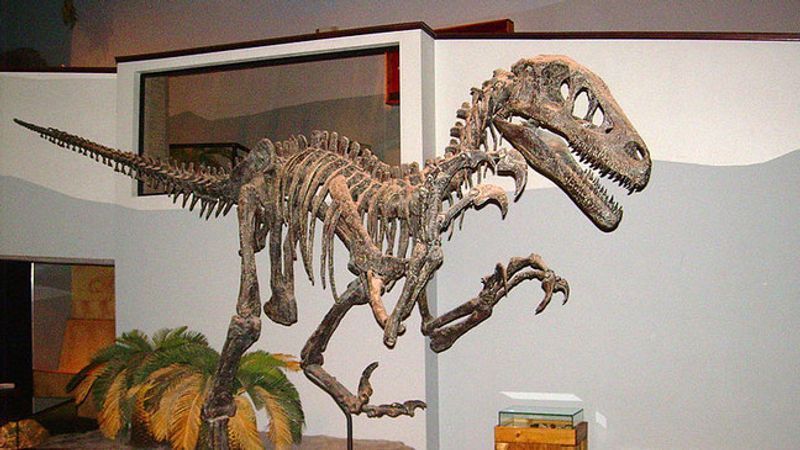
If you encounter a Utahraptor:
Keep your distance.Don’t approach it for a photograph.Keep children and pets close.Don’t attempt to feed or pet it.Consider immediately notifying a paleontologist — after reaching a safe location.Reconsider everything you thought you knew about extinction.
Utahraptor has been extinct for more than 100 million years, so no official wildlife encounter recommendations exist. However, based on what paleontologists know about the animal’s size and anatomy, giving a live Utahraptor plenty of space would be a reasonable precaution.
A few rules apply to almost every wildlife encounter
Regardless of the species, wildlife officials recommend watching animals from a safe distance, keeping dogs leashed, never feeding wildlife and avoiding anything that could make an animal feel trapped or threatened.
People should also resist the temptation to move closer for a photograph or video.
If an animal is acting aggressively, has entered a heavily populated area or poses an immediate threat to public safety, the encounter should be reported to the Utah Division of Wildlife Resources or local law enforcement.
_____