
Think this is nice? It’s a version of the weekly Under 30 newsletter and would be even better in your inbox.
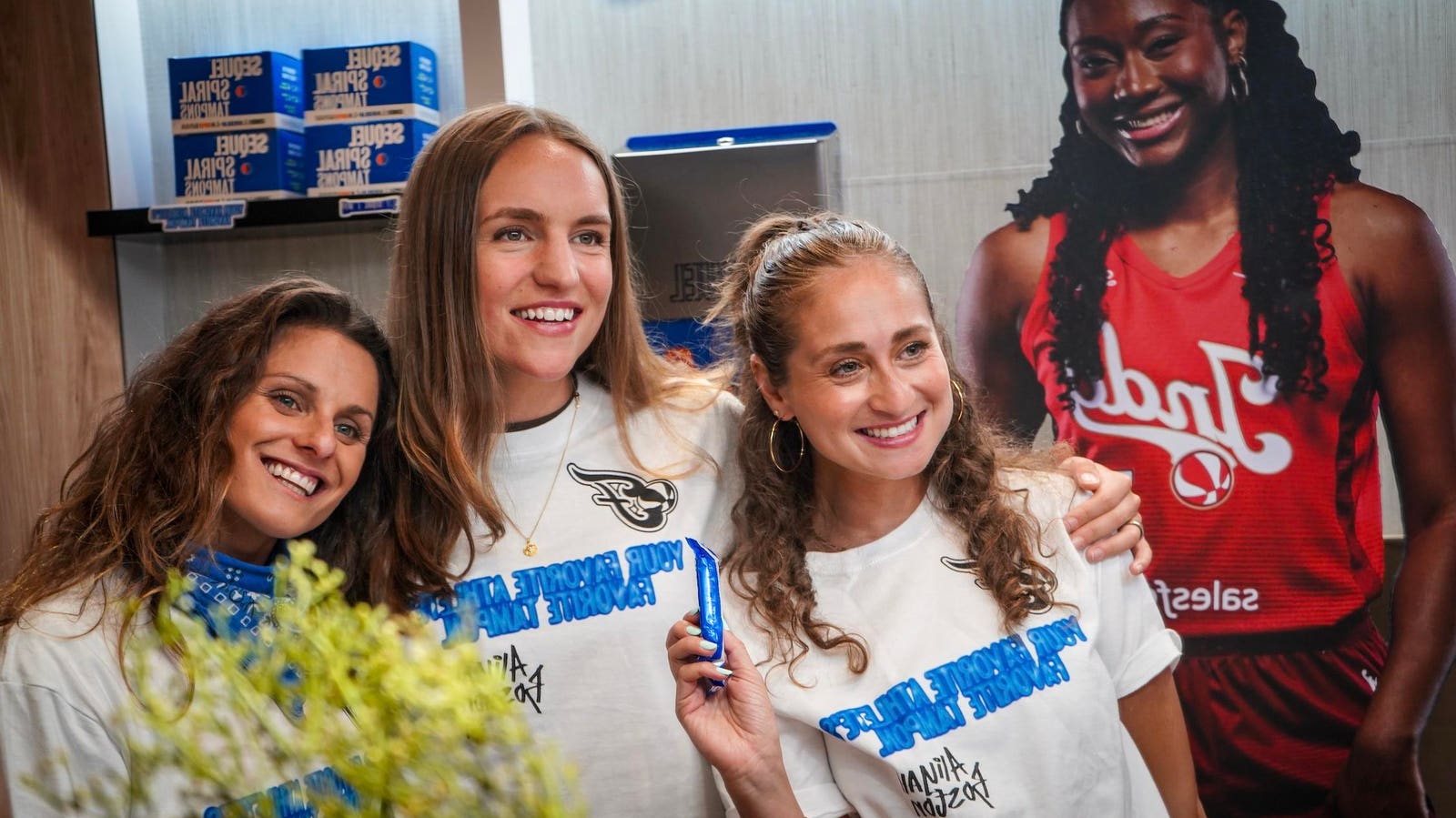
To celebrate the partnership with Boston, the Sequel team recreated her locker room—featuring Sequel products—in the concourse at the Fever’s latest home game.
Robbie Boyles via Sequel
Indiana Fever star Aliyah Boston has more eyes on her than ever. The No. 1 pick in the 2023 WNBA draft has had the basketball world watching her since she was in high school, when she was recruited for the powerhouse women’s team at The University of South Carolina. But today, with record WNBA viewership, and more than 600,000 followers across social media, it’s no longer just hardcore basketball fans who know her name.
“The league is just continuing to grow,” says Boston—and it’s true, more than 70 million unique viewers had reportedly tuned into a WNBA game over just the first half of the 2026 season, up from less than 50 million for the entire 2025 run (which was already a record); and team valuations are surging, too. “So many brands and partnerships are coming from that because there’s so many eyes on it.”
For Boston, those opportunities include partnerships with the likes of T.J. Maxx, and her player-exclusive shoe designed with Adidas. Just this week, Boston was announced as an official co-owner of Under 30 tampon maker Sequel. Founded by Amanda Calabrese and Greta Meyer, Sequel sells patented tampons designed with spiral instead of vertical panels to more effectively absorb flow. With athletes as Sequel’s target user, they say Boston is a perfect new face for the brand.
The deal came about in February when Boston asked her management team to connect her with Sequel, who was already the Fever’s official tampon sponsor.
“It wasn’t even the normal process where we say ‘Let us send you a box, try it, and let us know if you like it,’” says Calabrese. “It was literally just, ‘She’s already a fan of the product. Let’s start building together.'”
By August, Boston had officially joined Sequel as a co-owner, gaining equity in exchange for social media posts and other marketing campaigns they have planned to bring the products to her fanbase. To celebrate the deal at their recent home game, Sequel worked with experiential marketing firm the Czarnowski Collective to create a larger-than-life version of Boston’s locker room in the middle of the Gainbridge Fieldhouse concourse (the Fever’s home court)—including Sequel products and Boston’s shoes and a signed jersey. Plus, they handed out 5,000 free tampon boxes.
This partnership isn’t Boston’s first equity deal, but it’s the first time she’s taking on an active role with a company. Ownership stake is a new wave of marketing partnerships that we’re seeing with athletes and content creators alike: Influencer Alix Earle led the trend with her investment into healthy soda company Poppi, and college basketball player JuJu Watkins became the first collegiate player to hold equity in pro sports leagues with her investments into 3×3 Basketball league Unrivaled and an NWSL team.
“Equity is always a great opportunity because these brands are growing,” Boston says. “You never know when a brand might sell, and then your money is worth way more than you would’ve agreed to that first deal” had it been a one-time cash offer.
For Boston, she says the longer the relationship, the better. But it’s about more than money. She looks at her growing business partnerships as a way to show her fans more sides to her: “It’s an opportunity for me to actually talk about something that I enjoy, but also make it a safe space for young girls.”
As women athletes become more and more popular, they’re increasingly sought after by brands. But that doesn’t mean it’s always the right fit, Calabrese notes: “The hard thing with athlete partnerships is that athletes are athletes first. Their job is to go out onto the court or the field and perform for their team,” Calabrese says. “Their job is not brand deals and creating content.”
That makes finding the right athlete partners all the more important, and why Sequel says Boston was the right choice for them. As consumers become more skeptical than they’ve ever been, “If you don’t have the ‘why’ to back it up, trust is going to be an uphill battle.”
See you next time,
Alex & Zoya
50 OVER 50: 2026
Forbes released its sixth annual 50 Over 50 list, spotlighting a cohort of 200 women who are launching new ventures, pursuing ambitious ideas and making an impact in their 50s, 60s and beyond. Check out the full list here (and remember, despite the name and mission of this newsletter, it’s never too late to pursue your dreams!).
Lister Lowdown
-Lovable, the Swedish vibe-coding company that became the fastest growing software startup ever in 2025, raised $400 million in Series C funding. Led by Menlo Ventures and Scaleup Europe Fund, the new round brings Lovable’s valuation to $13.3 billion. The company was founded by Anton Osika and 2025 Under 30 alum Fabian Hedin, both of whom are now billionaires according to Forbes estimates.
-Cognition AI, which builds autonomous agents for software engineering, is reportedly chatting with investors about a round that could value the startup at $40 billion, according to Bloomberg. The startup was valued at $26 billion following a $1 billion raise in May. Cofounder Scott Wu made the Under 30 list in 2020 for a networking startup called Lunchclub; Cognition landed him on the Forbes cover in 2024.
-2022 Under 30 alum, Top Creator and former Forbes cover star Alex Cooper secured a strategic investment in her production company, Unwell Network, from WTSL, the firm led by WME cofounder Patrick Whitesell. While the size of the investment was not disclosed, the deal valued Unwell at $500 million. In addition to Cooper’s Call Her Daddy, the network is home to several podcasts hosted by creators including Madeline Argy and Harry Jowsey. But while the media side seems to be thriving, her hydration company is reportedly shutting down less than two years since it launched, according to Bloomberg.