
No matter what the calendar or thermostat may say, it is time to start thinking about autumn. Direct your focus to falling leaves, cozy sweaters, toasty beverages and a refresh of our homes.
In the interest of putting a rush job on fall while putting the kibosh on this summer of swelter and discontent, I took a dive into what lies just ahead.
Autumn 2026 interior design shifts toward “cocooning warmth,” replacing stark minimalism, cold greige and cool white with rich, restorative mineral colors, high-shine lacquered finishes and tactile fabric layering. The focus centers on timeless, comforting spaces rather than temporary novelty.
Do you remember the rich jewel tones, plaids, paisleys and velvets of the Ralph Lauren-driven 1980s? They’re back.
“I just returned from market,” said Penny Francis, a celebrated local interior designer and owner of Eclectic Home. “There was a clear shift — more confident, more layered and unapologetically design-driven.”

For this stunning formal dining room, designer Whitney Wilkinson indulged her fondness for muddy greens that mix so well with other colors. The rich textures of the velvet upholstery and the statement chandelier add warmth and visual complexity.
Photo by Laura Steffan
Dark, mineral-toned wall palettes include smoky jades, eucalyptus sages, oxblood, rich plum and chocolate brown instead of stark neutrals. Pair these with warm accents to add depth — burnt orange, rust, ochre and deep golds are best used in cushions and small accessories rather than for entire walls. Also trending are shades of pale blue paired with organic greens and warm, pared-back neutrals.
“I’m loving warmer, more enveloping colors and textures that add depth and make a room feel cozy without feeling dark or heavy,” said designer Whitney Wilkinson, a masterful guru of color according to her clients. “Muddy greens mix so well with other colors, and rich textures add warmth, helping a space feel comfortable, inviting and lived-in.”
New Orleans interior designer Curtis Herring echoed these sentiments.
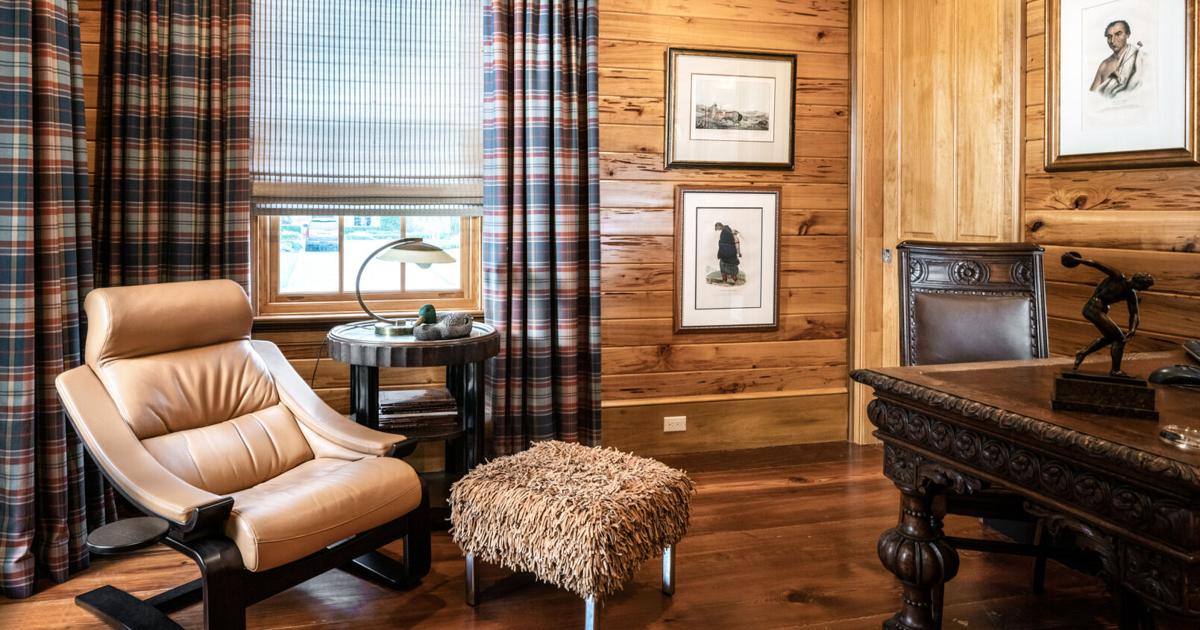
“When I think of fall, I think of warm wood tones, rich leather and classic plaid,” Herring said. “This season, I’m seeing those timeless elements return in fresh, elevated ways. Natural wood paired with leather. Antique pieces bring warmth and depth while plaids add a sense of nostalgia. Incorporating these materials creates spaces that feel layered, inviting and collected. These qualities make a home feel especially welcoming while we transition into fall.”
So, there you have it. Adios to cool white, beige, cold gray and pale washed-out whatnot.
Antiques and “brown” furniture are definitely back as statement pieces, as are pieces made of, or veneered with, travertine.
“Brown furniture is firmly back,” Francis said. “Particularly in medium to darker tones. Burled woods leaned deeper in finish, and we saw the introduction of vellum and parchment tops adding subtle texture and warmth.”
High-shine lacquered finishes — think burgundy coffee tables or cabinets — and glossy surfaces are, again, bringing us right back to the 1980s, but this time with an overlay of modern mod-vintage energy.
“Lacquered furniture was everywhere,” said Francis of the 2026 High Point Market of home furnishings in North Carolina, “showing up in richly saturated colors across stools, tables and credenzas. The high-gloss finishes gave pieces a depth and presence that felt fresh and intentional. The 1970s and ’80s certainly were calling.
At the recent 2026 High Point Market in North Carolina, New Orleans interior designer Penny Francis noticed an abundance of furnishings with high-shine lacquered finishes, from stools (like those pictured here) to larger pieces such as credenzas and dining tables.
Provided by Penny Francis
“Tables, whether side, console or dining, took on a more sculptural presence. Bases ranged from modern to traditional, but all had a sense of form and intention that made them feel like focal points. Think jewelry and biophilic design as inspiration for the bases.”
Textures and layering are part of building a lavish nest for oneself: velvet, wool and soft leather. Nostalgic, hand-painted ceramic and floral tiles have shoved simple checkerboard backsplashes to the rubbish heap, and atmospheric lighting is not going anywhere. Get your glow on with candles and classic table lamps rather than harsh overheads.
“There was also a strong return to detail — fringe, cording, leather trim, ruffles and tailored skirts,” Francis said. “From multicolor fringe to box pleats, these dressmaker touches were applied to upholstery and pillows in a way that felt elevated, not overly precious.”
Homeowners might save a few bucks by incorporating dried, sculptural botanical arrangements into their decor. They have more lasting power than fresh, seasonal blooms.
Good or bad, we are also making greater investment in dedicated home-based activity zones, such as refined home offices and integrated home gyms. The isolation required of us during the COVID-19 pandemic remains a thing — we seem to have embraced making the most of our homes, then staying put there.
For this client’s living room, designer Curtis Herring chose neutral walls and an otherwise dark, mineral-toned palette paired with warm accents to add depth.
Photo by Curtis Herring
The shift is away from highly decorative, trend-driven interiors and toward spaces that feel grounded, personal and restorative — created with colors and designs that offer lasting appeal, flexibility and emotional resonance instead of fleeting microtrends.
Of her recent experience at the High Point Market, Francis said, “Overall, it felt refreshing to see so many new introductions. The last couple of markets, with the cloud of tariff uncertainty and a slower economy, didn’t leave much that felt memorable.
“This time around, there was a clear shift: more creativity, more diversity in design and a willingness to take risks. It brought an energy back to the market that felt both inspiring and long overdue.”