
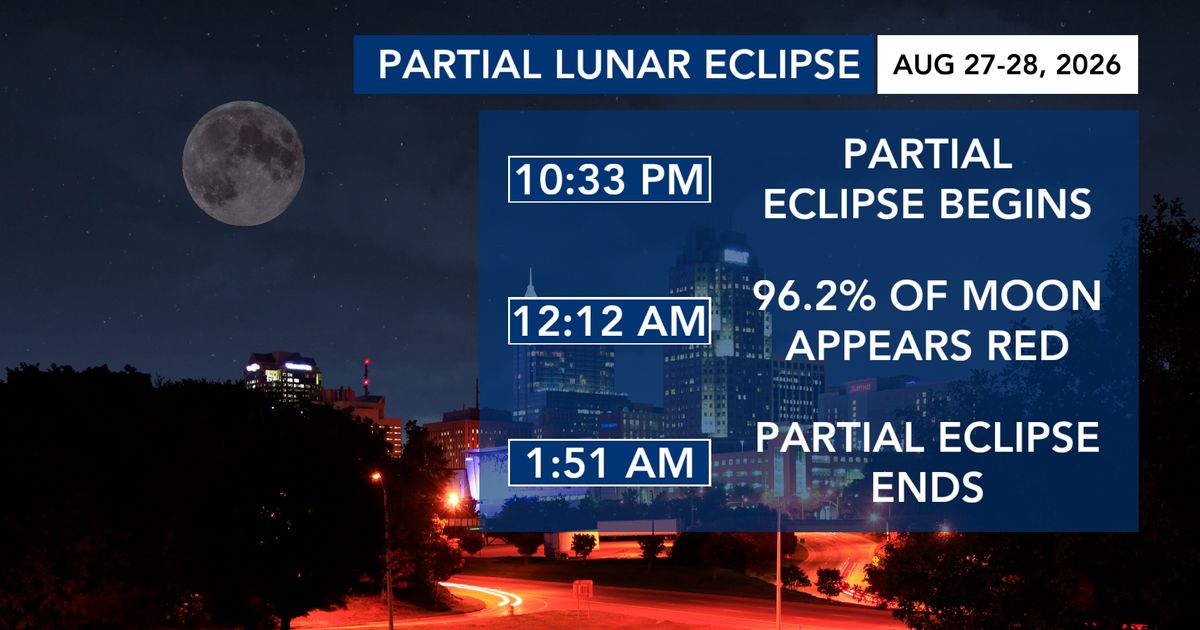
A partial lunar eclipse will take place late Thursday night into early Friday morning, August 27 to August 28, 2026.
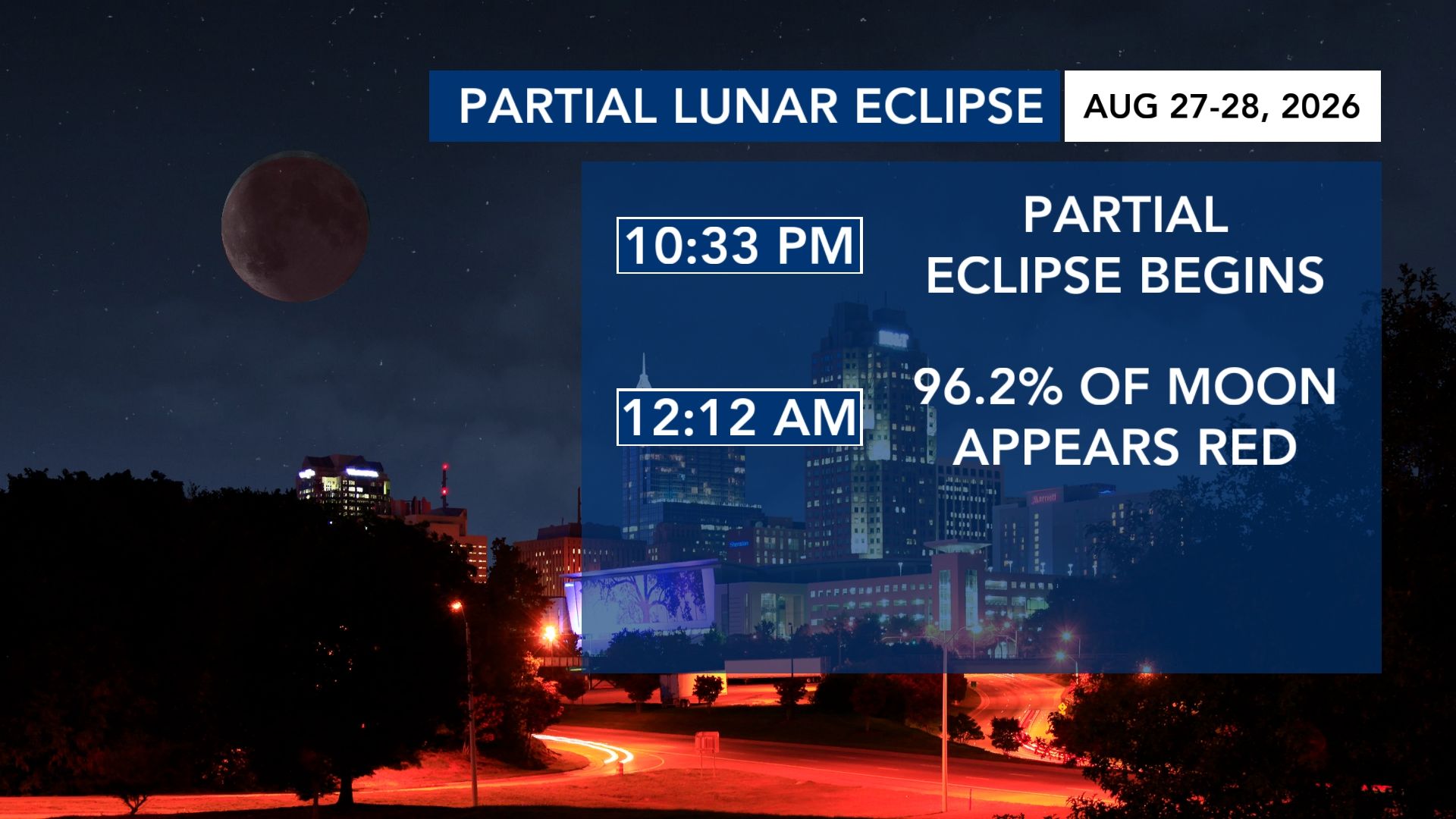
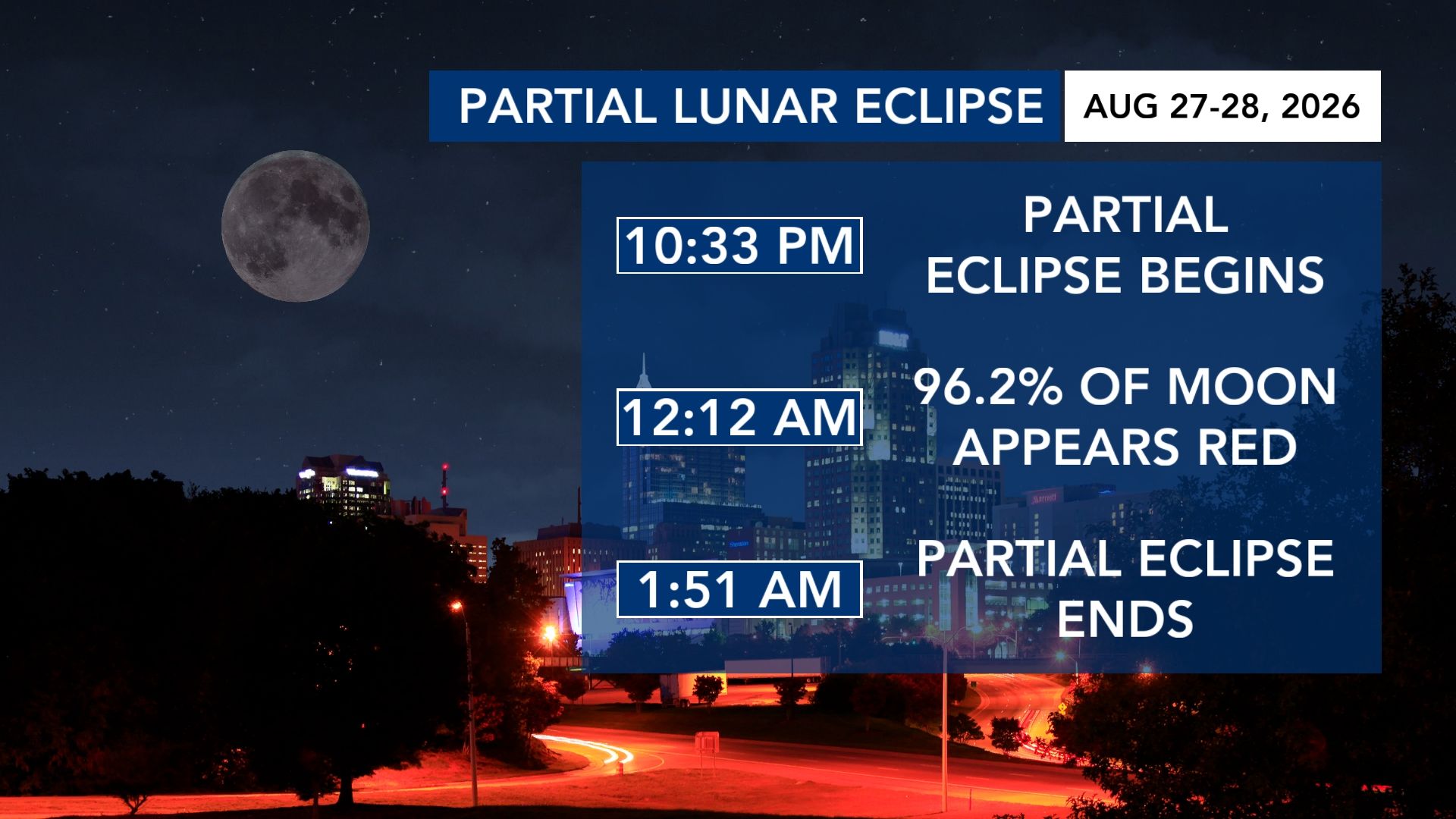
At its peak, 96% of the moon’s surface will go into the earth’s inner shadow (umbra) and appear red. This will happen shortly after midnight.
What is a lunar eclipse?
A lunar eclipse happens when the earth is sandwiched between the sun and the moon. The earth’s shadow is then cast onto the lunar surface.
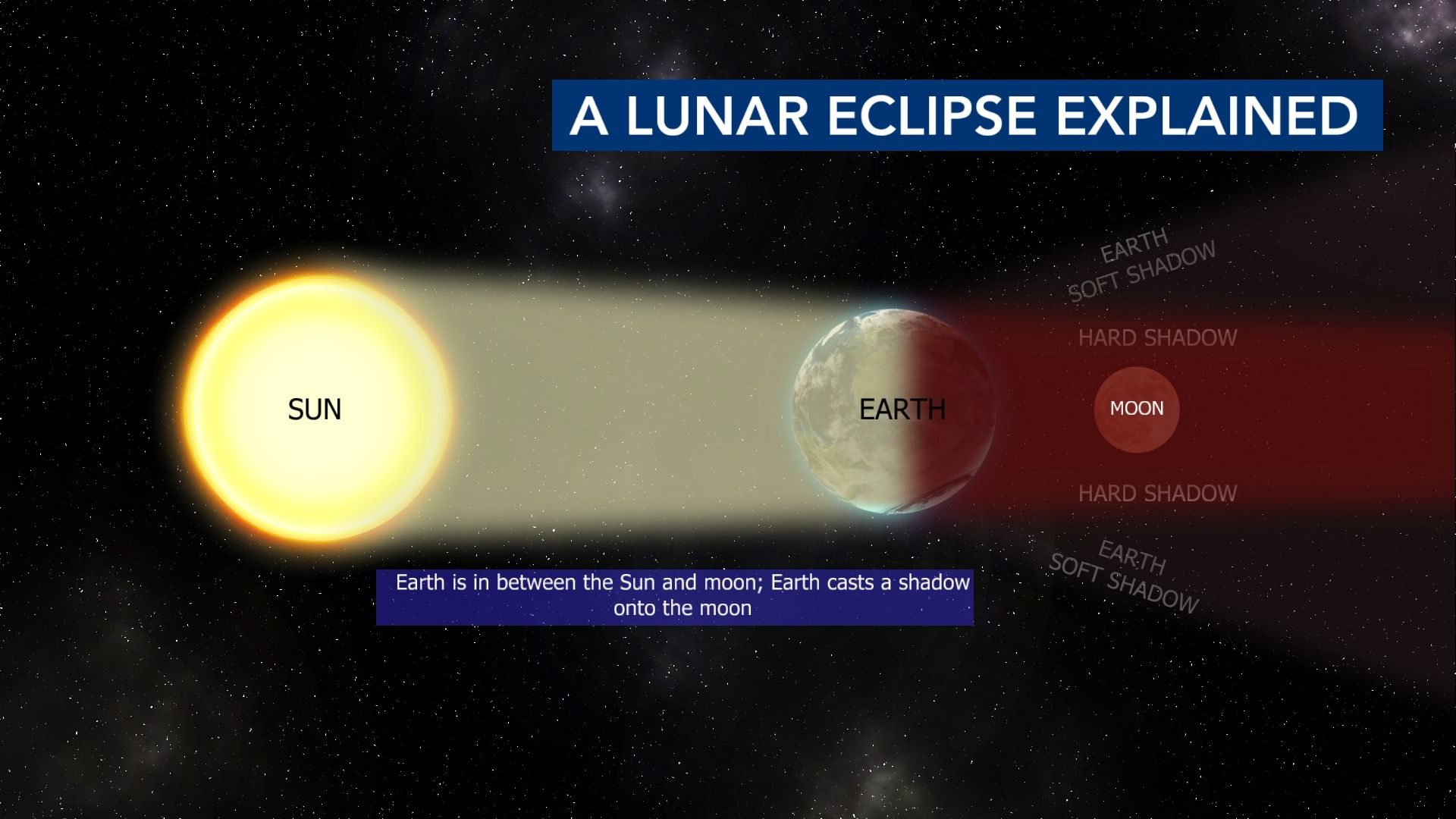
When you see the red hues on the moon, you’re essentially seeing all of Earth’s sunrises and sunsets projected onto the moon.
When to look
According to NASA Ambassador, Tony Rice, there are specific times to watch.
He wrote a detailed article regarding the lunar eclipse on wral.com.
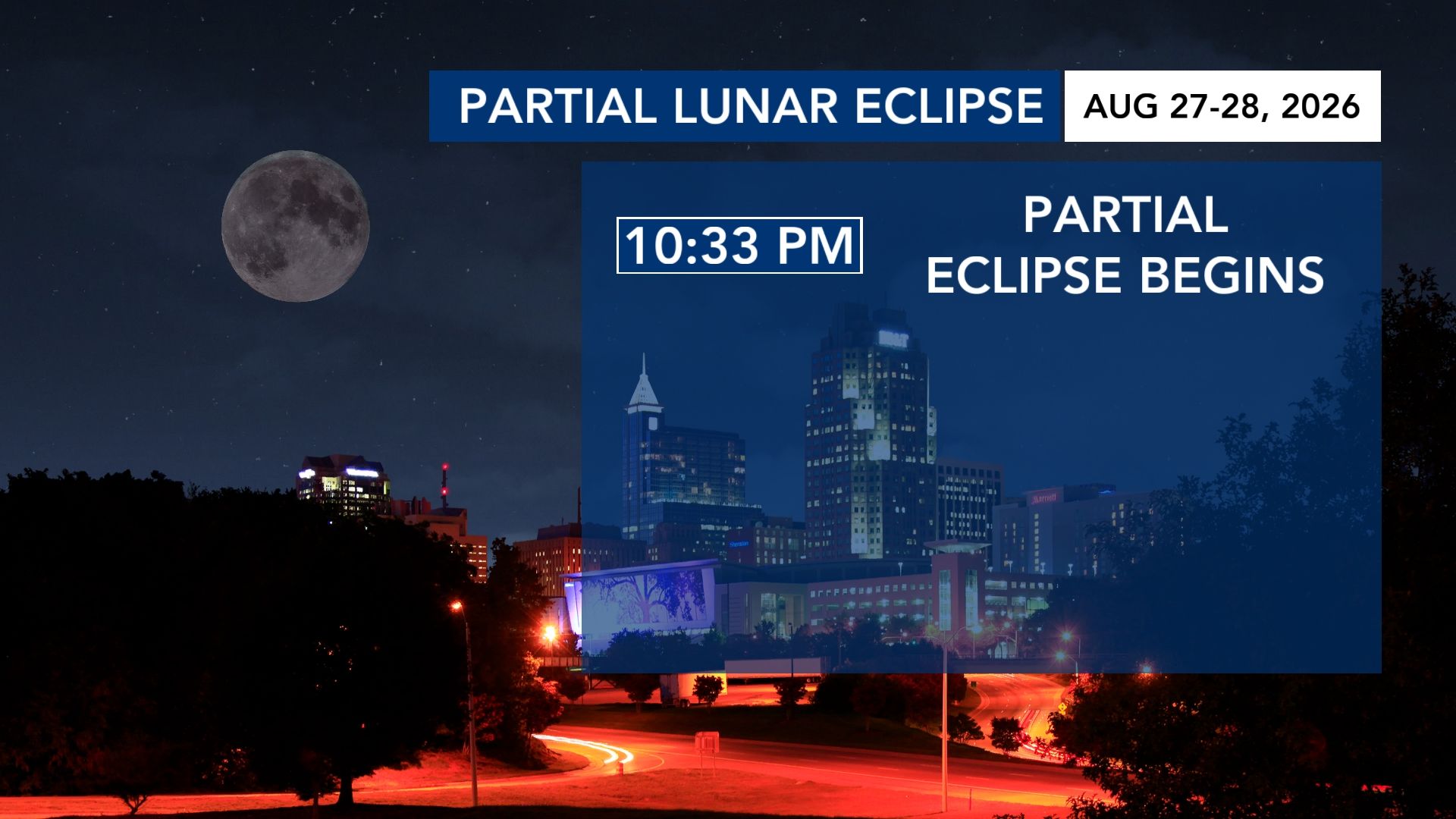
When the moon goes into earth’s outer shadow (penumbra), you don’t notice much with the naked eye. After 10:33 p.m. Thursday, however, this is when you’ll start to notice a sliver of red projected onto the moon’s surface.
9:24 p.m.: Penumbral eclipse begins. This stage produces only a subtle dimming and can be difficult to notice with the naked eye.10:34 p.m. Umbral eclipse begins. the Moon starts moving into Earth’s darker umbral shadow. From that point, observers should be able to watch Earth’s shadow gradually move across the moon’s surface.
3. 11:15 p.m.: 50% partial eclipse, this is a great time to see Earth’s curvature cast onto the surface of the Moon.
4. 12:12:53 a.m. Friday, maximum eclipse, when 96.3% of the Moon will be within the umbra.
5. 1:11 a.m. 50% partial eclipse
6. 1:52 a.m.: Umbral eclipse ends
7. 1:02 a.m. Penumbral eclipse ends
What if I miss this one?
There won’t be much to look out for in 2027 or in 2028. We’ll have to wait until 2029, according to Tony Rice.
He says, “Raleigh will get to see two total lunar eclipses in 2029 however, on June 26 (low in the eastern sky), and December 20 (much higher, similar to this week’s).”