
LINCOLN, Neb. — In the months before and after Nebraska football trended sharply in a bad direction five years ago, the Huskers signed 11 players from their own state in the 2022 and 2023 recruiting classes.
Four remain on the roster. One has played extensively, offensive lineman Gunnar Gottula, with 16 starts over the past two seasons.
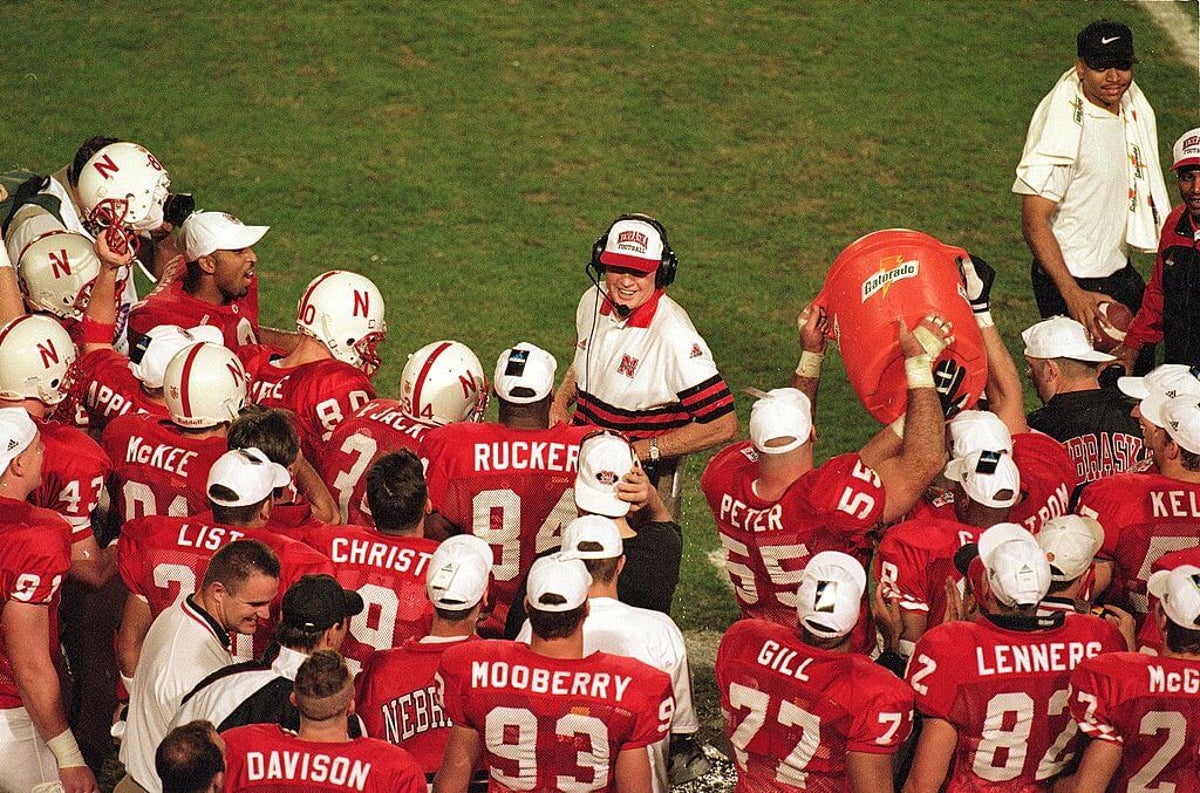
Coaching changes are messy. Nebraska has endured six such resets in the 29 years since its last national championship in 1997, one of five it won or shared in a 28-year span. Evaluation and development take hits in times of transition.
College football has shifted in the past five years. Players transfer with ease and earn seven-figure payments. The value of a geographic component in roster management has diminished.
But from where and how Nebraska players arrive in Lincoln still serves as something of a bellwether for the program’s success level. To understand the degree of change since the Huskers last stood atop college football, The Athletic compared Nebraska’s 2026 and 1997 rosters.
In 1997, 58.5 percent of the Nebraska roster (110 of 188 players) came from inside state borders. This season, it’s 27 percent (31 of 115). Among first- and second-stringers on the depth chart, 47.1 percent of Nebraska’s championship two-deep in 1997 graduated high school in the state. This year, that number stands at 16.7 percent, based on a depth-chart projection.
Historically, when Nebraska loaded up on Nebraskans, it won. In 2026, though, success hinges on finding the right fits among a diversified pool.
The high school classes of 2022 and 2023 in the state of Nebraska produced three members of the recent Freaks List, a compilation by The Athletic’s Bruce Feldman of the most outstanding athletes in the sport. None of the three signed with the Huskers.
As karma might require, North Dakota offensive tackle Trace Thaden (Millard West), Oregon linebacker Devon Jackson (Omaha Burke) and Iowa center Kade Pieper (Norfolk Catholic) are set to play against Nebraska this fall. As the trio grew up on Nebraska high school fields, the Huskers tripped and slipped to a 7-17 record during their senior seasons.
That exodus of talent provides a new way to illustrate an old story of Nebraska missteps. And it facilitates a conversation about the balance that fourth-year coach Matt Rhule and general manager Pat Stewart seek to find in assembling a roster.
“The world is flat in recruiting,” said Stewart, who worked for three NFL organizations in scouting and personnel from 2007 to 2024. “Everybody can get everywhere. All the information is at the click of a button.
“You’re going to go try to find the best possible players, regardless of where they’re from. That’s the NFL (model). But I do think there’s definitely a place (in college) for relationships and geographic proximity that creates a little bit of nostalgia or loyalty, whatever you want to call it.”
How else has roster complexion changed at Nebraska since the Huskers last won a national championship?
• Traditional recruiting hotbeds California, Texas and Florida produced 10.1 percent of the roster and 21.6 percent of the two-deep in 1997. This year, those three states check in at 22.2 percent overall and 33.3 percent of the two-deep.
• Among out-of-state players, Nebraska plucked 35.9 percent of its roster from the six-state Big 12 footprint in 1997. In 2026, 38.1 percent of the non-Nebraskans came from 14 states home to a Big Ten program.
The Huskers are tapping areas close to home with less frequency. It’s not a talent issue. In the 2026 class, 19 Nebraska high school graduates signed with FBS programs. Just two came to Lincoln.
In the absence of Nebraska recruiters, Matt Campbell and Penn State signed four Nebraskans, all previously committed to Iowa State. Alabama, Iowa, Northwestern, Missouri and Illinois nabbed players.
In 2025, six of 19 who went to the FBS signed with Nebraska. Florida State, Kansas State, Texas Tech and Stanford came in for others.
Still, it’s not right for the Huskers to recruit everyone close to home who’s got a shot to play in the Power 4. Rhule can’t afford to miss in a way that Tom Osborne could, because a player who’s not a hit in the Class of 2027 counts against the roster limit, capped at 105, and eats up NIL money, which is finite.
Also, the pressure of playing for the home-state school as a pseudo-professional at age 19 rates as a possible recipe for trouble that’s different from 1997.
“It’s a layered issue,” Stewart said. “The guys from here, they have a support system built-in that’s local. But if you’re not playing, you’re going to hear a lot more people asking, ‘Why?’”
The Huskers’ roster in 2026 includes eight Nebraska high school graduates in their first or second seasons of college — a low-water mark dictated by roster limits, the near disappearance of walk-ons and burgeoning pipelines to high-talent-producing states and regions.
Moreover, 29 of 116 players on Nebraska’s roster transferred from another Division I program. More than 35 percent of the projected two-deep in 2026 arrived in Lincoln via the portal, including as many as 14 starters when Nebraska opens on Sept. 5 against Ohio.
Still, the success of Jackson, Pieper and Thaden — in addition to Penn State tight end Ben Brahmer of Pierce, Neb., Miami running back Marty Brown (Omaha Creighton Prep) and former Nebraska-turned-Michigan linebacker Ernest Hausmann (Columbus, Neb.) — illuminates the collateral damage related to coaching turnover and recruiting misevaluations.
Pride fueled Nebraska prep stars to grow into captains and all-conference players on championship teams. It’s there with the likes of Gottula, a Lincoln Southeast graduate, tight end Luke Lindenmeyer (Papillion-La Vista) and defensive back Donovan Jones (Omaha North).
Gottula rebounded from a knee injury suffered last November to win back a key spot in the O-line rotation.
“He is going to get it done,” offensive line coach Geep Wade said of Gottula, “because he loves playing for Nebraska.”
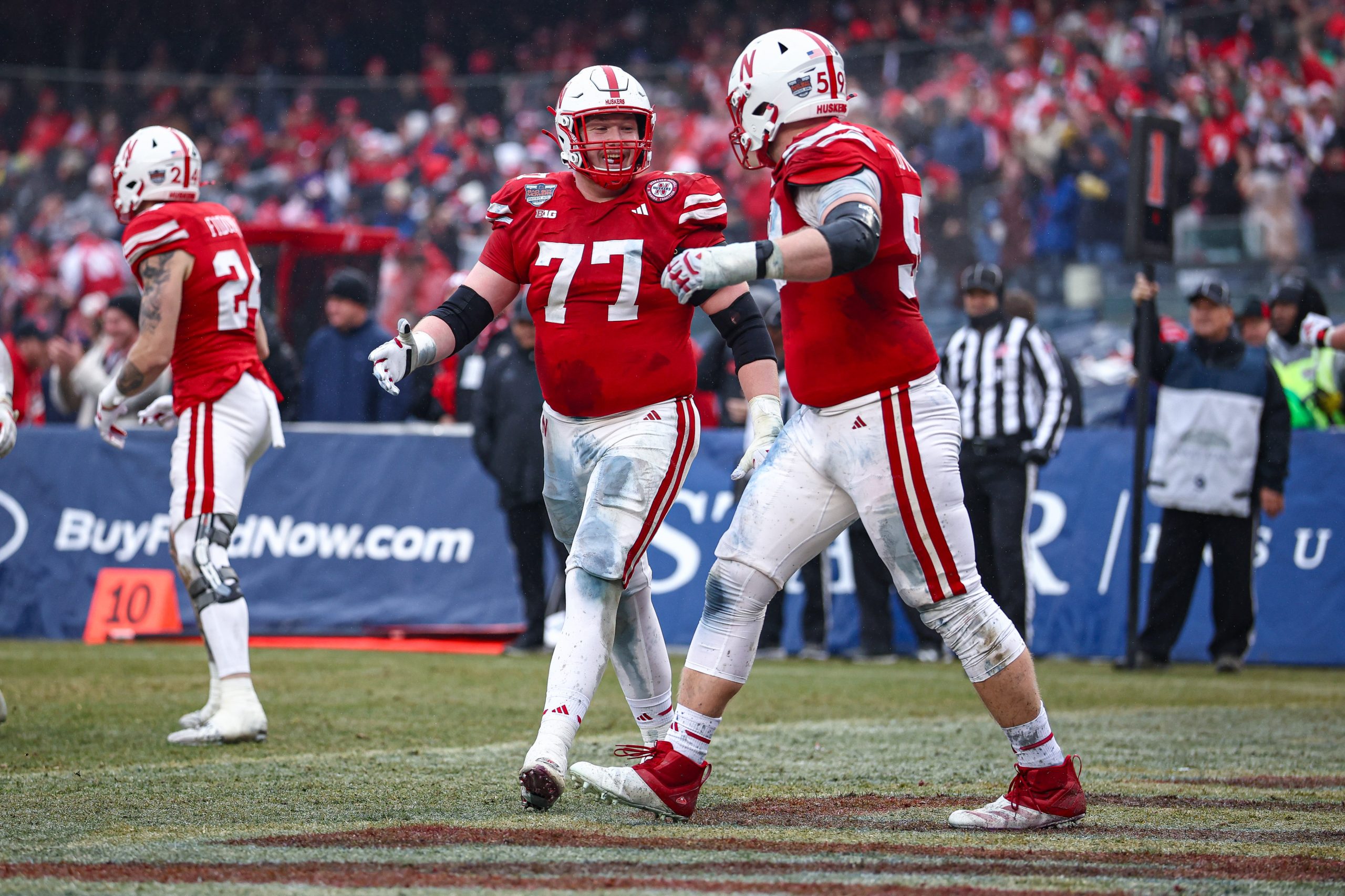
Gunnar Gottula (77) has been the only home-state key contributor from Nebraska’s 2022 and 2023 recruiting classes. (Vincent Carchietta / USA Today Sports via Reuters Connect)
Among the batch of Nebraska-grown members of the Freaks List, the Huskers pursued only Jackson, rated as the No. 1 prospect in the state by Rivals and 247Sports in the Class of 2022.
Iowa was the lone FBS school to offer Pieper, slotted as a recruit below seven of the eight from Nebraska who signed with the Huskers weeks after Rhule was hired. Thaden was unknown on the recruiting scene. He walked on at North Dakota, then packed some 60 pounds onto his 6-foot-7 frame.
Players with similar trajectories — like Cory Schlesinger, Matt Hoskinson and Terry Connealy — filled Nebraska’s title-winning rosters. The rise of Pieper and Thaden shows that elite evaluation and development can remain a driver for winning teams.
Undeniably, in the transfer portal era, geographic proximity is waning as a factor in roster construction. But it’s not dead.
“All of us who love college football want that part of it to stay,” Stewart said.
What’s to say that Thaden, who began his time in college as a tight end, would have developed at Nebraska as he did at North Dakota? He received opportunities to play in 2023 and 2024 at the FCS level, prepping him for a breakout season last year.
But ideally for Nebraska, it’s not missing on Darion Jones, Iowa’s first-year defensive back out of Omaha, whose brother, Donovan, is in line to start in the secondary for the Huskers.
Not every one of those 110 Nebraskans on the 1997 roster factored in the run to a national championship. But 24 on the two-deep did, along with others. The Nebraska kids came with innate pride and a chip on their shoulder.
The chips exist today in the Nebraska locker room. And as the Huskers might soon see, they pack a punch on the visitors’ sideline, too.