
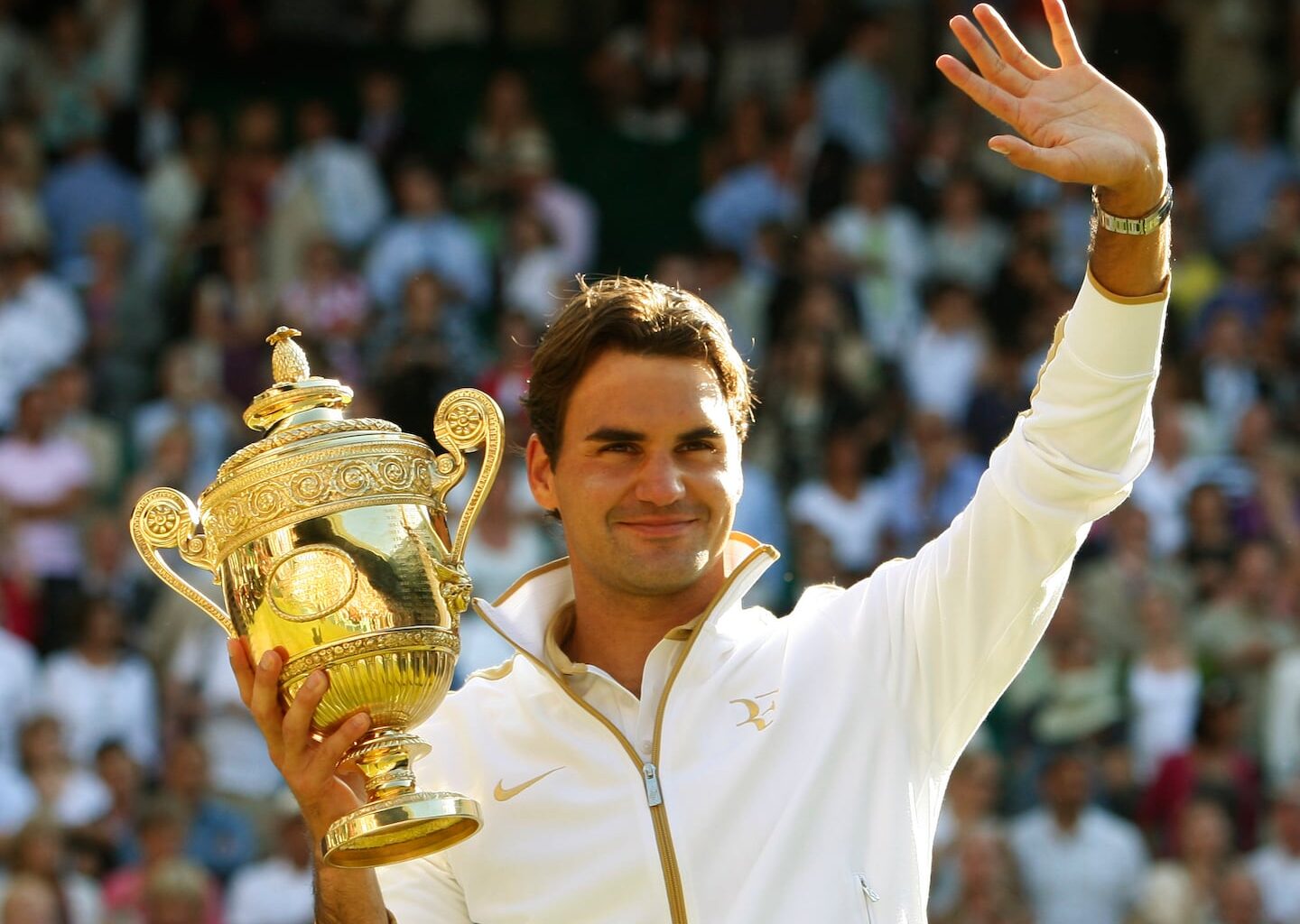
“We were just kind of having fun for this one tournament. I’ll never forget watching him that way,” McEnroe said in a recent telephone call. “Right after he served, his movement would be so quick and so aggressive. But then, he was completely calm. I just watched him, I didn’t even watch the ball, you know, like you normally do, going back and forth. It was just amazing to see his incredible speed and quickness.”
That’s the thing about Federer. He changed our perspective. He did it on the court, with a fluidity of movement unlike anything the game had ever seen and a level of graciousness rarely found at his height of professional achievement. He did it off the court, with outside interests from fashion to footwear that made him a billionaire. He’s still doing it since walking away from the court, with an eponymous foundation continuing its impactful charitable work for children worldwide.
As Federer gets inducted into the International Tennis Hall of Fame in Newport, R.I., on Saturday, there is no doubt of the indelible footprint he left along the way. He took us out of the Pete Sampras era, when it seemed Sampras’s 14-time Grand Slam trophy case would never be touched, into the Big Three era, when Federer, alongside Rafael Nadal and Novak Djokovic, rewrote those record books. Yet in what feels like a final lesson in humility and perspective from the 45-year-old, 20-time Grand Slam champ, he never saw himself that way.
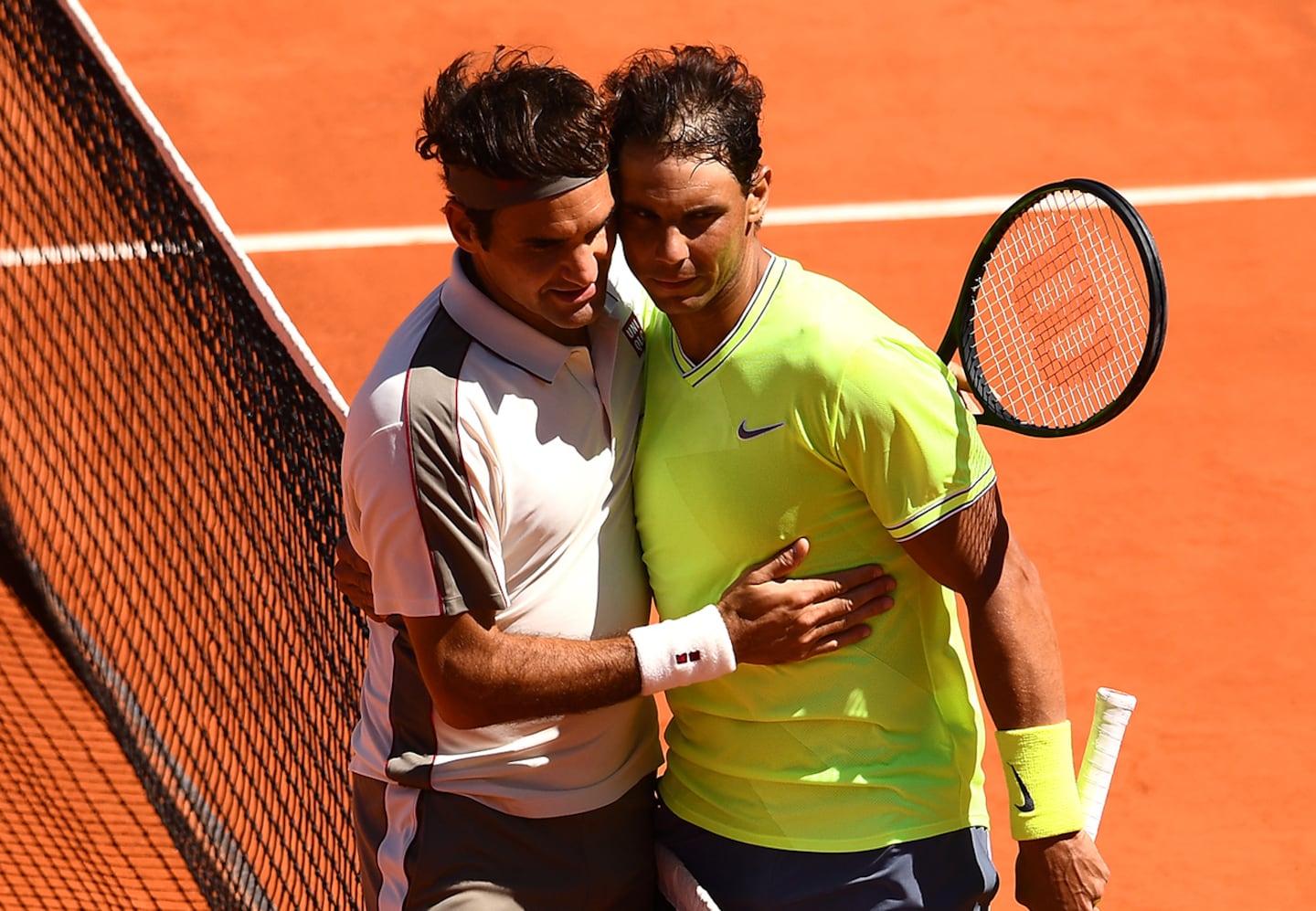 Along with Novak Djokovic, Roger Federer (left) and Rafael Nadal (right) comprised the Big Three of men’s tennis for more than two decades.Clive Mason/Getty Images
“I think when you retire, there was a lot of talk also about my personality and what I brought to the game overall when I wasn’t on court, which I was a little surprised,” he said this week before playing an exhibition match at the US Open. “I thought it was about in the moment, forehands and backhands and saving break points and victories and all that stuff. But actually, it becomes a little bit, not irrelevant, but about ‘what were you remembered for, how did you behave in the locker rooms or in the corridors or maybe with the media, or with the tournament directors, the ball kids.’
“For me, if I look back, that’s what I’m very happy about, that I went through 25 years on tour, and actually felt like I made a lot of friends and a lot of people miss me. Same with fans. They come up to me and say, ‘What a shame you’re not playing anymore.’ ”
It’s the lament of every aging sports fan. Yet much the way Federer took that baton from Sampras and set a new bar for Nadal, Djokovic, Andy Murray, Stan Wawrinka et al, today’s standouts such as Carlos Alcaraz and Jannik Sinner continue to raise the game. The sports stage demands as much, constantly resetting and revolving to welcome new stars. The beauty is in the way those stars continue to glow in our memories.
Close your eyes and see Federer’s beautiful one-handed backhand, or his lightning-quick approach to the net, or his artful drop shots or down-the-line winners. Dare yourself to imagine any player doing it all with any of the elegance and gracefulness that set him apart. Federer somehow managed to hide the endless hours in the gym and countless strokes on the practice court behind an aura of effortlessness. It was a sight to behold.
As McEnroe described it, “He had this incredible gift where he almost looked like he was playing in slow motion, with his backswings and everything he did. Elegance is a great word for a way to look at it. I would call it balletic, almost balletic. With the way he moved, like when you look at ballet dancers, they don’t look like they’ve been lifting weights, but they’re so strong, so supple, yet so strong. I think he had that same type of quality that he brought to the tennis court.”
Strength plus elegance equaled greatness. The 20 major titles, including a men’s record eight at Wimbledon. Five consecutive US Open wins from 2004-08, still the last man to defend that hardcourt. Six wins in Australia. And finally, an elusive French Open championship, the 2009 breakthrough that earned him the career Grand Slam. A record 237 consecutive weeks as world No. 1. A staggering 103 ATP titles from 2001-19. A 2014 Davis Cup victory and 2008 gold medal with doubles partner Wawrinka.
“The way he played was wondrous,” said Mary Carillo, the former player turned commentator who is being inducted into the Hall of Fame as a contributor.
“You don’t expect somebody to have that kind of decision-making ability in a fraction of a moment, to be able to toss up a lob over somebody’s head that hits the baseline. I know that when I called his matches, a lot of times you could hear me laughing. Instead of explaining analytically what just happened, I would be laughing, someone else would explain it, because you would watch something and just think, ‘How did he even see that winner? How did he look at the court in that fraction of a moment and see that winner?’ It didn’t exist until he saw it and made it happen.”
Tara Sullivan is a Globe columnist. She can be reached at tara.sullivan@globe.com. Follow her @Globe_Tara.