
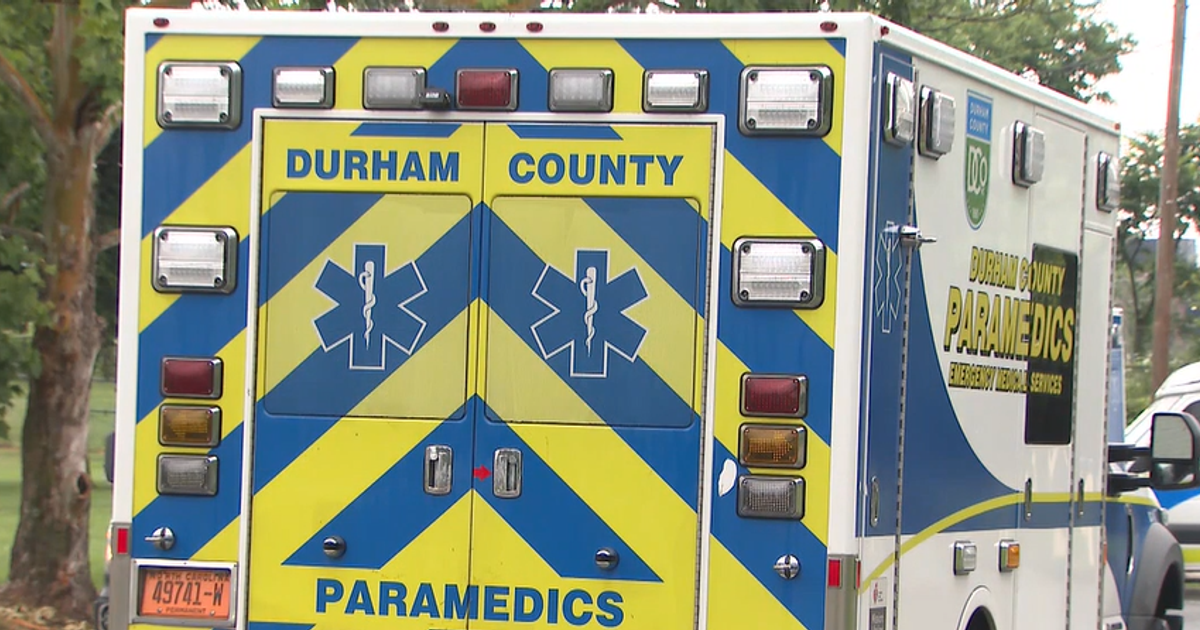
Durham’s growth
is straining the capacity of emergency resources.
It’s impacting
the ability of EMS to respond to lower-priority 911 calls.
One family
found out firsthand when there were no available units to transport their son,
injured in a football game.
Durham’s Director of Emergency Services Mark
Lockhart said Durham broke a record last fiscal year for calls for service, and
they’re on track to break it again this year.
That increase puts a strain on EMS.
“At this point the call volume is outpacing the
supply of staff and vehicles that we have and that’s created a difficult
situation for us, because obviously our folks want to be able to help,”
Lockhart said. “There are very few hours of the day when we aren’t facing a
situation where we have more calls than units available.”
Lockhart said Durham EMS is holding about 10 to 14% of lower priority calls each week, meaning a longer wait time for those without serious medical needs.
Those calls are being held on average for 30 to 34
minutes, and some have been held up to an hour.
“There’s not a day goes by that we aren’t seeing
the signs of wear and tear on the system. The system was designed to get the
right help to the right place at the right time,” Lockhart said. “There are
days where that system just – we get overwhelmed.”
The Wake Forest family felt that wait firsthand, when their son’s leg was injured during a JV football game at Southern last week.
Cody and Marquita Singleton said the Wake Forest medical team couldn’t find a
pulse in his foot, and they were told EMS had no units available.
“When you’re talking about major leg bones
and you know his foot is pointed in the wrong direction and contorted, and they
can’t detect a pulse in his foot, it raises a lot of concern,” Cody Singleton
said.
They ultimately took him to the hospital
themselves.
“We can’t wait here indefinitely without any
timeline for when they’re going to be coming to take him to emergency services,”
Singleton said.
Lockhart emphasized, EMS staff wants to help.
“Know that we’re coming. We’re doing the best we
can. Some calls just take higher priority than others,” Lockhart said. “While
we want to respond to every call when it’s received, we don’t want there to be
a delay. At this point in time, that’s just not the situation.”
WRAL Investigates has covered EMS staffing issues multiple
times in recent years.
Lockhart says the first step is filling all
vacancies, and then adding more staffing positions to meet the demand,
emphasizing the difference between those.
“Fully staffed would mean we have all the
ambulances and all the staff we need to answer the call volume that exists in
the county – we’re not there yet,” he said. “We’re trying to fill all available
vacancies, and we’ll ask for additional positions once that is done.”
The most recent county budget added funding for
more positions, and ten members of an EMS academy just graduated, with 18 more
starting an academy in September.
“This is an issue that has continued despite
the county’s efforts to address it,” Lockhart said.
In 2022, Durham County added a thriving wage
initiative to adjust salaries to be more competitive.
Lockhart also says the County has been replacing
its ambulance fleet for the last several years. However, the time from ordering
to delivering an ambulance takes about three years. That issue is a holdover
from the pandemic.
Lockhart says the County has switched providers
that should cut that time in half, with five ambulances arriving last week.
EMS also has a $6,000 sign-on bonus for certain
positions and is actively recruiting at colleges.
In addition to hiring incentives, Durham County
EMS is also changing how they respond to calls.
Recently, the County added a basic life support
unit, utilizing either two EMTs or an EMT and an advanced EMT, depending on the
type of call.
Lockhart points out, only 58% of patients EMS
responds to need to be transported to the hospital. He says they’re looking at
other ways to serve those 42% of patients who either didn’t need to be
transported, or didn’t need EMS.
“Our field crews are working diligently to clear
calls as quickly and safely as possible so they can turn around and take the
next call,” Lockhart said. “We’re making the best progress we can with the
resources that we’ve got.”