

RICHMOND, Va. (WWBT) – Forget the old rumor about swallowing spiders in your sleep; one Richmond doctor woke up with a bat’s wings folded in her mouth, and it was heading for her throat.
Dr. Krista Edelman, a gastroenterologist with Richmond Gastroenterology Associates, said the encounter happened on Aug. 20, around 6 a.m., about 30 minutes before her alarm was set to go off.
“I was dreaming that there was a little mouse trying to get into my mouth. And I was in nice slumber. And then in my dream, I was reaching up to my mouth. And when I did, I grabbed something and ultimately, I had folded the bat’s wings back,” Edelman said.
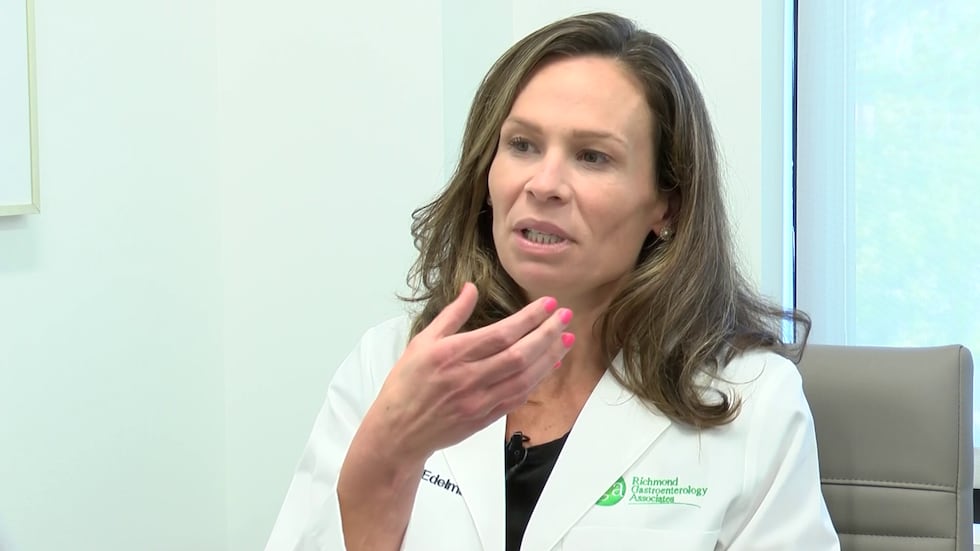 Dr. Krista Edelman(WWBT)
Edelman said she was sleeping next to her husband when she felt something soft inside her mouth.
“I thought I was still dreaming. And then when I touched the hair on its back and kind of pulled it out and then looked at it. That’s when it was like, my gosh, this is real life…So I went from like my nice slumber to somewhat panicked within probably like 2 seconds,” Edelman said.
She said the bat did not bite her, but maybe was looking for a nice place to rest for a hit.
“It was actually, I mean, it was kind of soft wings, and it was kind of soft. So, it wasn’t painful at all. It was just a little bit unsettling,” she said.
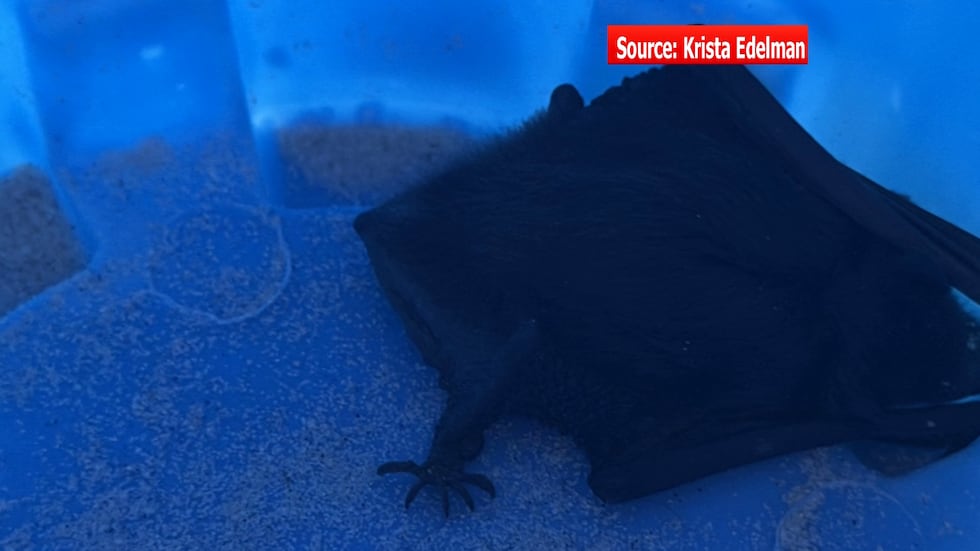 Forget the old rumor about swallowing spiders in your sleep — one Richmond doctor woke up with a bat’s wings folded in her mouth, and it was heading for her throat.(Dr. Krista Edelman)
Edelman’s screams woke up her husband, who trapped the bat so animal control could test it for rabies.
She said she pulled a comforter over her head and called out instructions to her husband while researching what to do on her phone.
“Everywhere I was looking, it said, please catch it, please catch it,” she said. She said her husband put on a pair of her snow mitten gloves, used a plastic net and a bucket, and covered the bucket with a piece of cardboard held down with masking tape.
Edelman said she stood outside her 6-year-old daughter’s bedroom door during the process because she was worried her daughter would wake up and walk in before the bat was contained.
Edelman said she did not go to the emergency room right away.
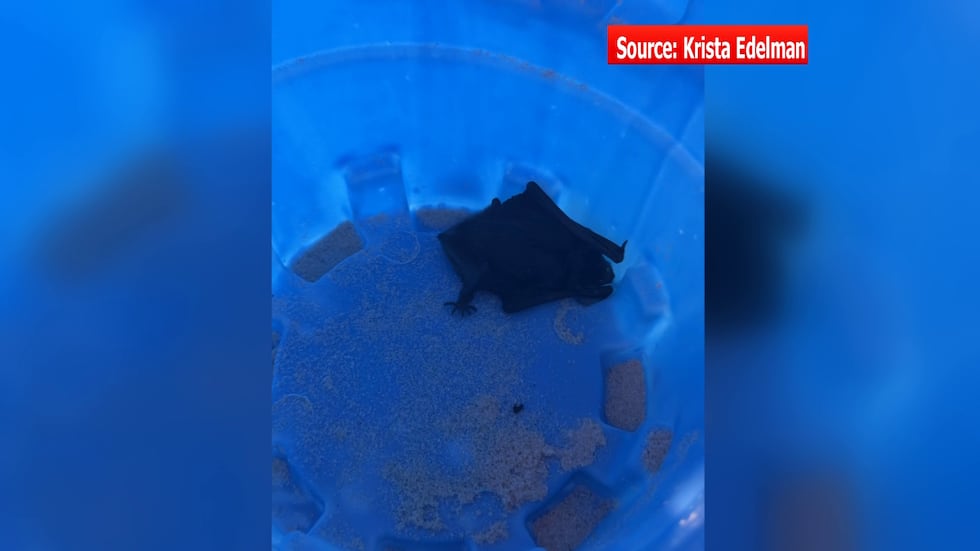 Forget the old rumor about swallowing spiders in your sleep — one Richmond doctor woke up with a bat’s wings folded in her mouth, and it was heading for her throat.(Dr. Krista Edelman)
Instead, she washed out her mouth with hand soap and went to work, seeing patients and performing procedures, before deciding what to do next.
She said she later called Dr. Nate Warner, an infectious disease doctor at VCU, who told her that exposure closer to the brain — such as in the mouth — could carry a more accelerated rate of transmission than an exposure on arms or legs.
Edelman said that information, along with learning that Richmond Animal Control had recorded at least five rabies-positive bats in Richmond and Henrico so far this year, led her to go to St. Mary’s Hospital after her workday.
Medical Director of St. Mary’s Emergency Department Dr. Adam Landsee was one of the many to helped treat her to treat her for rabies.
“One is the rabies vaccine, which is a four-shot series on days 0, 3, 7, and 14. And then the second part is a rabies immunoglobulin that actually treats active rabies virus in the body before the vaccine can make enough antibodies in your body to fight the rabies infection,” Landsee said.
Landsee says there were no bite wounds on Edelman, so the immunoglobulin could not be injected at the exposure site on her face.
Edelman received her first vaccine dose Thursday night and her second dose the following Sunday, once the test results from the bat came back negative, she no longer had to continue with treatments.
Landsee, who has worked in St. Mary’s emergency department for just over five years, said the case was unusual.
“To actually have a bat in the mouth, assuming that’s a mucous membrane and a bat is crawling in with its head or its mucous membranes, its saliva are, it’s a pretty concerning exposure,” he said.
The doctor said bat-related rabies treatment is common at St. Mary’s and at the Short Pump freestanding emergency department it operates, where staff treat patients for potential rabies exposure multiple times a week.
Landsee said bat bites are often not felt and may leave no visible wound.
“Bat teeth are very small. And so it’s a very small pin prick and you may not feel the bite and there may not be any wounds there,” he said.
He explained the CDC and the Virginia Department of Health do not require a visible bite or injury for a patient to receive treatment, because rabies is fatal once symptoms develop.
Landsee said rabies spreads slowly through the nervous system, meaning a bite on the foot could take days to months to reach the brain, giving time for treatment.
He said there were two human rabies cases in Virginia in the last nine years and that most rabies cases involving dogs in the United States occur along the border with Mexico, where animal vaccination is less consistent.
Edelman said she began posting on social media a few months ago to share evidence-based medical information with patients beyond what she said is often limited time during office visits. Since her initial Instagram post on the bat, it’s received more than 45,000 shares, 30,000 likes, and 5,000 comments.
“When this episode happened, I was humbled because I grew up in rural Hanover and I thought I knew about bats and wildlife and I’m a medical doctor, but I didn’t know. And I was a little embarrassed and sheepish that I was hiding under the comforters trying to Google like, what do I do next? So I thought if I was that unsure, other people have bad exposures maybe this would help empower them,” Edelman said.
She said many people have since reached out to her with similar experiences involving potential rabies exposure from animals.
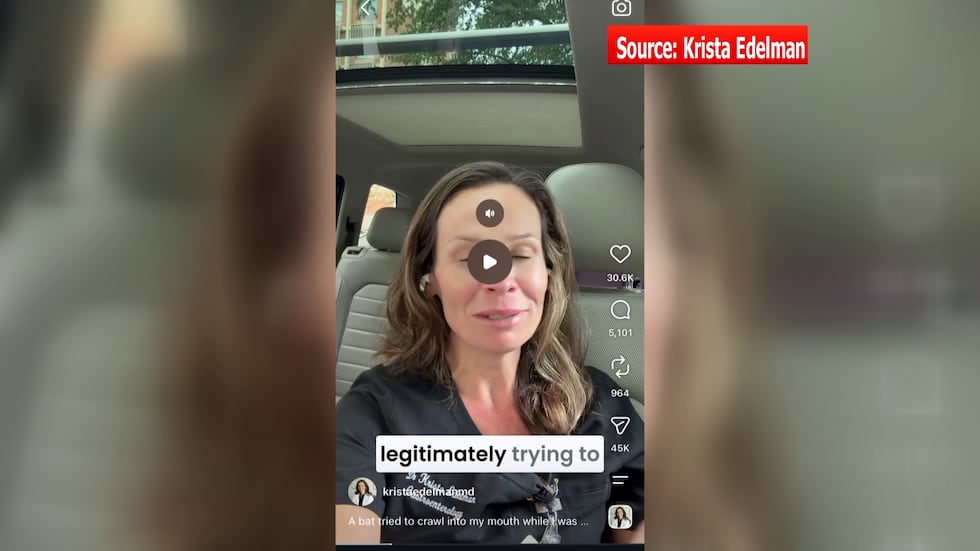 Dr. Krista Edelman(Dr. Krista Edelman)
Julia Murphy, State Public Health Veterinarian with the Virginia Department of Health, said bats are important to the environment and should not be proactively removed from it. “We should never proactively remove them from the environment,” Murphy said.
But she said certain situations should raise concern about possible rabies exposure: being bitten by a bat and knowing it happened, having direct contact with a bat without being sure a bite did not occur, waking up in a room with a bat present, or finding a bat in a room with a sleeping person, small child or pet who could not say whether they were bitten. Murphy said Edelman’s case reflected the second scenario — direct contact with a bat without being able to rule out a bite.
Murphy said people who find themselves in this type of situation should try to safely capture the bat while wearing gloves and place it in a container, then contact local animal protection services or the local health department. “If we have a bat to test, usually the test results will come back in roughly 48 hours. And that is certainly a sufficient window of time to intervene with additional recommendations like vaccination if we need to,” Murphy said.
Murphy said people who are not comfortable capturing a bat should at least avoid letting it escape. She recommended closing doors and windows and blocking gaps underneath doors, since bats can fit through very small openings, and then contacting animal protection or health department services for guidance.
Murphy said Virginia Department of Health data show a heavier-than-average number of bat encounter reports this year, though the number of bats testing positive for rabies has not increased. She said the state typically confirms an average of about 25 positive bats per year and that the state was at 19 confirmed positive bats so far this year. She said the increase in reports could reflect greater public awareness rather than a rise in actual rabies cases.
Murphy said the state sees more wildlife activity, and more encounters between people, pets and wildlife, during the summer months.
She said bats — particularly a species called the big brown bat — are the wild animal people are most likely to encounter because the species is drawn to homes and buildings to form colonies.
Murphy said anyone dealing with a bat colony in a home, or a bat that appears sick, orphaned or injured, should not handle the situation directly.
She said the Virginia Department of Wildlife Resources maintains a list of licensed wildlife rehabilitators and wildlife trappers, some with experience specifically mitigating bats in homes.
The health department also has a safety checklist for handling a bat inside a home.
Copyright 2026 WWBT. All rights reserved.