
Editor’s note: This article is part of the Winning Style series, a collection of articles that explore the methods elite tennis players adopt to remain at the pinnacle of the sport.
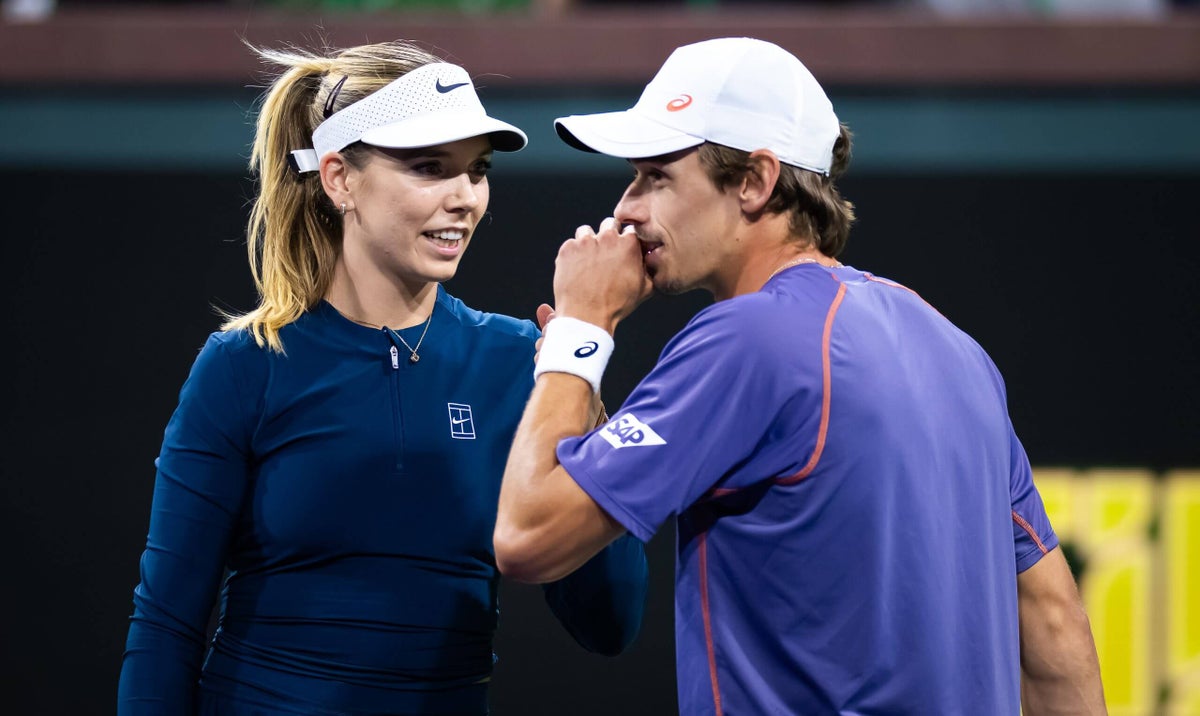
Katie Boulter and Alex de Minaur made a rule for their relationship shortly after they started dating six years ago. As long as they were on the pro tours, tennis would be the priority.
“Anything else comes after,” Boulter said during a recent interview, as she and her husband of roughly four weeks relaxed on a leather couch in a suburban Cincinnati hotel. “We’ve always stuck by that.”
But what about now? What about all those vows about sickness and health and lifelong commitments?
Is that still the way it’s going to be?
“I would say a hundred percent, yeah,” Boulter insisted, as de Minaur nodded beside her.
This year’s U.S. Open mixed doubles event, reimagined in 2025 as a tennis jamboree focused on singles star power with a $1 million prize — and no little controversy over what that said about the tournament’s priorities for doubles players — would figure to be a perfect first appearance for Boulter, 30, and de Minaur, 27, to debut on the court as newlyweds.
Instead, Boulter and de Minaur are sticking to their first commitment. After a tough few months in their singles careers, it’s each other’s tennis — the individual pursuit of their shared sport — that will come first, though truth be told they would have liked to give the mixed doubles a go but got passed over for a wild card in favor flashier and higher ranked teams.
Too bad. they showed some promise not too long ago.
Why the best singles players lose at doubles
Matthew Futterman
They played Wimbledon together in 2023, registering an impressive first-round win over de Minaur’s compatriots, Australia’s Storm Hunter and John Peers, before losing in a deciding-set tiebreak to Belgium’s Joran Vliegen and Xu Yifan of China.
“I still haven’t heard the end of how I missed a certain shot at Wimbledon for us to basically lose,” de Minaur said. “It was a second-serve return.”
“Break point,” Boulter immediately reminded him.
Tennis is a selfish sport. There is no shortage of couples on the tour at any given time. Some public. Some less so. Most of them don’t last.
Chris Evert, once half of a golden couple with John Lloyd, the British star of the 1970s and 1980s, found herself having to decide between her relationship and her drive to be the best player in the world. The drive won out.
As Boulter and de Minaur spoke, Frances Tiafoe wandered into the hotel lobby and couldn’t resist some ribbing.
“Ahh, look at the newlyweds!” Tiafoe said in what was definitely his inside voice.
Tiafoe has a tennis relationship himself. His longtime girlfriend, Ayan Broomfield, is a former pro who now runs Ayan’s Aces, a program designed to bring more Black women to tennis crowds at events of all levels.
“You’ll be married soon,” Boulter yelled to him. “I’m waiting for the ring!”
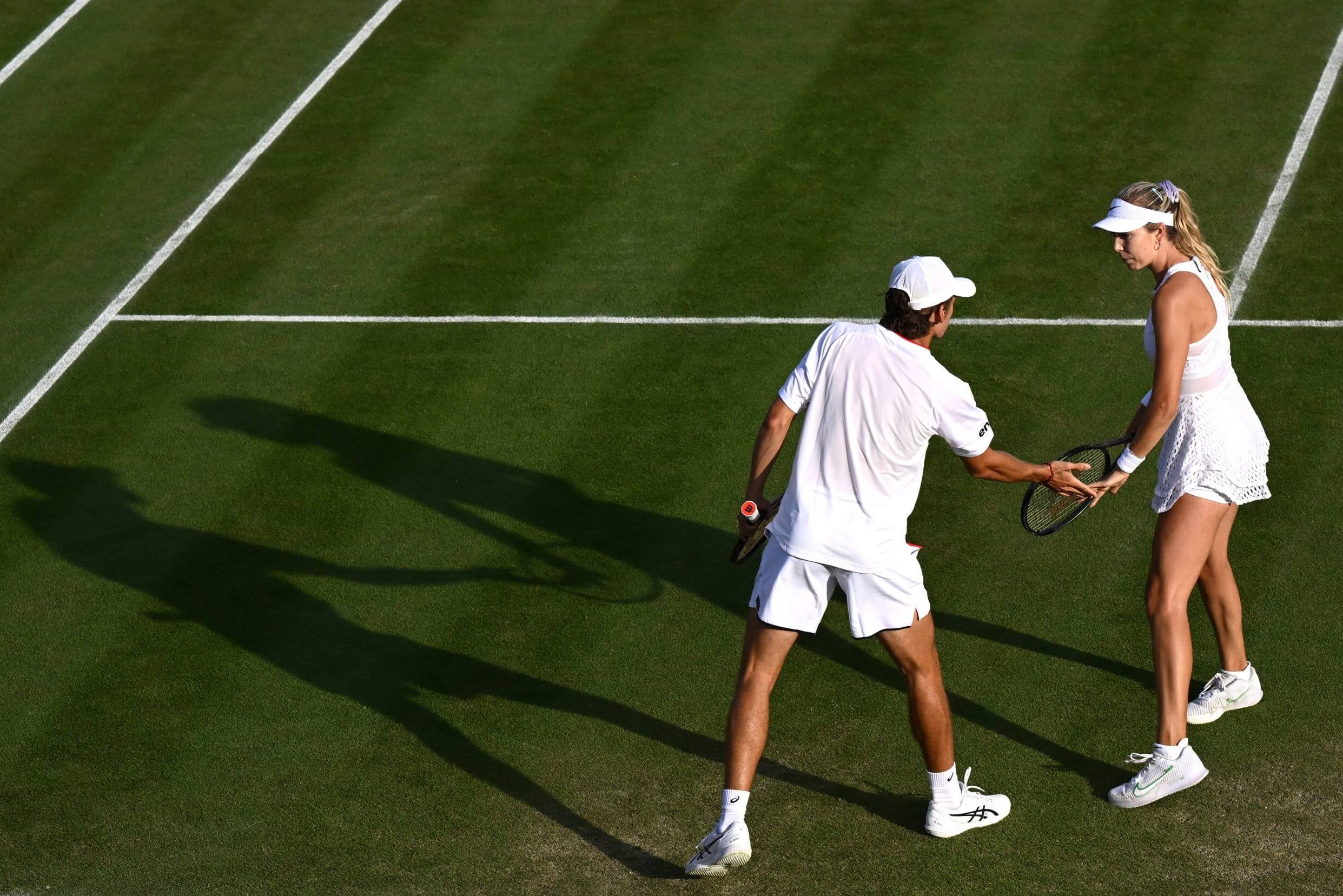
Alex de Minaur and Katie Boulter played mixed doubles together at Wimbledon in 2023, but have prioritized their singles careers. (Mike Hewitt / Getty Images)
It’s Boulter’s and de Minaur’s turn to navigate the marital terrain after tying the knot last month, first in a private ceremony at a small church in Boulter’s hometown in Leicestershire, England. Just eight people attended. Then there was a bigger celebration in Tuscany, Italy, with about 85 guests.
They put the rackets away for a while, shut their careers out of their minds and focused on a moment that felt far bigger than their professional pursuits.
“This is a once-in-a-lifetime thing, and we gave ourselves that time to be there,” de Minaur said.
For Boulter, the biggest priority was having her grandfather, Brian Gartshore, walk her down the aisle. Boulter’s parents divorced when she was 13. Her father traveled a lot. Her mother’s parents lived nearby. She saw Gartshore nearly every day. He took her to school and to training.
He turned 90 in March, and is living with dementia. Creating a ceremony in which he could still play the role that she wanted him to play was Boulter’s top priority. Her grandfather has good days and bad ones. She wouldn’t know until the morning of the wedding which one it would be.
As she sat in a chair getting her hair and makeup done on the morning of the wedding, she received a call from her mother, who had gone over to his nursing home to see how he was doing. Gartshore had woken up and quickly announced to the nurses that his granddaughter was getting married that day.
Boulter burst into tears. De Minaur’s sisters were with her. They asked her what was wrong.
“Nothing’s wrong,” she said. “He’s going to make it. He is coming.”
They walked to the church, walked down the aisle and walked home, eight of them, just family. A rare private moment for two people whose private lives have mostly unfolded in a very public way, as they navigate the international travel and time-zone crunches that come with being on two tours that don’t always sing from the same scheduling hymn sheet.
One weekend in the spring of 2024, de Minaur won the Mexican Open title in Acapulco late on a Saturday night, beating Casper Ruud. He rose just after 4 a.m. the next morning, got the first flight to Tijuana at 6 a.m. and drove across the border so he could be courtside as Boulter played a final of her own at the San Diego Open.
She won, too, coming back to beat Ukraine’s Marta Kostyuk in three sets to clinch the biggest title of her career.
Most weeks do not end like that, though. For every tennis player, nearly every week ends with a loss. Most couples will say it’s easy to be together when times are good, when wins of all kinds are piling up. Relationships get tested when the losses come.
In tennis, the wins don’t pile up all that often, apart from a select few. Runs of form, good or bad, don’t always obey reason. And injury can strike at any time. For Boulter and de Minaur, there are plenty of days when one loses and the other wins, when one of them might go from nursing the hurt of a defeat to heading over to another court to take a seat in the players box and cheer the other one on, and when the winner has to set aside a celebration to comfort the one who has lost.
“I lose a lot more than he does,” Boulter, the world No. 60, joked. “So he’s holding me up most of the time.”
De Minaur is ranked seventh. He last won a title in Rotterdam in February.
They both know that the best thing to do after a loss is to move on, do something different and take their minds off tennis, whether it’s going for a walk and a coffee or spending the night watching Netflix in the hotel room. Sometimes even a bad practice can weigh heavily, and it might come on a day when the other one has had a terrific practice.
Both have had their fair share of bad days recently. Boulter’s ranking dropped 90 places in 2025. At this year’s Wimbledon, the frustration of Grand Slam opportunities slipping away led de Minaur to say in a news conference that he felt “like two years ago, I was really closer to all of that. Today, I just feel like I’m moving a little further away from my dreams.”
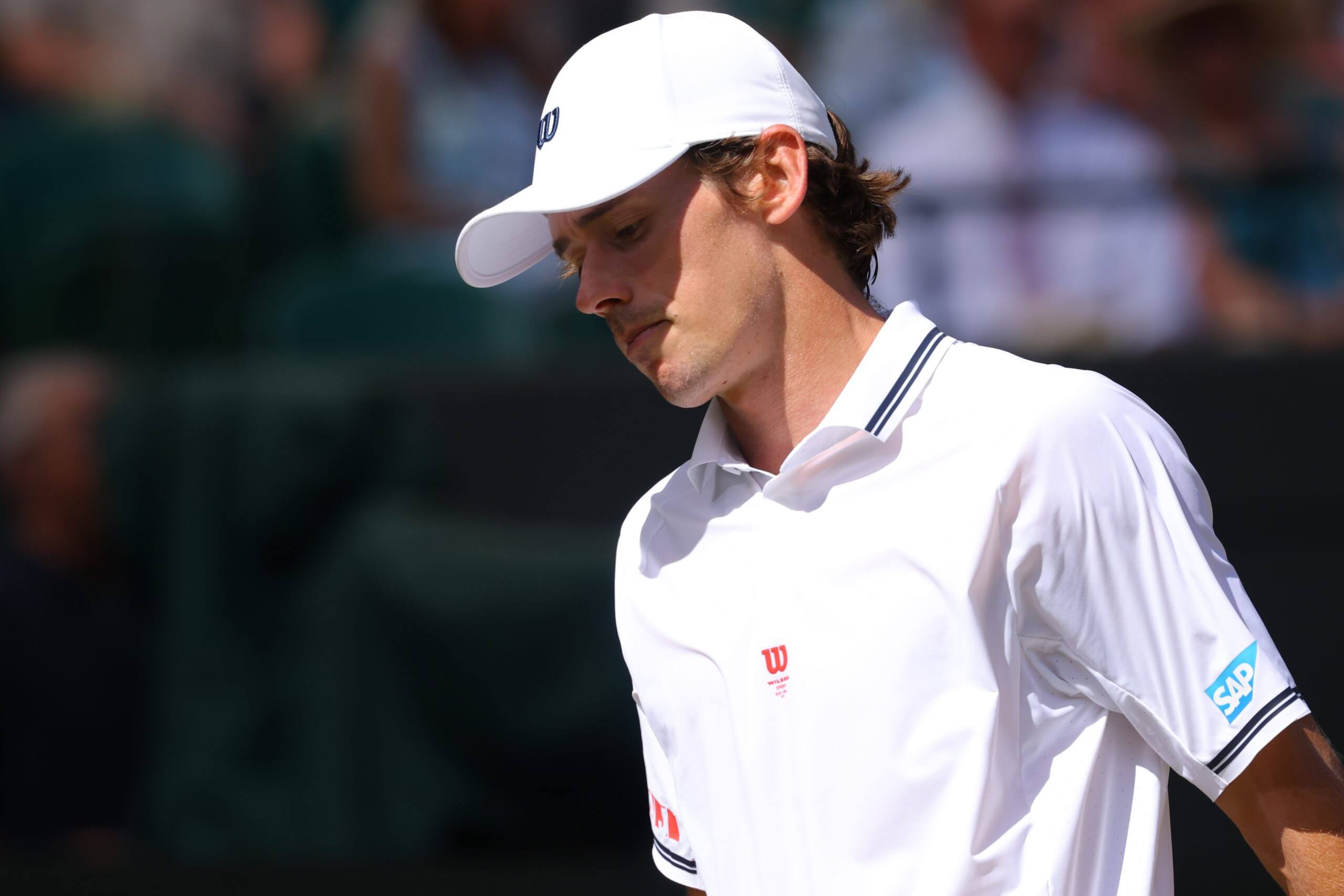
Alex de Minaur lost to Flavio Cobolli in the fourth round at Wimbledon. (Shaun Brooks / CameraSport via Getty Images)
“Sometimes it’s just about having a nudge and moving someone in a direction of not thinking about that consistently,” Boulter said in Cincinnati.
And yet there are plenty of times when one of them does not feel like being nudged.
“There are moments of, ‘OK, he needs space,’ but you read the room,” she said. “I think we know each other well enough to be like: ‘Today, honestly, just don’t talk to me, just give me space.’
“We’ll sit there in silence, whatever it needs to be, but knowing that you have the comfort of having someone else there, I think automatically helps you, whether it’s moving on or not, it gives you a bit of comfort that someone’s there.”
The double-match days when they are at the same tournament site can be tricky. There’s no obligation to watch the other one, they say. If someone needs to go back to the hotel and rest, or eat or throw something instead of sitting courtside, that’s just fine.
“Everybody is allowed not to show up,” de Minaur said.
Of course, two nights later at the Cincinnati Open, he was courtside through a rain delay and well past 11 p.m. for Boulter’s first-round match against Katie Volynets of the U.S. They went three sets, before Boulter pulled it out 7-5, 0-6, 6-4.
They’re not often on court simultaneously. So they make a point of having a brief check-in after the first of their matches, if they can. It might only be two seconds in the gym while one of them is stretching. But just a little something so they each know where the other one is. And if someone has taken a loss, it’s essential to not do anything that might drag the other one down.
It goes back to that original deal. For as long as they play, tennis is the main priority.
Boulter likes to play a game in her mind on the double-match days. She treats it like they are part of a team, as if they are in a team competition like the Davis Cup or Billie Jean King Cup, which they have both played in during their careers.
“We’re 1-0 down or 1-0 up, and then I rise to the occasion, however it’s sitting,” she said. “We know how to deal with doing our job, irrelevant of what has just happened.”
Eventually the matches, or the tournaments, end, and it’s time for a break from forehands and backhands. They don’t have any rules about not talking about tennis at the end of the day. They insist they don’t need any.
They have plenty else to talk about, plenty of plans to make, and shows to catch up on, a favorite activity to turn their brains off in the hotel at the end of the day.
They have pretty good role models on the tour in Gaël Monfils and Elina Svitolina, who are also parents to their three-year-old daughter, Skai.
Boulter said she has yet to seek advice from Svitolina on the balancing act, but Monfils, who is retiring after this season, recently gave De Minaur some words of wisdom.
“He basically said that tennis is a part of your life but it’s not your full life,” de Minaur said. “There are a lot of amazing things that happen after tennis.”
For now, those things can wait.
The Winning Style series is sponsored by Ralph Lauren.
The Athletic maintains full editorial independence. Sponsors have no control over or input into the reporting or editing process and do not review stories before publication.