
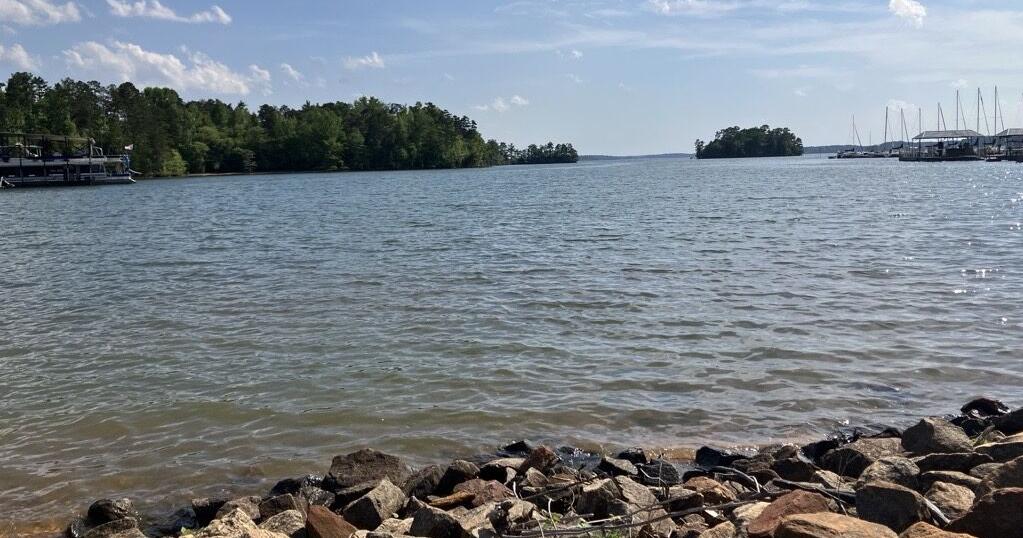
Expect to see low water levels for the foreseeable future.
Typically, the lake’s water level varies seasonally between 660 feet above mean sea level in the summer and 656 feet in the winter. Right now, due to drought conditions, the water is at 651 feet.
Effective Aug. 24, the lake will operate at 656 feet year-round, reaching an absolute maximum of 662 feet. The reduction is meant to reduce pressure on the dike, giving officials time to develop a permanent solution.
For now, there won’t be any change to water levels because the lake is already abnormally low.
A permanent solution is still a ways away.
First, the Corps of Engineers must conduct a Dam Safety Modification Study. That’s followed by finding funding, engineering design and construction.
Together, that could take five to 10 years, potentially even longer, the Corps said.
How is Clemson University responding?
Clemson’s picturesque campus is bounded on one side by Lake Hartwell.
The Clemson Protective Works — which include two diversion dams and the downstream Clemson Saddle Dike — were built before Lake Hartwell was created to prevent it from flooding the campus.
If the Saddle Dike were to fail, water could pour into low-lying areas, shutting down the university and endangering lives, the Corps says.

The Clemson Protective Works — which include two diversion dams and the downstream Clemson Saddle Dike — were built before Lake Hartwell was created to prevent it from flooding the campus.
U.S. Army Corps of Engineers/Provided
However, what’s closest to the lake are sports complexes and agricultural fields. Most of the university’s student halls and academic buildings are further inland.
In a message posted online, Clemson University emphasized there is no immediate danger to the public and no impact to university operations.
All university facilities adjacent to the lake, including the Snow Family Outdoor Fitness and Wellness Complex, remain open and fully operational.
“Clemson University’s top priority is the safety of the University community. University officials continue to monitor the situation and its potential impacts on Clemson University,” the university wrote.