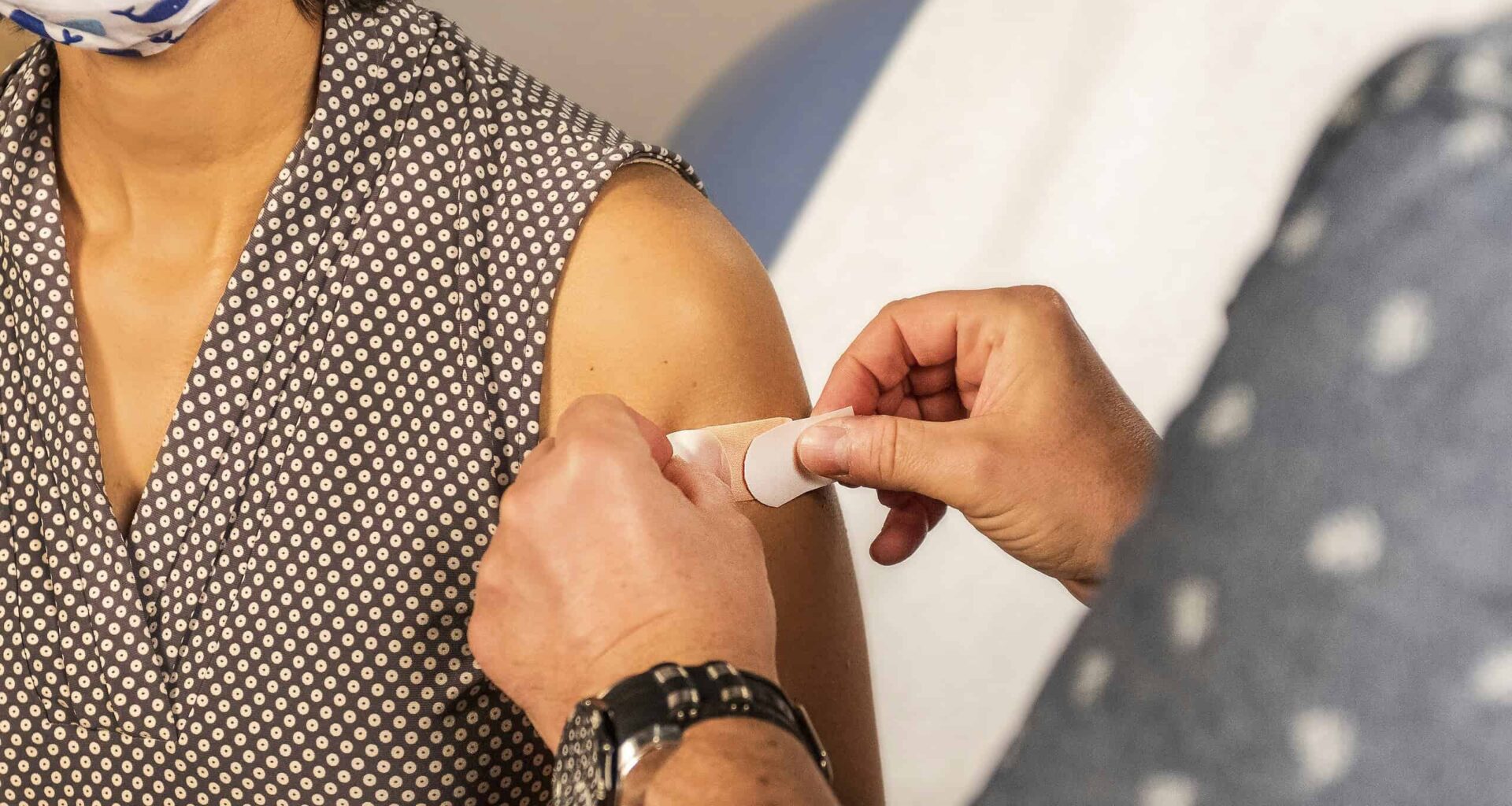
 Image via Unsplash.
A vaccine given to stop a painful disease may be doing something unexpected years later: protecting the heart.
A new study based on 70,000 people in the US found that older adults who received the new recombinant shingles vaccine were significantly less likely to suffer from cardiovascular disease than the people who got a previous version. The effect showed up most clearly for ischemic heart disease and heart failure, and it persisted for years. The study suggests that the modern shingles vaccine may change the immune system in ways that reach well beyond shingles.
A rare chance
Shingles happens when varicella-zoster virus, the same virus that causes chickenpox, wakes up after lying dormant in the body for decades. The risk rises with age, and the infection can cause severe pain that sometimes lingers long after the rash disappears.
Shingles is rarely life-threatening, but it can cause serious complications, particularly in older or immunocompromised people.
For years, the United States used a live, weakened-virus vaccine against shingles. Then, beginning in late 2017, that vaccine was rapidly replaced by a recombinant vaccine, now sold as Shingrix. Unlike its predecessor, the newer shot doesn’t contain live virus, but rather a viral protein alongside a powerful immune-stimulating ingredient called AS01.
This abrupt change gave researchers a chance to study what happened when the vaccine changed. Normally, studies compare people who received a vaccine to people who didn’t. But this type of study has some clear weaknesses. People who get vaccinated often differ in income, health habits, education, and many other ways from those who don’t. All of these can also affect their chances of developing heart disease. Researchers call this the healthy-vaccinee bias.
The new study gave researchers a rare chance to compare people who had all made the same basic decision: they got vaccinated against shingles. Because both groups had chosen vaccination, the comparison sidesteps much of the healthy-vaccinee bias that complicates vaccinated-versus-unvaccinated studies.
What the stsudy found
Researchers examined adults aged 60 and older who received a shingles vaccine between April and September 2017, when 98.6% received the older live vaccine. They also examined another group vaccinated during the same months in 2018, when 93.5% received the recombinant version. They then built two groups of 36,460 people who were closely matched in age, health and other recorded characteristics.
×
Thank you! One more thing…
Please check your inbox and confirm your subscription.
Over seven years, the group vaccinated in the recombinant era experienced a 9% lower cardiovascular burden by the study’s time-based measure. Ischemic heart disease showed a 10% reduction, while heart failure showed a 12% reduction. Atrial fibrillation, an abnormal heart rhythm, was also lower. The researchers did not find a statistically significant reduction in ischemic stroke across the full group, although they did find one among men.
Still, something else caught their attention. For ischemic heart disease and heart failure, the apparent protective association was concentrated in the first 3.5 years of follow-up and then weakened.
That fading signal may be a clue.
Why would a shingles shot protect the heart?
The first plausible explanation is obvious.
Shingles itself has been linked to an increased risk of cardiovascular problems. An infection can provoke inflammation, disturb blood vessels and increase the likelihood that an unstable plaque triggers a heart attack or stroke. Prevent the infection, and some of those downstream events might disappear with it.
But the researchers argue that preventing shingles alone probably doesn’t explain the size and timing of the effect. The cardiovascular differences appeared early, while the difference in shingles cases between the two vaccine groups was comparatively small.
That leaves another suspect: AS01.
An adjuvant is an ingredient added to some vaccines to wake up the immune system and make it respond more strongly to the target. And the immune effects triggered by an adjuvant can last longer than the immediate response to vaccination.
One possibility is that AS01 does more than boost the vaccine response. It may also “retune” certain immune cells so they produce less harmful inflammation — including less IL-6, a molecule linked to cardiovascular disease. That could help protect the heart and blood vessels, although researchers have not yet proven that this is what is happening.
This isn’t the shingles vaccine’s first surprise
The shingles vaccine has also repeatedly been linked to something seemingly unrelated to its intended target: a lower risk of dementia. The evidence isn’t yet definitive, but several observational studies have pointed in the same direction. For instance, several studies have found evidence that the shingles vaccine could be slashing dementia risk.
They compared more than 100,000 people vaccinated largely with the newer recombinant vaccine with a matched group that had mostly received the old live vaccine. Over six years, recipients in the recombinant-vaccine era spent 17% more time without a dementia diagnosis by the study’s measure. Among people who eventually developed dementia, that worked out to an additional 164 diagnosis-free days.
No one yet knows exactly what to make of this.
Preventing viral reactivation might reduce inflammation in the brain. The immune response itself might matter. Or some remaining difference between vaccinated populations could still create part of the effect.
This may not even be unique to shingles vaccination. Other vaccines also provide added benefits.
Flu vaccination offers one of the clearest examples. Influenza can provoke heart attacks and other cardiovascular events, particularly in people who already have heart disease. Randomized-trial evidence has found fewer major cardiovascular events after flu vaccination in high-risk patients. Also, the BCG vaccine, against tuberculosis, was found to offer some protection against COVID-19.
More study needed
Of course, the shingles vaccine is only recommended for shingles; not as a treatment for dementia or cardiovascular disease. But if these unexpected associations hold up, they could inspire a new generation of studies asking whether vaccines can be deliberately used to reduce chronic inflammation and prevent diseases far beyond infection.
With heart disease and dementia among the biggest causes of illness and death worldwide that could matter enormously. Even a modest protective effect could have a major public-health impact.
For now, the authors say the next step is clear: clinical trials and mechanistic studies to find out whether the apparent protection is real, and if so, why.
The study was published in Nature Medicine.