
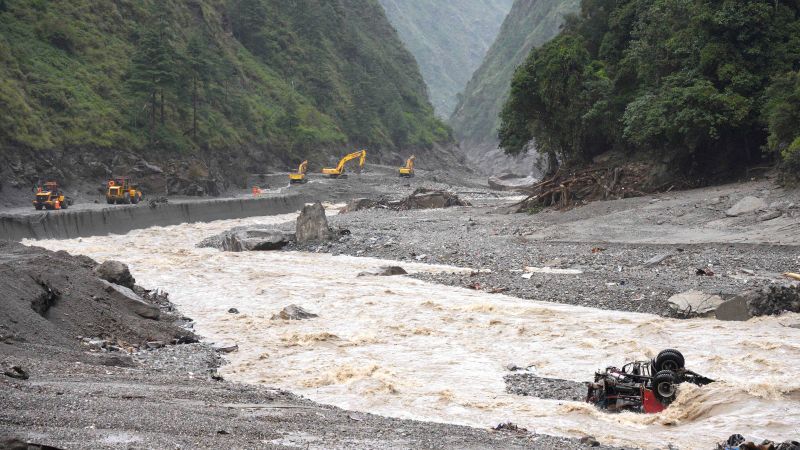
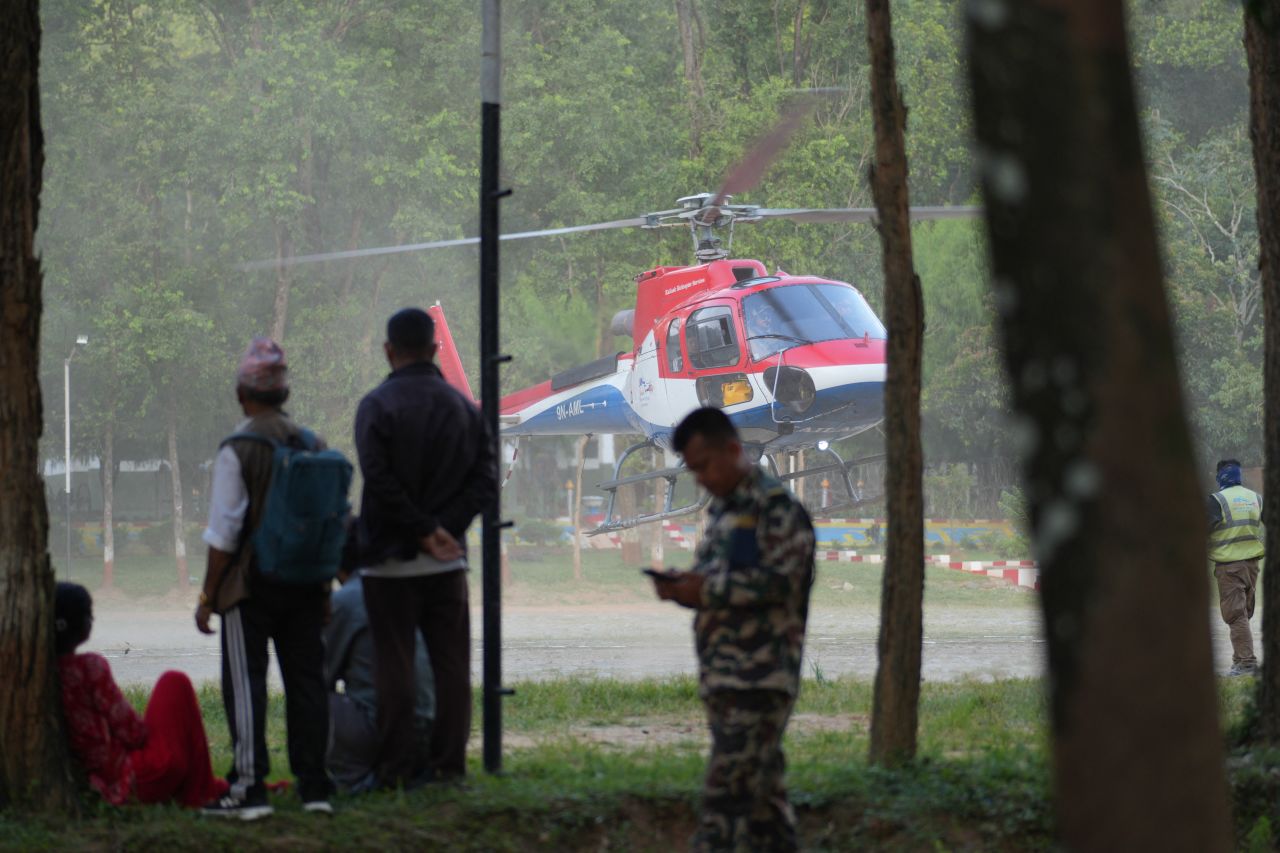
Signs of despair and heartbreak hung heavy Friday outside the army barracks serving as Nepal’s emergency response centre.
Outside the compound, on the wall of a hut, several pieces of paper were taped up, containing names and dates of birth. A desperate crowd pressed forward, tracing names on the notices with trembling fingers, searching for their loved ones.
Further along, relatives searching for those missing called out their names and phones numbers to two soldiers sitting at a bench the other side of the wire, log books in front of them.
Those injured in the disaster lay on temporary beds set up under blue canvas tents. Stacks of bottled water lay around and young children skipped around. One young child drank juice from a carton.
Authorities had rescued about 900 people yesterday, General Rajaram Basnet told CNN. All were from Timure and Syaphrubesi in the most-affected Rasuwa district, near the Chinese border, devastated by the deluge, he said.
Basnet said he’d “never seen a disaster of this scale” before. Rescue operations could be hampered, he said, due to forecasted rain and other complications over the next few days.
119 of those flown out were 92 Indians, 13 Chinese, 8 Koreans, 2 Italians, 2 Americans and 2 Italians.
But hundreds of Nepalis are still missing. A man who had screamed through the fence, hoping for any information at all, claimed too much effort had been spent on trying to locate and rescue foreigners, including those working at hydropower stations as well as pilgrims on their way to Tibet.
Meanwhile, Kapur Singh Tamang, one of the workers at a hydropower station, landed safely at the barracks after being rescued by helicopter. He was ushered away by police to a vehicle that would take him to his home in Hetauda in Makwanpur district.
As the main gate parted to admit ambulances and military vehicles, it offered fleeting glimpses of the anxious crowd waiting outside for answers.