
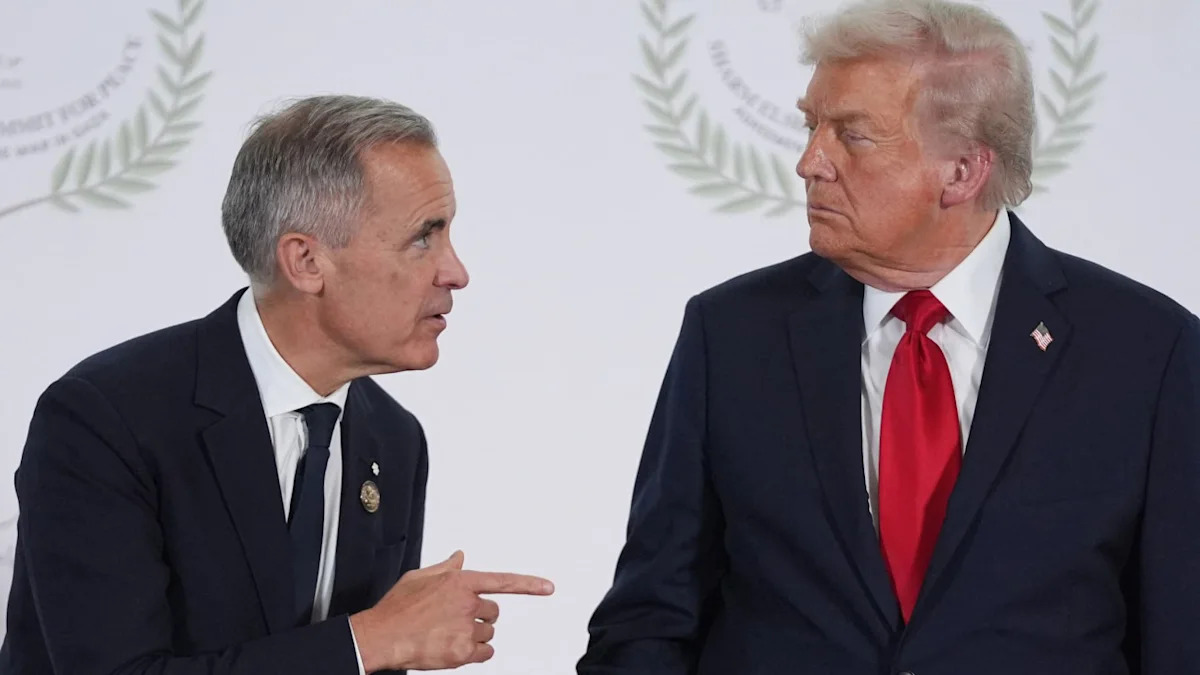
Things are heating up in the Canada/U.S. trade war. Kevin O’Leary says that Canada holds a key resource — and that the country’s new prime minister is prepared to use it.
“The richest country on Earth per capita is Canada but it’s all in the ground,” said O’Leary in a recent X post. “[Prime Minister Mark] Carney is gonna change all that and he’s got the population behind him.”
Must Read
His post comes after negotiations between the countries fell apart, in large part thanks to unrealistic demands from U.S. negotiators. U.S. stipulations included everything from limiting Canada’s ability to make trades with other countries to weakening Canada’s language protections for its French-speaking citizens. However, President Trump has denied making the latter demand.
“For Americans, French language, Francophone culture, Canadian culture, these are irritants,” said Carney in a news conference held in Quebec, a majority French-speaking province of Canada. “Here in Quebec, here in Canada, these are rights.”
Here’s what O’Leary thinks will happen next in the North American trade war — and how likely his predictions are to turn out right.
Canada is awash with energy resources that U.S. needs
One of Canada’s biggest exports is its natural resources. In 2025, Canada exported roughly $198 billion of energy resources to other countries, making up a little over a quarter of its total goods exports.
The vast majority of Canada’s exports go to the U.S. According to the Government of Canada’s Spring 2026 Energy Fact Book, 90% of its crude oil exports were destined for the U.S.; 63% of U.S. crude oil imports were from Canada.
Canada also exports significant amounts of natural gas and electricity to the U.S. It is also the world’s largest producer and exporter of potash, which is used to make fertilizer.
Both Canada’s energy and its fertilizer are especially important imports for the U.S. right now. The Strait of Hormuz’s status remains unclear, which means vital oil and fertilizer supplies are still struggling to make it to U.S. soil.
Right now, Canada hasn’t made any changes to its energy trades to the U.S. despite the breakdown in trade negotiations. But that could change if President Donald J. Trump doesn’t back down from some of his harsher demands.
Story Continues
“I’d love to see [Trump] run cars without any oil,” said Doug Ford, Premier of Ontario, in a statement. “I’ll love to see him grow vegetables and fruit without the Potash. President Trump underestimates us, and that’s the biggest mistake.”
Carney is actually planning to increase Canada’s fossil fuel production, something previous prime ministers have avoided to help Canada meet its climate goals.
Some experts are already doubting if Canada will be able to export enough fossil fuels to make the production increase worth it. If Canada increases its oil production while cutting off its biggest trade partner, it could leave a huge gap in the Canadian economy.
But it’s still a strategic short-term tool to get the U.S. back to the bargaining table.
“I don’t think they want us to stop sending any of that energy,” said Carney.
O’Leary says the U.S. and Canada “love each other anyways”
Ultimately, O’Leary doesn’t think this bargaining breakdown will last for long.
“Right now this tiff with the United States makes no sense long term,” said O’Leary in his X post. “These two countries are going to get together 100%… no matter what anybody says, [these two countries] love each other anyways.”
But not everyone believes that Trump is fighting fair. Even before making impossible demands at the negotiation table, Trump has continually said that he wants Canada to become the U.S.’s 51st state since taking office.
In response to trade negotiations breaking down, he signed an executive order changing Lake Ontario’s name to “Lake of America.”
“The lake change — ‘Lake of America’ was something I’ve been thinking about for a long time, actually,” said Trump during the signing. “We have a Gulf and we have a lake. Now all we need is an ocean. So maybe we’ll have to change the name of the Atlantic and/or the Pacific. Maybe we’ll change them both.”
O’Leary did not immediately respond to a request for comment.
What To Read Next
Join 250,000+ readers and get Moneywise’s best stories and exclusive interviews first — clear insights curated and delivered weekly. Subscribe now.
This article originally appeared on Moneywise.com under the title: Kevin O’Leary says Canada’s natural resources give it leverage over the U.S. as trade talks collapse
This article provides information only and should not be construed as advice. It is provided without warranty of any kind.