
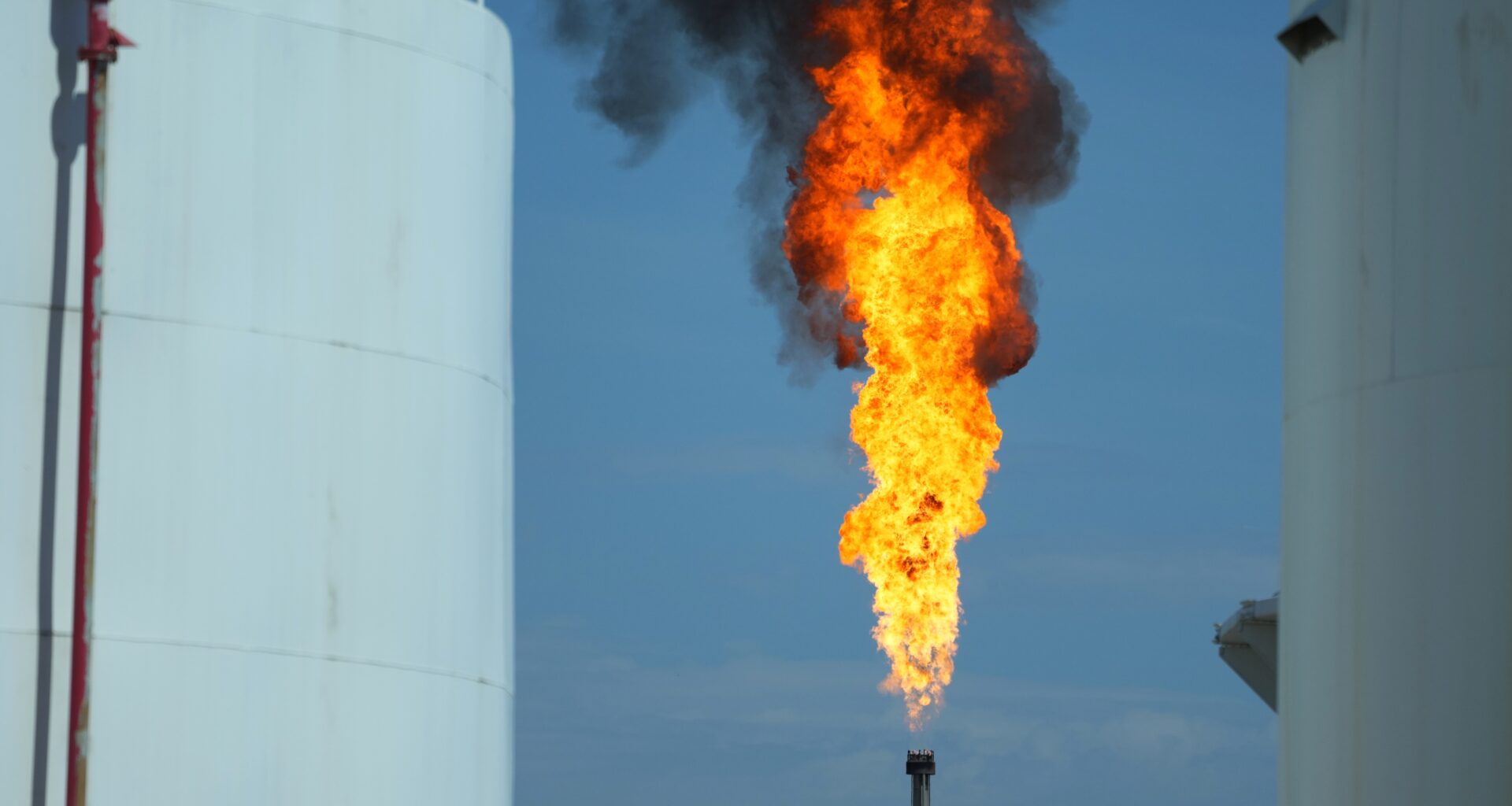
When an orange burst of flames shot hundreds of feet from a flare at Suncor Energy’s Commerce City oil refinery in late July, it was the latest example of how the facility routinely spews harmful pollutants into the air, causing people who live and work in the surrounding community to wonder what’s happening and whether they’re in danger.
Now Colorado regulators want to address those flares — the structures often called smokestacks by the general public — after a recently published report found that the flames are the state’s most significant source of volatile organic compounds.
Those harmful chemicals contribute to ground-level ozone pollution, an ongoing problem along the Front Range that has pushed the region into violation of federal air quality standards. The compounds can also be hazardous to human health if breathed for extended periods or in highly concentrated levels.
“We’re looking at programs that would necessitate periodic reviews of how the facility’s operating their flares, in terms of what’s being sent to them and what technologies are they using to minimize emissions from flaring, and then taking steps to implement process improvements,” said Jessica Ferko, the policy and planning director for Colorado Department of Public Health and Environment’s Air Pollution Control Division.
Not only is the Suncor refinery Colorado’s largest polluter of volatile organic compounds, the Assessment of Air Quality Impacts and Control Measures for Petroleum Refineries in the State of Colorado report released in April shows the Commerce City facility is in the state’s top 10 for releasing sulfur dioxide, carbon monoxide and nitrous oxides. Those are all hazardous gases that contribute to global warming and are also harmful to humans who regularly breathe them or are exposed to intense levels within a short period of time, the report found.
The facility also fell within the top 50% of emissions nationally for a refinery of its size and age, according to Eastern Research Group, a North Carolina consulting firm that produced the report. The first refinery on that site was built in the 1930s.
“Broadly speaking, we see Suncor as a large source of pollution,” Ferko said.
The refinery report will become the foundation for an upcoming process to create new state rules directly aimed at Suncor and its ongoing pollution problems. The air pollution division is hosting a series of public meetings this month to explain the report’s findings and to listen to public concerns about the refinery. The next meetings will be held Saturday and Tuesday.
Colorado law sets up a formal but lengthy process for creating new air quality rules, and it could be nine months or longer before the Air Quality Control Commission acts. It would be even longer before any new regulations went into effect.
But the state’s regulators said they have heard from the public and understand there is demand to do more to bring Suncor into compliance. The report, which cost $190,506 to produce, was mandated by the Colorado General Assembly.
Suncor has not been involved in writing the report or developing new regulations. The company would have the opportunity to argue over proposed new rules once the Air Quality Control Commission starts considering new policies.
In an email to The Denver Post, a Suncor spokeswoman said the company has made significant investments in its Commerce City refinery to improve reliability, refining operations and environmental impact. She did not address the report’s findings or the upcoming plans for new regulations.
“We remain committed to continuous improvement, regulatory compliance and working with regulators and stakeholders to responsibly support Colorado consumers and Colorado’s energy needs,” Tara Weber of Suncor wrote in the email. “As Colorado’s only refining operations, our ability to remain competitive with out-of-state suppliers is essential to supporting local jobs, continuing investment in the facility and providing the fuels Coloradans rely on every day.”
In 2025, Suncor said it was prepared to spend $57 million to reduce greenhouse gas emissions at its Commerce City refinery.
Suncor, based in Calgary, Canada, operates Colorado’s only refinery, processing 103,000 barrels of crude oil per day. The refinery, located on the banks of Sand Creek, makes gasoline, diesel, jet fuel and asphalt, and it sells 95% of its products in Colorado.
The refinery is allowed to send pollutants into the air under its federal Title V air permit. But that permit limits how much of each particular pollutant can be released. Violations must be reported to the state.
Colorado has three active investigations into Suncor’s pollution violations, dating to July 2, 2024. However, no investigation has yet to be launched over possible 2026 violations, including the July 28 incident when giant flames shot from a smokestack, or a May 11 incident when black and yellow plumes billowed from the refinery.
In the July incident, Suncor reported that it had exceeded its limits for smoke, carbon monoxide and hydrogen sulfide from 9:42 a.m. July 27 through 12:59 p.m. July 28, according to its notification to the state health department. The malfunction occurred at its Plant 1 main flare and fluid catalytic cracking unit, equipment that cooks crude oil at high temperatures and breaks it down into a usable substance.
Flares and cracking units are two pieces of equipment at the refinery that often malfunction and cause Suncor to violate its federal air permit standards, the refinery report found.
The air pollution division’s staff is looking into those incidents as part of its annual inspection, which is not finished, said Kate Malloy, a state health department spokeswoman. If any alleged violations are found, the department would issue a compliance advisory, which is an official notice of an investigation.
In a recent public meeting, multiple people complained that Suncor’s notifications about this summer’s flaring incidents came late and did not provide much information about what had caused the excessive smoke and whether they needed to take precautions.
Michael Ogletree, the state health department’s senior director of state air quality programs, said the division wants to address Suncor’s public notification system so the community is more informed when malfunctions happen at the refinery.
“We have heard a lot from the community about how we can increase transparency from the refinery,” Ogletree said.
The refinery report identified four pieces of equipment, including the flares, that cause the most pollution, and it offered ideas for new technology and best management practices used by other refineries to reduce pollution.
Excessive pollution is often released when refinery workers need to shut down and then restart operations, which often happens after a malfunction. Between 2022 and 2024, 175 of those events were reported, Ferko said during a Wednesday public meeting.
The state health department will likely propose a regulation that would require Suncor to hire an outside consultant to analyze repeated malfunctions within a certain time frame, or when they happen because the same piece of equipment fails, Ferko said.
The division’s regulators want the new rules to give enforcement staff more power to bring Suncor into compliance, Stefanie Shoup, deputy director of regulatory affairs for the Air Pollution Control Division, said the Wednesday meeting. They can only do so much under existing state and federal regulations.
“It gives them more weight,” Shoup said. “It gives them something they can grip into when they are pursuing enforcement.”
Get more Colorado news by signing up for our Mile High Roundup email newsletter.