
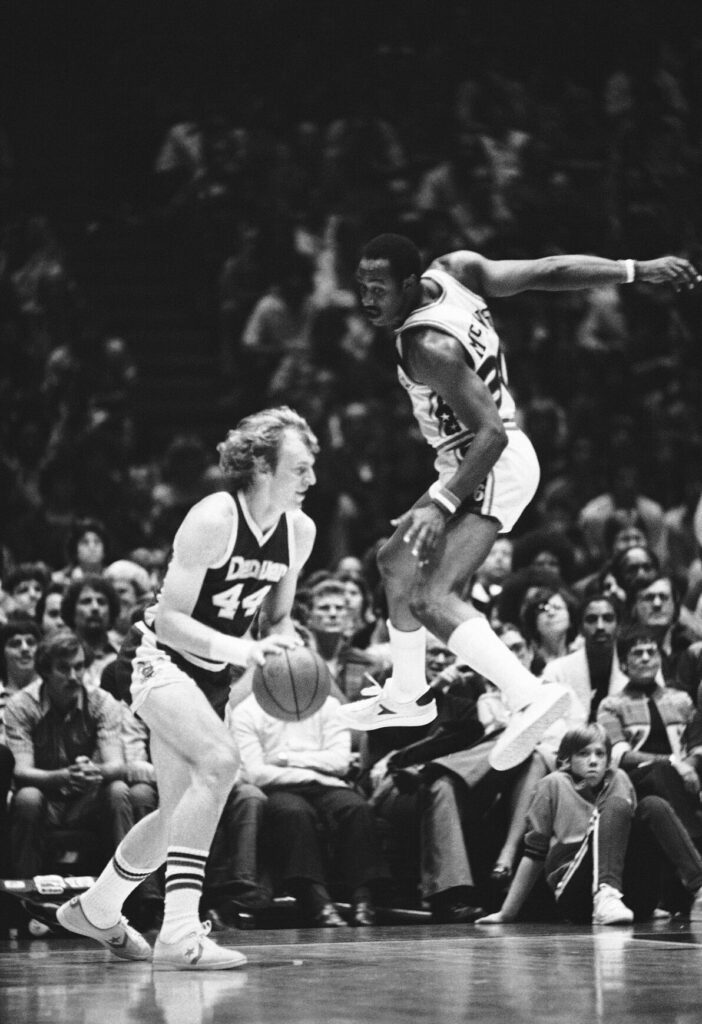
I first interviewed “The Horse” when I was a high-school sophomore. Now, at 77, he’s written a memoir about failure, faith and forgiveness. Here’s what he had to say.
At 77, Dan Issel is not running from his mistakes. “The Horse” is galloping toward them like a man.
When looking back on the life and times of perhaps the most significant Denver Nugget not named Jokic, there are many slam dunks: The Basketball Hall of Fame. The 27,000 points. The six All-Star Games. Two stints as coach, including the unprecedented playoff upset that left a tearful Dikembe Mutombo flat on his back, refusing to let go of the ball.
Or my favorite: Issel played 1,350 games over his 15-year professional career and missed only 24. Of his teams’ 133 postseason games, he sat out zero.
But in his new memoir, Issel doesn’t even get past his preface before planting his massive frame under the basket and inviting all comers:
“On December 11, 2001, I made a terrible remark in the heat of the moment; something I deeply regret to this day,” he writes.
Following a frustrating 99-96 home loss to Charlotte, a heckling fan taunted Coach Issel as he walked off the Pepsi Center floor. Issel snapped back, “Go drink another beer, you Mexican piece of (expletive).” It was all caught on camera. Outrage, threatened boycotts and a four-game suspension followed. Despite a public apology and a meeting with local community leaders, Issel resigned – and his 31-year life in professional basketball was over.
“That moment brought shame on me, my family, and my fans,” he writes.
I couldn’t believe what I was reading.
One paragraph later, he’s addressing what he calls the darkest day of his life: an embarrassing 2009 bankruptcy that essentially came down to bad investments. A legal but hardly moral failure – yet it cost him his home, his self-esteem and most of his belongings, including his Hall of Fame and Kentucky Colonels ABA championship rings. “We were allowed to keep up to $10,000 worth of property,” Issel writes. “The court representative came out to our house and began pointing. He’d say things like, ‘That stool’s worth $50. Do you want to keep it or not?’ It was awful; truly the worst thing I’ve ever been through.”
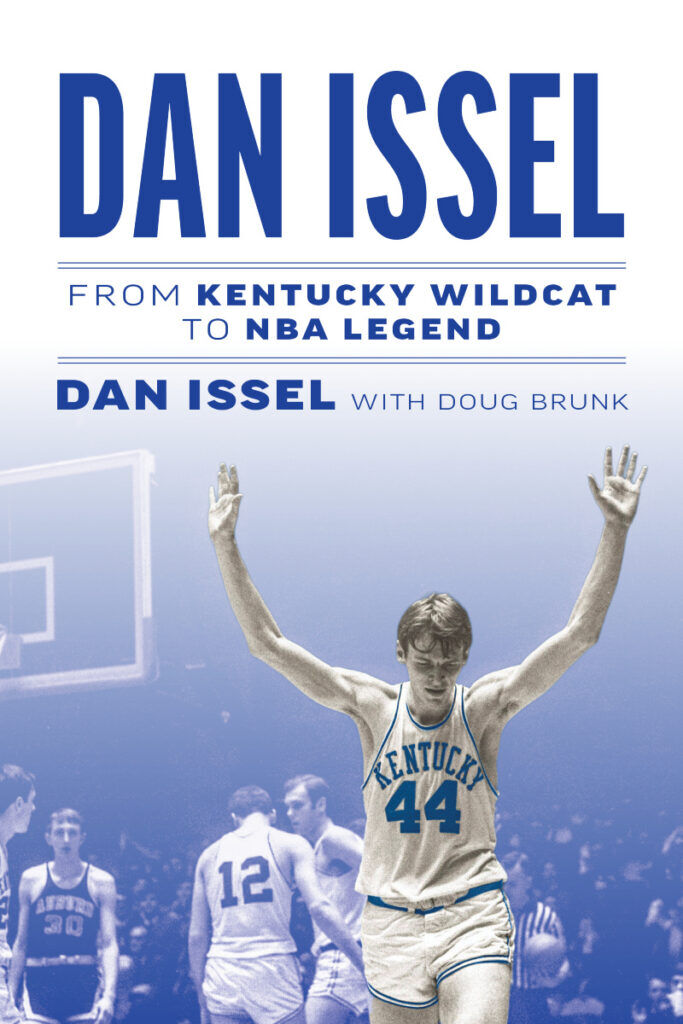 ‘Dan Issel: From Kentucky Wildcat to NBA Legend,’ co-written by Issel and Doug Brunk, is slated for a Nov. 2 release. (University Press pf Kentucky)
Issel addresses both of these painful incidents with blindsiding candor in his new book “Dan Issel: From Kentucky Wildcat to NBA Legend,” co-written by Doug Brunk and slated for a Nov. 2 release.
As a lifelong Denver Rockets/Nuggets fan, I was trying to decide whether I never knew about the bankruptcy story or had simply forgotten it. As for the epithet Issel has sent a quarter-century atoning for: I’ve taught journalism in the state correctional system, where I often find myself reminding people that none of us should be defined by our worst moments.
As I was reading, I couldn’t help but wonder: Why is he being so forthright and confessional in this one-way conversation where the author gets to set the tone of the narrative? He could have left out the hard parts and focused on the many glories of a remarkable career and been done with it. The reader doesn’t have a say.
Then the why became obvious: He’s a coach. Our successes aren’t inherently teachable moments. Not like our failures.
Coaches coach. Even from behind a keyboard. This memoir is Issel’s playbook.
“I hadn’t thought of it that way, but that’s a good point,” Issel said when we were connected by phone last week. “I believe that if you only cover the great times, then that’s an Instagram post – not a true reflection of your life.”
I asked Issel why he reported so openly on the bad times when he knew his kids and grandkids were going to read it. His answer: Precisely because he knew his kids and his grandkids were going to read it.
“I want people to know how important my faith and my family are to me,” he said. And he wants them to know that the man who imploded that day isn’t who he is. At that moment, he was a coach not used to losing riding a 7-14 start, an injury to star forward Antonio McDyess and massive internal friction. Hours before, star point guard Nick Van Exel publicly demanded a trade.
When Issel popped off, he obviously didn’t know a random camera was rolling nearby. But he’s glad it was.
No, really.
“Because maybe it was God rescuing me from the situation,” Issel said. “I certainly believe in divine intervention, that is 100% correct. There are so many examples in my life, John, that I can’t list them all.”
Deep down, Issel knew: “It was time for me to leave,” he said of coaching the Nuggets. “I believed that wholeheartedly.”
The thing is: I had no intention of asking Issel about the biggest humiliations of his life. But it was almost as if, through his preface, he was inviting me to go ahead and ask. Why? So he could talk about the grace, forgiveness and resilience that followed – which are far greater reasons for writing a book than a checklist of personal accomplishments.
No, what I really wanted to talk to Issel about was the time he first allowed me to interview him for my high-school journalism class – 47 years ago.
Next stop: 1979
At 15, I was the starting center in my sophomore journalism class. Not in size, but in stature. That’s because we had been assigned to go out and “interview someone famous” – and I landed the captain of the Denver Nuggets.
Admittedly, Issel did it purely as a favor to my father, Ralph Moore, then the longtime Nuggets beat reporter for The Denver Post. A shortcut, certainly. But an early journo lesson on the importance of developing a deep roster of sources – starting with your father.
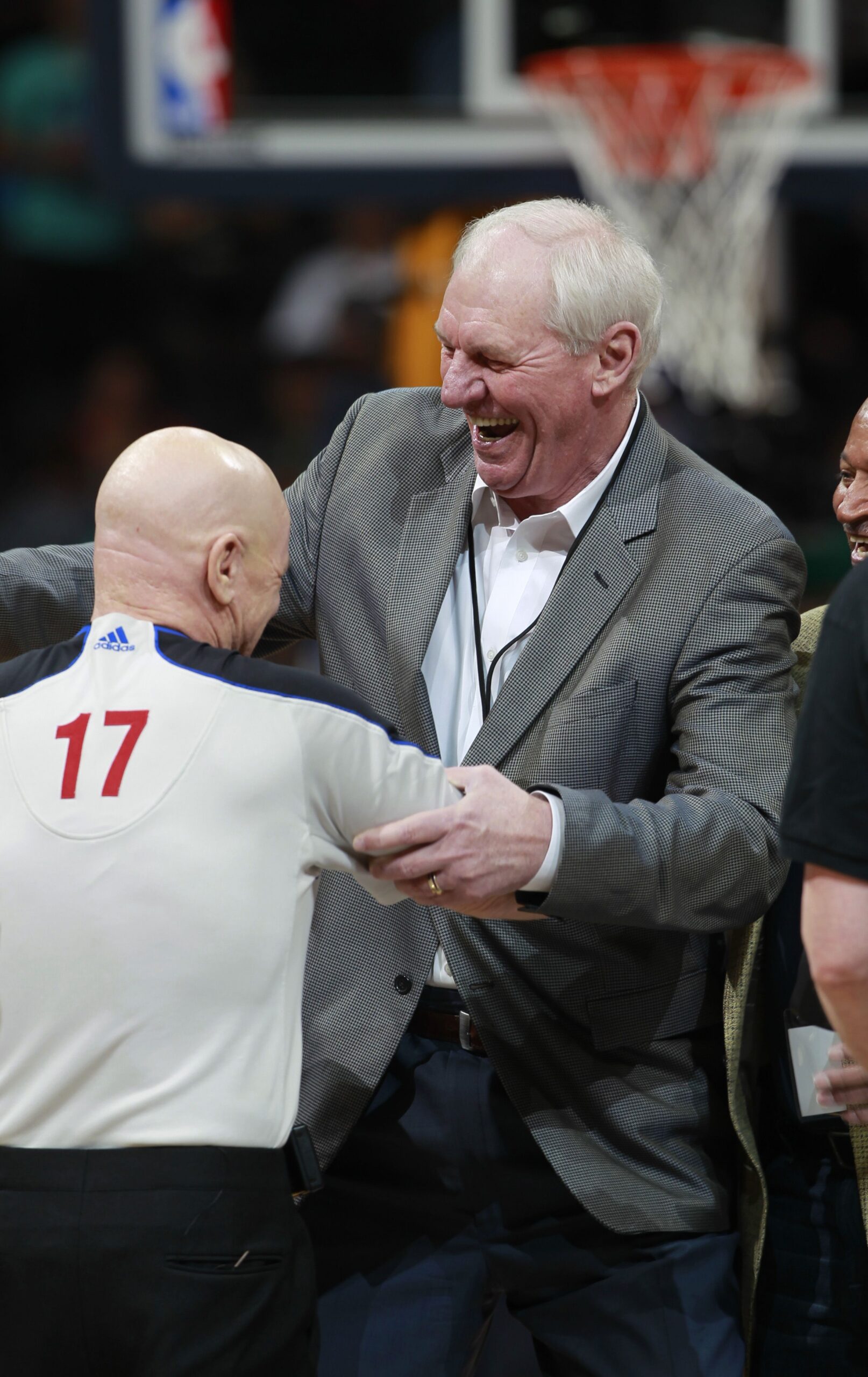 During part of a pre-game ceremony, former Denver Nuggets head coach and player Dan Issel, right, hands the game ball to referee Joey Crawford for tip off as the Nuggets host the Los Angeles Clippers in the first quarter of an NBA game in Denver on March 17, 2014. (AP Photo/David Zalubowski)
When we sat down, the first thing I noticed, of course, were the missing front teeth. You know how the city would soon come to collectively tease John Elway because of his horse teeth? Well, here was “The (actual) Horse” – and he had nothing up front at all. I was too shy to ask about it then, and I am too shy to ask about it now. But the book told me Issel’s feet slipped in gym class on the first day of eighth grade, and out came three teeth, roots and all.
My paper was dated Dec. 12, 1979. Here’s how I set it up, bad punctuation and all:
 Dan Issel as a rookie with the Kentucky Colonels in 1970. (Associated Press)
“Being in an empty 17,000-set McNichols Sports Arena can make you feel like the smallest thing in the world. It is awesome. Then when 11 Denver Nuggets, who combine to make just under two million dollars a year come onto the practice floor, the feeling does not go away.”
I’ll pause now for your laughter.
Two million dollars?
For the record, the Nuggets’ payroll last season was $200 million – an increase of 9,900% over the past 47 years. On the day we talked again, the news had broken that Peyton Watson signed an $88 million free-agent contract with the Cleveland Cavaliers.
Issel made $18 million over 15 professional seasons. And, again, he missed all of 24 games in his entire career. Watson missed 34 last year alone, not to mention the entire playoffs.
Issel was nicer about it than most Nuggets fans.
“I will never begrudge anybody for making what they’re making,” Issel said. “I’m sure Peyton didn’t hold a gun to anybody’s head. I mean, they negotiated the deal. Bill Russell probably thought the money that I was making was ridiculous, so it’s all relative.”
Maybe so. In 1970, as a coveted college star from the hometown University of Kentucky, Issel signed a then-massive multi-year rookie contract with the ABA’s Kentucky Colonels valued at $1.4 million – a record for its time.
Yes, “player salaries have escalated beyond belief,” Issel said, citing the three-year, $90 million contract the Nuggets signed Paul Millsap to in 2017. (“I figured out that he made more money in one game than I made the first five years I played,” he said with a laugh.) But he’s far more piqued by the secretive way the NBA hides specific injury information about any given player. How hurt was Watson? Jokic? Braun? Your guess was as good as anybody’s.
“Yeah, I have a much bigger problem with the load-management thing than I do with the salaries,” he said. What’s that? Nicely put, it’s the strategic practice where NBA teams rest healthy or “slightly hurt players” during the season to ensure peak performance for the playoffs.
Not so nicely put: It’s ducking. Punting. Soft tanking. The media (and fans) are never told.
“It’s ridiculous,” Issel said. “I can’t imagine walking into the Nuggets locker room in my day and saying, ‘You know guys, I’m fine. But I played 40 minutes last night, and we’ve got a game two nights from tonight, so I’m just not going to play tonight.’ Well, they would’ve beaten me up. You owe it to the fans with the ticket prices they pay today.
“Now, I’m not going to say you should play if you’re hurt. But if you can get out there and contribute, that’s what you ought to do.”
Losing his grip
When we spoke in 1979, Issel had never played on a losing team in his life. But those Nuggets were 11-20 and on their way to a 30-52 finish – and three losing seasons out of four. Issel gritted his remaining teeth and told a young me then: “I can’t tell you how frustrating it is for me.”
Last week, I asked: How did a guy as competitive as you get through that period?
“Well, it was miserable because the top priority for me was always winning,” he said. “My old Kentucky coach, Adolph Rupp, always said, ‘If it doesn’t matter if you win or lose, why do they keep score?’ So, that was the most important thing to me. Not how many points I scored or how many rebounds I got. And that year was absolutely the worst because a bunch of guys were at the end of their careers, and I didn’t feel like we were all giving 100%.”
Issel spoke with me (and writes in his book) about the glory days of the ABA, including the historic 1976 All-Star Game that introduced the slam-dunk contest. It also featured concerts by Glen Campbell and Charlie Pride, and ended with the Nuggets, playing as an intact unit, beating the ABA’s collective opposing all-stars. He talks about his running feud with Larry Brown and his joy that fellow former Nuggets coach George Karl succeeded in producing the ABA documentary “Soul Power,” and got it distributed on Amazon Prime.
 Former Denver Rockets player and Denver Nuggets player and later coach Dan Issel in ‘Soul Power: The Legend of the American Basketball Association.’ (Courtesy of Prime)
“I thought it was very well done,” Issel said. “The generation that was around when the ABA was thriving is starting to go out of existence. So, it’s important for new people to understand that the ABA was a great league that really led to a resurgence of interest in professional basketball. A lot of people today wouldn’t realize that in a lot of markets in the ’70s, the NBA Finals were carried on tape delay after the 10 o’clock news. I mean, basketball just wasn’t that popular. And I’m telling you, the NBA today looks a whole lot more like the ABA in the ’70s than the NBA in the ’70s.”
Of everything we talked about, I was second-most excited to revisit Issel’s 10 days as a member of the Baltimore Claws, a franchise that folded so fast that it never played a game. I don’t know why. Maybe because I still have a Claws pennant in my cubby hole.
“I can honestly say to you that my 10 days in Baltimore were the 10 worst days of my life,” Issel told me in 1979. “The people running the franchise had no experience or expertise in the field. They had no organization and no money. Learning that I was traded to Denver was like getting a reprieve from the governor.”
Can you say, “money quote?” My teacher couldn’t believe I got it. That was sophomore gold.
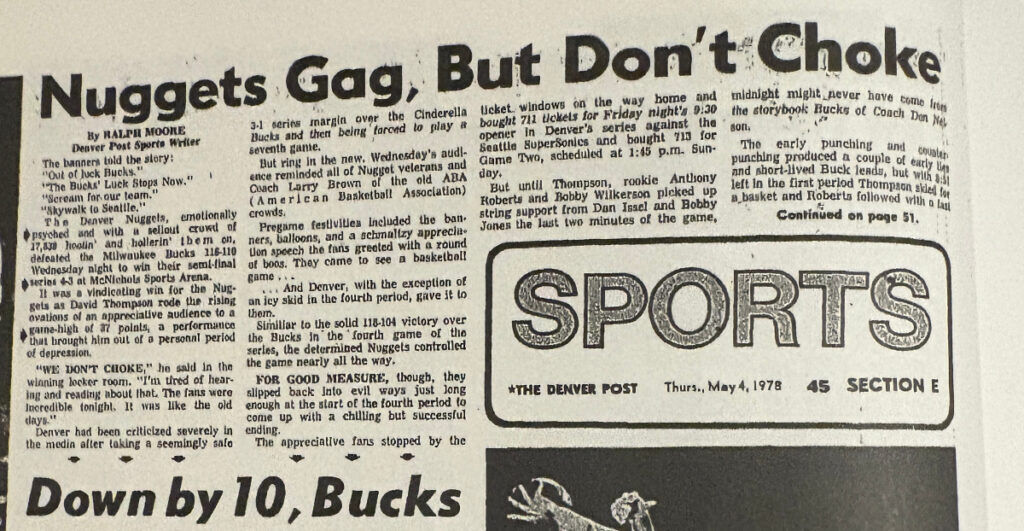 John Moore’s father, Ralph Moore, was The Denver Post’s basketball beat writer from the inception of the Denver Rockets in 1966 until his retirement in 1984. (Courtesy John Moore)
But the subject I wanted most to address, out of my own complete selfish nostalgia, was my dad. Ralph has been gone nearly 30 years. When you’re a son, the opportunity to ask a guy, “What do you remember about my dad?” is an invaluable gift. More so when it’s Issel.
“Well, let me tell you: Your dad was terrific,” Issel told me. “He was an old-time newspaper writer – and I say that with the greatest respect because, after a while, with the way the competition between the Post and the Rocky Mountain News evolved, if you were a player or a coach, you didn’t stand a chance. You always felt like those reporters were trying to uncover something spectacular that would give them a foot up in the ratings. But your dad was old school. He covered the Nuggets very professionally, which I always appreciated.”
That got us talking about David “Skywalker” Thompson – Jordan before Jordan – the superstar with a legendary 44-inch vertical leap. My dad (and his kids) were witness to his epic fall from grace fueled by a rapid series of injuries and severe substance abuse.
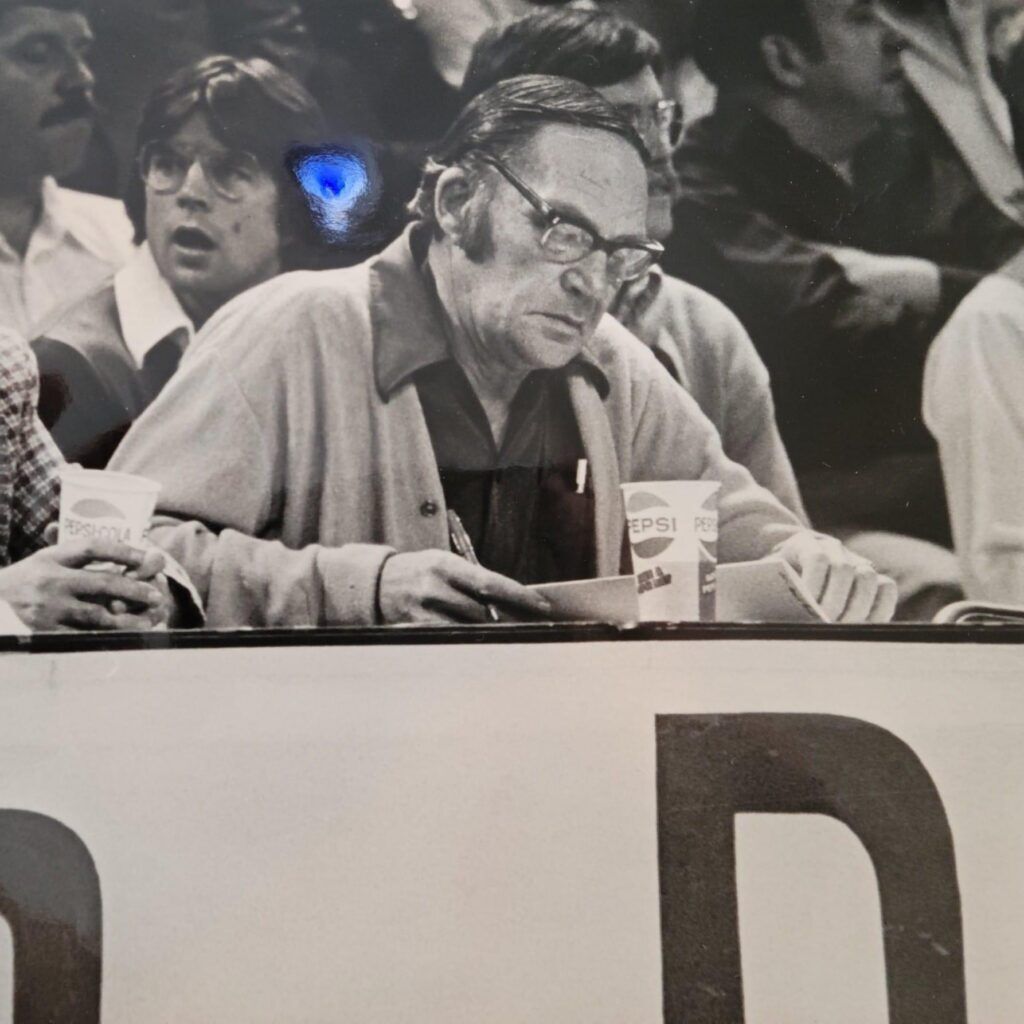 Ralph Moore, father of Denver Gazette Senior Arts Journalist John Moore, covered hundreds of Denver Rockets/Nuggets games from press row. (Courtesy Moore family)
I told Issel something he never knew: That Ralph was fully aware of Thompson’s addiction and tried to do something about it. That he approached General Manager Carl Scheer and threatened to expose the situation in print. Not to shame Thompson or to sell papers. Like Issel, Ralph was a father and a coach. He saw full transparency as his only way to force the team to do the right thing and get Thompson the help he needed. He thought Thompson’s life might depend on it.
The irony? In the end, it was my dad’s own sports editor who didn’t want to run the story. This was in the dying days of a time when a “respectable” newspaper regarded a public figure’s private life as exactly that.
“Well, that would be handled very differently today,” Issel said. “They would run the story – and not with the idea that they were helping David, but because they would be able to report on something sensational. And I think your dad was right on. The Nuggets – and the community at large, for that matter – they really didn’t want to admit that David was in trouble. Because even though he was starting to decline, he was still a heck of a player. And so I think they were a little selfish in hoping that somehow the thing would turn around without their intervention, and that David would be David again. But I think you’re absolutely right: Had they addressed the problem earlier, David’s entire life might have gone a different way.”
I’m not even sure if Issel realized that what he was saying in that moment paralleled his own story: That sometimes, intervention (divine or otherwise) means telling the uncomfortable truth.
It was funny, talking with Issel, an absolute legend in my young life, in this wholly unexpected way: About our common humanity. About our failures. About faith, fathers, forgiveness and starting over.
Our conversation, in the end, wasn’t about mistakes. It was about what happens next.
This was not the same Dan Issel I met in 1979. I am certainly no longer a 15-year-old boy. Thompson completely turned his life around, found long-term sobriety and dedicated the rest of his life to counseling youth on the dangers of addiction.
Of all the questions asked and answered, the one underlying it all was this:
Are any of us the same people we were at our absolute worst moments?
“There was a very popular radio commentator by the name of Paul Harvey, who said, ‘Failure is not falling down. Failure is not getting back up,’” Issel said. “I’ve always remembered that. So I would hope that people who read this book know that you’re going to have tough times. But fight through it, and you’ll come out all right on the other end.”
That was then. Now is what you make of it.
John Moore is the Denver Gazette’s Senior Arts Journalist. Email him at [email protected].
Dan Issel/The memoir