
Through the lens of Midwest Materials
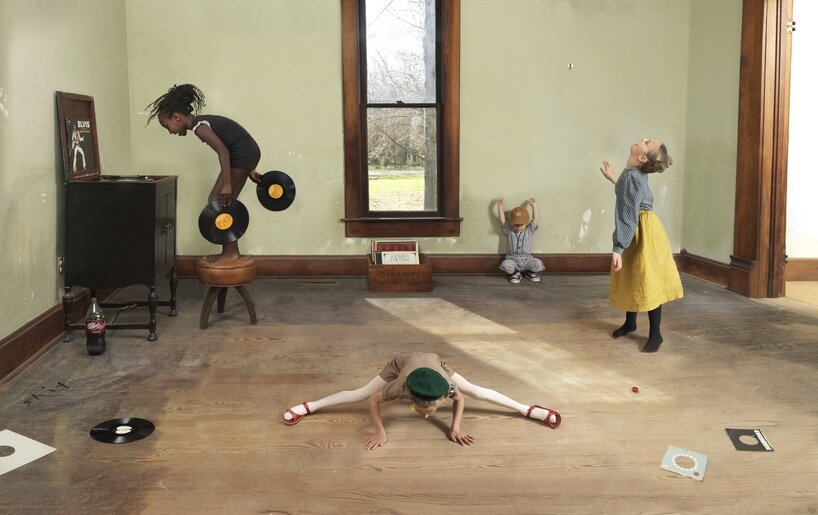
In Julie Blackmon’s Midwest Materials, published in 2022 by Radius Books, is a series that both confirms and obscures the imagined life of the American suburb. In her photos, she moves through the landscape around her hometown in Springfield, Missouri, capturing moments that have all the trappings of childhood memory, but its meticulous colors, compositions, and staging render the stills closer to dreams than historical record.
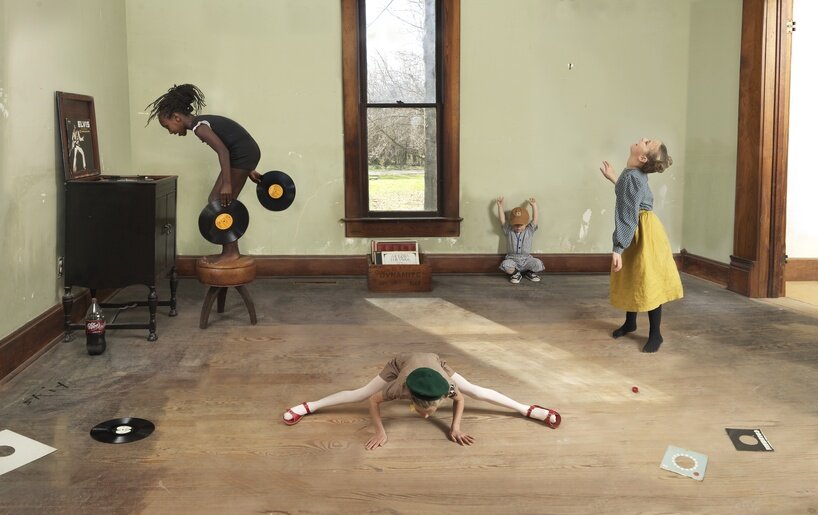
Midwest Materials is Julie Blackmon’s third monograph published by Radius Books | image courtesy of Julie Blackmon and Haw Contemporary
The American Suburb as Muse
The ‘little boxes on the hillside, the little boxes made of ticky-tacky,’ as American folk singer Malvina Reynolds famously referred to American track-home suburbs in her 1962 song Little Boxes, has long captured the imagination of auteurs both in the States and abroad. Think Tim Burton’s Edward Scissorhands, Sam Mendes’s 2000 film American Beauty, or the hit television series Desperate Housewives, to name a few—they’re highly standardized rows of multi-bedroom homes have become their own stage for domestic drama. In Blackmon’s brightly colored, artfully composed images, she adds another narrative to the lore of the American landscape.
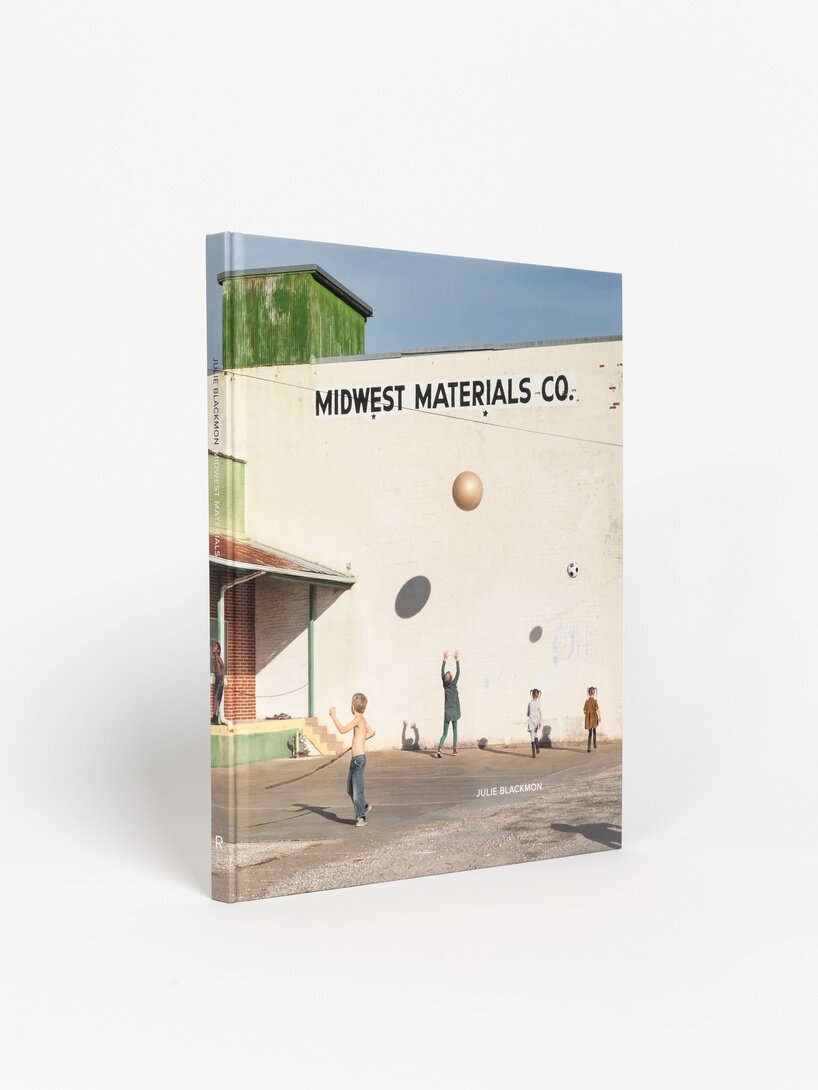
cover of Midwest Materials by Julie Blackmon’s that explores the midwestern landscape | image courtesy of Radius Books
Beginning in the Midwest
In the book foreword, art critic Leah Ollman draws the readers’ attention to the origins of the book’s title. The cover of Blackmon’s monograph comes from the image, called Midwest Materials as well, of children playing in front of a commercial building. They all face away from the camera, looking as though they are in the midst of playing a game of wall ball. In this image, the spheres hang in mid-air, paused as they ricochet off the side of the building. Ollman points out that the words ‘MIDWEST MATERIALS CO.,’ painted in a thick black san-serif against a creamy brick background, aptly describe how Blackmon manages to use people, places, and things from her home to materialize the energy of the place itself.
In the book foreword, art critic Leah Ollman draws the readers’ attention to the origins of the book’s title and explores theme in the photographer’s series | image courtesy of Radius Books
Home in watery landscapes
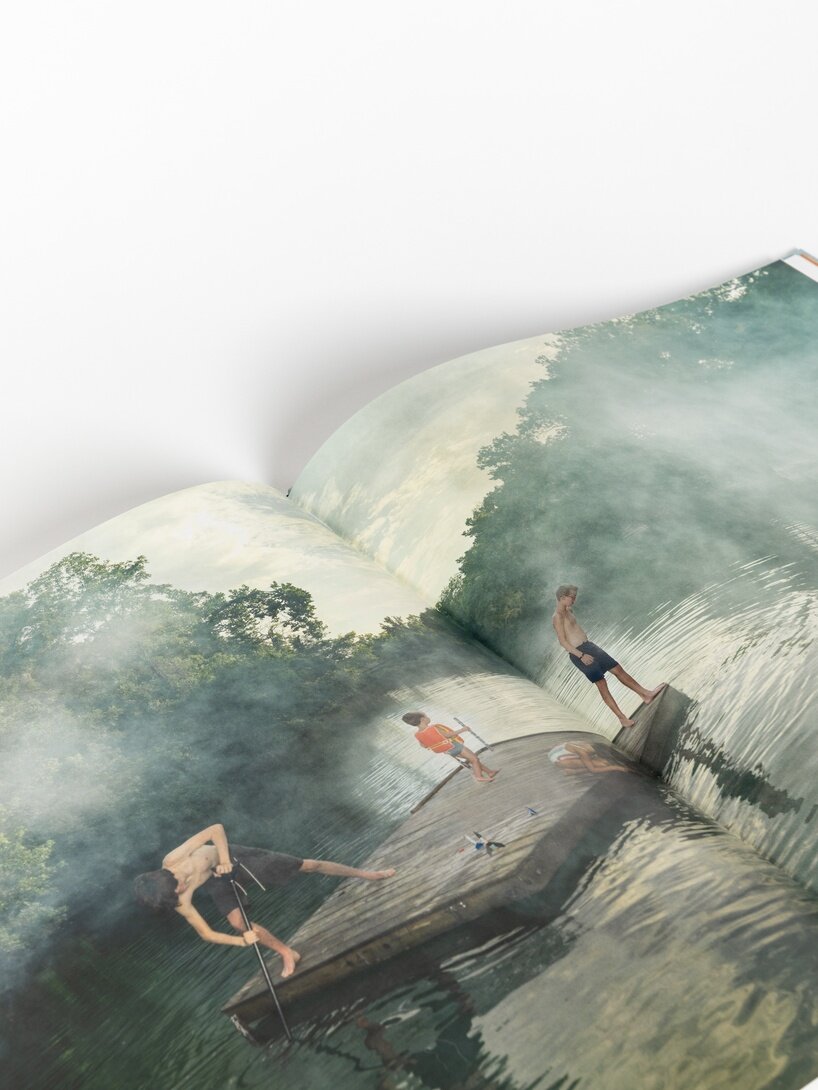
Throughout the book, Blackmon often returns to water as a site of relaxation and exploration. There are the scenic, moody images of lackadaisical days in River, where there is no land in sight—just floating docks, inner tubes, and adventures out into the blue. In Pool, an aquamarine swimming pool acts as a magnet for tots and tweens as they dot the composition. On the water-staining concrete image of Laying Out, you can almost feel the hot cement on your belly after crawling out of the chlorinated water. In these images, there’s a certain organized simplicity. The way that the kids fall upon the scene feels like sprinkles on top of a cake—it’s the rendering of a sweet memory. Even for those who have never been to the Midwestern region of the US, there’s a tender kinship here that knocks at the door that holds memories of summers with cousins, neighbors, and grade school classmates.
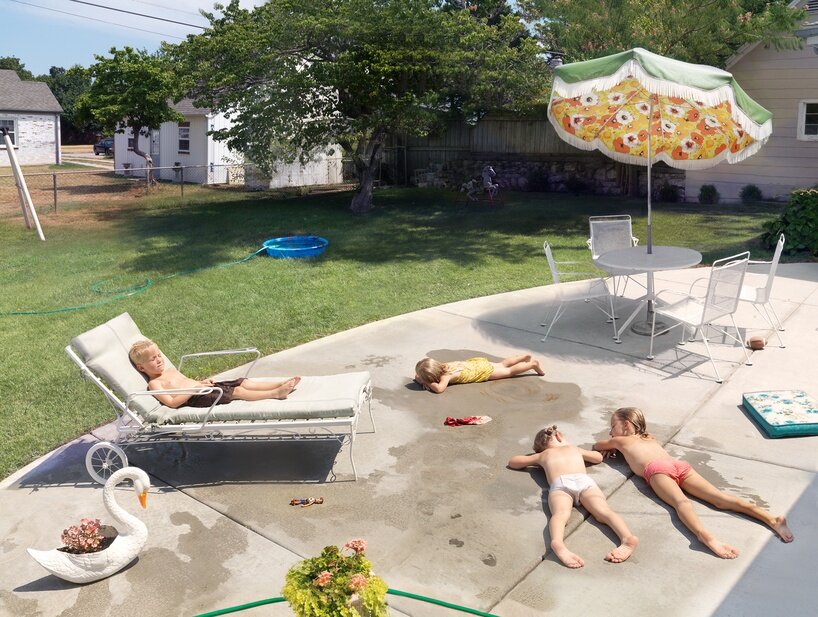
throughout the book, Blackmon often returns to water as a site of relaxation and exploration | image courtesy of Julie Blackmon and Haw Contemporary
Chairs, pianos, soccer balls
A hallmark of these photos is their sense of motion. Every space, whether it be a Costco, a living room with a piano, or a driveway, is a stage for actors to perform a domestic scene. In Costco, named for the wholesale grocer that’s famous for its low-cost bulk-buy offerings, children populate an open van as they dance, snooze, and explore an arrangement of name-brand vodka, a massive bag of sugar, and a near-child-sized bag of Doritos. Just off in the corner, an elongated group of shadows signals a group approaching the scene.
Similarly, New Chair features a bright red, bulbous armchair being unloaded from the back of a FedEx delivery truck. The chair that it’s presumably replacing—a mustard-colored lounger—sags in front of the garage with a handwritten ‘$20 OBO’ sign tacked to its front. As with almost all of her images, children, cats, and babies, captured in the middle of play and make-believe, frame the unloading of this recently arrived furniture. The scene is so familiar, with the saturation of it all makings something like a childhood memory feel like it was experienced just this afternoon.
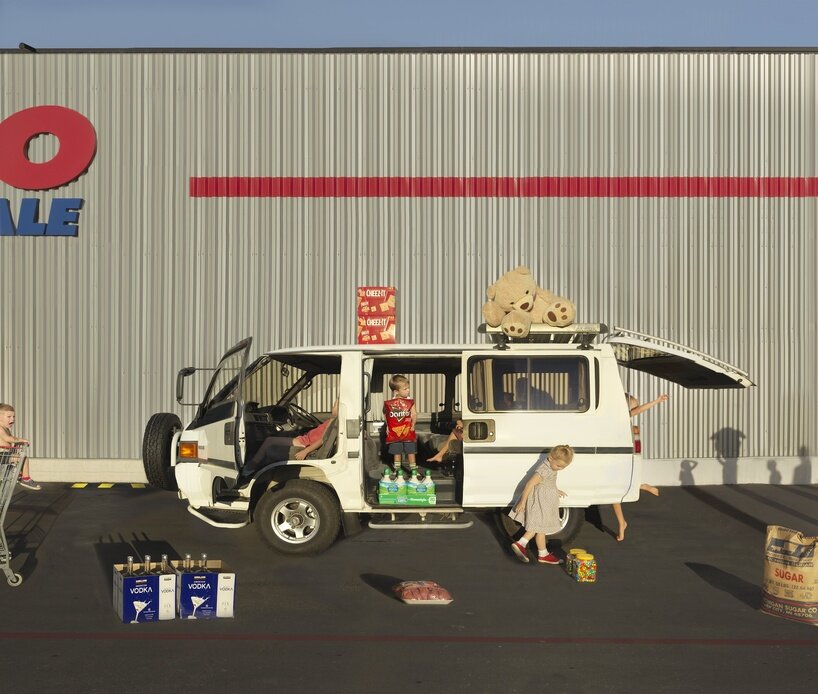
every space, whether it be a Costco, a living room with a piano, or a driveway, is a stage for actors to perform a domestic scene | image courtesy of Julie Blackmon and Haw Contemporary
The portrait of home
In the end, Blackmon creates the portrait of a home that is at once hers, ours, and nobody’s. In the careful crafting of these familiar places, she offers these access points into adolescence that are almost hauntingly ubiquitous—being in water, play, exploration of the natural environment that borders a family home. Yet the perfection of the scene hints at the simulacrum of the composition, perhaps suggesting that the memory of place is just as real, if not more tangible and more meaningful, than the sum of its parts.
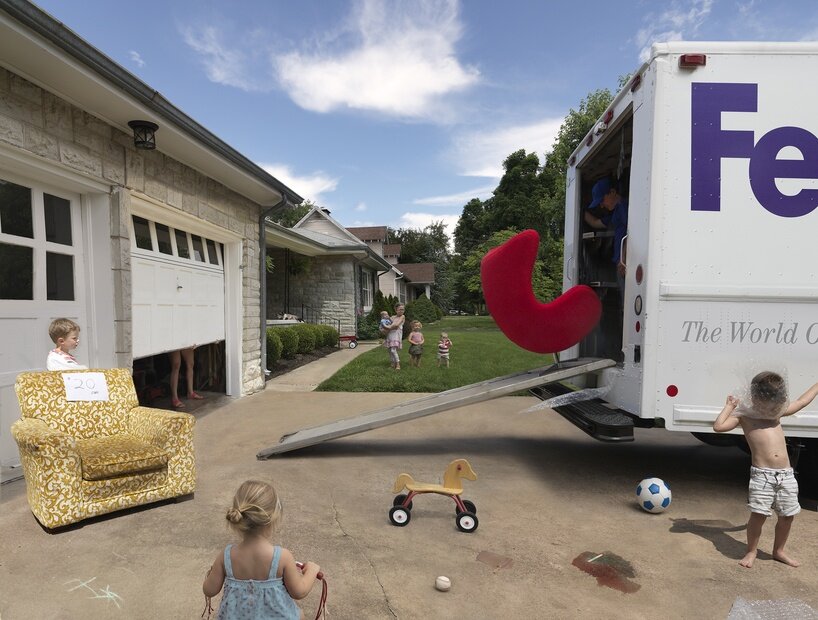
a hallmark of these photos is their sense of motion | image courtesy of Julie Blackmon and Haw Contemporary