

ABILENE, Texas — September marks Suicide Prevention Month, placing renewed emphasis on an issue that often remains unseen until a person reaches a crisis point.
In Abilene, licensed professional counselor Brody Powell is approaching the issue from both professional and personal experience. Powell’s own struggle with suicidal thoughts became the catalyst for his career in counseling, and it continues to shape his work through Brody Powell; Life Potential, LLC.
“Before I became a counselor, I was actually suicidal myself. That’s what drew me into the counseling world,” Powell said. “I have a private practice here in Abilene. My doors are open to people who have suicidal thoughts. I’ve kept up with how many people I’ve had the honor of working with, and as of last week, that number is 263, here in the Abilene area.”

September marks Suicide Prevention Month (SBG).
Powell explained that his own experience with suicidal thoughts was difficult to recognize from the outside. He was a successful student and athlete, active in his church, and surrounded by friends, but he noted that the side effects of a medication contributed to changes in his brain chemistry.
According to Powell, suicidal thoughts do not necessarily come from a desire to die, but they can arise when the challenges a person faces begin to overwhelm their ability to cope, creating a gap between what they can manage and what life is demanding of them.
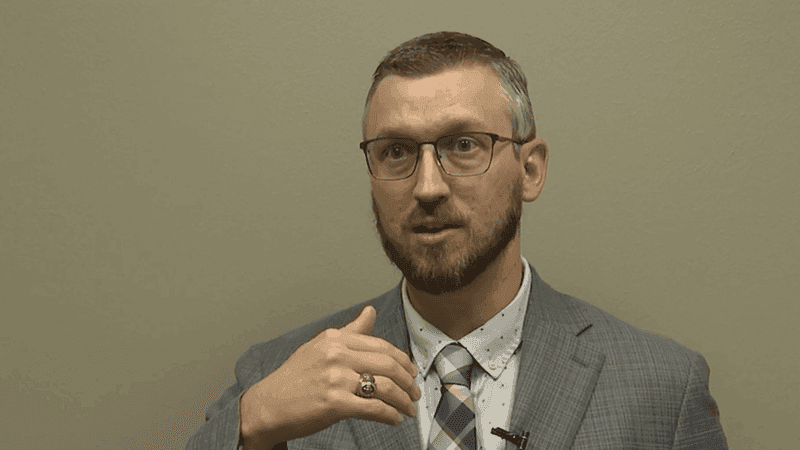
Brody Powell is approaching the issue from both professional and personal experience (KTXS/Briannagh Dennehy).
Powell also urged people to pay attention to the language someone uses when they may be struggling, noting that seemingly ordinary statements can reveal a deeper sense of hopelessness or diminished self-worth.
“Some of the main signs to look out for are statements such as, ‘I feel like I’m a burden to everyone else’ or ‘I don’t want to be a bother to you,’” he said. “Those kinds of statements dismiss our own worth as human beings.”

The side effects of a medication contributed to changes in Brody Powell’s brain chemistry (SBG).
Powell’s personal experience has informed his approach to suicide prevention, but his role also carries a responsibility to turn that experience into measurable action in the Abilene community.
KTXS asked, “What concrete steps are you taking to strengthen suicide prevention in Abilene?”
One focus of Powell’s prevention work is reaching students in local schools.
“I love going to schools and sharing my story of having suicidal thoughts. My suicidal thoughts came six months after graduating from high school. No one would have even known. As I share my story with local schools, what I find in the audience is that a handful of kids are experiencing suicidal thoughts,” he said. “I will give my presentation about my own suicidal thoughts and the categories of suicidal thoughts. Then, I’ll invite kids who have been experiencing these thoughts to come and see me and the school’s counselor. We’ll then try to see what we can do by teaming up and helping them out.”
If you or someone you know is struggling, call or text 988 to reach the Suicide & Crisis Lifeline, where trained counselors are available 24 hours a day.