
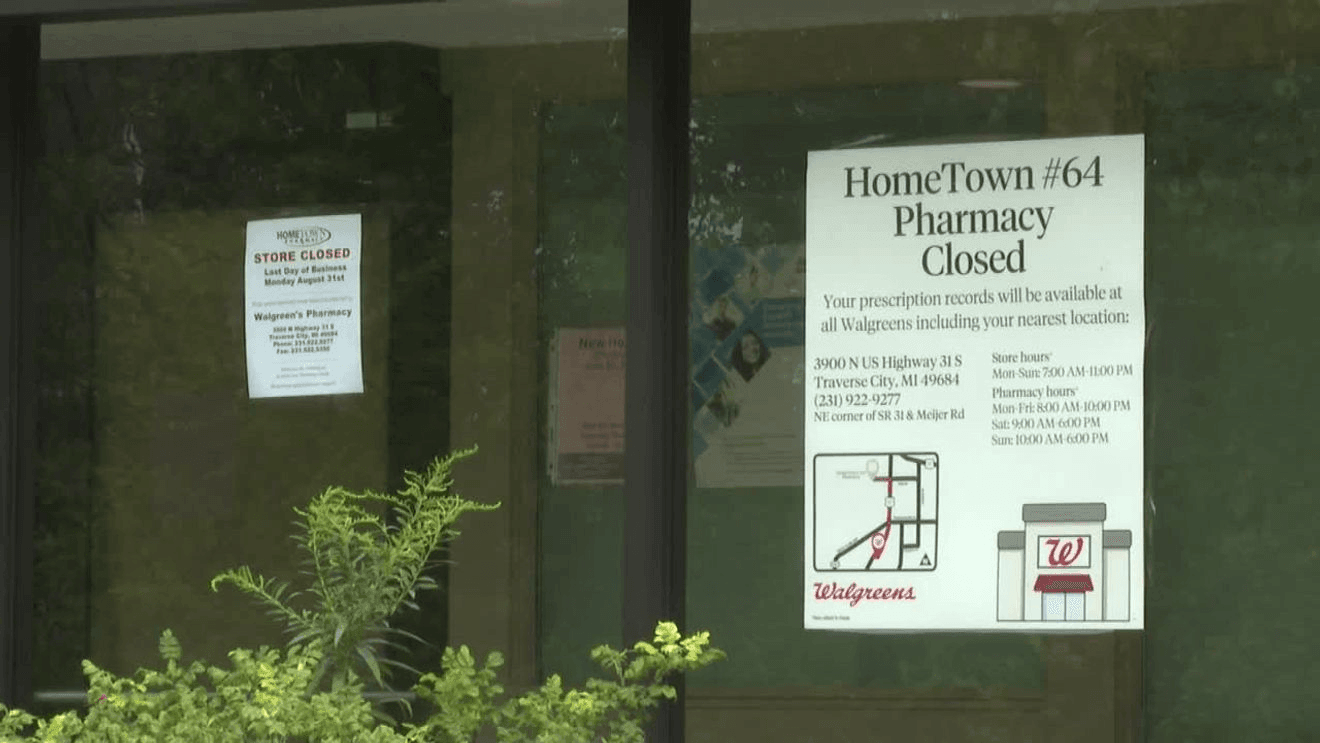
MICHIGAN., (WPBN/WGTU) — Pharmacies across Michigan have been closing suddenly.
It’s a trend that doesn’t seem to be slowing down, with three in Traverse City announcing closures yesterday.
“It’s devastating news devastating for those communities where they were serving patients, but unfortunately, it’s also typical of what’s going on around the state and has been for, you know, at an accelerated rate for the last five to 10 years,” said Miguel Rodriguez of American Pharmacies.
A sign of the times with signs on doors at pharmacies across Michigan.
“270 stores closed in the state of Michigan of all types over 90 were independent pharmacies that closed in the state of Michigan just in the first half of 2024,” Rodriguez said.
From 2024 to Sept. 2, 2026, with the announcement from Hometown Pharmacies of three more closures in the Traverse City Area.
“Because of the financial strain they’ve had, they’ve had to tighten their belt evermore and so they reduce staff, reduce hours, reduce free deliveries, reduce community outreach and then when they can’t tighten in anymore, the pharmacy eventually closes,” said Rodriguez.
Financial strains that often, as referenced in Hometown’s announcement, center around Pharmacy Benefit Managers or PBM’s.
“The quintessential middlemen in the healthcare system,” said Rodriguez. “No one’s ever heard of them, but yet they’re some of the biggest companies in the entire country and these pharmacy benefit managers both dictate what drugs are covered, where patients can get their medicine, how much patients pay and how much pharmacies get paid for dispensing those medicines.”
Many pharmacists say that price point isn’t enough to keep both small independent and some larger chains profitable.
“The pharmacy they go and pick up their medicine it has no control over the price that the patient pays,” said Rodriguez. “That’s all something that pharmacy benefit manager decides and the other problem is that pharmacies often get paid by their pharmacy benefit manager less than the cost it takes them to buy the drug.”
A slow financial death for many long-standing pharmacies, but hope that something can be done in Lansing to turn things around.
“Lansing has been listening, trying to listen to these problems,” said Rodriguez. “Our organization has held roundtables around the state where we’ve brought local legislators into independent pharmacies in the area. We’ve been to Clio, Claire, Jackson, Grand Rapids, all over the state to try to get these state legislators who do have power to change the system into the stores and listening to the patients and pharmacy owners about what’s going on. So, we definitely have a big ask of the folks in Lansing.”
In the meantime, a request for customers who still can rely on independent pharmacies close to their own homes.
“We have these tremendous resources in our pharmacists that can provide care at a very efficient rate and can do a lot of things to a community,” said Rodriguez. “So, let’s support them. Let’s invest in these independent pharmacies and that’s an investment in healthcare for a community.”
While Michigan pharmacies are looking to Lansing and lawmakers for help, other states have already started the process.
Louisiana has a law on the books requiring PBM’s to reimburse pharmacies at least the actual cost of a drug and prohibits certain fees from being passed onto pharmacies and patients.