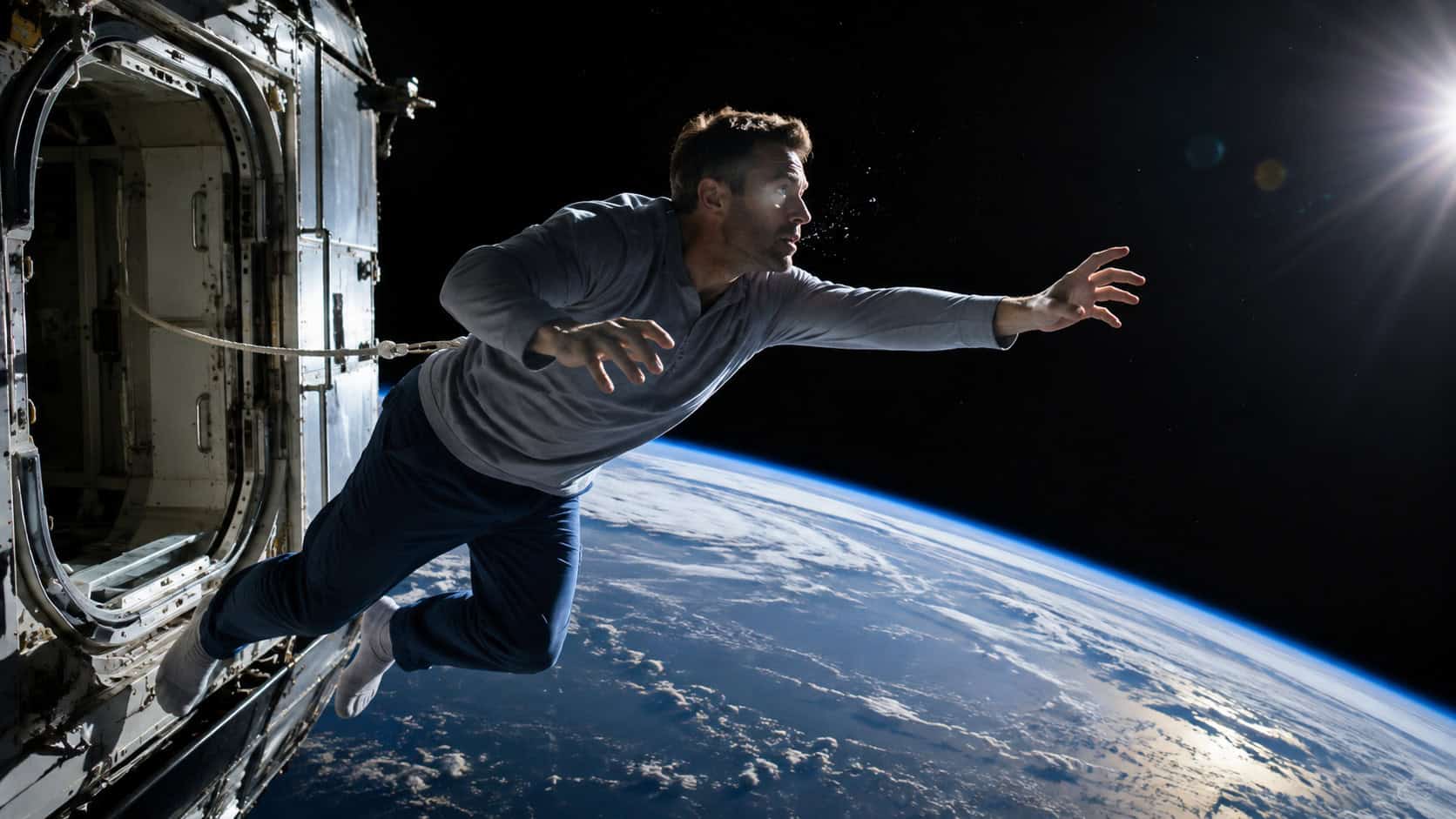
 Image made with the help of AI. Credit: ZME Science
It’s yet another boring day at the space station. You check your holographic wrist-watch, and you suddenly get excited: in 10 minutes you’re supposed to have a delicious lunch of turkey in a toothpaste tube, with a side of telomere-enhancing pills. Highlight of the day!
You get too excited though, and accidentally open the hatch to the airlock. Seconds later, you find yourself floating through space with no spacesuit, wearing just the typical astronaut pajamas. Boy, did you mess up big time!
Although you’ve seen all the Sci-Fi space movies, as a trained astronaut, you actually know better. No, you won’t explode, and your blood won’t boil. But that doesn’t mean it’s pretty. Far from it!
If you’re lucky, maybe you have a good 15 seconds to do something before you lose consciousness.
After that, survival would depend almost entirely on how quickly someone could drag you back inside and restore the pressure.
“Space is not an environment that is made to keep people alive,” NASA spacesuit engineer Amy Ross said in a NASA podcast about spacesuit engineering.
As you’re drifting through space, the flow of time grinds to a crawl. You begin to remember your training and what those NASA nerds explained would happen in the unlikely event that one ends up hurled in space without a spacesuit.
Decades of aerospace-medicine experiments, accidents and NASA research give scientists a reasonably good idea of what would happen during those extraordinary few seconds. And in one respect, the movies do get something right: it would be deeply unpleasant.
×
Thank you! One more thing…
Please check your inbox and confirm your subscription.
Your body wouldn’t explode — but it would swell
 Two United States Navy sailors demonstrate treatment for decompression sickness inside a decompression chamber. Credit: Wikimedia Commons.
When on Earth, the weight of the air around us pushes against the body. In turn, the pressure inside our body pushes back against the weight of the air pressing the skin. The result is a state of perfect balance.
However, space is pretty much vacuum, which means that any person unfortunate enough to find themselves unshielded in such an environment will experience rapid internal decompression.
Gases expand as the pressure surrounding them falls. Air would rush from your lungs, while gases inside the digestive tract and other cavities expanded. You won’t explode, though. Your skin, blood vessels, and connective tissues, however, are strong enough to keep your body together.
The largest organ in the human body, the skin, is extremely flexible and tough. Therefore, it is able to expand without “spilling its contents,” as some assume.
Yet, this doesn’t mean that the experience is pleasant. And holding your breath would make matters considerably worse.
Rapidly expanding gas trapped inside the lungs can injure delicate lung tissue, causing what doctors call pulmonary barotrauma. Documented decompression injuries have included collapsed lungs, bleeding and gas leaking into surrounding tissues. NASA’s spaceflight mishap medical handbook specifically lists lung rupture among the possible consequences of severe depressurization.
But something stranger would also begin happening.
At normal atmospheric pressure, water boils at 100 degrees Celsius (212°F). But as pressure drops, so does the boiling point. Reduce the pressure to only about 6% of what we experience at sea level — equivalent to an altitude of roughly 19 kilometers (63,000 feet) — and water can boil at normal body temperature, around 37°C (98.6°F).
This threshold is known as the Armstrong limit, after aviation-medicine pioneer Harry Armstrong. Space lies well beyond it.
The result is ebullism, meaning water inside some tissues begins turning into vapor.
Loose soft tissues would start swelling as vapor formed beneath the skin. Early NASA research suggested extraordinarily severe swelling could occur under sustained near-vacuum conditions, although researchers also cautioned that humans would probably swell less than experimental animals because human skin provides greater resistance.
This is the small kernel of truth buried inside movies such as Total Recall.
 Scene from the movie Total Recall when Arnold Schwarzenegger is exposed to Mars’ thin atmosphere. This is highly unrealistic. Credit: Total Recall (1990).
Mars itself has an atmospheric pressure of only around 6 to 10 millibars, according to NASA measurements of the Martian atmosphere — far below the Armstrong limit. An unprotected person on Mars would therefore face ebullism as well as catastrophic oxygen deprivation.
But their eyeballs would not inflate like balloons, and their head would not explode.
So would your blood actually boil?
Not really.
Your blood is not sitting inside an open pot. It remains confined within pressurized blood vessels and surrounded by tissues that exert their own pressure.
NASA explains in its guide to why astronauts need pressure suits that circulating blood would not immediately boil inside the veins because blood pressure helps keep it liquid.
Exposed fluids are another matter.
The thin layer of tears coating your eyes could begin evaporating and boiling. So could saliva and moisture on your tongue. Water lining parts of the respiratory system would also begin vaporizing as the exposure continued.
NASA learned this during one of the most famous vacuum accidents in aerospace history.
In December 1966, spacesuit technician Jim LeBlanc entered a vacuum chamber at what is now Johnson Space Center while testing an Apollo-era suit. A fitting on the suit’s oxygen line failed, causing its pressure to plummet while the chamber was already at near-vacuum conditions.
LeBlanc remained conscious for about 14 seconds.
His last clear sensation before blacking out was the moisture on his tongue beginning to boil, according to NASA’s account of the incident. The test team immediately repressurized the chamber and LeBlanc thankfully regained consciousness as the pressure rose and ultimately escaped without lasting neurological injury.
You have about 15 seconds before the lights go out
 Credit: Unsplash.
The worst thing you could do in a situation when you’re flung into space is to hold your breath. If you do this, bubbles of air will be forced into the bloodstream, eventually arriving in the brain where they will cause a stroke. Holding your breath will also expose the lungs to the shock of the pressure difference between vacuum and atmospheric pressure inside your body, likely rupturing quickly. This is known to happen to scuba divers if they descend too quickly into deep waters.
Then again, if you don’t hold your breath, there is no oxygen outside. The oxygen already circulating through the bloodstream is rapidly consumed and lost, and the brain has almost no oxygen reserve.
In this case, you have about 10 to 15 seconds after extremely rapid decompression into conditions where ebullism can occur. LeBlanc had 14 seconds.
A 2013 systematic review of ebullism research concluded that many vacuum-related injuries may be survivable if pressure is restored and treatment comes quickly.
However, hypoxia (lack of oxygen) will kill you first before ebullism. This happens around the two-minute mark when all organs fail from oxygen deprivation.
No, you wouldn’t instantly freeze either
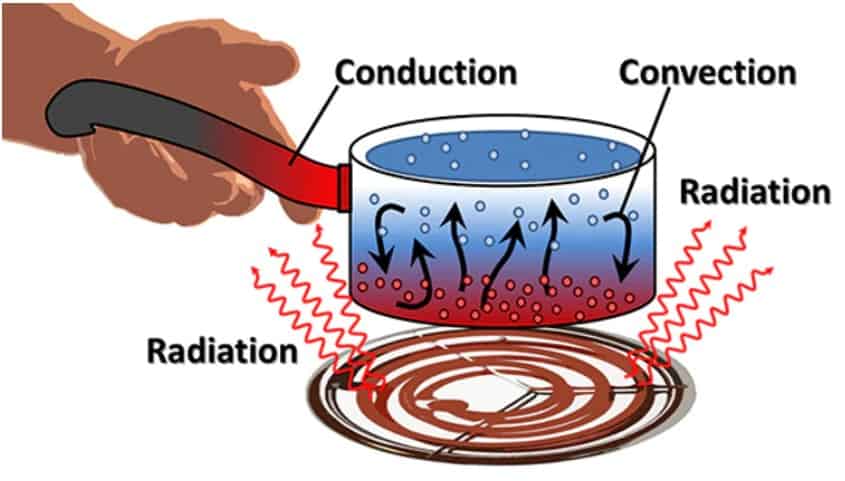
When the International Space Station faces the sun, the external temperature is around 121 °C (250 °F). When the sun is blocked by Earth, the temperature around the space station hovers around -157 °C (-250 °F).
At face value, any of these temperatures sounds horrific. A spacesuit-less human just outside the space station would surely either boil alive or get turned into a popsicle in under a minute, right? However, you’re thinking of heat transfer on Earth.
In space, there is no air, so heat can’t be transferred through conduction (direct contact between two objects) or convection (energy transfer through a fluid like water or air). The only viable means of heat transfer between two objects — in this case the human body and space — is thermal radiation (electromagnetic waves, especially infrared), which does not require matter.
Humans radiate heat at a rate of only 100 Watts, much like an incandescent light bulb. Given the sheer mass of the human body, it will take a long time before you freeze. Other things would have killed you long before this happens.
There is, however, one strange caveat.
Rapid evaporation removes heat. As water boiled away from your tongue, nose and eyes, those surfaces could cool dramatically. NASA research into ebullism even warned that an unprotected corneal surface might freeze under some conditions.
Your eyes would not pop out.
But they might hurt, dry rapidly and suffer surface injury. Vision could deteriorate — another problem if your rescue depended on finding and operating a control.
No one can hear you scream in space
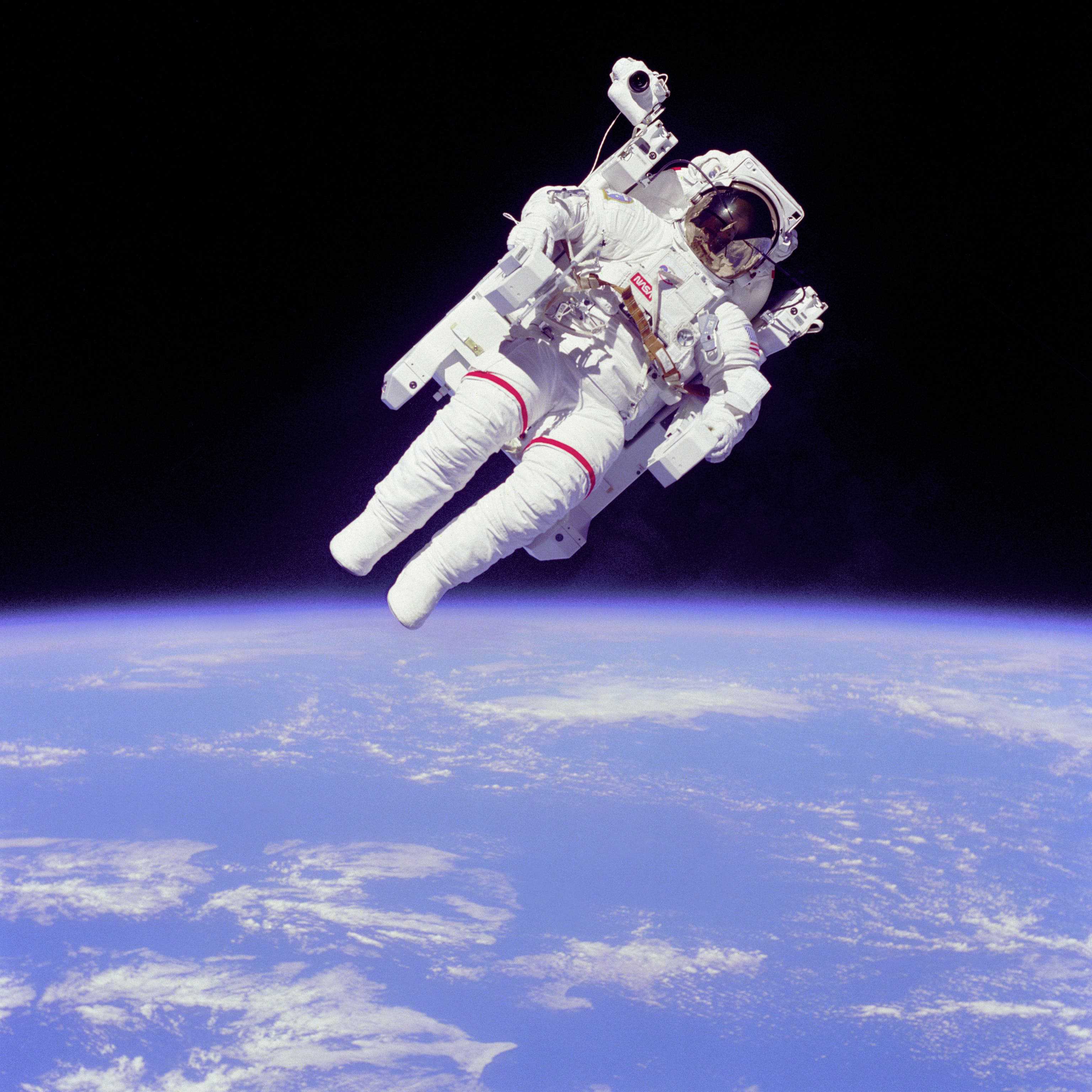 Try not to leave the spacecraft without putting one of these on. Credit: Wikimedia Commons.
It’s been a full second since you stupidly flung yourself outside the space station, basically bare naked in space. At this point, your mind goes into overdrive. You remember from your training that you shouldn’t hold your breath, nor that your body will explode, boil, or instantly turn into a popsicle as you see in the movies. The thought of missing turkey dinner also creeps to mind.
But you are still alive.
If your crewmates could restore pressure almost immediately, history suggests recovery might be possible. That is essentially what saved Jim LeBlanc: the people running the chamber recognized the pressure failure and began repressurization almost at once.
In actual spaceflight, though, rescue would be enormously difficult.
A nearby astronaut would somehow have to reach you, restrain you and return you to a pressurized environment within an extraordinarily short window. If you had drifted away from the spacecraft without a tether, the problem would become worse still to the point of hopelessness.
Anyway, you have approximately 14 seconds left before you’ll get knocked out. You decide to put this little time to good use and immediately make quick taps on your wristwatch’s holographic display and alert the rest of the crew on the space station. You black out.
You slowly open your eyes — which hurt badly due to the evaporation of water in the retina — and are greeted by the familiar face of the captain of the mission crew. “Another 5 seconds and you would’ve been done for,” she retorts. “Good thing we got your message and used the station’s telescopic arm to pull you back in right on time.”
Lesson learned. Always wear protection!